OrbitalHub

The place where space exploration, science, and engineering meet

Domain is for sale. $50,000,000.00 USD. Direct any inquiries to contact@orbitalhub.com.

Archive for 2017

September 11, 2017

Vantage Point Over Earth

Posted by


NASA dixit:

“No planet is better studied than the one we actually live on. NASA’s fleet of Earth observing spacecraft, supported by aircraft, ships and ground observations, measure aspects of the environment that touch the lives of every person around the world. They study everything from the air we breathe, to rain and snow that provide water for agriculture and communities, to natural disasters such as droughts and floods, to the oceans, which cover 70 percent of Earth’s surface and provide food for many people around the world. Satellites and instruments on the International Space Station circle the whole globe, seeing both where people live and those remote parts of deserts, mountains and the vast oceans that are difficult if not impossible to visit. With instruments in space, scientists can get data for the whole globe in detail that they can’t get anywhere else. This visualization shows the NASA fleet in 2017, from low Earth orbit all the way out to the DSCOVR satellite taking in the million-mile view.”

Music credit: The Glide, by Zubin Thakkar [SOCAN]

Video credit: NASA Goddard


  • Facebook
  • Google
  • Slashdot
  • Reddit
  • Live
  • TwitThis
September 10, 2017

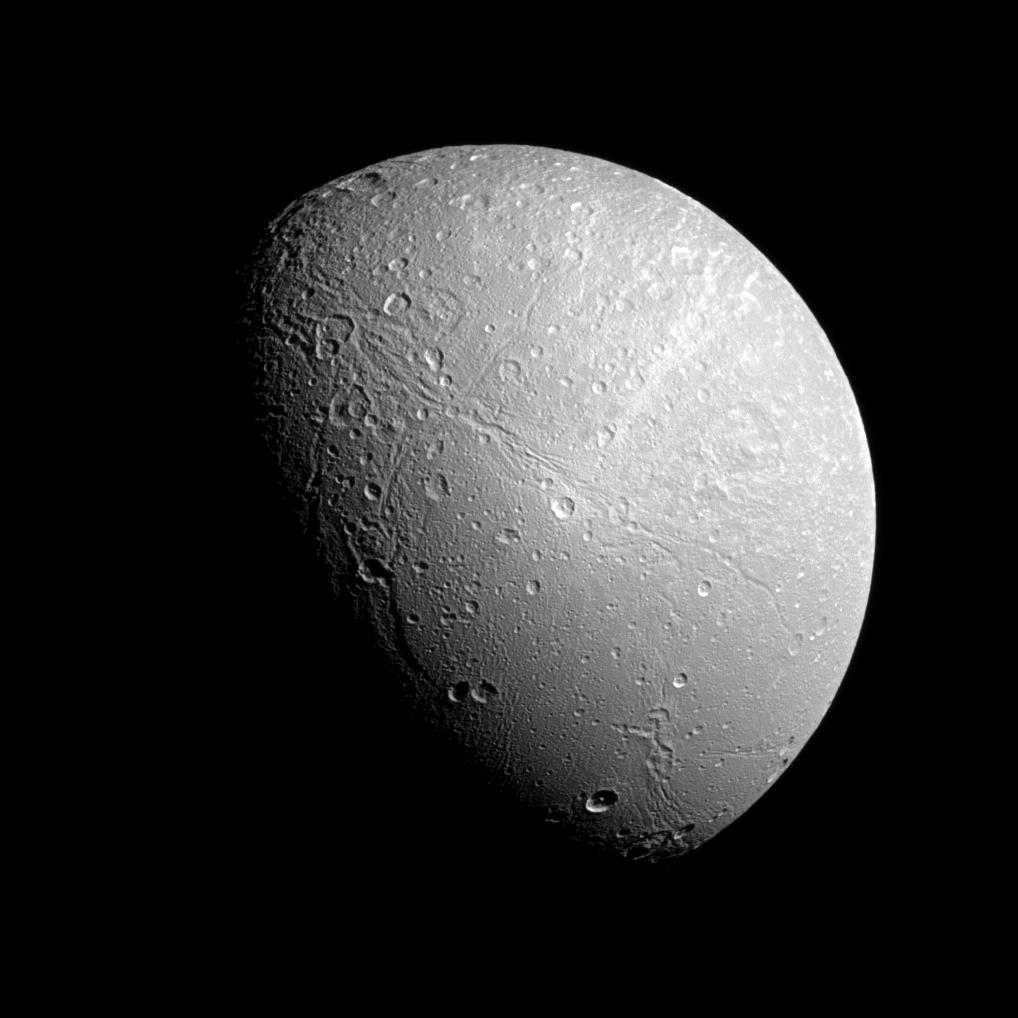
Wispy Terrain on Dione

Posted by


NASA dixit:

“December 23, 2012. The famed wispy terrain on Saturn’s moon Dione is front and center in this recent Cassini spacecraft image. The ”wisps” are fresh fractures on the trailing hemisphere of the moon’s icy surface. This view is centered on 55 degrees north latitude and 85 degrees west longitude on Dione (698 miles, or 1,123 kilometers across). North is up and rotated 39 degrees to the left.

The image was taken in visible light with the Cassini spacecraft narrow-angle camera. The view was obtained at a distance of approximately 153,000 miles (246,000 kilometers) from Dione. Image scale is 0.9 miles (1.5 kilometers) per pixel.”

“After almost 20 years in space, NASA’s Cassini spacecraft begins the final chapter of its remarkable story of exploration: its Grand Finale. Between April and September 2017, Cassini will undertake a daring set of orbits that is, in many ways, like a whole new mission. Following a final close flyby of Saturn’s moon Titan, Cassini will leap over the planet’s icy rings and begin a series of 22 weekly dives between the planet and the rings.

No other mission has ever explored this unique region. What we learn from these final orbits will help to improve our understanding of how giant planets – and planetary systems everywhere – form and evolve.

On the final orbit, Cassini will plunge into Saturn’s atmosphere, sending back new and unique science to the very end. After losing contact with Earth, the spacecraft will burn up like a meteor, becoming part of the planet itself.

Cassini’s Grand Finale is about so much more than the spacecraft’s final dive into Saturn. That dramatic event is the capstone of six months of daring exploration and scientific discovery. And those six months are the thrilling final chapter in a historic 20-year journey.”

Image credit: NASA


  • Facebook
  • Google
  • Slashdot
  • Reddit
  • Live
  • TwitThis
September 10, 2017

Cubesats

Posted by


NASA dixit:

“NASA’s CubeSat Launch Initiative provides opportunities for small satellite payloads built by universities, high schools and non-profit organizations to fly on upcoming launches. Through innovative technology partnerships NASA provides these CubeSat developers a low-cost pathway to conduct scientific investigations and technology demonstrations in space, thus enabling students, teachers and faculty to obtain hands-on flight hardware development experience.

Each proposed investigation must demonstrate a benefit to NASA by addressing aspects of science, exploration, technology development, education or operations relevant to NASA’s strategic goals. This initiative provides NASA a mechanism for low-cost technology development and scientific research to help bridge strategic knowledge gaps and accelerate flight-qualified technology.”

Video credit: NASA Kennedy


  • Facebook
  • Google
  • Slashdot
  • Reddit
  • Live
  • TwitThis
September 7, 2017

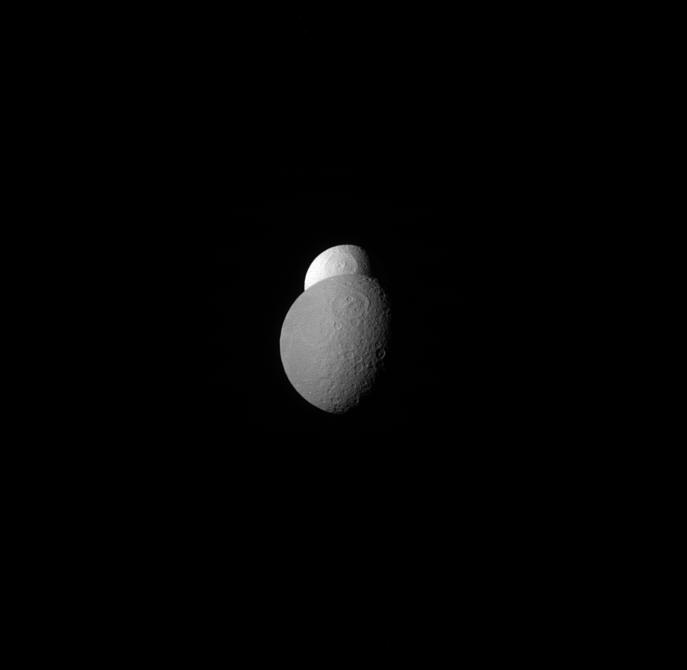
Tethys the Spy

Posted by


NASA dixit:

“April 20, 2012. Tethys appears to be peeking out from behind Rhea, watching the watcher. Scientists believe that Tethys’ surprisingly high albedo is due to the water ice jets emerging from its neighbor, Enceladus. The fresh water ice becomes the E ring and can eventually arrive at Tethys, giving it a fresh surface layer of clean ice. Lit terrain seen here is on the anti-Saturn side of Rhea. North on Rhea is up. The image was taken in red light with the Cassini spacecraft narrow-angle camera.

The view was obtained at a distance of approximately 1.1 million miles (1.8 million kilometers) from Rhea and at a Sun-Rhea-spacecraft, or phase, angle of 59 degrees. Image scale is 7 miles (11 kilometers) per pixel.”

“After almost 20 years in space, NASA’s Cassini spacecraft begins the final chapter of its remarkable story of exploration: its Grand Finale. Between April and September 2017, Cassini will undertake a daring set of orbits that is, in many ways, like a whole new mission. Following a final close flyby of Saturn’s moon Titan, Cassini will leap over the planet’s icy rings and begin a series of 22 weekly dives between the planet and the rings.

No other mission has ever explored this unique region. What we learn from these final orbits will help to improve our understanding of how giant planets – and planetary systems everywhere – form and evolve.

On the final orbit, Cassini will plunge into Saturn’s atmosphere, sending back new and unique science to the very end. After losing contact with Earth, the spacecraft will burn up like a meteor, becoming part of the planet itself.

Cassini’s Grand Finale is about so much more than the spacecraft’s final dive into Saturn. That dramatic event is the capstone of six months of daring exploration and scientific discovery. And those six months are the thrilling final chapter in a historic 20-year journey.”

Image credit: NASA


  • Facebook
  • Google
  • Slashdot
  • Reddit
  • Live
  • TwitThis
September 6, 2017

Atlas V Peregrine

Posted by


ULA dixit:

“Astrobotic’s Peregrine Lunar Lander will launch onboard a ULA launch vehicle in 2019, during the 50th anniversary of Apollo 11. This effort is a big step in realizing Astrobotic’s goal of creating a Rust Belt based international gateway to the Moon. The Peregrine Lunar Lander will fly 35 kilograms of customer payloads on its first mission, with the option to upgrade to 265 kilograms on future missions.”

Video credit: ULA


  • Facebook
  • Google
  • Slashdot
  • Reddit
  • Live
  • TwitThis
September 5, 2017

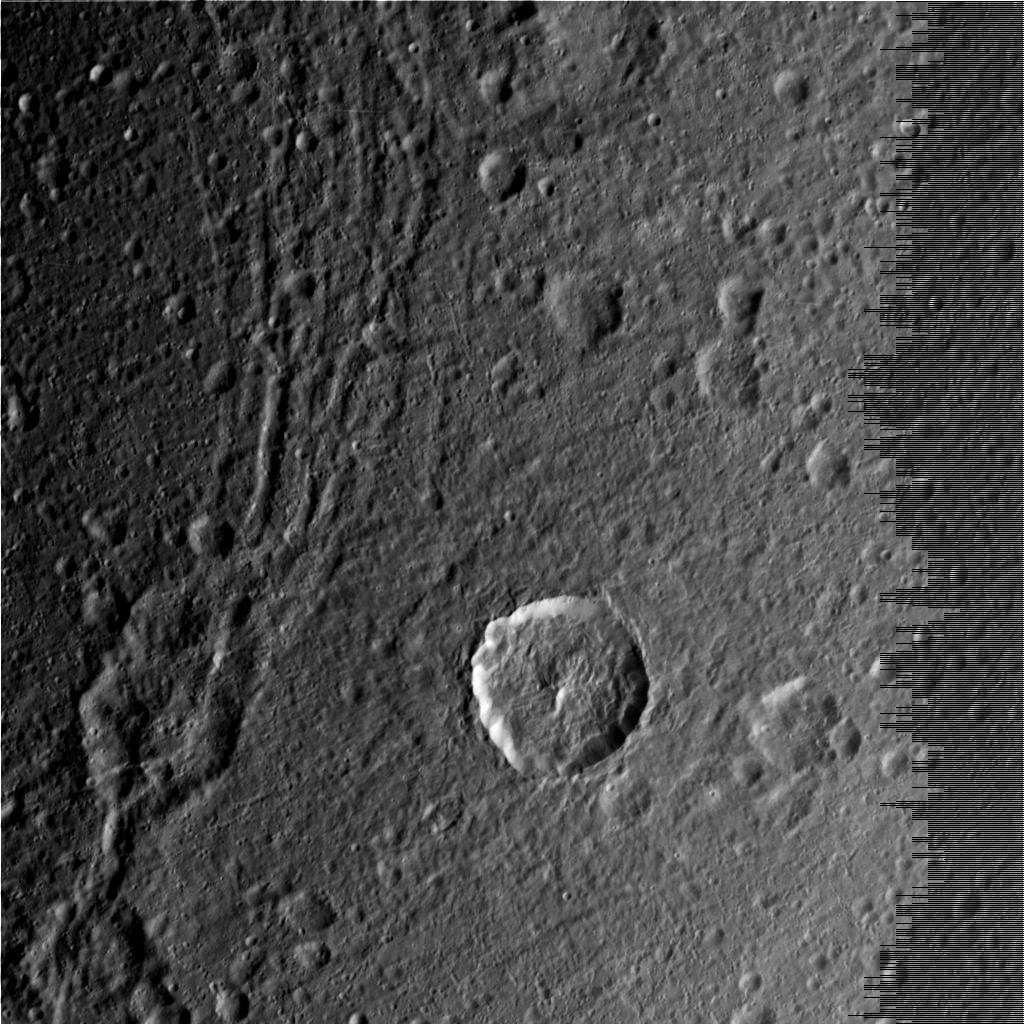
Dione Close-Up

Posted by


NASA dixit:

“March 28, 2012. This raw image from NASA’s Cassini spacecraft was taken with the camera pointing toward Saturn’s moon Dione at approximately 27,668 miles (44,528 kilometers) away.”

“After almost 20 years in space, NASA’s Cassini spacecraft begins the final chapter of its remarkable story of exploration: its Grand Finale. Between April and September 2017, Cassini will undertake a daring set of orbits that is, in many ways, like a whole new mission. Following a final close flyby of Saturn’s moon Titan, Cassini will leap over the planet’s icy rings and begin a series of 22 weekly dives between the planet and the rings.

No other mission has ever explored this unique region. What we learn from these final orbits will help to improve our understanding of how giant planets – and planetary systems everywhere – form and evolve.

On the final orbit, Cassini will plunge into Saturn’s atmosphere, sending back new and unique science to the very end. After losing contact with Earth, the spacecraft will burn up like a meteor, becoming part of the planet itself.

Cassini’s Grand Finale is about so much more than the spacecraft’s final dive into Saturn. That dramatic event is the capstone of six months of daring exploration and scientific discovery. And those six months are the thrilling final chapter in a historic 20-year journey.”

Image credit: NASA


  • Facebook
  • Google
  • Slashdot
  • Reddit
  • Live
  • TwitThis