OrbitalHub

The place where space exploration, science, and engineering meet

Domain is for sale. $50,000,000.00 USD. Direct any inquiries to contact@orbitalhub.com.

Archive for March, 2009

March 15, 2009

Carnival of Space #94

Posted by


Credits: NASA


Carnival of Space #94 is live at Out of the Cradle. This week, the host is Ken Murphy, the friendly Lunar Librarian at Out of the Cradle. There are many interesting stories at the carnival, so make sure you check them out!


OrbitalHub tells the story of the Alpha Magnetic Spectrometer, a high-energy particle detector that will be installed on the International Space Station during the STS-134 mission.


  • Facebook
  • Google
  • Slashdot
  • Reddit
  • Live
  • TwitThis
March 12, 2009

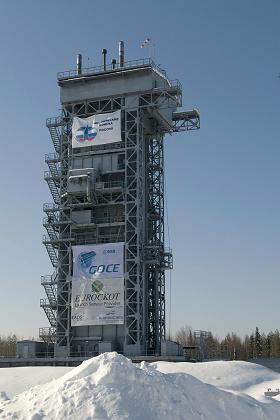
GOCE Ready For Launch

Posted by


Credits: ESA – S. Corvaja

ESA is about to launch a satellite capable of measuring very small variations in the Earth’s gravitational field. Determining the variations in the Earth’s gravitational field will improve our knowledge of ocean circulation, and will also help to make advances in geodesy and surveying.

The satellite is called Gravity field and steady-state Ocean Circulation Explorer (GOCE). GOCE is the most advanced gravity space mission to date. Scientists will build a detailed map of Earth’s gravity using data collected by GOCE.

Read more about GOCE…


  • Facebook
  • Google
  • Slashdot
  • Reddit
  • Live
  • TwitThis
March 11, 2009

SpaceX Reaches Two Major Milestones

Posted by


Credits: SpaceX


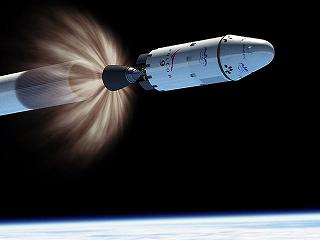
SpaceX recently reached two major milestones towards the goal of servicing the International Space Station (ISS) after the retirement of the Space Shuttle in September 2010.


The milestones are the successful testing of the heat shield material used for the thermal protective system of the Dragon spacecraft, and a mission-length firing of the Merlin Vacuum engine that powers the second stage of the Falcon 9 launch vehicle.


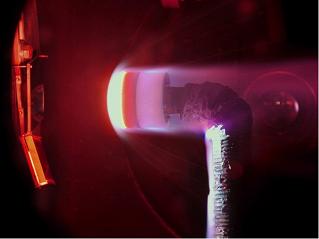
On February 23, 2009, SpaceX announced that the PICA-X high performance heat shield material passed an arc jet testing. During the test that recreates the conditions experienced during an atmospheric reentry, the material was subjected to temperatures as high as 1850 degrees Celsius.


PICA is short for Phenolic Impregnated Carbon Ablator. It is a material used for thermal protection, which was initially developed by NASA. PICA-X is an improved variation of the original PICA and was developed by SpaceX with the assistance of NASA. SpaceX becomes the second commercial source for this high-performance carbon-based material.


“We tested three different variants developed by SpaceX,” said Tom Mueller, VP of Propulsion, SpaceX. “Compared to the PICA heat shield flown successfully on NASA’s Stardust sample return capsule, our SpaceX versions equaled or improved the performance of the heritage material in all cases.”
 

Credits: SpaceX


The arc jet tests were performed at the Arc Jet Complex at NASA Ames Research Center, as the test center is capable of creating the reentry conditions. The Arc Jet Complex has a long history in the development of thermal protective systems.


PICA-X will protect the Dragon spacecraft and the crew during the reentry in the atmosphere from low Earth orbit (LEO).


One remarkable detail that I discovered when reading the press release is that PICA-X will also be used to coat the second stage of the Falcon 9 launch vehicle, as SpaceX plans to reuse the second stage of the launch vehicle as well.


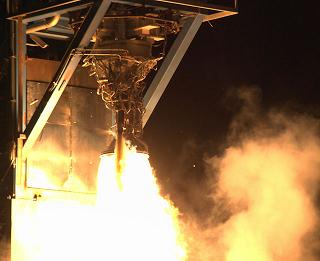
On March 7, 2009, the Merlin Vacuum engine completed a full mission duration firing at the SpaceX Test Facility in McGregor, Texas. During the test that lasted 6 minutes, the engine consumed more than 100,000 pounds of liquid oxygen and rocket grade kerosene.


The Merlin Vacuum engine is a variation of the Merlin 1C engine that powers the Falcon 1 launch vehicle, and it accommodates changes that make it more efficient to fire in the vacuum of space (most notably the shape of the nozzle).
 

Credits: SpaceX


“Specific impulse, or Isp, indicates how efficiently a rocket engine converts propellant into thrust,” said Tom Mueller. “With a vacuum Isp of 342 seconds, the new Merlin Vacuum engine has exceeded our requirements, setting a new standard for American hydrocarbon engine performance in space.”


The engine uses a regeneratively cooled combustion chamber, which means that the propellant is injected into the walls of the combustion chamber and prevents them from melting.


The nozzle is radiatively cooled and much larger, and also has a larger exhaust section than the Merlin 1C. This results in an improved performance of the engine. The engine is capable of multiple restarts and can operate at reduced thrust, which will enable the upper stage to deliver payloads matching a broad range of orbital profiles.


“Falcon 9 was designed from the ground up to provide our customers with breakthrough advances in reliability,” said Elon Musk, CEO and CTO of SpaceX. “In successfully adapting our flight tested first stage engine for use on the second stage, this recent test further validates the architecture of Falcon 9, designed to provide customers with high reliability at a fraction of traditional costs.”


The first flight of the Falcon 9 /Dragon launch system is scheduled for late 2009 from Launch Pad SLC-40 at Cape Canaveral, Florida. For more information about SpaceX and the Falcon 9 /Dragon launch system, you can visit the SpaceX website.

 

  • Facebook
  • Google
  • Slashdot
  • Reddit
  • Live
  • TwitThis


Credits: NASA/RASA


The Alpha Magnetic Spectrometer (AMS) is a high-energy particle detector. AMS will detect electrons, positrons, protons, antiprotons, and nuclei in cosmic radiation.


AMS is a cooperative project that involved more than 200 scientists from 31 institutions and 15 countries. The data gathered by AMS during its three-year mission will help scientists answer important questions about antimatter and invisible mass in the Universe. AMS could detect many types of particles predicted by theorists and determine their astrophysical sources.


AMS could reveal to scientists unusual astrophysical objects like antimatter galaxies, dark matter, strangelets, microquasars, and primordial black holes.


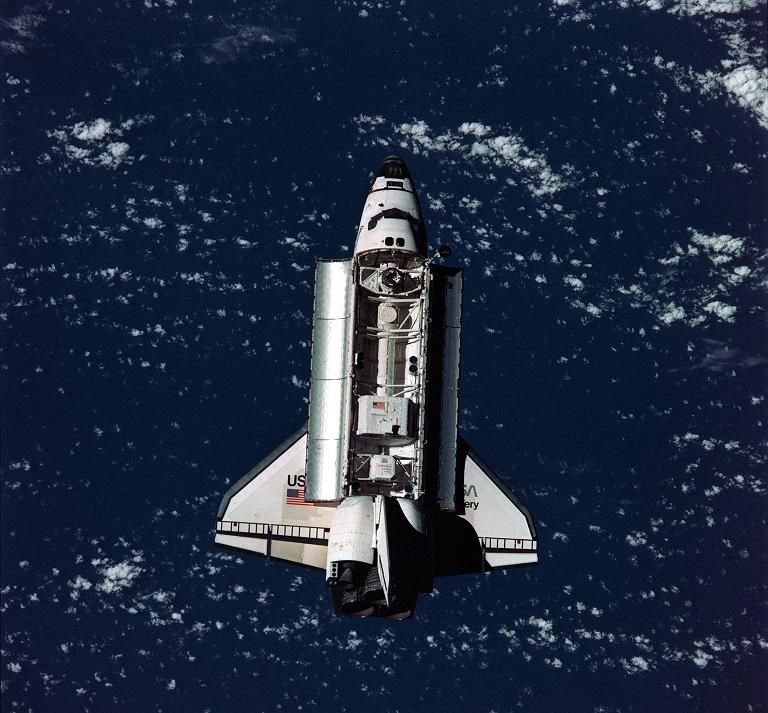
AMS actually refers to two particle experiments: AMS-01 and AMS-02. AMS-01 flew in low Earth orbit (LEO) with Space Shuttle Discovery STS-91 in June 1998. AMS-01 was an AMS prototype (a simplified version of the spectrometer) and was used to test particle physics technology in LEO. AMS-02 is the Alpha Magnetic Spectrometer designed to be mounted and operated on the ISS.


Credits: NASA


AMS-02 is a cube-shaped structure with a mass of 6,731 kg. The spectrometer consists of a huge superconducting magnet and six specialized detectors, and requires 2,000 watts of power.


The experiment has a 10Gb/sec internal data pipeline and will have a dedicated 2MB/sec connection to ground stations. AMS-02 will gather approximately 200 TB of scientific data during its mission. Four 750 MHz PowerPC computers running Linux will provide the computing power.


The spectrometer also contains two star tracker cameras, which detect the orientation in space, and a thermal control system that will control the temperature of the whole experiment. The thermal control system is quite complex. Heat is collected from the detectors and the magnet, and then pushed through conductors to the radiators mounted on the outside of the AMS and radiated into space.


AMS-02 has a little bit of history associated with it … due to the Space Shuttle accidents, which reduced the number of orbiters available, and the decision to retire the Space Shuttle fleet, AMS-02 faced cancellation (a long list of elements meant to be part of the ISS were cancelled for the same reasons). Because an additional shuttle flight was added to the launch manifest, most likely AMS-02 will make it to the space station.


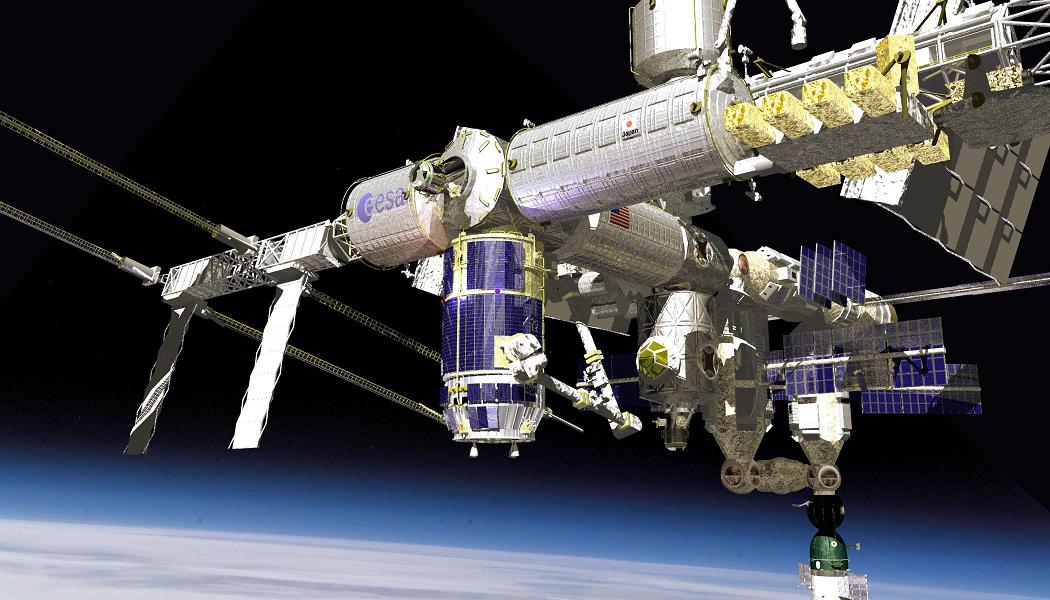
The plan for AMS-02 is that it will be attached to the zenith side of the S3 section of the Integrated Truss Structure on the ISS. A Payload Attachment System will be used to keep the spectrometer in place on the truss segment.


Credits: NASA


According to the missions schedule, AMS-02 will be installed on ISS as part of the Space Shuttle Discovery STS-134 mission, together with the last ExPRESS Logistics Carrier (ELC-4), in late 2010.


STS-134 will be the last Space Shuttle flight before the deadline set to end Space Shuttle operations on September 30, 2010.


To make things more interesting (and Space Shuttle operations cheaper), it has been proposed that the last mission should end through a destructive re-entry. In this scenario, the reduced crew of three will remain on the space station and return to Earth onboard Soyuz spacecraft.


You can read more about AMS-02 on a dedicated web page at MIT. There is also a web page dedicated to AMS-02 at CERN.


  • Facebook
  • Google
  • Slashdot
  • Reddit
  • Live
  • TwitThis
March 9, 2009

Carnival of Space #93

Posted by


Credits: JAXA


Carnival of Space #93 is hosted by Emily Lakdawalla at The Planetary Society Blog.


You can hear Emily every week on Planetary Radio. The Planetary Society has also launched a new Catalog of Exoplanets on their web site.


This week you can read about the Comet Lulin, nuclear explosions that could be used to launch massive payloads into space, the ethics of Project Paperclip, the International Association of Space Entrepreneurs, Galileo’s first telescopic studies of the Moon, and much more.


OrbitalHub has submitted a post about the Japanese built H-II Transfer Vehicle, one of the future workhorses that will service the International Space Station.


  • Facebook
  • Google
  • Slashdot
  • Reddit
  • Live
  • TwitThis
March 8, 2009

Remember Phoenix

Posted by


In 2002, an instrument on the Mars Odyssey spacecraft detected hydrogen under the Martian surface. This was regarded as clear evidence that there is subsurface water ice on Mars.

In 2003, NASA decided to revive a mission that was cancelled in 2001 due to the fact that a previous mission, the Mars Polar Lander, was lost in 1999. The revived mission was named Phoenix.

Read more about Phoenix…


  • Facebook
  • Google
  • Slashdot
  • Reddit
  • Live
  • TwitThis