Carnival of Space #71 is hosted by Rob at DotAstronomy. Check out the new articles from around the space blogosphere this week!



Carnival of Space #71 is hosted by Rob at DotAstronomy. Check out the new articles from around the space blogosphere this week!


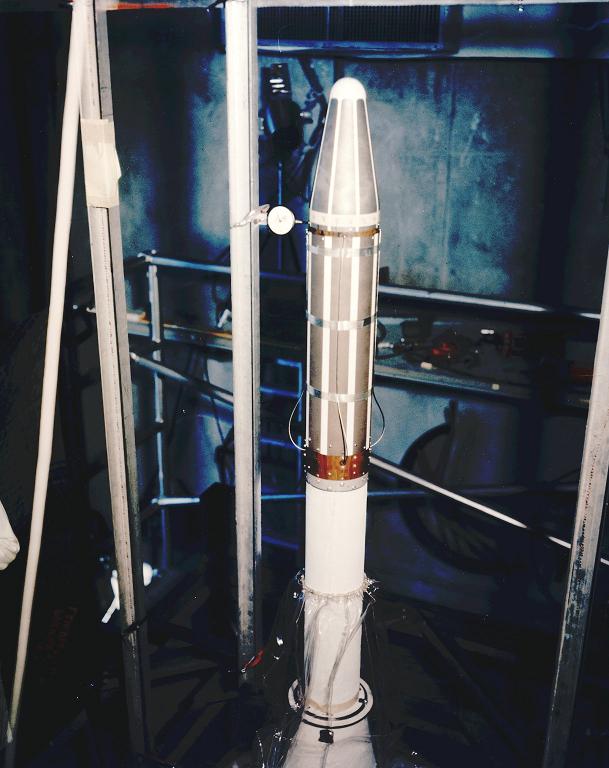
This post is the first in a series discussing how power is generated onboard spacecrafts.
 |
| Credits: NASA |
One major component of a spacecraft is the power system. All systems onboard a spacecraft need electricity in order to run. From the early days of space flight, development of this essential system has been a challenge for spacecraft designers.
There are a number of factors that spacecraft designers must take into account: the size, the accessibility, and some operational constraints that can limit the options available. A good example of operational constraints is a spacecraft operating in the Van Allen radiation belts, where radiation exposure can contribute to the rapid degradation of the solar arrays. Other important factors that designers need to consider are the lifetime required by the mission, the orbital parameters, and the attitude control concept employed.
Probably some space geeks (especially science fiction fans) would think of M/AM reactors onboard spacecrafts, but the reality is not as glamorous. Maybe future generations of spacecrafts will use that type of technology, but the present generation is using what some might call primitive technology by comparison.
 |
| Credits: NASA |
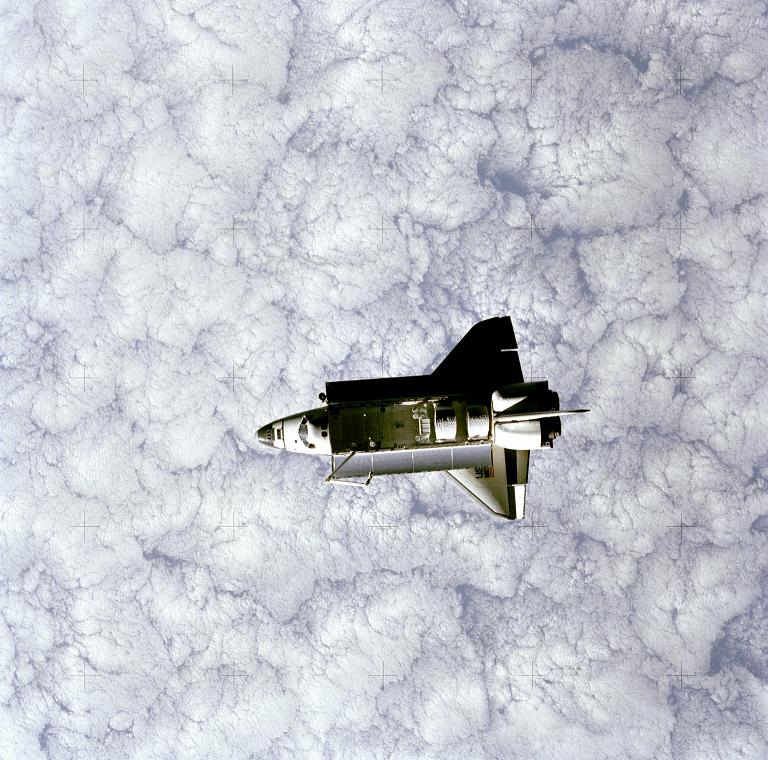
As a general requirement, power systems must control, condition, and process the power received in order to comply with the needs of the systems onboard the spacecraft. The power is received from the primary source, which can be a battery, a solar array, etc. For the duration of the mission, the power system must supply stable and uninterrupted power. If not, the mission is lost.
In the second part of this series, we will take a look at the options available to spacecraft engineers when designing the power system for space missions.
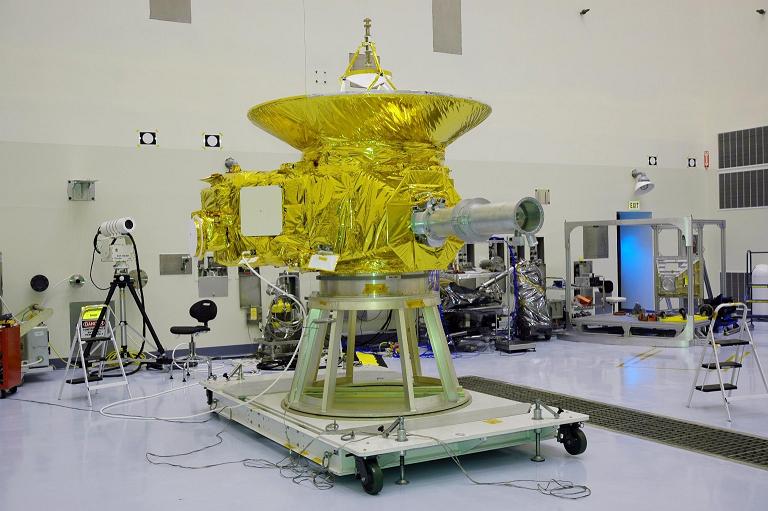
Yes, they do. They really do! One of NASA’s deep space mission probes, New Horizons, is undergoing a check. The mission operators wake the spacecraft out of hibernation once a year. A number of checks are performed: the antennas must be pointed toward Earth, the trajectory must be corrected if needed, and instruments must be calibrated. These checks last more than a usual visit to a doctor… about 50 days. The operators verify the health of the spacecraft, perform maintenance on subsystems and instruments, and gather navigation data.
 |
| Credits: NASA |
The highlight of the current check was the upload of a new version of the software that runs the spacecraft’s Command and Data Handling system. The brain transplant, as it was called, was a success. The mission team at the Johns Hopkins Applied Physics Laboratory (APL) in Laurel, Maryland, sent the updates through NASA’s Deep Space Network (DSN) to the spacecraft. Two more updates are to be sent for both the Autonomy and Guidance and Control systems.
All commands that are sent to the spacecraft must pass a rigorous development and review process. After the command sequences are tested on the ground, the mission operations team will send them from the New Horizons Mission Operations Center at APL using the DSN, which is operated and managed by NASA’s Jet Propulsion Laboratory.
 |
| Credits: NASA |
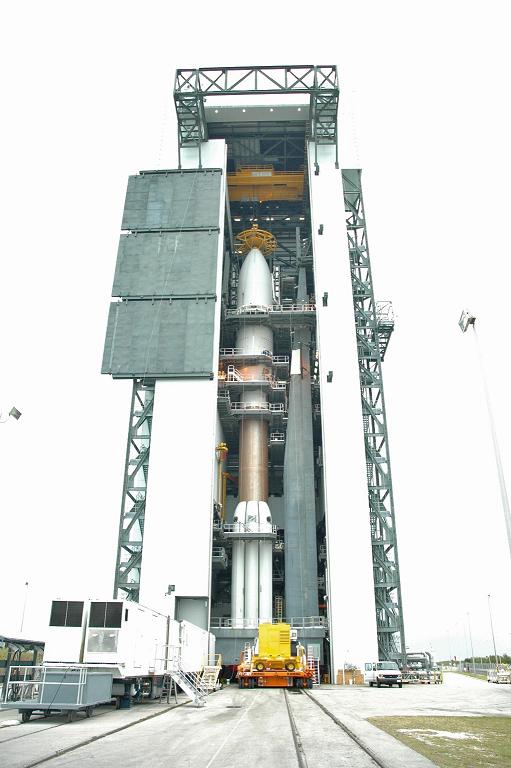
The New Horizons spacecraft was launched on January 19th, 2006 on top of an Atlas V rocket from Cape Canaveral Air Force Station, Florida.
The trajectory chosen for the probe is not complicated, as the probe is flying to Pluto using just one gravity boost from Jupiter. The journey consists of 5 segments: the early cruise, the Jupiter encounter, the interplanetary cruise, the Pluto-Charon encounter, and the Kuiper Belt.
During the early cruise segment of the voyage, spacecraft and instrument checkouts, instrument calibrations, and trajectory corrections were performed. Rehearsals for the Jupiter encounter were also conducted.
During the second segment of the voyage, the closest approach to Jupiter occurred on February 28th, 2007.
 |
| Credits: JHUAPL / SwRI |
The third segment of the voyage consists mainly of spacecraft and instrument checkouts, trajectory corrections, instrument calibrations, and Pluto encounter rehearsals. This part of the voyage lasts for 8 years and is the current segment of the mission.
The Pluto-Charon encounter is planned for July 14th, 2015.
In the Kuiper Belt, plans are for one or two encounters with Kuiper Belt Objects (KBOs). These objects would be in the 40 to 90 kilometer size range and New Horizons would acquire the same data it collected during the Pluto-Charon encounter and send it back to Earth for analysis.
 |
| Credits: JHUAPL / SwRI |
New Horizons is a small spacecraft. It weighs 478 kilograms in total, of which 77 kilograms is the hydrazine fuel, and 30 kilograms the scientific instruments. It measures 0.7×2.1×2.7 meters.
For communication with Earth, the spacecraft is using a 2.1 meter high-gain antenna. The data transfer rate is 38 kilobits per second at Jupiter, and 0.6 to 1.2 kilobits per second at Pluto. The data gathered during the encounter with Pluto will take 9 months to transmit back to Earth.
The scientific payload of the spacecraft draws less than 28 Watts of power. The mission uses a radioisotope thermoelectric generator (RTG) for power generation. The RTG contains 11 kilograms of plutonium dioxide. At the start of the mission, the RTG provided 240 Watts of energy at 30 Volts. Due to the decay of the plutonium, the power output decreases during the mission, and by the time of the Pluto encounter the RTG will only produce about 200 Watts.
The scientific instruments that were selected meet the mission’s goals. NASA set out a list of things it wanted to know about Pluto: the composition and behavior of the atmosphere, the appearance of the surface, the geological structures on the surface of Pluto, etc. The scientific payload contains seven instruments.
 |
| Credits: NASA |
Ralph is a visible and infrared imager/spectrometer. It will obtain high-resolution color maps and surface composition maps of the surfaces of Pluto and Charon.
Alice is an ultraviolet imaging spectrometer. It will be used to analyze the composition and the structure of Pluto’s atmosphere and to look for atmospheres around Charon and Kuiper Belt Objects (KBOs).
REX is the Radio Science Experiment. It is a passive radiometer that measures atmospheric composition and temperature by using what is called an occultation technique: after passing Pluto, the spacecraft will point its antenna back to Earth and record the transmissions sent by the NASA’s DSN. The alterations of the transmissions caused by Pluto’s atmosphere will be recorded and sent back to Earth for analysis. REX will also be used to measure weak radio emissions from Pluto itself.
LORRI stands for Long Range Reconnaissance Imager. It is a telescopic camera and it will be used to obtain encounter data at long distances, to map Pluto’s far side and to provide high-resolution geologic data. LORRI will take images having 100-meter resolution.
SWAP, the solar wind and plasma spectrometer, stands for Solar Wind Around Pluto. It will measure the atmospheric escape rate and it will observe Pluto’s interaction with solar wind, determining whether Pluto has a magnetosphere or not.
 |
| Credits: NASA / JHUAPL |
PEPSSI, Pluto Energetic Particle Spectrometer Science Investigation, is an energetic particle spectrometer used to measure the composition and density of plasma (ions) escaping from Pluto’s atmosphere.
SDC is the Student Dust Counter. It is the first scientific instrument built by students mounted on a space probe. It measures the space dust impacting the spacecraft during the voyage across the solar system, recording the count and the size of dust particles. It was built primarily by students from the University of Colorado in Boulder, with supervision from scientists.
If you want to know the present location of the spacecraft, there is a dedicated page on APL that you can visit.
For more information on the New Horizons Mission you can read the New Horizons Missions Guides document on the APL website.
The New Horizons Mission also has a page on Twitter.
Welcome to The OrbitalHub – the place where space exploration, science, and engineering meet. My name is DJ and I will be your host for this week’s Carnival. This is not only my first time participating in the Carnival, but also my first time hosting it. I hope you will enjoy reading this week’s entries.
Stuart Atkinson at the Cumbrian Sky points out that ESA marked a successful and historic day by beginning to involve the public more in their missions. He reminds us about some past missions that ESA was very reluctant to share with the general public.

On October 10, 2008, the Space Shuttle Atlantis will lift off on a fourth service mission to the Hubble Space Telescope. This sky veteran has served astronomers over the past (almost) two decades. On Astronomy at the CCSSC Rosa Williams explains why this mission is important and presents the upgrades that Hubble will undergo.
Space Shuttle flights may end in 2010. Alpha Magnetic Spectrometer, an ambitious cosmic ray experiment, is completed and sitting on the ground without a ride to the Space Station. The AMS mission may coincide with Shuttle retirement. Read The Last Flight at A Babe in the Universe to find out how scientists and the US Congress strongly support an extra mission for AMS. One controversial plan would deliver AMS and retire an Orbiter in space. The AMS mission would be a dramatic end to the Shuttle era.
On Kentucky Space, we can see how The Space Systems Design Studio at Cornell has been studying some superconducting technologies that might enable the building of modular spacecrafts.
Alexander DeClama, on Potentia Tenebras Repellendi, outlines more arguments on why space exploration is justified. Many byproducts of the space industry have migrated into healthcare and other industries over the years, bringing with them increased quality and reliability.
Centauri Dreams, in Cepheid Variables: A Galactic Internet?, looks at a recent paper that speculates on how a super-civilization might be able to modulate the extremely useful (and highly visible) Cepheid variable stars to encode a signal, for broadcast as one type of interstellar beacon. Intriguingly, if such a long-shot scenario turned out to be true, we might actually have data that could confirm it in existing records about Cepheid variables. The authors suggest how we might parse that data, and how future observations could help with such studies.
Ian Musgrave at Astroblog presents an animation of a cloud floating high above the Martian surface. He used Mars Express VMC camera images that ESA has released to the general public for analysis and processing.
Inspired by an article on Centauri Dreams, Music of the Spheres does some virtual space sailing with the help of the Orbiter space flight simulator and a solar sail add-on.
On The Planetary Society Weblog, Emily Lakdawalla covers a hot topic this week in the blogosphere: the encounter of ESA’s Rosetta with asteroid Steins.
David Portree of Altair VI describes the challenges that astronauts must face living and working in microgravity and an ambitious plan for the settlement of Mars in Delivering settlers to Mars (1995). The plan was initially published in the August 1995 issue of the Journal of the British Interplanetary Society by NASA Ames Research Center engineer Gary Allen.
Since the landing on Mars, the Phoenix lander has developed some odd little clumps on one of its legs, leading to speculations about their origin. Read about them on The Meridiani Journal in What is growing on Phoenix?
Even if space is a very harsh environment, it has been demonstrated that the water bears, a sea-monkey-like creature, can survive in the hard vacuum of space. Read all about it on Visual Astronomy in the article that Sean Welton has submitted for this week’s Carnival: Bears in Space?
Any old school astronomy geeks around here? Steinn Sigurdsson presents an illustration of Homeric Epicycles on Dynamics of Cats.

Arthur C. Clarke’s vision of the future seems to be closer to reality as advances are made in separating carbon nanotubes. Read Brian Wang’s post Advance in separating carbon nanotubes brings space elevators a step closer at Next Big Future. This is a significant step towards building a space elevator and towards wider scale use of carbon nanotubes for other applications.
The future in space (and on Earth) of the next 20 years is so bright, you’ll probably need shades… Bruce Cordell of 21st Century Waves explains why in the post Why the World is Not Going to End.
It seems like the LHC (Large Hadron Collider) has an abort button! Thankfully, LHC physicists have a sense of humor about all of this doomsday mumbo-jumbo. Dave Mosher of Space Disco posted a picture of the ‘device’ in The LHC’s Abort Button.
At One Astronomer’s Noise, Nicole Gugliucci tells us about the successful attempt to resolve the super massive black hole at the center of our galaxy. Astronomers used what is called 1.3mm VLBI (Very Long Baseline Interferometry). VLBI is a technique that allows you to create a giant virtual telescope by linking multiple telescopes across long distances.
Measuring the positron emissions of the giant black hole at the center of the universe is quite a challenge. Ethan Siegel, at Starts With A Bang!, presents measurements taken by a detector in the gamma-ray domain and why these measurements are up for debate.
On Cosmic Ray, Ray Villard explores the possibility that the satellites of a Jovian-like planet orbiting around Epsilon Eridani, a star only 10 light-years away from our solar system, could harbor the seeds of life.
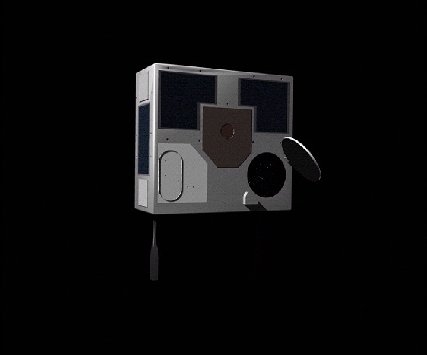
David Gamey, from Mang’s Bat Page, posted three articles about MOST (Microvariability and Oscillations of Stars), the suitcase sized microsatellite designed to probe stars and extra solar planets by measuring tiny light variations undetectable from Earth. By using a computer-controlled telescope, an astronomer from Toronto was able to catch MOST on camera. The MOST also started to offer its services to the public: Canadian amateur astronomers can win time on MOST. Even though it is a small telescope, MOST can be used to detect asteroids in an exo planetary system.
If you are an amateur astronomer, Alan Dyer at What’s Up Astronomy can show you how to catch on camera a cosmic flasher. Under the right conditions, the sunlight, reflected by the solar panels of communication satellites, can be observed from Earth.
The Earth is not left out this week. Phil Plait aka The Bad Astronomer, at Bad Astronomy, presents Ten things you don’t know about the Earth. I do not want to spoil the pleasure of reading the post, but I have to mention one of them: there is a measurable effect due to the centrifugal forces caused by the spinning motion of the Earth. The Earth’s diameter measured across the Equator is ~42km bigger than the diameter measured between the poles!
That’s it for this week’s Carnival! Thanks to everyone who submitted an entry. I enjoyed reading all of the posts and getting to know some members of the community. For more details on the Carnival of Space and past editions, you can check out the Carnival page at Universe Today. Many thanks to Fraser Cain at Universe Today for inviting me to host this Carnival.

On September 6th, 2008, the ESA’s space probe Rosetta performed the first highlight on its 11 year mission: a close flyby the asteroid 2867 Steins. There are two more important events to occur during the mission, which are another flyby the asteroid 21 Lutetia in 2010 and the actual rendezvous with the comet 67/P Churyumov-Gerasimenko in 2014.
The Rosetta mission is special in many ways. It is the first mission to deploy a lander to the surface of a comet. It will also be the first to orbit the nucleus of a comet and to fly alongside a comet as it heads towards the inner Solar System.
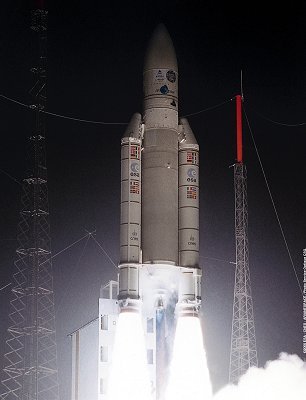
Rosetta’s mission began on March 2nd, 2004, when the spacecraft lifted off from Kourou, French Guiana. In order to optimize the use of fuel, the probe has a very complicated trajectory to reach its final target, the comet 67/P Churyumov-Gerasimenko. The long trajectory includes three Earth-gravity assists (2004, 2007, and 2009) and one at Mars (2007). The probe uses the gravity wells of Earth and Mars to accelerate to the speed needed for the rendezvous with the comet. Most of the time, the probe is hibernating with the majority of its systems shut down in order to optimize the power consumption. At the time of the rendezvous, the remaining fuel will be used to slow down the probe to match the speed of the comet.
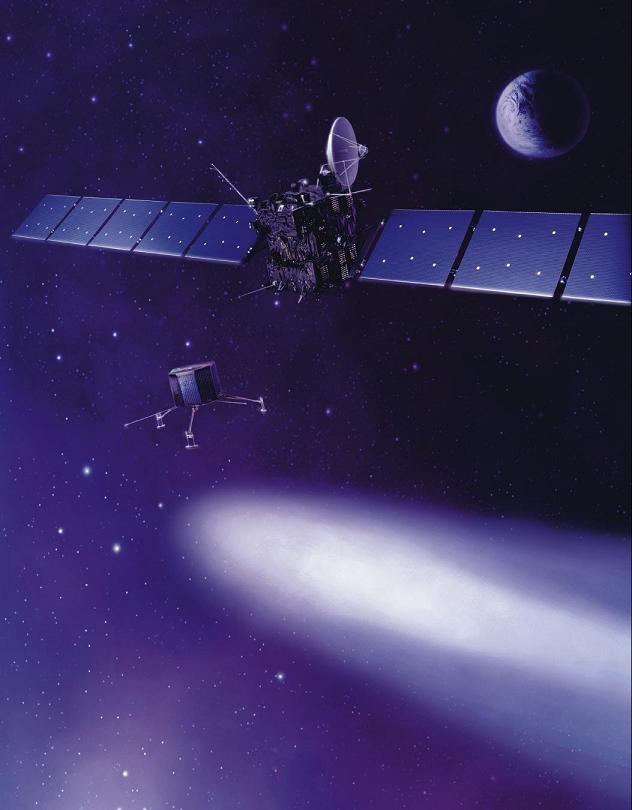
After reaching the comet, Rosetta will deploy a lander, called Philae, to the surface. While the probe will study the comet’s nucleus from a close orbit, the lander will take measurements from the comet’s surface. Because the gravity of the comet is very weak, the lander will use a harpoon to anchor itself to the surface.
Rosetta will stay with the comet more than one year, and during this time it will study one of the most primitive materials in the solar system. Scientists hope to discover the secrets of the physical and chemical processes that marked the beginning of the solar system some 5 billion years ago.
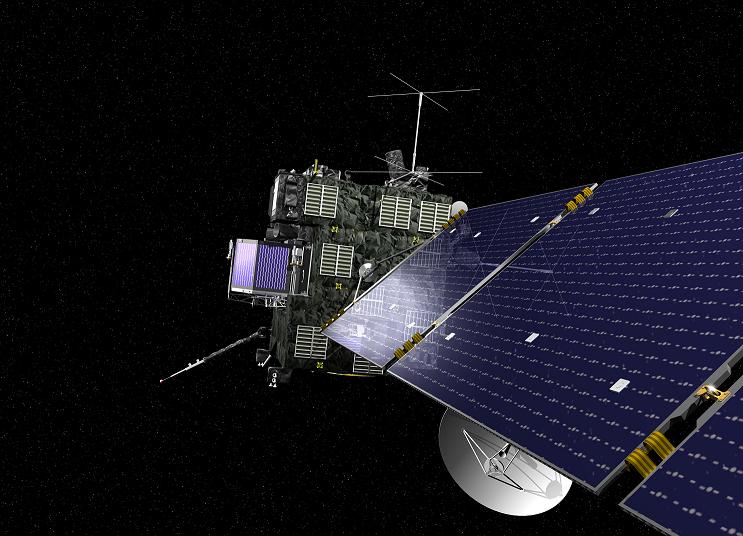
Traditionally, probes sent beyond the main asteroid belt employ radioisotope thermal generators (RTGs) as power generators. RTGs convert the heat from a radioactive source into electricity using an array of thermocouples. Instead, Rosetta is using solar cells for power generation. The probe deploys two impressive solar panels (a total area of 64 square meters). Even when close to the comet, the panels will be able to generate around 400 Watts of power. The panels can be rotated through +/- 180 degrees to track the Sun in every attitude assumed by the probe.
The probe is cube-shaped and measures 2.8×2.1×2.0 meters. At launch, it weighs 3,000 kg, including 1,670 kg of fuel, 165 kg of scientific payload for the orbiter, and 100 kg for the lander. The scientific instruments are accommodated on the lower side of the probe, which will be directed towards the comet during the last phase of the mission. Meanwhile, the probe will orbit the nucleus of the comet. A communication antenna 2.2 meters in diameter will be mounted on one side of the probe and on the opposite side the lander is attached. The other two lateral sides are used for anchoring the solar panels.
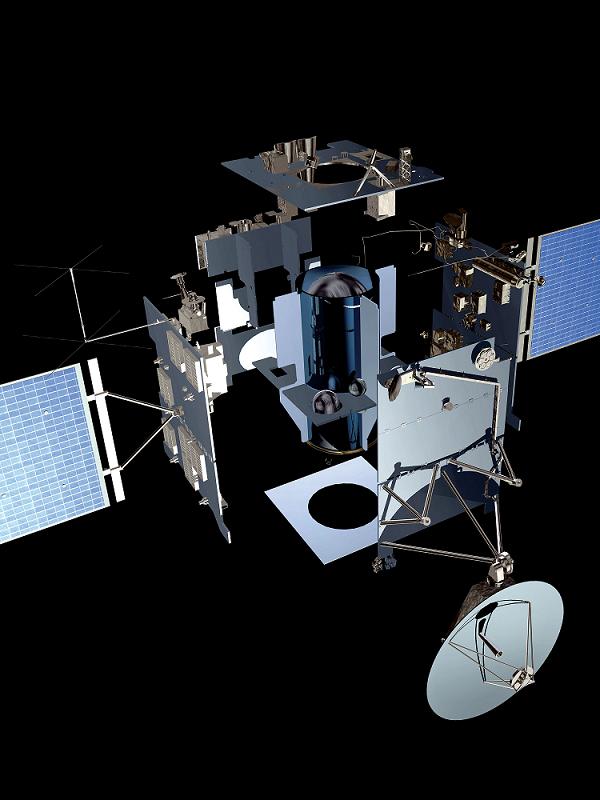
I was able to dig up more information about the probe and the lander in the mission launch kit on the EADS Astrium website.
The prime contractor for the spacecraft is Astrium Germany. The main sub-contractors are Astrium UK, Astrium France, and Alenia Spazio.
For propulsion and attitude control, the probe is using 24x10N bipropellant jets. The propulsion system is at the centre of the probe, where the tanks of propellant are located in the centre of a vertical tube.
I could not find an explanation as to why this design was chosen. Since the ability of the spacecraft to maneuver by using the onboard propulsion system is critical, I am assuming that the fuel tanks have to be protected from possible hits by micro meteorites.
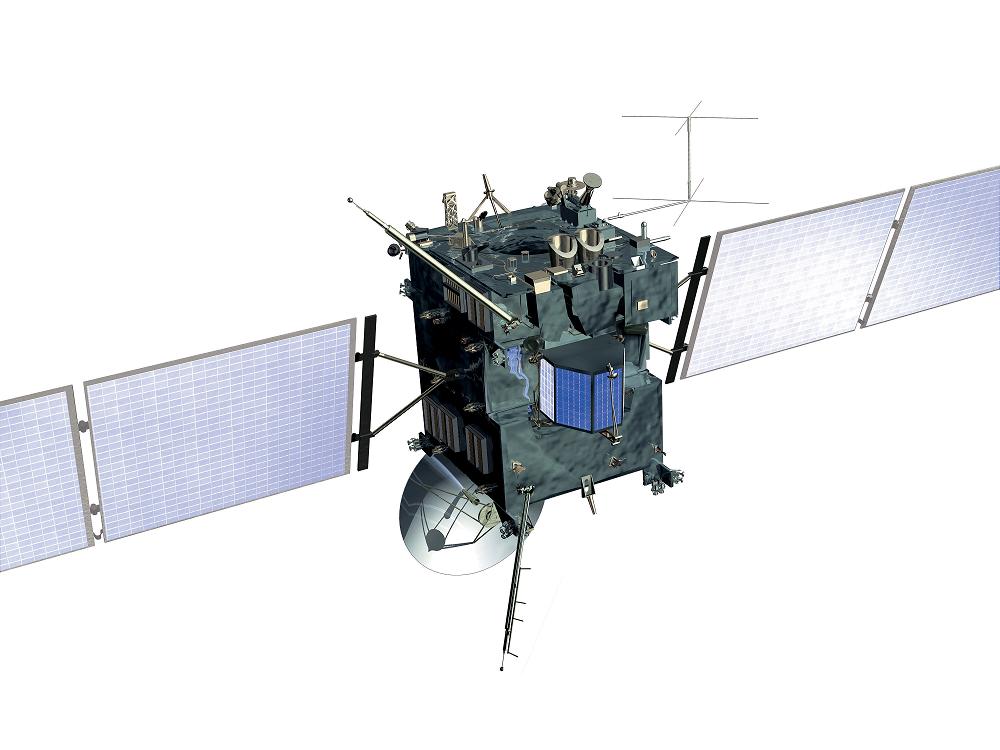
The scientific instruments onboard Rosetta are: OSIRIS (Optical Spectroscopic and Infrared Remote Imaging System), ALICE (Ultraviolet Imaging Spectrometer), VIRTIS (Visible and Infrared Thermal Imaging System), MIRO (Microwave Instrument for Rosetta Orbiter), ROSINA (Rosetta Orbiter Spectrometer for Ion and Neutral Analysis), COSIMA (Cometary Secondary Ion Mass Analyser), MIDAS (Micro-Imaging Dust Analysis System), CONSERT (Comet Nucleus Sounding Experiment by Radiowave Transmission), GIADA (Grain Impact Analyser and Dust Accumulator), RPC (Rosetta Plasma Consortium), and RSI (Radio Science Investigation).
The lander is provided by a European consortium lead by the DLR (German Aeronautic Research Institute). Members of this consortium include ESA and the Austrian, Finnish, French, Hungarian, Irish, Italian, and British institutes.
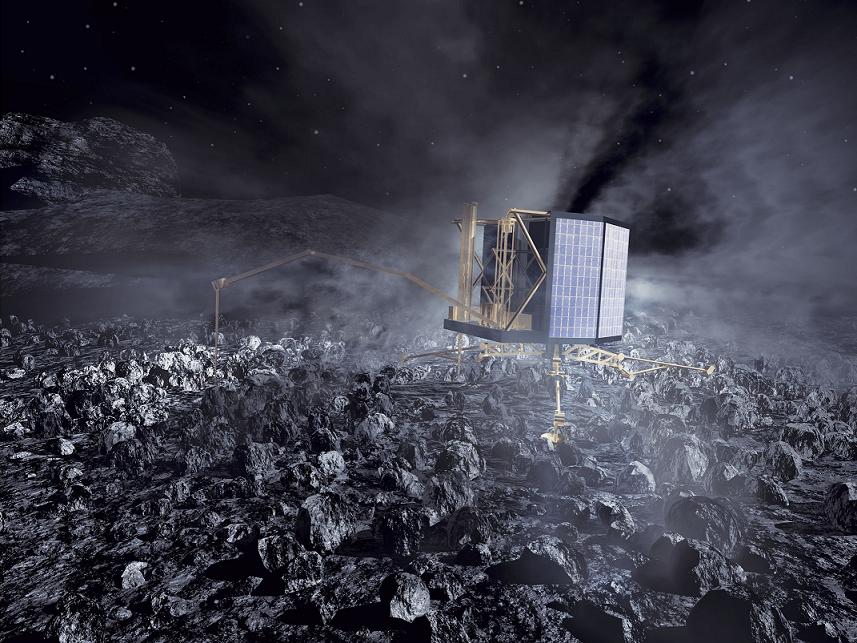
The lander has a polygonal carbon fibre sandwich structure which is covered in solar cells. The antenna transmits data from the lander via the probe orbiting the comet.
There is an impressive collection of scientific instruments mounted on the lander as well: COSAC (Cometary Sampling and Composition experiment), MODULUS PTOMELY (Gas analyser), MUPUS (Multi-Purpose Sensors for Surface and Subsurface Science), ROMAP (Rosetta Lander Magnetometer and Plasma Monitor), SESAME (Surface Electrical Seismic and Acoustic Monitoring Experiments), APXS (Alpha X-ray Spectrometer), CONSERT (Comet Nucleus Sounding Experiment by Microwave Transmission), CIVA (Imager system using panoramic cameras), ROLIS (Rosetta Lander Imaging System used during the descend phase), and SD2 (Sample and Distribution Device, a sample acquisition system).

The scientific data collected by the instruments is transmitted to the Rosetta Mission Operations Centre (MOC) through a 8bps link. Due to the narrow bandwidth, the data cannot be sent back to Earth in real-time and has to be stored on the probe before being relayed.
The MOC at the European Space Operations Centre (ESOC) in Darmstadt has been controlling this long term mission since launch using ESA’s DSA 1 deep-space ground station at New Norcia.
It may seem like a long journey, but as in The Days of the Comet, the Rosetta mission could open up a whole new world of possibilities.

When I read The Fountains of Paradise a few years ago, I thought the space elevator was an interesting concept but that there was little chance of seeing it materialize like we saw the geostationary satellites become a reality after being depicted in a science fiction story by the same author, Arthur C. Clarke. And not just because some famous scientist said so, but because anchoring to the Earth a geostationary satellite with a cable measuring some 100,000 km is quite a technological challenge.
The first scientist to propose building a structure to reach space was Konstantin Tsiolkovski, who envisioned an orbital tower in 1895. In 1960, another Russian scientist, Yuri Artsutanov, developed this concept into an article called Into Space with the Help of an Electric Locomotive, which was published in Komsomolskaya Pravda. Artsutanov proposed linking of geosynchronous satellites to the ground using cables. It is interesting to mention here that Arthur C. Clarke and Yuri Artsutanov actually met years after the Fountains of Paradise was published.
Ok, so it is just science fiction, you might say. Well, not quite. There was a study ordered by NASA under the NASA Institute for Advanced Concepts (NIAC) program, which had as its object the investigation of all aspects of the construction and operation of a space elevator. The study was funded by NASA for more than two years and it was titled The Space Elevator.


A book was also published by the authors of the study, Bradley C. Edwards and Eric A. Westling. The book has the same title as the study. I found the book easy to read and really entertaining. Even if it becomes very technical in some parts, it is accessible to readers who do not have a technical background.
The book starts by presenting the main components of the design (the ribbon, the spacecraft, the climber, and the anchor), and the challenges that the space and the Earth’s atmosphere pose to the space elevator during the deployment phase and during the normal life of the program: lightings, meteors, and LEO objects, just to mention a few.
Being a feasibility study, the economic considerations had to be part of it. There are budget estimates that would draw the attention of potential investors, and even a realistic schedule for the development of not just one, but up to four ribbons.
While the space elevator is obviously a very cheap solution for deploying payloads in Earth’s orbit, it can also be used for opening Mars to human exploration and colonization. An Earth space elevator uploading materials in orbit working together with a space elevator downloading them on Mars would make possible the continuous flow of materials and colonists.
The later chapters of the book present the possible implications of the space elevator on the development of space travel and on the future of our technological society.
As the authors acknowledge, the book is not an exhaustive study of all aspects to be considered in the designing and building of the space elevator, but a good beginning. The proposed budget of 6 to 10 billion dollars for the project is not excessive considering the potential return of investment and that access to space is essential for the future development of our society.
Published in 2003, the book is a classic. I strongly recommend it.
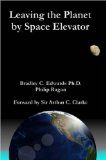

In a follow up to The Space Elevator, Bradley C. Edwards and Philip Ragan wrote Leaving the Planet by Space Elevator, which was published in 2006.
For more information about the space elevator, including the 2008 Space Elevator Challenge and the Elevator: 2010 challenge, check out The Spaceward Foundation’s site.













 Subscribe to blog posts using RSS