OrbitalHub

The place where space exploration, science, and engineering meet

Domain is for sale. $50,000,000.00 USD. Direct any inquiries to contact@orbitalhub.com.

Archive for the Robotics category

May 21, 2017

ExoMars Rover

Posted by


ESA dixit:

“The ExoMars Rover, developed by ESA, provides key mission capabilities: surface mobility, subsurface drilling and automatic sample collection, processing, and distribution to instruments. It hosts a suite of analytical instruments dedicated to exobiology and geochemistry research: this is the Pasteur payload.

The Rover uses solar panels to generate the required electrical power, and is designed to survive the cold Martian nights with the help of novel batteries and heater units. Due to the infrequent communication opportunities, only 1 or 2 short sessions per sol (Martian day), the ExoMars Rover is highly autonomous. Scientists on Earth will designate target destinations on the basis of compressed stereo images acquired by the cameras mounted on the Rover mast.

The Rover must then calculate navigation solutions and safely travel approximately 100 m per sol. To achieve this, it creates digital maps from navigation stereo cameras and computes a suitable trajectory. Close-up collision avoidance cameras are used to ensure safety.

The locomotion is achieved through six wheels. Each wheel pair is suspended on an independently pivoted bogie (the articulated assembly holding the wheel drives), and each wheel can be independently steered and driven. All wheels can be individually pivoted to adjust the Rover height and angle with respect to the local surface, and to create a sort of walking ability, particularly useful in soft, non-cohesive soils like dunes. In addition, inclinometers and gyroscopes are used to enhance the motion control robustness. Finally, Sun sensors are utilised to determine the Rover’s absolute attitude on the Martian surface and the direction to Earth.

The camera system’s images, combined with ground penetrating radar data collected while travelling, will allow scientists on-ground to define suitable drilling locations.The Rover subsurface sampling device will then autonomously drill to the required depth (maximum 2 m) while investigating the borehole wall mineralogy, and collect a small sample. This sample will be delivered to the analytical laboratory in the heart of the vehicle. The laboratory hosts four different instruments and several support mechanisms. The sample will be crushed into a fine powder. By means of a dosing station the powder will then be presented to other instruments for performing a detailed chemistry, physical, and spectral analyses.”

Video credit: ESA


  • Facebook
  • Google
  • Slashdot
  • Reddit
  • Live
  • TwitThis
September 25, 2015

Buoyant Rover

Posted by


NASA dixit:

“Researchers at NASA’s Jet Propulsion Laboratory are developing the Buoyant Rover for Under-Ice Exploration, a technology that could one day explore oceans under the ice layers of planetary bodies. The prototype was tested in arctic lakes near Barrow, Alaska.”

Video credit: NASA JPL


  • Facebook
  • Google
  • Slashdot
  • Reddit
  • Live
  • TwitThis


Credits: MDA


MDA (MacDonald, Dettwiler and Associates Ltd.) is a Canadian company that was incorporated in 1969 by two British Columbia entrepreneurs, John MacDonald and Werner Dettwiler. The company offers a broad spectrum of services. Currently, MDA is developing a Space Infrastructure Servicing (SIS) spacecraft that would operate as a refueling depot for communication satellites in geosynchronous orbit.


Geostationary communication satellites have to perform regular orbital stationkeeping maneuvers, which need delta-v of approximately 50 m/s/year (this translates into fuel consumption). As a result, the lifespan of a satellite is proportional to the amount of fuel it carries onboard, even if most satellites are capable of operating beyond this lifespan. MDA’s SIS system would extend the operational lifespan of these satellites and save satellite operators a lot of money (refueling a satellite would save the operators the cost of building and launching a new satellite).


A typical SIS mission profile not only includes satellite refueling, but also cleaning orbital slots by pushing dead satellites into graveyard orbits. This would also be a money saver because orbital slots are quite expensive.


However, there are challenges. The satellites currently operating are not designed to be serviced/refueled while on orbit (the Hubble Space Telescope is a notable exception). And this will make the refueling maneuver quite complicated… the servicing satellite has to remove a part of the thermal protection blanket of the target spacecraft before connecting to an internal fuel line.


In a March 15, 2011, press release, MDA announced that Intelsat S.A. entered into an agreement with MDA for the servicing of Intelsat’s operational satellites. On-orbit servicing is to be performed by a space-based service vehicle provided by MDA. From the press release:


“The SIS vehicle is expected to be the first of its kind, utilizing a sophisticated robotics and docking system. This system will be based on work that MDA has previously performed for NASA, the Canadian Space Agency and various Department of Defense agencies. The SIS vehicle’s robotic arm will not only be used in refueling, but could also be used to perform critical maintenance and repair tasks, such as releasing jammed deployable arrays and stabilizing or towing smaller space objects or debris. Intelsat, the world’s largest operator of commercial satellites in the geosynchronous arc, is expected to provide flight operations support for the SIS vehicle for the life of the mission.”


The services to be provided by MDA to Intelsat are estimated at more than US$280 million. In the June 17, 2011, press release, MDA also announced that it is extending by three months the requirements definition phase of its SIS initiative.


Needless to say, on-orbit servicing will be a very lucrative endeavor. It also has a strategic importance. Very expensive LEO observation satellites used by the military would benefit from such on-orbit services. Also, NASA is under a tremendous budget pressure. And this can be an answer to the question why NASA would move forward with its own on-orbit servicing initiative.


NASA will demonstrate in-orbit satellite refueling at the International Space Station. MDA-built Dextre, equipped with special tools, will cut through a satellite exterior shell and pump fuel into a mock satellite.


The first thing that comes to mind is that a NASA competition may put the MDA SIS system at risk. Does anyone remember the Avro Canada CF-105 Arrow?


  • Facebook
  • Google
  • Slashdot
  • Reddit
  • Live
  • TwitThis


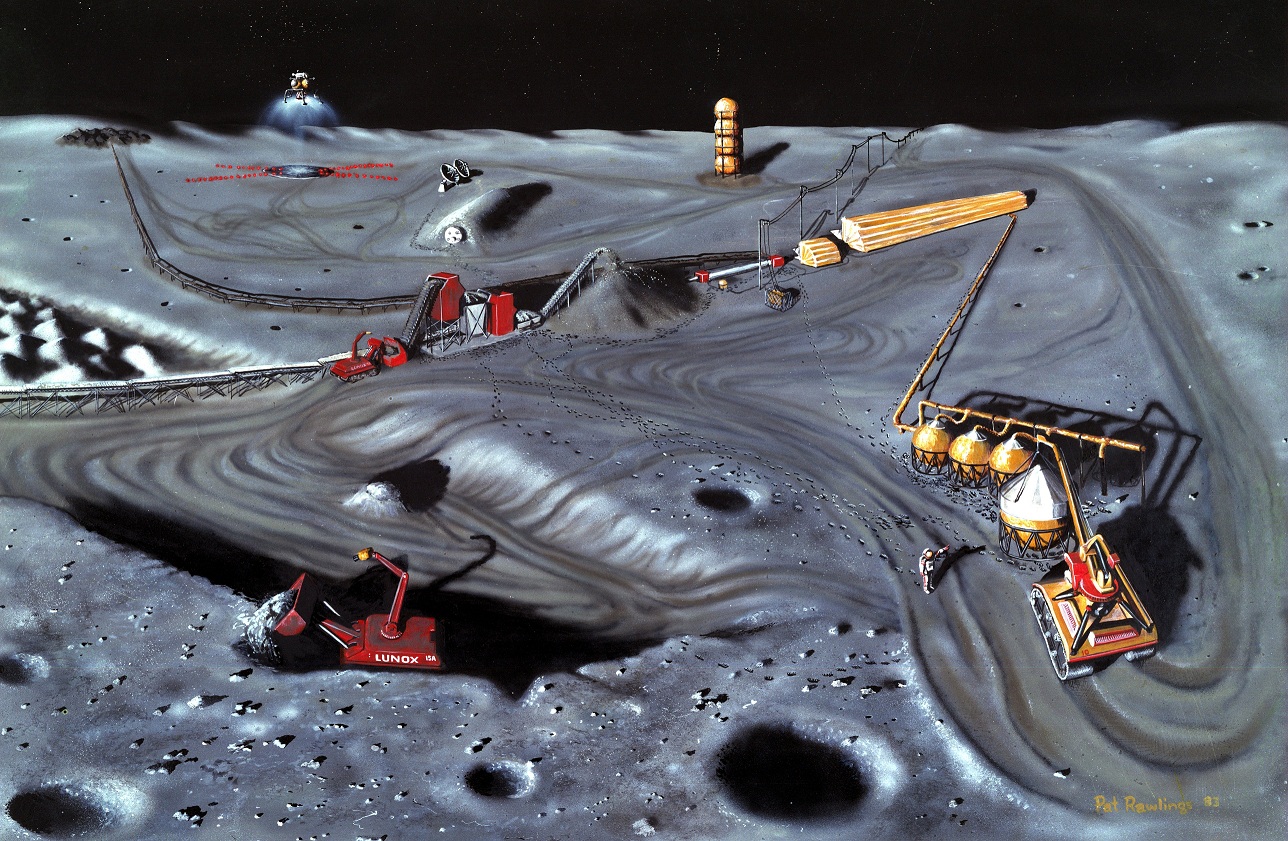
Credits: Pat Rawlings


Excavation is a necessary first step towards extracting resources from the lunar regolith and building human settlements on the moon. NASA’s Lunabotics Mining Competition is designed to promote the development of interest in lunar regolith mining, which is especially challenging due to the unique properties of the lunar regolith, reduced gravity, and vacuum.


A Canadian team took first place in the second edition of NASA’s Lunabotics Mining Competition. Team Production of Laurentian University of Sudbury, Ontario, consisted of 4th year mechanical engineering students. The team had to compete with teams from 40 other universities from the U.S., Canada, India, Chile, and Bangladesh.


The competition was conducted at Kennedy Space Center, from May 23 to May 28, 2011. The minimum excavation requirement was 10 kilograms and the maximum excavation hardware mass was 80 kilograms. The lunabots performed in an enclosure (a.k.a. Lunarena) filled with compacted lunar regolith simulant.


The Canadian lunabot was able to excavate 237.4 kilograms of synthetic lunar regolith in 15 minutes. The team won a $5,000 cash prize and VIP passes to the final launch of the Space Shuttle Atlantis in July.


  • Facebook
  • Google
  • Slashdot
  • Reddit
  • Live
  • TwitThis
November 13, 2009

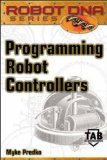
Programming Robot Controllers

Posted by


In a world dominated by personal computers, there is room left for applications running on microcontrollers. Beginning with home appliances and ending with robotic manipulators used in space missions, microcontrollers are still the optimal choice of many system designers. It seems that in computer-land you do not have to be big, strong, and/or fast in order to be smart… there are even examples of Kalman filter implementations running on microcontrollers.


Today I recommend you a book on programming microcontrollers – Programming Robot Controllers. The book focuses on using microcontrollers for robot control and has the declared goal to provide robot designers with the knowledge and the tools that will help guarantee that his/her robot will perform to expectation and specification and can be easily modified.


Myke Predko, the author, uses the Microchip PICmicro PIC16F627 chip for the example circuits presented in the book. Despite the modest performances of the microcontroller (PIC16F627 is a 18-pin device, providing 1K instruction space and 68 bytes of variable memory, two 8-bit timers, a 16-bit timer, serial communications, and a single-vector interrupt capability), it is very popular for robot applications. Assembly language enthusiasts might be a little bit disappointed because the code examples in the book are written in C. But there is an advantage to that… if you want to port the robot code, the compiler will do most of the work for you.


The author introduces three different spectrums in describing how software is written for robots. Depending on the requirements for the code response/execution speed, the code can be biologic, mechalogic, and elelogic. Don’t bother to look up the last two in the dictionary… they are new terms. In a nutshell, the biologic code makes the high-level decisions providing the high-level intelligence demonstrated by the robot, the mechalogic code controls the mechanical devices built into the robot, and the elelogic code provides intercomputer communications and some interface and output functions.


After an introduction focused on the specifics of software development for microcontrollers and a detailed description of the microcontroller itself, the book presents devices that are external to the microcontroller and how they can be integrated into a general robot architecture: RS-232 interfaces, LEDs, LCDs, IR sensors, sound sensors, motor controllers, odometers, and radio control servos. The author points out that it is easy to build a robot, but it is much more difficult to get it to work properly or as expected. The conclusion is that designing the robot system is an important step of the process.


If you plan to build your own exploration rover, design a micro-satellite bus, or put together a robot manipulator, Programming Robot Controllers is a good book to start with.


  • Facebook
  • Google
  • Slashdot
  • Reddit
  • Live
  • TwitThis