OrbitalHub

The place where space exploration, science, and engineering meet

Domain is for sale. $50,000,000.00 USD. Direct any inquiries to contact@orbitalhub.com.

Archive for the Space Exploration category

February 21, 2009

Carnival of Space #91

Posted by


Credits: NASA/Jack Pfaller


Carnival of Space, edition 91, is hosted by Brian Wang at Next Big Future.


This week you can read about recent statistical treatments of the Drake Equation, the Texas Fireball, liquid water on Mars, the business, law, and economics of the new Space Age, the early Shuttle manipulator, sand dunes on Mars, and much more.


OrbitalHub has submitted a post about the Dawn mission. The Dawn spacecraft is currently performing the Mars flyby phase of its mission. The purpose of the Mars flyby is to alter the trajectory of the spacecraft in order to rendezvous with its first scientific target in the main asteroid belt.


  • Facebook
  • Google
  • Slashdot
  • Reddit
  • Live
  • TwitThis


Credits: NASA/MSFC


Solar sails have emerged as a revolutionary propulsion system for space travel. Due to increased interest in both theoretical and experimental research, the benefits of solar sailing have become clear and compelling.


Two leading experts in solar sail propulsion, Gregory Matloff and Les Johnson, have agreed to share their knowledge about this exciting topic with OrbitalHub readers.


Gregory Matloff teaches physics at the New York City College of Technology and consults for NASA’s Marshall Space Flight Center. Les Johnson is a physicist at NASA’s Marshall Space Flight Center, where he serves as the Deputy Manager of the Advanced Concepts Office.


DJ: From the whole range of space technology-related fields of research, why was it that solar sails attracted your attention?
Gregory Matloff: I was attracted to solar sailing because it is an example of space propulsion that requires no fuel. As such, it has the potential to achieve higher velocities at less cost.
Les Johnson: They are simple, elegant and very practical in that they do not require any fuel. We are extremely limited in our exploration of space because of our lack of efficient propulsion. Sails, which require no fuel, will enable some science and exploration missions that are currently impossible (using only chemical rockets).


DJ: In the Solar Sails book, you have presented the problems and limitations of chemical, nuclear, and ion rocket propulsion. Why do you think that, despite these limitations, the solar sail has not yet been adopted as a means of propulsion for interplanetary robotic missions?
G.M.: Solar sails have been slower to achieve operational readiness for a number of reasons. First, space agencies have developed vast rocket-based infrastructures. We simply have more experience with rockets. Second, rockets work on Earth as well as in space. We needed a lot of in-space experience before sail testing in space could begin. Third, space-mission planners are a conservative lot. They (correctly) will not risk their payloads to a sail until the technological readiness of solar sailing is sufficiently advanced.
L.J.: The reasons are simple. 1) Any mission conducted in space is expensive. When you are the owner of a multi-million dollar spacecraft, you tend to become very conservative and risk averse. Even though there are many benefits to be gained from using a solar sail, it is new and therefore risky. We’ve flown hundreds, if not thousands, of rocket engines and not a single solar sail. Would you risk your investment on a new (risky) propulsion system? 2) Anytime you use a new technology, the first flight will be more expensive. If you are paying for a space mission and your budget is limited, you must often choose between what is best (like a solar sail) and what is good enough (like the tried and true rocket engine). Tried and true seems to be the choice right now.
Let me be clear. This may be penny wise but it is pound foolish. If solar sails become an “off the shelf” option like some rocket engines, then we will be going new places and learning things that we simply cannot otherwise accomplish with “tried and true” technologies.


DJ: How many solar sail designs have been considered to date, and which one do you think will prove to be the most successful in the future?
G.M.: There are six or seven different sail designs. These include rectangular (or square), spinning-disc, heliogyro, parachute, hollow-body, parabolic and hoop sails. All these and various other configurations may find application to different missions.
L.J.: There is no clear answer here. NASA and DLR selected the square, 3-axis stabilized approach. The Russians, with their Znamya, appear to prefer a spinning solar sail. Others prefer the heliogyro. All appear to be feasible.


DJ: How well suited is the solar sail for manned space missions?
G.M.: Unfurled near Earth, solar-sails are slow to accelerate but can reach high velocities. Current Earth-launched sail designs could be uprated and enlarged to carry freight to support manned interplanetary expeditions. Future thinner, heat-tolerant and radiation resistant solar sails manufactured in space could result in faster interplanetary transfers and even slow interstellar travel.
L.J.: Any solar sail that we can foresee building in the near term will be useful only for robotic missions. These sails will be big enough — some nearly half a mile on a side! To get the materials and sizes required for a human mission will require advances in materials technology that are difficult to imagine happening anytime soon. Though I am optimistic that they will eventually occur, we prefer the incremental approach. We should begin with using sails to propel robots and move toward a capability for humans.


DJ: How do you think space propulsion systems will evolve in the near future? To what extent will they include solar sails?
G.M.: Future solar-sail evolution requires advances in space infrastructure — notably in-space manufacturing, and materials science. More theoretical work on space environment effects and theories of devices such as the perforated solar sail is also required. Also, space-based solar-pumped lasers could be developed to allow sail acceleration farther from the Sun.
L.J.: I believe we won’t be giving up chemical rockets anytime soon. We will see more and more flights of solar electric propulsion after the (assumed) success of the DAWN mission, which is currently enroute to asteroids Ceres and Vesta. THEN we might see the use of solar sails begin.


Les Johnson and Gregory L. Matloff are two of the co-authors of the book Solar Sails: A Novel Approach To Interplanetary Travel. A good review of the book was written by Paul A. Gilster of Centauri Dreams. I invite everyone to read it.


  • Facebook
  • Google
  • Slashdot
  • Reddit
  • Live
  • TwitThis
February 15, 2009

Carnival of Space #90

Posted by


Credits: NASA


The Valentine’s Day Edition of the Carnival of Space is hosted by Bruce Cordell at 21ST CENTURY WAVES.

The collision of the Iridium 33 and Cosmos 2251 satellites has sent ripples across the space blogosphere and debris into low Earth orbit. At this Carnival you can read about shielding interstellar spaceships, saving the Space Shuttle, Pluto, visualizing constellations, lakes on Titan, type III Kardashev civilizations, and much more.


OrbitalHub has submitted a post about the Japan Experiment Module a.k.a. Kibo. The Japanese Experiment Module (JEM) is the first contribution of the Japan Aerospace Exploration Agency (JAXA) to the International Space Station (ISS) program.


  • Facebook
  • Google
  • Slashdot
  • Reddit
  • Live
  • TwitThis
February 11, 2009

Mars 500

Posted by


Credits: ESA – S. Corvaja


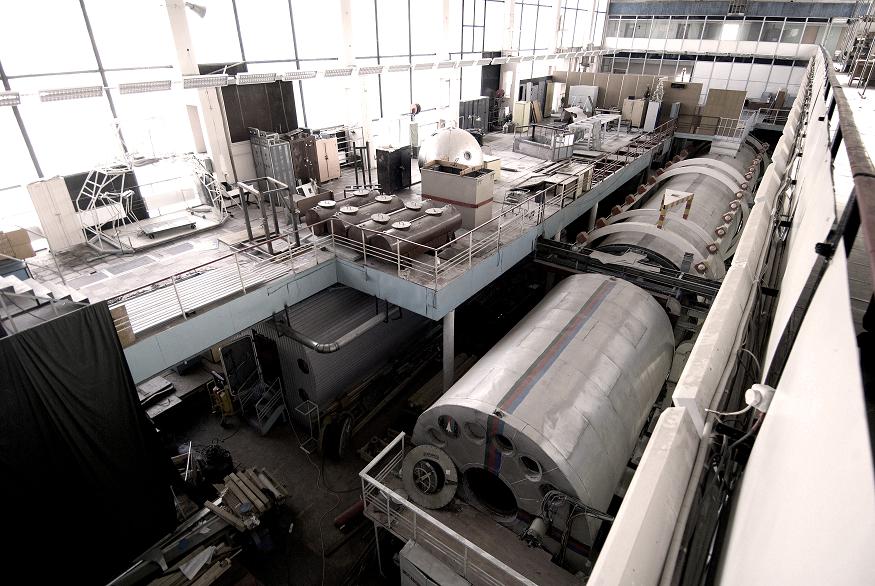
The Mars500 experiment is a cooperative project between the European Space Agency’s Directorate of Human Spaceflight and the Russian Institute for Biomedical Problems (IBMP).


The experiment will be conducted inside a special facility at the IBMP in Moscow.


Mars500 is essential for the preparation of human missions to Mars, as the data, knowledge, and experience accumulated during the experiment will help scientists investigate the human factors of this type of mission.


Many aspects of long duration spaceflights are targeted by this study: crew composition, the influence of isolation on sleep, mood, and mental health, the impact of different personalities, cultural background, and motivation of the crew members, and the effects of stress on health and the immune system.


There is one 150-day simulation to be conducted (that can be followed by an additional 150-day study) before the full 520-day simulation. The full simulation follows the profile of a real mission to Mars, which contains an exploration phase that has to be performed by the crew of six selected for the experiment.


During the experiments, the crews will have a diet identical to the one that the ISS crews have and communication with the outside world will involve a delay (as in the real conditions of a space mission, when the spacecraft and the mission control are millions of kilometers away from each other).


The crew will be completely isolated, and they will have to handle all of the critical situations for the duration of the experiment. The crew will speak English and Russian, and have experience in medicine, biology, and engineering.
 

Credits: ESA – S. Corvaja


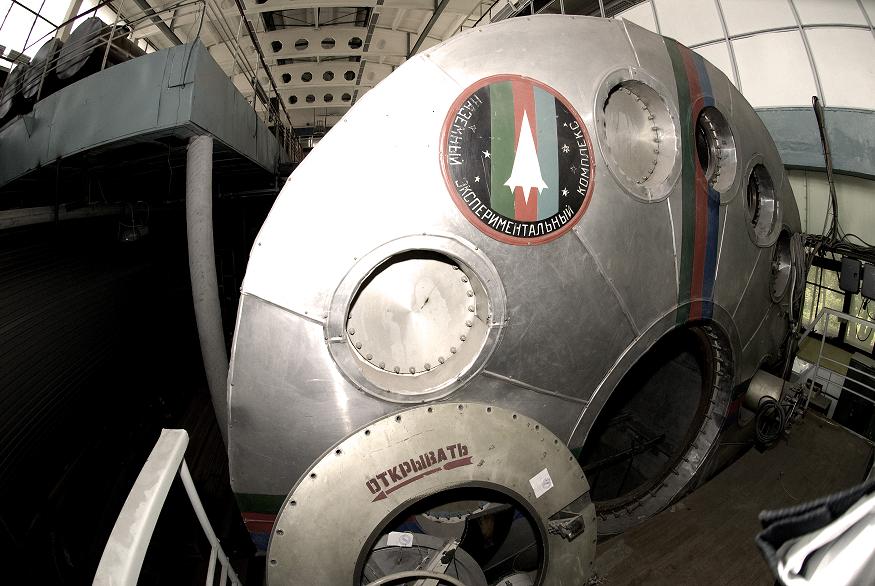
The facility at IBMP is known as the Ground-based Experimental Complex (GEC or NEK in Russian). Besides the isolation facility (or the mockup of the habitable modules of a spacecraft), the facility also contains technical facilities, offices, and an operations room.


The isolation facility contains four interconnected modules, which are used by the crew for daily activities.


It also contains a module that will simulate the Martian landscape and it will be used for activities on the surface of Mars during the simulated landing.


The four modules are designated as the medical module, the living quarters, the Mars landing module, and the storage module. The medical module will be used for routine medical examinations, and eventually for complex medical investigations in the case of any crew member becoming ill. The living quarters module contains individual compartments for the crew members, and also a living room, and a kitchen. The control room will also be part of this module.


The Mars landing module will accommodate the landing crew during the orbiting of Mars phase of the mission. Three of the crew members will have to live and work inside this module for up to 3 months. The storage module contains a refrigerator for food storage, a storage compartment for non-perishable food, a greenhouse, a gym, a bathroom, and even a sauna.


The start of the full 520-day study is planned for late 2009, when a six-member crew will be sealed behind the entry hatch in order to live and work in the conditions of a complete Mars mission.


For more information about the Mars500 project, check out the dedicated page on the IBMP web site.



  • Facebook
  • Google
  • Slashdot
  • Reddit
  • Live
  • TwitThis
February 8, 2009

Carnival of Space #89

Posted by


Credits: NASA-JPL


The Carnival of Space (The Lunar Edition) is hosted at the Moon Society Blog by Darnell Clayton.


At the lunar edition of the Carnival, you can read about Skylon Space Planes, the history of lunar exploration, fresh craters on Mars, Pluto the (ex)planet, the Drake Equation, and much more.


OrbitalHub has submitted a post about the GRACE mission.


  • Facebook
  • Google
  • Slashdot
  • Reddit
  • Live
  • TwitThis
February 5, 2009

GRACE Or Why Tom Is Chasing Jerry In Orbit

Posted by


Credits: NASA-JPL


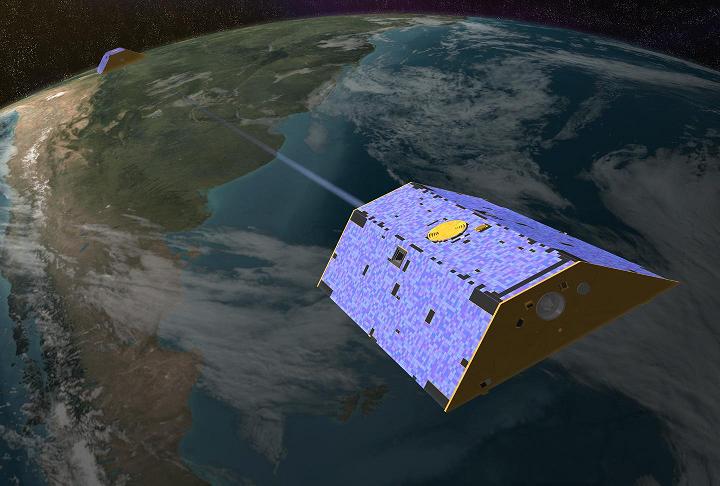
While the preparations for ESA’s GOCE mission are under way, NASA already has its own gravity mapping mission called GRACE, which was launched in March 2002.


NASA teamed up with the German Space Agency to launch GRACE (Gravity Recovery And Climate Experiment).


GRACE currently provides detailed measurements of the Earth’s gravity field, and these measurements help scientists better understand the effects of gravity on global climate change, oceans, and land masses. This will lead to better predictions about changes in water supply, weather forecasts, and natural hazards.


The data gathered by GRACE has been used to create the best map to date of Earth’s gravitational field. While common sense and introductory physics textbooks tell us that the weight of an object should not have different values at different locations on the surface of the Earth, measurements taken indicate that there are areas where gravity is slightly stronger or weaker than the average. Many of the peaks or valley on the maps put together by scientists can be attributed to surface features, like ridges or mountains. However, there are cases when the variations cannot be explained, and they might be related to high or low sub-surface densities.


The maps compiled from the scientific data returned by GRACE are 1,000 times more accurate then maps previously produced.


The GRACE mission consists of two satellites flying one behind another in near circular orbits at an altitude of 460 km and about 220 km apart. The satellites have really neat nicknames: Tom and Jerry. The leading satellite (that would be Jerry) sends a microwave signal to the trailing satellite (Tom) to precisely measure the distance between the two. GRACE can detect very small changes in the distance that separates the two spacecraft, down to one-tenth of the width of a human hair. The Global Positioning System (GPS) onboard Tom and Jerry is used to determine the precise location of the measurement taken.


Credits: NASA-JPL


What is the science involved in taking these measurements? When a satellite passes over an area where the gravity is stronger, it will experience a stronger gravitational pull and increase its speed. Conversely, the speed of the satellite will decrease when passing over areas with weaker gravity.


Going back to the satellites, the variations in the gravity field will cause the distance between the two spacecraft to vary slightly. On the ground, the measurements of the distance between the GRACE satellites are translated into variations of the gravity field, and this is how the maps are compiled.


GRACE maps the entire gravity field of Earth every thirty days. The snapshots allow the detection of changes in the polar ice sheets, sea level, ocean currents, the Earth’s water cycle, and even the interior structure of the Earth.


The list of applications is impressive. Measurements over ice sheets can indicate decreases in the ice sheet’s mass. Decreases in gravity can also indicate drying river basins. And not just changes in water above the ground can be measured, but also water stored in aquifers beneath the surface.


For more information about GRACE check out NASA’s web site or the dedicated web page at the University of Texas at Austin.


  • Facebook
  • Google
  • Slashdot
  • Reddit
  • Live
  • TwitThis