OrbitalHub

The place where space exploration, science, and engineering meet

Domain is for sale. $50,000,000.00 USD. Direct any inquiries to contact@orbitalhub.com.

July 20, 2017

August’s Total Solar Eclipse

Posted by


Wikipedia dixit:

“As seen from the Earth, a solar eclipse is a type of eclipse that occurs when the Moon passes between the Sun and Earth, and the Moon fully or partially blocks (“occults”) the Sun. This can happen only at new moon when the Sun and the Moon are in conjunction as seen from Earth in an alignment referred to as syzygy. In a total eclipse, the disk of the Sun is fully obscured by the Moon. In partial and annular eclipses, only part of the Sun is obscured.

If the Moon were in a perfectly circular orbit, a little closer to the Earth, and in the same orbital plane, there would be total solar eclipses every month. However, the Moon’s orbit is inclined (tilted) at more than 5 degrees to the Earth’s orbit around the Sun (see ecliptic), so its shadow at new moon usually misses Earth. Earth’s orbit is called the ecliptic plane as the Moon’s orbit must cross this plane in order for an eclipse (both solar as well as lunar) to occur. In addition, the Moon’s actual orbit is elliptical, often taking it far enough away from Earth that its apparent size is not large enough to block the Sun totally. The orbital planes cross each other at a line of nodes resulting in at least two, and up to five, solar eclipses occurring each year; no more than two of which can be total eclipses. However, total solar eclipses are rare at any particular location because totality exists only along a narrow path on the Earth’s surface traced by the Moon’s shadow or umbra.

An eclipse is a natural phenomenon. Nevertheless, in some ancient and modern cultures, solar eclipses have been attributed to supernatural causes or regarded as bad omens. A total solar eclipse can be frightening to people who are unaware of its astronomical explanation, as the Sun seems to disappear during the day and the sky darkens in a matter of minutes.

Since looking directly at the Sun can lead to permanent eye damage or blindness, special eye protection or indirect viewing techniques are used when viewing a solar eclipse. It is technically safe to view only the total phase of a total solar eclipse with the unaided eye and without protection; however, this is a dangerous practice, as most people are not trained to recognize the phases of an eclipse, which can span over two hours while the total phase can only last a maximum of 7.5 minutes for any one location. People referred to as eclipse chasers or umbraphiles will travel to remote locations to observe or witness predicted central solar eclipses.”

Video credit: NASA Goddard
 

July 19, 2017

Epimetheus Revealed

Posted by


NASA dixit:

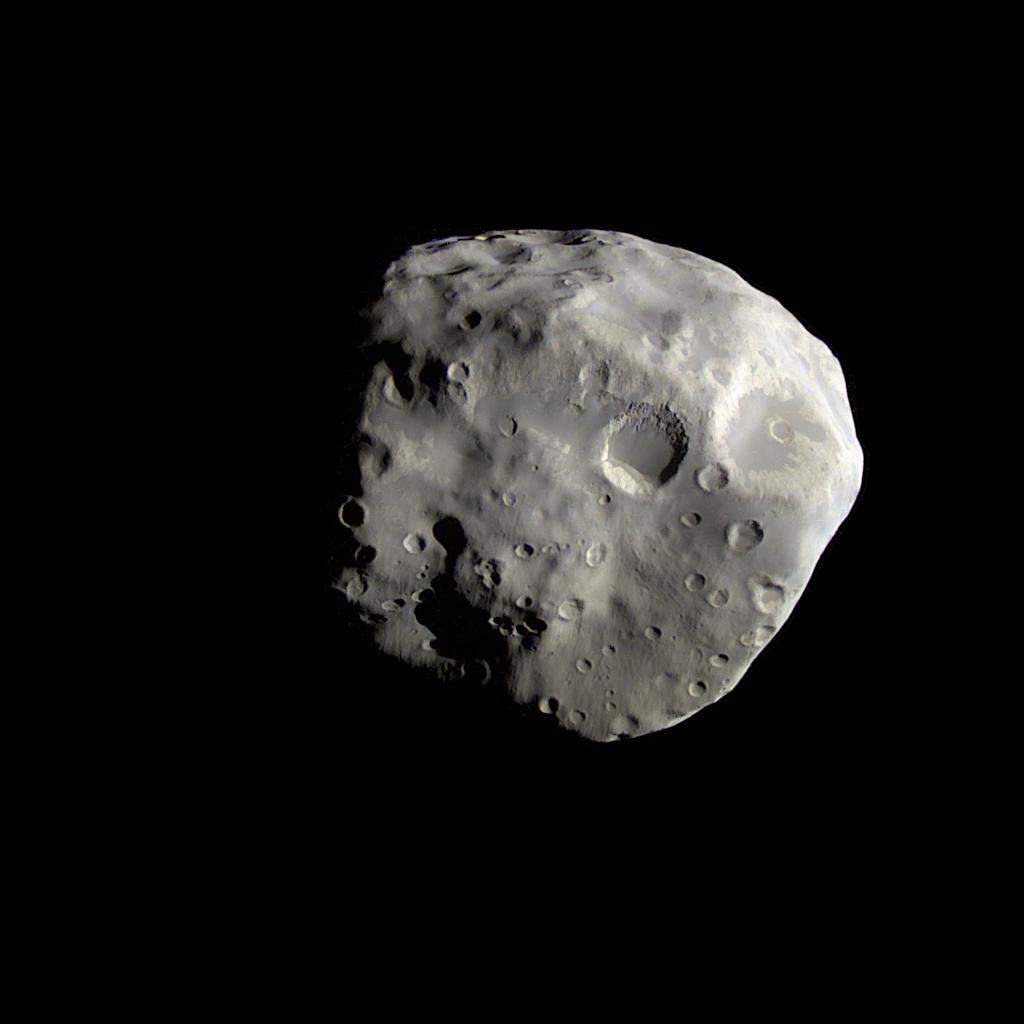
“December 3, 2007. The Cassini spacecraft’s close flyby of Epimetheus in December 2007 returned detailed images of the moon’s south polar region. The view shows what might be the remains of a large impact crater covering most of this face, and which could be responsible for the somewhat flattened shape of the southern part of Epimetheus (116 kilometers, or 72 miles across) seen previously at much lower resolution.

The image also shows two terrain types: darker, smoother areas, and brighter, slightly more yellowish, fractured terrain. One interpretation of this image is that the darker material evidently moves down slopes, and probably has a lower ice content than the brighter material, which appears more like “bedrock.” Nonetheless, materials in both terrains are likely to be rich in water ice.

The images that were used to create this enhanced color view were taken with the Cassini spacecraft narrow-angle camera. The views were obtained at a distance of approximately 37,400 kilometers (23,000 miles) from Epimetheus and at a Sun-Epimetheus-spacecraft, or phase, angle of 65 degrees. Image scale is 224 meters (735 feet) per pixel.”

“After almost 20 years in space, NASA’s Cassini spacecraft begins the final chapter of its remarkable story of exploration: its Grand Finale. Between April and September 2017, Cassini will undertake a daring set of orbits that is, in many ways, like a whole new mission. Following a final close flyby of Saturn’s moon Titan, Cassini will leap over the planet’s icy rings and begin a series of 22 weekly dives between the planet and the rings.

No other mission has ever explored this unique region. What we learn from these final orbits will help to improve our understanding of how giant planets – and planetary systems everywhere – form and evolve.

On the final orbit, Cassini will plunge into Saturn’s atmosphere, sending back new and unique science to the very end. After losing contact with Earth, the spacecraft will burn up like a meteor, becoming part of the planet itself.

Cassini’s Grand Finale is about so much more than the spacecraft’s final dive into Saturn. That dramatic event is the capstone of six months of daring exploration and scientific discovery. And those six months are the thrilling final chapter in a historic 20-year journey.”

Image credit: NASA


July 19, 2017

BepiColombo

Posted by


ESA dixit:

“BepiColombo is Europe’s first mission to Mercury. It will set off in 2018 on a journey to the smallest and least explored terrestrial planet in our Solar System. When it arrives at Mercury in late 2025, it will endure temperatures in excess of 350 °C and gather data during its 1 year nominal mission, with a possible 1-year extension. The mission comprises two spacecraft: the Mercury Planetary Orbiter (MPO) and the Mercury Magnetospheric Orbiter (MMO). BepiColombo is a joint mission between ESA and the Japan Aerospace Exploration Agency (JAXA), executed under ESA leadership.”

Video credit: ESA


July 16, 2017

Flying by Epimetheus

Posted by


NASA dixit:

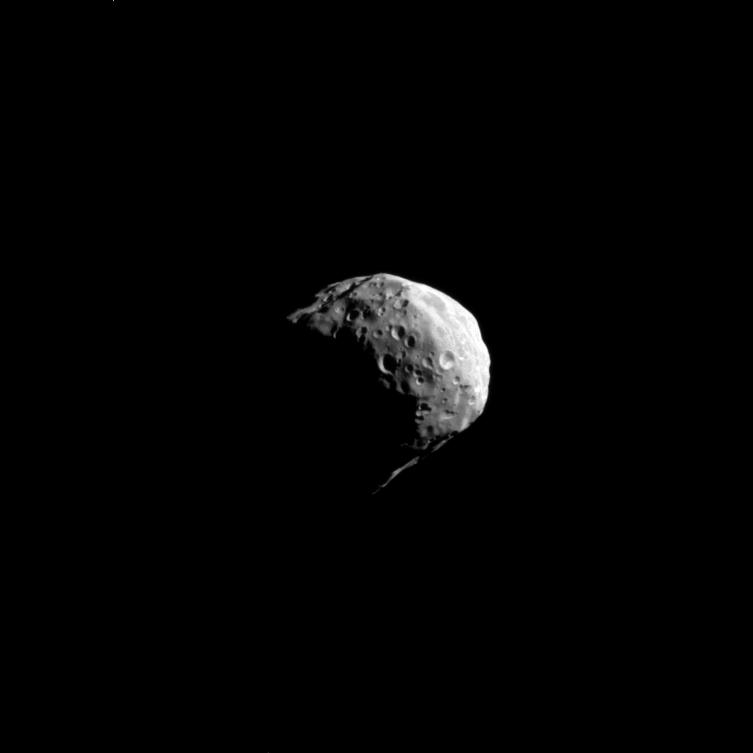
“April 7, 2010. Swinging by Saturn’s small moon Epimetheus, Cassini snapped this shot during the spacecraft’s flyby. Lit terrain seen here is on the Saturn-facing side of Epimetheus (113 kilometers, or 70 miles across). North on Epimetheus is up and rotated 27 degrees to the left.

The image was taken in visible light with the Cassini spacecraft narrow-angle camera. The view was acquired at a distance of approximately 87,000 kilometers (54,000 miles) from Epimetheus and at a Sun-Epimetheus-spacecraft, or phase, angle of 69 degrees. Image scale is 519 meters (1,703 feet) per pixel.”

“After almost 20 years in space, NASA’s Cassini spacecraft begins the final chapter of its remarkable story of exploration: its Grand Finale. Between April and September 2017, Cassini will undertake a daring set of orbits that is, in many ways, like a whole new mission. Following a final close flyby of Saturn’s moon Titan, Cassini will leap over the planet’s icy rings and begin a series of 22 weekly dives between the planet and the rings.

No other mission has ever explored this unique region. What we learn from these final orbits will help to improve our understanding of how giant planets – and planetary systems everywhere – form and evolve.

On the final orbit, Cassini will plunge into Saturn’s atmosphere, sending back new and unique science to the very end. After losing contact with Earth, the spacecraft will burn up like a meteor, becoming part of the planet itself.

Cassini’s Grand Finale is about so much more than the spacecraft’s final dive into Saturn. That dramatic event is the capstone of six months of daring exploration and scientific discovery. And those six months are the thrilling final chapter in a historic 20-year journey.”

Image credit: NASA


July 16, 2017

Mars Pathfinder 20th Anniversary

Posted by


NASA dixit:

“On July 4, 1997, NASA’s Mars Pathfinder lander and Sojourner rover successfully landed on the Red Planet utilizing a revolutionary airbag landing system. This special 20th anniversary show chronicles the stories and the people behind the groundbreaking mission that jump-started 20 years of continuous presence at Mars. Guests include: Former NASA Administrator Dan Goldin, former JPL Directors Ed Stone and Charles Elachi, JPL Director Michael Watkins and Pathfinder mission team members Jennifer Trosper and Brian Muirhead.”

Video credit: NASA


July 10, 2017

Big and Small Before Rings

Posted by


NASA dixit:

“March 24, 2010. Saturn’s moon Rhea looms “over” a smaller and more distant Epimetheus against a striking background of planet and rings. The two moons aren’t actually close to each other. The view was obtained at a distance of approximately 1.2 million kilometers (746,000 miles) from Rhea and 1.6 million kilometers (994,000 miles) from Epimetheus.

Lit terrain seen here is in the area between the trailing hemisphere and anti-Saturn side of Rhea (1,528 kilometers, or 949 miles across). Lit terrain seen on Epimetheus (113 kilometers, or 70 miles across) is mostly on the Saturn-facing side. This view looks toward the sunlit side of the rings from just above the ringplane.

The image was taken in visible green light with the Cassini spacecraft narrow-angle camera. Image scale is 7 kilometers (4 miles) per pixel on Rhea and 10 kilometers (6 miles) per pixel on Epimetheus.”

“After almost 20 years in space, NASA’s Cassini spacecraft begins the final chapter of its remarkable story of exploration: its Grand Finale. Between April and September 2017, Cassini will undertake a daring set of orbits that is, in many ways, like a whole new mission. Following a final close flyby of Saturn’s moon Titan, Cassini will leap over the planet’s icy rings and begin a series of 22 weekly dives between the planet and the rings.

No other mission has ever explored this unique region. What we learn from these final orbits will help to improve our understanding of how giant planets – and planetary systems everywhere – form and evolve.

On the final orbit, Cassini will plunge into Saturn’s atmosphere, sending back new and unique science to the very end. After losing contact with Earth, the spacecraft will burn up like a meteor, becoming part of the planet itself.

Cassini’s Grand Finale is about so much more than the spacecraft’s final dive into Saturn. That dramatic event is the capstone of six months of daring exploration and scientific discovery. And those six months are the thrilling final chapter in a historic 20-year journey.”

Image credit: NASA