OrbitalHub

The place where space exploration, science, and engineering meet

Domain is for sale. $50,000,000.00 USD. Direct any inquiries to contact@orbitalhub.com.


SpaceX has set no earlier than May 19, 2026, for the first flight of Starship in its Version 3 configuration, a significant step in the development of the vehicle that NASA has contracted to land astronauts on the Moon and that SpaceX intends to use for missions to Mars. The upcoming flight, designated Flight 12, will lift off from Starbase in South Texas with a window opening around 5:30 to 6:30 p.m. ET, with a backup opportunity on May 20 if weather or technical issues require it.

The Version 3 configuration represents the most capable iteration of the Starship and Super Heavy system yet built. The vehicle stands approximately 150 meters tall with the upper stage stacked on the booster, making it the largest flying object ever constructed. The Super Heavy booster carries 33 Raptor engines — the full complement — compared to the 33-engine configuration that flew in earlier tests, but V3 introduces upgraded engines with higher thrust output and improved longevity. The upper stage, Ship 39, carries the same engine count as its predecessors but benefits from the thermal protection and reusability improvements that the SpaceX team has refined through the program’s rapid iteration cycle.

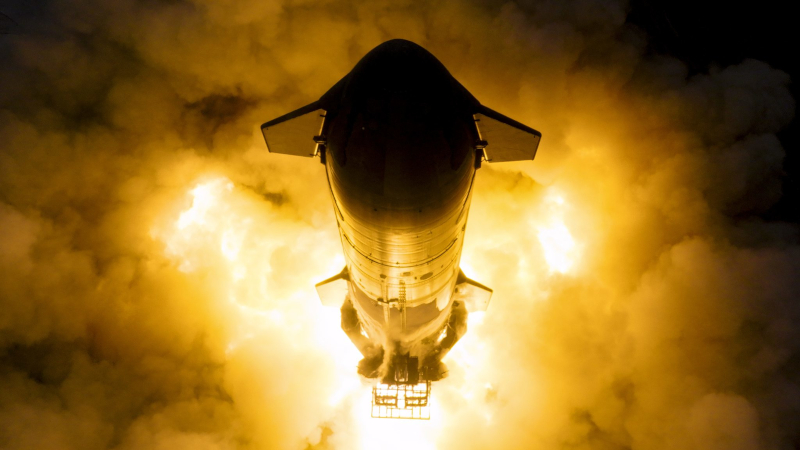
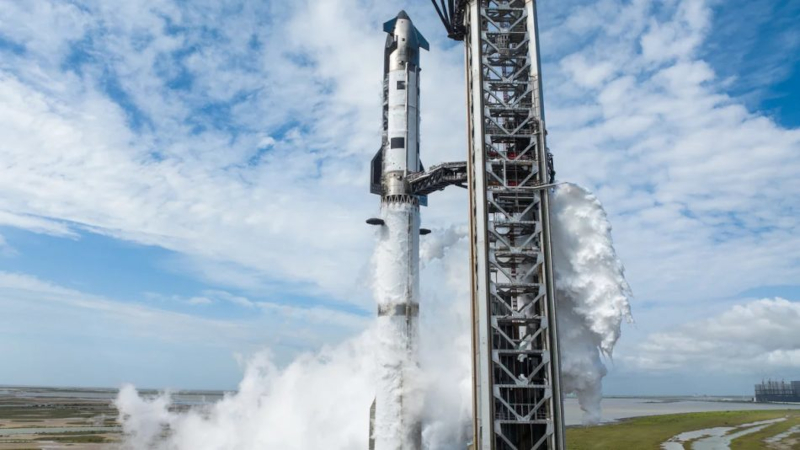
On May 11 and 12, SpaceX completed a full launch rehearsal that included propellant loading and a 33-engine static fire of Booster 19 with Ship 39 stacked on top. The test was the first time V3 hardware had been subjected to a full-duration static fire with all engines firing simultaneously, and it verified the vehicle’s readiness for flight conditions. The rehearsal included loading cryogenic propellants — liquid oxygen and liquid methane — into both stages, a process that takes hours and involves managing thermal gradients and boil-off rates that are significantly more complex for a vehicle of Starship’s scale than for any prior rocket.

The May 19 target has been in development for several weeks. SpaceX had originally planned an earlier V3 debut but chose to extend the testing and validation phase after discovering a hardware issue during pre-flight inspections. The conservative approach reflects a pattern the company has followed throughout the Starship program: when something does not look right, the team stops, diagnoses, and fixes rather than proceeding and hoping for the best. The strategy has produced a flight rate that is slower than early projections suggested, but it has also produced a vehicle that, by the time it flies, has been tested against the conditions it will actually face.

Flight 12 will be the first Starship flight of 2026 and the twelfth overall test flight in the program’s history. SpaceX has been flying approximately one Starship mission every few months as the vehicle matures, with each flight serving as both a test of new hardware and a demonstration of capabilities that have been validated in previous flights. The Version 3 hardware will attempt to complete the full mission profile: a full-duration burn of both stages, a controlled descent of the booster back toward the launch site where it will be caught by the mechanical arm system, and an upper stage that will perform a controlled splashdown in the Indian Ocean after completing one or more orbits of Earth.

The vehicle’s role in NASA’s Artemis program gives the program a significance that extends beyond SpaceX’s own ambitions. The Human Landing System contract that NASA awarded to Starship requires the vehicle to demonstrate crewed lunar landing capability before astronauts from the Artemis III mission descend to the lunar surface. That demonstration is years away, but the hardware being tested in the V3 flights is the same hardware that will eventually attempt the lunar descent. Each test flight, even if it ends in a loss of vehicle, produces data that refines the engineering and reduces the risk of the crewed mission later.

The May 19 window is specific enough that it suggests the team has high confidence in the timeline, but not so specific that it implies a guarantee. SpaceX has shown, repeatedly, that it will delay a launch rather than fly a vehicle it has reason to doubt. For a rocket program that has redefined what rapid iteration means in aerospace, the patience to wait for the right conditions is not a contradiction — it is the discipline that makes the iteration sustainable.

Super Heavy’s 33-engine first stage is a study in the engineering trade-offs that define modern launch vehicle design. Each Raptor engine produces a specific thrust at sea level, and the total thrust at liftoff is the sum of all 33 engines burning simultaneously. The challenge is not generating that thrust but managing the physical interactions between engines, the structure, and the propellant flow at the scale Super Heavy requires.

The Raptor engine uses a full-flow staged combustion cycle, which means that all of the fuel and oxidizer are gasified before they enter the combustion chamber. This approach produces very high efficiency — specific impulse in the range of 380 seconds at sea level — but it requires turbomachinery that can handle extreme temperatures and pressures without failing. The engineering challenge is not just the performance but the durability: an engine that will be fired multiple times must maintain its tolerances across many cycles of heating and cooling, which is why the V3 engines include upgrades to materials and cooling passages that extend engine life.

At liftoff, the structural loads on Super Heavy are enormous. The vehicle weighs approximately 4,000 metric tons at full propellant, and the acceleration from zero to thousands of meters per second in a few minutes requires structural integrity in the airframe that can withstand both the axial loads along the body and the bending moments produced by the aerodynamic forces acting along the vehicle’s length. The stainless steel construction that SpaceX chose for Starship is not a cost-cutting measure but an engineering decision that trades away the weight efficiency of carbon composites for the fracture toughness and reusability of a material that can survive the thermal and structural extremes of repeated flights without developing the microcracks that compromise composite structures over time.

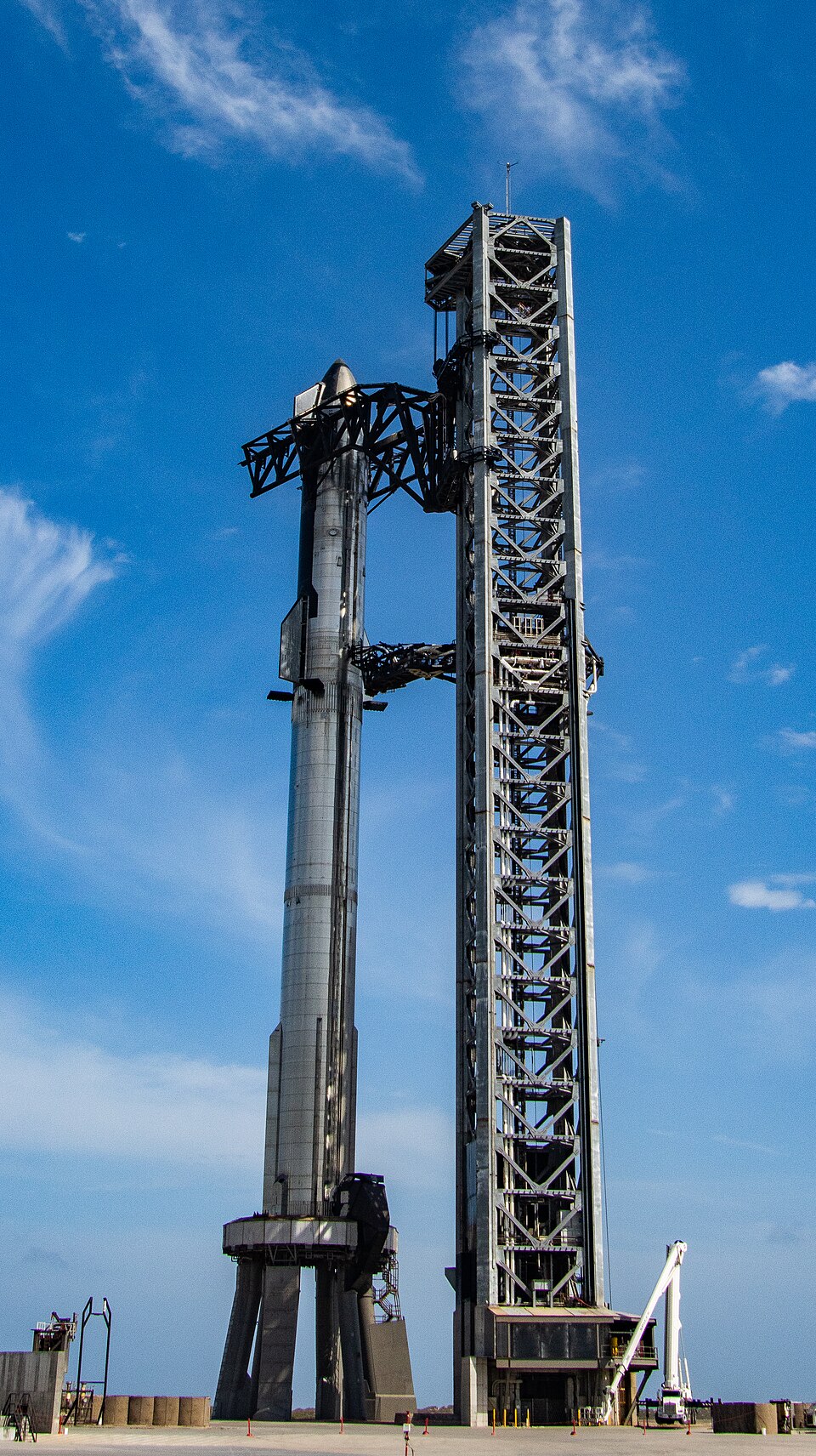
The catch mechanism — the mechanical arms at the launch tower that are designed to catch the returning booster rather than landing it on legs — remains one of the more ambitious elements of the Starship reusability architecture. The system requires precise trajectory control during descent, a structure on the booster that can interface with the catcher arms, and software that can execute the maneuver reliably at the end of a ballistic arc. The May 19 flight will be the first V3 attempt at this catch, and whether the system works on the first try or requires iteration will define the timeline for the operational reusability that SpaceX has designed the vehicle around.


  • Facebook
  • Google
  • Slashdot
  • Reddit
  • Live
  • TwitThis


The next integrated test of Starship is positioned as a configuration transition rather than a routine increment. Flight 12, targeting early to mid-May 2026 from Starbase Orbital Launch Pad 2, is the first mission planned to use Version 3 (Block 3) hardware. The flight stack—Super Heavy Booster 19 and Starship Ship 39—incorporates design changes intended to improve propulsion performance, structural efficiency, and overall system reliability.

Pre-flight validation has centered on static fire testing. On April 15, 2026, Booster 19 executed a full-duration ignition of all 33 engines at the McGregor test facility. This was the first complete integrated test of the updated propulsion configuration using Raptor 3 engines. The preceding day, Ship 39 conducted a static fire of its six engines, including vacuum-optimized variants. These tests are designed to verify ignition sequencing, thrust vector control response, propellant flow stability, and structural load handling prior to flight.

The propulsion system is the primary area of change in Version 3. The Raptor engine operates on a full-flow staged combustion cycle using liquid methane and liquid oxygen. In this cycle, both propellants are fully gasified in separate preburners before entering the main combustion chamber. This approach allows for high chamber pressures and improved efficiency relative to simpler cycles, but it requires precise control of turbomachinery and flow balance. The Raptor 3 iteration focuses on simplification and integration. External plumbing has been reduced, and thermal management features are incorporated more directly into the engine structure. The intent is to decrease part count, reduce mass, and improve manufacturability while maintaining or increasing performance.

For Booster 19, the use of 33 engines introduces additional system-level considerations. Engine-out capability, thrust balancing, and control authority must be validated under conditions where all engines are firing simultaneously. The static fire provides data on pressure stability across the propellant manifolds, synchronization of ignition timing, and the response of the thrust vector control system. Structural loads transmitted through the thrust puck and into the booster’s primary structure are measured and compared against design predictions.

Ship 39’s propulsion configuration includes both sea-level and vacuum-optimized engines. The vacuum engines use larger expansion ratio nozzles to increase exhaust velocity in low-pressure environments. This improves specific impulse, which is a measure of propulsion efficiency. The trade-off is that these nozzles are not suitable for operation at sea level due to flow separation risks. The combined configuration allows the vehicle to operate efficiently across ascent and in-space phases. Static fire testing of Ship 39 validates ignition reliability, mixture ratio control, and thermal behavior of the extended nozzles.

Beyond propulsion, Version 3 hardware reflects iterative changes in structure and systems integration. Starship’s primary structure is composed of stainless steel, chosen for its strength at cryogenic temperatures and its ability to tolerate high thermal loads during reentry. Modifications in weld patterns, ring structures, and internal tank geometry are aimed at improving load distribution and reducing mass. These changes must be validated through both ground testing and flight data, as structural margins are closely tied to vehicle performance and reusability goals.

Propellant management is another area of focus. The vehicles use subcooled liquid methane and liquid oxygen, which require careful handling to maintain density and prevent cavitation in turbopumps. Tank pressurization systems must ensure consistent flow to the engines while accommodating changes in acceleration and orientation during flight. Static fire tests provide an opportunity to observe these systems under controlled conditions, including the behavior of autogenous pressurization, where gaseous propellants are used to maintain tank pressure.

The planned flight profile for Flight 12 remains suborbital, consistent with previous integrated tests. This allows the program to evaluate ascent performance, stage separation, and initial reentry behavior without committing to a full orbital insertion. Data collected during ascent will include engine performance metrics, structural loads, and aerodynamic response. Stage separation dynamics are of particular interest, as they involve complex interactions between the booster and upper stage, including plume effects and transient forces.

Reentry testing focuses on thermal protection and guidance. Starship uses a combination of passive and active systems to manage heat loads. The vehicle’s geometry distributes heating across the windward surface, while thermal protection tiles provide insulation. Guidance algorithms control the vehicle’s orientation to maintain a stable descent profile, balancing drag and lift to manage deceleration. Flight 12 is expected to provide additional data on tile performance, attachment reliability, and thermal gradients across the structure.

The integration of these systems reflects a broader engineering approach centered on rapid iteration. Design changes are implemented, tested, and refined in successive vehicles. Static fire campaigns serve as gate checks, confirming that major subsystems perform as expected before flight. The transition to Version 3 hardware indicates that the program has reached a stage where incremental improvements are being consolidated into a more mature configuration.

From a systems engineering perspective, Flight 12 is a validation of integration rather than a demonstration of isolated components. Propulsion, structure, guidance, and thermal systems must operate together under dynamic conditions. The objective is to reduce uncertainty in how these systems interact, providing data that informs future design decisions and operational procedures.

The significance of this flight lies in its role as a configuration baseline. If Version 3 hardware performs as intended, it establishes a reference point for subsequent vehicles, supporting the program’s goal of achieving full reusability. This includes rapid turnaround between flights, consistent performance across missions, and the ability to scale production.

Starship Flight 12 represents a transition to a more integrated and refined vehicle configuration. The static fire tests of Booster 19 and Ship 39 have validated key aspects of the propulsion system and supporting infrastructure. The upcoming flight will extend this validation into operational conditions, providing data on ascent, separation, and reentry. The outcome will determine the effectiveness of the Version 3 design changes and their contribution to the overall development of the launch system.


  • Facebook
  • Google
  • Slashdot
  • Reddit
  • Live
  • TwitThis


SpaceX has completed cryoproof testing of the Starship upper stage assigned to the next flight, designated Ship 39, moving the company closer to its first Starship launch of 2026. During testing the week of March 7, 2026, engineers examined the vehicle’s redesigned propellant system and its structural strength, including squeeze tests that mimic the forces involved in future ship catches by the Mechazilla arms at Starbase in Texas.

CEO Elon Musk stated on social media that the launch is approximately four weeks away, targeting April 2026 for Flight 12. This marks another delay from earlier projections, as the company continues to refine the vehicles and procedures necessary for the massive fully-stacked Starship system.

The testing conducted in early March represented one of the final major milestones before the launch authorization process begins. SpaceX has pursued an aggressive testing schedule with Starship, using each flight to gather data and implement improvements for subsequent vehicles. Ship 39 incorporates several design changes from earlier test articles, particularly in the propellant storage and delivery systems that are critical to achieving the vehicle’s performance goals.

Starship consists of two stages: the Super Heavy booster and the Starship upper stage. Together, the system stands approximately 123 meters tall and uses liquid methane and liquid oxygen as propellants. The vehicle is designed to be fully reusable, with both stages intended to return to Earth for refurbishment and reflight. This reusability is central to SpaceX’s vision for dramatically reducing the cost of accessing space.

The company has conducted six full-stack Starship flights to date, with varying degrees of success. Each mission has provided engineering data that informed modifications to later vehicles. The program has progressed from initial short hops to increasingly complex maneuvers, including attempts at booster catches using the tower-based Mechazilla system.

SpaceX operates Starship from its Starbase facility in Boca Chica, Texas, where the company has constructed extensive production and launch infrastructure. The location on the Gulf Coast provides access to convenient launch trajectories and recovery areas. The company has also received approval to launch Starship from Kennedy Space Center Launch Complex 39A for future missions.

NASA’s Artemis program depends on a human-rated version of Starship serving as the lunar lander for Artemis III and subsequent missions. The space agency selected Starship for this critical role based on its technical capabilities and development progress. Continued successful testing of the SpaceX system remains important to NASA’s lunar exploration timeline.

The upcoming Flight 12 will represent another step in SpaceX’s iterative development approach, gathering additional data on vehicle performance and operational procedures. The company has not announced specific objectives for the mission beyond the standard goals of testing flight characteristics and system reliability.


  • Facebook
  • Google
  • Slashdot
  • Reddit
  • Live
  • TwitThis
10-14-25

Starship’s Tenth Flight Test

Posted by


Mea AI adiutor dicit:

On August 26, 2025, SpaceX finally pushed its Starship system through a full, ambitious test flight that many in the space-community had long awaited. After a series of earlier mishaps and scrapped attempts, the tenth integrated flight test marked a turning point: the vehicle performed a full-duration ascent burn, reached its planned velocity, deployed test payloads, and survived a fiery reentry before splashing down as intended.

The flight began from Starbase, Texas, with the Super Heavy booster igniting all 33 Raptor engines for launch. After climbing to altitude, Starship’s upper stage (Ship 37) separated and ignited its six engines, continuing on a suborbital trajectory.

During its coast phase, it deployed eight Starlink simulator payloads—marking the first time Starship successfully released a mock satellite mass during a test flight.

The upper stage also accomplished a Raptor engine relight in space, a key demonstration for future deorbit or orbit-raising maneuvers.

As the vehicle reentered Earth’s atmosphere, Starship faced some stress and damage—particularly in the aft skirt and in sections of its heat-shield and flaps.

Despite these challenges, the spacecraft managed a controlled “flip” maneuver, guiding itself nose-first toward the splashdown zone in the Indian Ocean.

Meanwhile, the booster executed a series of burns to reverse course, though it intentionally disabled one of its center engines during the landing burn as part of testing engine-out capability. It hovered briefly over the water before cutting engines and splashing in the Gulf of Mexico, where it broke up on impact.

While not perfect, Flight 10 delivered on many of its critical test objectives. The mission pushed Starship closer to full reusability, validated maneuvers needed for future missions, and restored confidence in the system after earlier failures.

The success of payload deployment and engine relighting in space stand out as especially important steps for upcoming missions to orbit and beyond. Challenges remain—especially refining heat-shield durability, improving structural margins during reentry, and achieving consistent booster recoveries. But the trajectory is now clearer: if the lessons from Flight 10 are applied well, Starship may well be on its way to realizing SpaceX’s goals for lunar, Martian, and deep-space missions.

Video credit: SpaceX


  • Facebook
  • Google
  • Slashdot
  • Reddit
  • Live
  • TwitThis
01-30-24

Starship Mission

Posted by


Wikipedia dicit:

Starship is an American two-stage super heavy lift launch vehicle under development by the aerospace company SpaceX. It is currently the largest and most powerful rocket ever flown. Starship is intended to be fully reusable, which means both stages will be recovered after a mission and reused.

The Starship launch vehicle is designed to supplant SpaceX’s Falcon 9 and Falcon Heavy rockets, expand SpaceX’s Starlink satellite constellation, and launch crews to both low Earth orbit and Mars. The vehicle is fundamental to SpaceX’s ambition of colonizing Mars. SpaceX plans to use Starship vehicles as tankers, refueling other Starships to allow missions to geosynchronous orbit, the Moon, and Mars. A planned lunar lander variant of Starship was contracted by NASA to land astronauts on the Moon as part of the Artemis program by 2025, later delayed to September 2026.

Starship consists of the Super Heavy booster and the Starship spacecraft, which are both powered by Raptor engines, which burn liquid methane and liquid oxygen. Both stages are constructed primarily of stainless steel, instead of the carbon composite used in a series of prior designs. The booster is designed to use its engines to slow itself down, before being caught by a pair of mechanical arms attached to the launch tower. The Starship spacecraft is designed to be protected during atmospheric reentry by its thermal protection system, using a ‘belly flop’ maneuver where the spacecraft turns from a horizontal to a vertical position from which it lands using its engines.

SpaceX has stated that a long-term goal for the Starship system is to achieve frequent space launches at low cost. Development follows an iterative and incremental approach involving test flights of prototype vehicles which are often destructive. The first flight test of the full Starship system took place on 20 April 2023, lifting-off with three engines out and ending four minutes after launch due to a loss of control, resulting in the destruction of the launch vehicle. The second flight test of the vehicle took place on 18 November 2023, achieving stage separation with the Super Heavy booster exploding roughly 30 seconds later following multiple engine failures during its boostback burn. The upper stage was lost nearly eight minutes after launch prior to reaching orbit.

Video credit: SpaceX


  • Facebook
  • Google
  • Slashdot
  • Reddit
  • Live
  • TwitThis


Wikipedia dicit:

On November 18, 2023, SpaceX performed the second integrated near-orbital flight of its Starship rocket. The rocket successfully lifted off under the power of all 33 Raptor engines on the Super Heavy booster and made it through stage separation. The booster then had multiple engine failures and exploded after beginning its boostback burn, while the Starship second stage continued to fly for over 8 minutes, reaching an altitude of 148 km (92 mi) before being destroyed by the flight termination system. The Federal Aviation Administration issued a statement confirming that an anomaly had occurred and that there are no reports of public property damage or injuries. SpaceX described the test as a success.

After the first test flight in April 2023 ended in the destruction of the Starship vehicle, significant work was done on the launch mount to repair the damage it sustained during the test and to prevent future issues.

Following Starship’s first flight failure, the Federal Aviation Administration (FAA) required SpaceX to conduct an investigation on the mishap, grounding Starship pending the outcome of their investigation. The FAA closed the investigation on September 8, 2023. The FWS concluded its environmental review on November 14, and the FAA gave its approval for launch shortly after.

Video credit: SpaceX


  • Facebook
  • Google
  • Slashdot
  • Reddit
  • Live
  • TwitThis