OrbitalHub

The place where space exploration, science, and engineering meet

Domain is for sale. $50,000,000.00 USD. Direct any inquiries to contact@orbitalhub.com.


Sierra Space has closed a $550 million Series C funding round, pushing the company’s valuation to $8 billion post-money. The investment, announced on March 5, 2026, reflects growing investor appetite for companies that bridge commercial space technology with national security applications. The round included participation from existing investors and new strategic partners interested in defense-related space infrastructure.

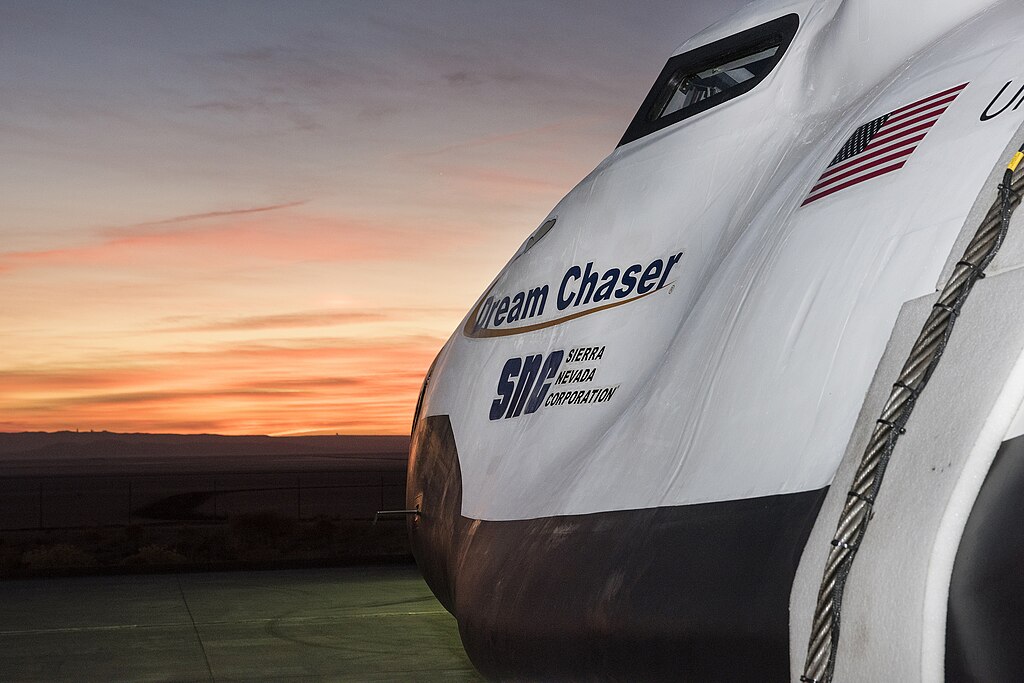
The Louisville, Colorado-based company has positioned itself at the intersection of civilian space operations and military applications. Its flagship product, the Dream Chaser cargo spaceplane, is designed to deliver payloads to the International Space Station and return them to Earth with a runway landing. Unlike most cargo vehicles that burn up on reentry, Dream Chaser’s lifting-body design allows it to glide back and land on conventional runways, preserving sensitive experiments for analysis.

Dream Chaser represents years of development dating back to NASA’s HL-20 Personnel Launch System concept from the 1990s. The design lineage traces through numerous experimental lifting-body vehicles including the X-20 Dyna-Soar, Northrop M2-F2, and Martin X-24. This heritage informs the current spacecraft’s reusability characteristics, which align with NASA’s commercial resupply goals.

The funding arrives amid a broader surge in space-related defense spending. Geopolitical tensions have intensified interest in space-based assets for communications, reconnaissance, and navigation. Companies developing spaceplane technology, satellite servicing capabilities, and orbital logistics have attracted significant capital in recent quarters.

Sierra Space plans to use the new capital to expand production facilities and accelerate development of advanced solutions for defense and intelligence customers. The company has already demonstrated its Dream Chaser cargo system’s capabilities through ground tests and drop flights, with the first orbital demonstration mission, known as Dream Chaser Demo-1, scheduled for late 2026.

The commercial crew and cargo market has matured considerably since NASA’s Commercial Crew Program initiated partnerships with multiple providers. Sierra Space’s Dream Chaser will compete with SpaceX’s Dragon capsule and Northrop Grumman’s Cygnus for NASA cargo resupply contracts. The reusable nature of Dream Chaser offers potential cost advantages over expendable alternatives.

Beyond cargo, Sierra Space has explored crewed versions of its spaceplane. The company’s vision includes point-to-point suborbital passenger transport, though that capability remains years away from reality. The current focus remains on achieving operational cargo flights to the ISS and expanding defense-related contracts.

The $8 billion valuation places Sierra Space among the most valuable private space companies globally, alongside SpaceX and Blue Origin. However, the path to profitability in the commercial space sector remains challenging, with significant capital requirements for development, manufacturing, and operations. The company’s ability to convert defense interest into sustained revenue will determine whether the valuation translates into long-term commercial success.


  • Facebook
  • Google
  • Slashdot
  • Reddit
  • Live
  • TwitThis


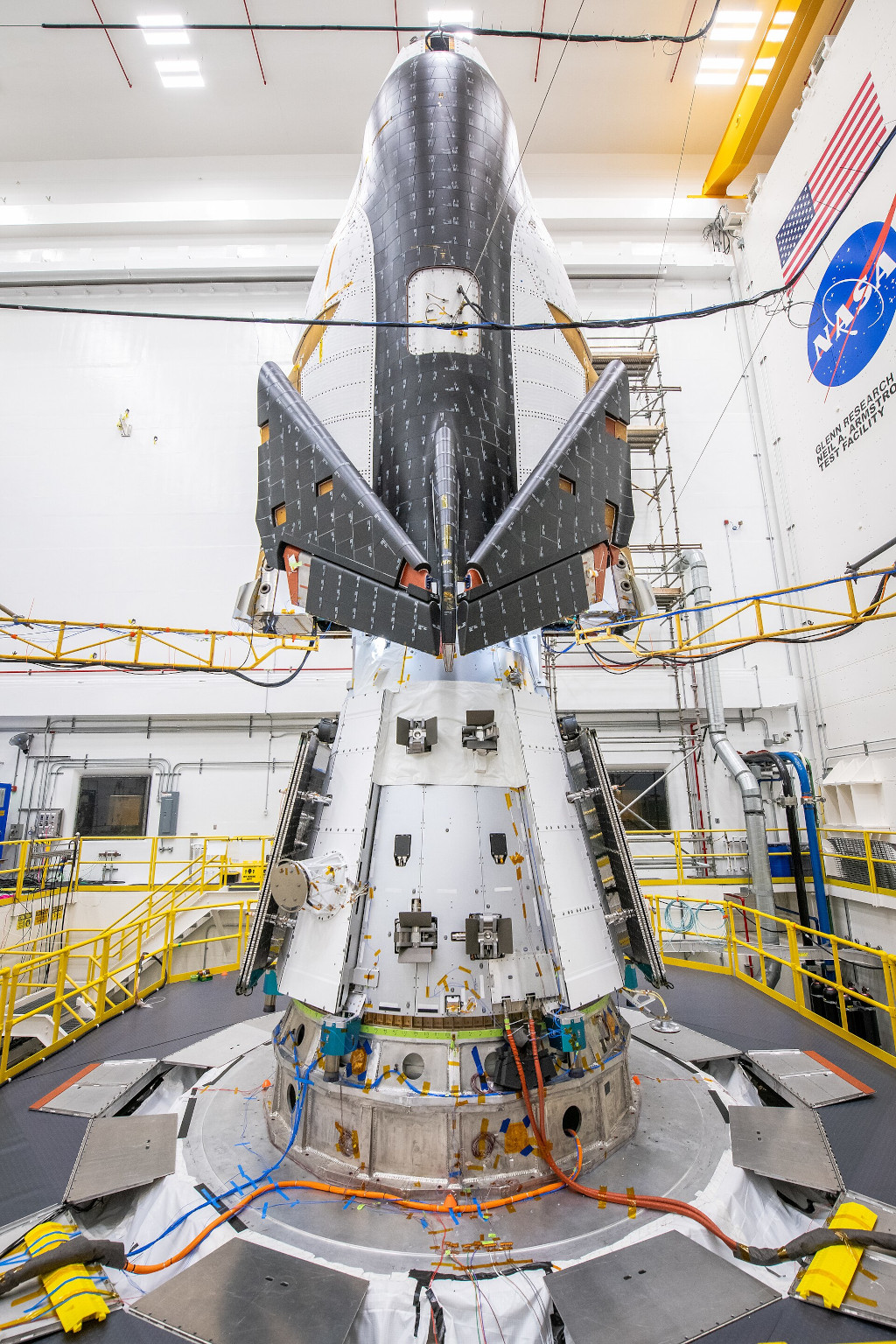
Sierra Space’s Dream Chaser cargo spaceplane continues its path toward first flight, with the demonstration mission currently targeted for late 2026. The spacecraft recently completed important pre-flight milestones at NASA’s Neil Armstrong Test Facility in Ohio, where it underwent vibration testing to simulate launch and re-entry conditions.

The Dream Chaser system consists of two main components: the reusable lifting-body spacecraft and the disposable Shooting Star cargo module. Together, the stack stands approximately 55 feet tall. Testing confirmed the vehicle’s structural integrity under the dynamic conditions experienced during launch and atmospheric re-entry.

Recent updates to the mission profile have changed the original plan. The demonstration flight will no longer dock with the International Space Station as originally planned. Instead, the mission will launch to low Earth orbit and return to Earth with a runway landing at Vandenberg Space Force Base in California. The change allows the mission to proceed without some of the complex docking systems that required additional development time.

NASA announced the modification in September 2025, noting that propulsion system and software certification remained in progress. The revised plan demonstrates the flexibility required in developing new spacecraft systems. The demonstration mission will still validate the vehicle’s core capabilities including launch, orbital flight, re-entry, and landing.

The CRS-2 contract with NASA tasks Dream Chaser with resupplying the International Space Station. Once operational, the spacecraft will be able to return sensitive cargo to Earth rather than disposing of it in the atmosphere as other cargo vehicles do. This capability addresses a longstanding gap in commercial resupply services.

The lifting-body design provides significant advantages during re-entry. Unlike capsule vehicles that splash down in the ocean, Dream Chaser can land on conventional runways. This approach enables faster payload recovery and eliminates the complexity of ocean recovery operations. The design also allows the vehicle to perform a controlled approach with greater maneuverability than capsule-shaped vehicles.

Testing at NASA’s facilities has included comprehensive evaluations of the integrated system. The vibration testing simulated the mechanical stresses of launch, orbital flight, and re-entry. Additional tests will evaluate thermal protection performance and systems integration before the vehicle is cleared for flight.

Sierra Space has invested heavily in developing manufacturing capabilities for the spacecraft. Production facilities in Colorado and Wisconsin support the build process for the reusable vehicle structure and the disposable cargo module. The company has established supplier relationships for specialized components including the heat shield tiles and propulsion systems.

If the demonstration mission succeeds, operational cargo flights could begin in 2027. The Dream Chaser will join SpaceX’s Dragon capsule and Northrop Grumman’s Cygnus vehicle in NASA’s commercial resupply portfolio. The addition of a runway-landable vehicle provides redundancy and expanded capabilities for station resupply operations.

The late 2026 launch window provides adequate time to complete remaining certification activities. Mission planners will select a specific date based on orbital mechanics and station logistics. The demonstration flight will carry a combination of NASA cargo and partner payloads to validate the vehicle’s performance in representative mission scenarios.


  • Facebook
  • Google
  • Slashdot
  • Reddit
  • Live
  • TwitThis