
OrbitalHub

The place where space exploration, science, and engineering meet

Domain is for sale. $50,000,000.00 USD. Direct any inquiries to contact@orbitalhub.com.


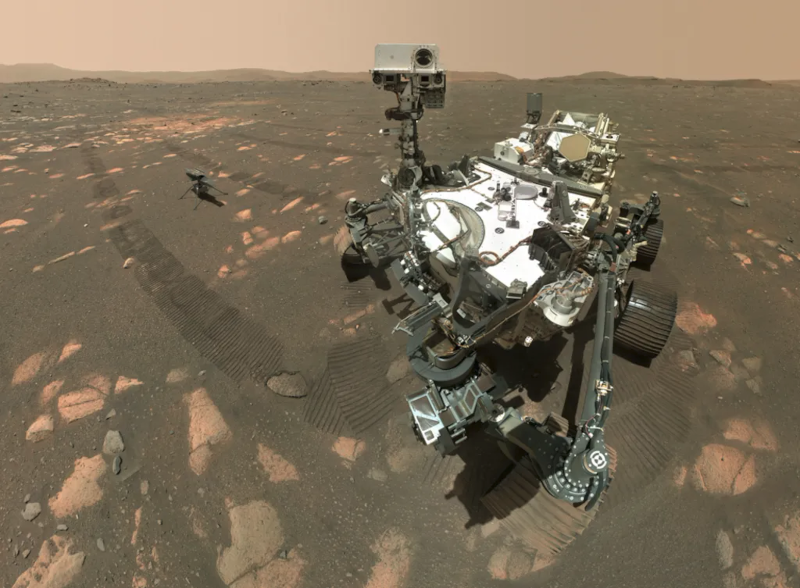
NASA’s Perseverance rover has entered a new era of autonomous exploration on Mars, with a system debuted in February 2026 that gives the vehicle GPS-like self-localization capabilities without requiring input from Earth. The Mars Global Localization system, first used in operations on February 2 and again on February 16, represents a fundamental shift in how the rover navigates the Martian surface, enabling longer drives with greater precision than ever before.

The system works by comparing navigation camera panoramas to stored orbital maps from the Mars Reconnaissance Orbiter. This matching process takes approximately two minutes and achieves positioning accuracy of 10 inches (25 centimeters), a dramatic improvement over previous visual odometry methods that accumulated errors potentially exceeding 100 feet over long drives. Previously, uncertainty about the rover’s precise position limited how far controllers would allow it to drive in a single sol, or Martian day.

The Mars Global Localization algorithm runs on hardware repurposed from the Ingenuity helicopter’s base station. This processor, roughly 100 times faster than the rover’s main computers and based on technology from the mid-2010s smartphone era, proved adequate for the computationally intensive matching process. The algorithm includes sanity checks to ensure reliability, preventing the rover from accepting obviously incorrect position estimates.

This development builds on earlier autonomy milestones. In December 2025, Perseverance completed its first fully AI-planned drives, with ground-based generative AI analyzing HiRISE orbital images and elevation data to generate safe waypoint paths. The rover drove 689 feet on December 8 and 807 feet on December 10, autonomously following routes that avoided boulders, sand ripples, bedrock, and outcrops identified by the AI system.

The combination of AI planning and autonomous localization has pushed the rover’s independence to approximately 90 percent of its travels without human input. This represents a fundamental shift in mission operations, where controllers no longer need to micromanage every aspect of each drive. The rover can receive high-level objectives and execute them with minimal oversight, dramatically increasing scientific productivity.

Perseverance continues its exploration of Jezero Crater, having traveled over 30 kilometers since landing on February 18, 2021. The vehicle has collected 24 rock and regolith samples, along with one air sample, for potential future return to Earth. Notably, the “Sapphire Canyon” sample collected from the Cheyava Falls rock in 2024 shows potential biosignatures that were validated in a September 2025 Nature paper, making it one of the most significant samples collected during the mission.

The autonomy advances have particular importance for future Mars missions. With the Mars Sample Return program effectively cancelled by Congress in January 2026, the samples collected by Perseverance will remain on the Martian surface indefinitely unless a new retrieval mission emerges. However, the technologies demonstrated by the rover pave the way for more ambitious autonomous explorers capable of operating independently across greater distances.

Navigating on Mars presents unique challenges absent in terrestrial robotics. The planet lacks any global navigation satellite system, meaning rovers cannot rely on GPS or GLONASS for positioning. Communication delays between Earth and Mars range from 4 to 24 minutes one way, making real-time remote control impossible and requiring the rover to make decisions autonomously.

Previous rovers used visual odometry, comparing successive images to estimate motion between positions. While effective for short distances, this method accumulates error over time as small estimation mistakes compound. After driving hundreds of meters, the rover’s position estimate might be significantly off, requiring ground controllers to carefully verify progress through orbital imagery.

The Mars Global Localization system sidesteps this problem by leveraging the extensive imaging data already collected by orbital missions. The Mars Reconnaissance Orbiter’s HiRISE camera has captured high-resolution images covering much of the Martian surface, creating a detailed map against which the rover can compare its own images. This approach works similarly to how facial recognition systems match images against databases.

The computational requirements for real-time image matching are substantial, requiring significant processing power to compare feature-rich navcam panoramas against large orbital map databases. The repurposed Ingenuity processor proved adequate for this task, demonstrating how hardware originally designed for one purpose can find new life in spacecraft applications.


  • Facebook
  • Google
  • Slashdot
  • Reddit
  • Live
  • TwitThis


NASA dicit:

Travel along a steep slope up to the rim of Mars’ Jezero Crater in this panoramic image captured by NASA’s Perseverance just days before the rover reached the top. The scene shows just how steep some of the slopes leading to the crater rim can be.

The rover used its Mastcam-Z camera system to capture this view on Dec. 5, 2024, the 1,349th Martian day, or sol, of the mission. At the time, the rover was about 1,150 feet (350 meters) from, and 250 feet (75 meters) below, the top of the crater rim – a location the science team calls “Lookout Hill.” The rover reached Lookout Hill on Dec. 10 after a climb of 3½ months and 1,640 vertical feet (500 vertical meters).

Video credit: NASA/JPL-Caltech/ASU/MSSS


  • Facebook
  • Google
  • Slashdot
  • Reddit
  • Live
  • TwitThis
04-28-23

Ingenuity’s 50 Flights

Posted by


Wikipedia dicit:

Ingenuity, also called Ginny, is a small robotic helicopter operating on Mars. It is part of NASA’s Mars 2020 mission, along with the Perseverance rover, which landed with Ingenuity attached to its underside on February 18, 2021. The helicopter was deployed to the surface on April 3, 2021. On April 19, it successfully made the first powered controlled extraterrestrial flight by an aircraft, taking off vertically, hovering, and landing for a flight duration of 39.1 seconds. As of its 51st flight on April 23, 2023, the helicopter has been flightworthy for 734 days.

Ingenuity was designed by NASA’s Jet Propulsion Laboratory (JPL) in collaboration with AeroVironment, NASA’s Ames Research Center and Langley Research Center. Other prominent contributors were Lockheed Martin Space, Qualcomm, and SolAero. Its rotors measure 4 ft (121 cm), and its entire body is 49 cm (19 in) tall. Its rectangular fuselage measures 136 mm Ă— 195 mm Ă— 163 mm (5.4 in Ă— 7.7 in Ă— 6.4 in), with four landing legs of 384 mm (15.1 in) each. It is operated by solar-charged batteries that power dual counter-rotating rotors mounted coaxially one above the other.

The helicopter was intended to perform a 30-day technology demonstration, making five flights at altitudes ranging 3–5 m (10–16 ft) for up to 90 seconds each. The expected lateral range was exceeded in the third flight, and the flight duration was exceeded in the fourth. The flights demonstrated the helicopter’s ability to fly in the extremely thin atmosphere of Mars, over a hundred million miles from Earth, without direct human control. Because radio signals take 5 to 20 minutes to travel between Earth and Mars depending on planetary positions, Ingenuity must operate autonomously, performing maneuvers planned, scripted and transmitted to it by JPL.

After the brief demonstration phase, JPL began more operational flights, showing how aerial scouting could aid in the exploration of Mars and other worlds. In its operational role, Ingenuity is observing areas of interest for possible examination by Perseverance. The helicopter’s performance and resilience greatly exceeded expectations, enabling it to make flights for the remainder of 2021 and into 2022. In March 2022, NASA announced that it would continue to fly Ingenuity through at least September.

The spacecraft arrived on Mars at the Octavia E. Butler Landing site in the 28 mi (45 km) wide Jezero crater. Before Ingenuity’s first flight, Perseverance drove approximately 100 m (330 ft) away to create a safe flying zone. Flight success was confirmed three hours later by JPL, which livestreamed a view of mission control receiving the data. On its fourth flight, on April 30, 2021, Ingenuity became the first interplanetary spacecraft whose sound was recorded by another interplanetary spacecraft, Perseverance.

Video credit: NASA/JPL-Caltech/ASU/MSSS


  • Facebook
  • Google
  • Slashdot
  • Reddit
  • Live
  • TwitThis
04-30-22

Solar Eclipse on Mars

Posted by


NASA dicit:

NASA’s Perseverance Mars rover used its Mastcam-Z camera system to shoot video of Phobos, one of Mars’ two moons, eclipsing the Sun. It’s the most zoomed-in, highest frame-rate observation of a Phobos solar eclipse ever taken from the Martian surface.

Several Mars rovers have observed Phobos crossing in front of the Sun over the past 18 years. Spirit and Opportunity made the first observations back in 2004; Curiosity in 2019 was the first to record video of the event. Each time these eclipses are observed, they allow scientists to measure subtle shifts in Phobos’ orbit over time. The moon’s tidal forces pull on the deep interior of the Red Planet, as well as its crust and mantle; studying how much Phobos shifts over time reveals something about how resistant the crust and mantle are, and thus what kinds of materials they’re made of.

Video credit: NASA


  • Facebook
  • Google
  • Slashdot
  • Reddit
  • Live
  • TwitThis
12-30-21

Weather on Mars

Posted by


NASA dicit:

Seasons change even on Mars and NASA’s fleet of explorers are helping scientists learn more about the effects on the Red Planet. NASA’s Perseverance and Curiosity rovers provide daily weather reports by measuring conditions such as humidity, temperature, and wind speed on the surface. Orbiters including Odyssey, Mars Atmosphere and Volatile EvolutioN (MAVEN), and the Mars Reconnaissance Orbiter (MRO) survey the scope and scale of storms from above. Changing weather conditions can be challenging for the spacecraft. The Ingenuity Mars Helicopter recently increased its rotor speed from 2,537 rpm to 2,700 rpm to fly in a thinner summer atmosphere. Meanwhile, NASA’s InSight lander, which is studying Mars’ interior, recently measured one of the biggest, longest-lasting marsquakes the mission has ever detected.

Video credit: NASA/JPL-Caltech/University of Arizona/ASU/MSSS


  • Facebook
  • Google
  • Slashdot
  • Reddit
  • Live
  • TwitThis
12-29-21

Jezero Crater

Posted by


NASA dicit:

Guided tour of Mars’ Jezero Crater from NASA’s Perseverance rover provides a glimpse of the Martian landscape from the rover’s highest vantage point yet in the “Séítah” region.

Perseverance Project Scientist Ken Farley points out highlights in this Martian panorama from the rover’s Mastcam-Z instrument, including mountains that make up the crater rim, remnants of an ancient river delta that could preserve signs of ancient life, volcanic rocks, and boulders likely carried into the crater by the river in the distant past. The enhanced-color panorama was created from images taken on November 28, 2021.

The color enhancement exaggerates small changes in color from place to place in the scene. This makes it easier for the science team to use their everyday experience to interpret the landscape. The sky on Mars would not actually look blue to a human explorer on the Red Planet, but pinkish.

Video credit: NASA Jet Propulsion Laboratory


  • Facebook
  • Google
  • Slashdot
  • Reddit
  • Live
  • TwitThis





