OrbitalHub

The place where space exploration, science, and engineering meet

Domain is for sale. $50,000,000.00 USD. Direct any inquiries to contact@orbitalhub.com.

08-1-11

Juno

Posted by


Credits: NASA/JPL


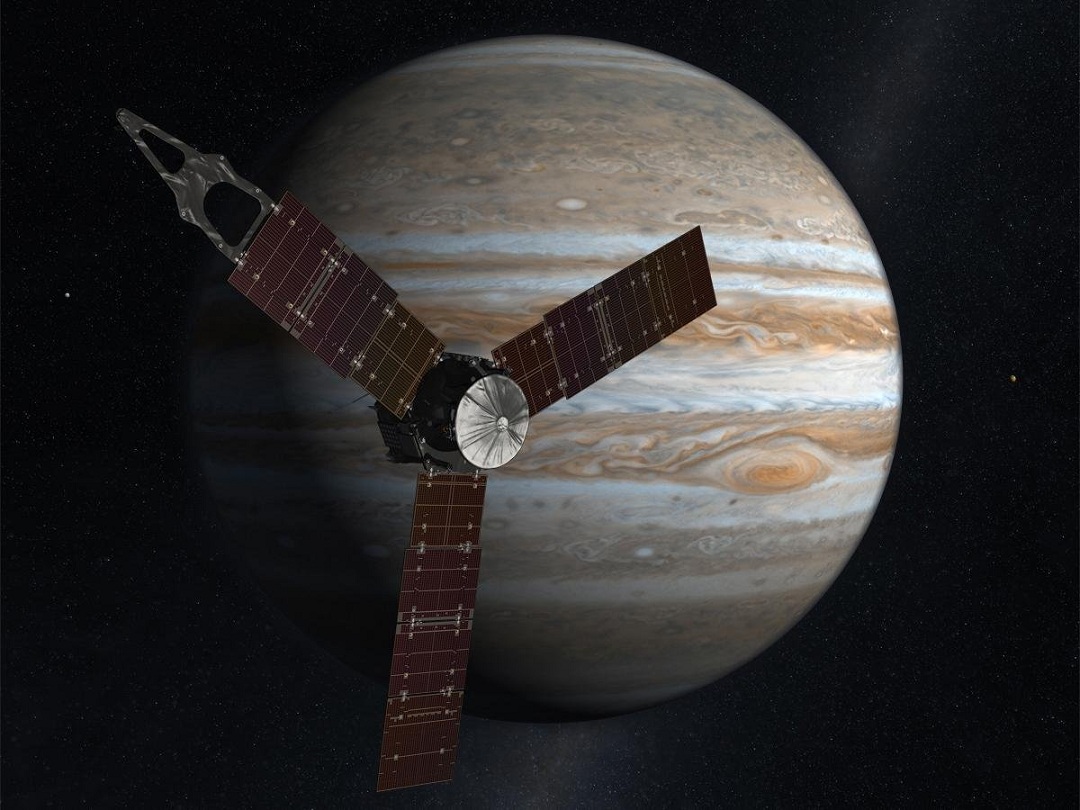
Juno is a NASA spacecraft scheduled to start its journey to Jupiter in a few days. Juno will help scientists understand the origin and evolution of Jupiter. While the dense cover of clouds helps Jupiter keep its secrets away from Earth observers, Juno will get close enough to Jupiter so that fundamental processes and conditions characteristic to the early solar system will be revealed.


First, Juno will try to determine if Jupiter has a solid planetary core. While this is an important piece of the puzzle, it might also help determine how Jupiter’s magnetic field is generated (by the way, scientists are still unclear how Earth’s magnetic field is generated, and there are several theories trying to explain it). Juno will also map Jupiter’s magnetic field, study the auroras, and determine the amount of water and ammonia in the atmosphere.


The launch vehicle to lift off with Juno is the most powerful Atlas rocket ever built, the United Launch Alliance Atlas V 551. In this configuration, an Atlas V launch vehicle can lift 18,810 kg to Low Earth Orbit (LEO) and 8,900 kg to Geosynchronous Transfer Orbit (GTO). However, the Atlas V 551 is not powerful enough to put Juno on a direct trajectory to Jupiter. In order to get as far as Jupiter’s orbit, Juno has to perform a gravity assist maneuver.


Juno will orbit Jupiter in a polar orbit and get as close as 5,000 km above the planet’s top clouds. This will allow the spacecraft to do science below the radiation belt of the planet and allow for a complete coverage of the planet. The low altitude will allow for a detailed analysis of the planet’s atmosphere. The orbit will also allow Juno to take a very close look at the auroras that are forming at the north and south Jovian poles.


The scientific payload carried by Juno includes a gravity/radio science system, a microwave radiometer, a vector magnetometer, particle detectors, ultraviolet and infrared spectrometers, and a color camera to capture images of the Jovian poles.


One interesting feature of the spacecraft is the electronics vault. Even if Juno’s highly elliptical orbit avoids the deadly radiation belts by approaching the planet at the north pole, skimming the clouds below the radiation belts, and exiting over the south pole, as an additional protection measure the onboard electronics are protected by a radiation shielded vault. This will ensure that the computers will not malfunction due to single events, and that the electronics will meet the requirements for the mission lifespan.


While the previous missions to the Jovian system have been powered by Radio Thermal Generators (RTGs), Juno will benefit from advances in solar power cell design. The cells used for Juno’s solar panels are far more efficient and radiation tolerant than the cells available to space systems engineers decades ago. Three solar panels that extend more than 10 meters from the hexagonal body of the spacecraft will provide the power required by the scientific instruments.


The mission is scheduled for launch on August 5, 2011. After coasting for more than two years, in October 2013, Juno will swing by Earth. The gravity assist maneuver will provide the delta V necessary for the spacecraft to reach Jupiter’s orbit. Juno will arrive at Jupiter in July 2016. After performing the Jupiter Orbital Insertion (JOI) maneuver, the spacecraft will start to collect and send back home scientific data.


Juno will send back science and telemetry data through the Deep Space Network (DSN), a network of powerful antennas located in Madrid, Spain; Barstow, California; and Canberra, Australia.


At the end of the mission, planned for October 2017, and after 33 complete revolutions around Jupiter, Juno will fire up its thrusters and decrease its velocity, enter the upper atmosphere of Jupiter, and get incinerated. Why such a tragic end to the Juno mission? Remember the Prime Directive? While the Prime Directive is known only to Star Trek fans… and it might get serious consideration only from Star Fleet officers, the possibility of having Juno crashing on one of the Jovian satellites (especially Europa) has to be eliminated. NASA scientists take contamination of other worlds very seriously.


You can find out more about the Juno mission on NASA’s dedicated web site. The Juno mission is managed by NASA’s Jet Propulsion Laboratory in Pasadena, California. The Principal Investigator for the Juno mission is Dr. Scott Bolton of Southwest Research Institute in San Antonio, Texas. The spacecraft was designed and built by Lockheed Martin of Denver, Colorado.


  • Facebook
  • Google
  • Slashdot
  • Reddit
  • Live
  • TwitThis


Credits: Ronald C. Wittmann


There are numerous examples of successful implementation of mitigation measures, but also some not so successful, and even failures. There are two cases that I will mention, one from each camp.


Cosmos 954 was a Soviet Radar Ocean Reconnaissance Satellite (RORSAT) powered by an onboard nuclear reactor. At the time, the Russian designers were not able to find an alternative for the power system due to the power requirements of the payload carried by the spacecraft, which was a powerful radar. A post-mission mitigation method that involved parking the nuclear reactor on a higher orbit (with an estimated lifetime of hundreds of years) was adopted.


It seems that not enough effort was put into designing a reliable solution for the post-mission disposal method of the nuclear reactor. Besides the inherent low reliability associated with hardware in developmental phases, the quality assurance practices at that time were most likely affected by the conditions of the Cold War. In both camps, the concerns regarding the environment were ignored in favor of the military and political goals.


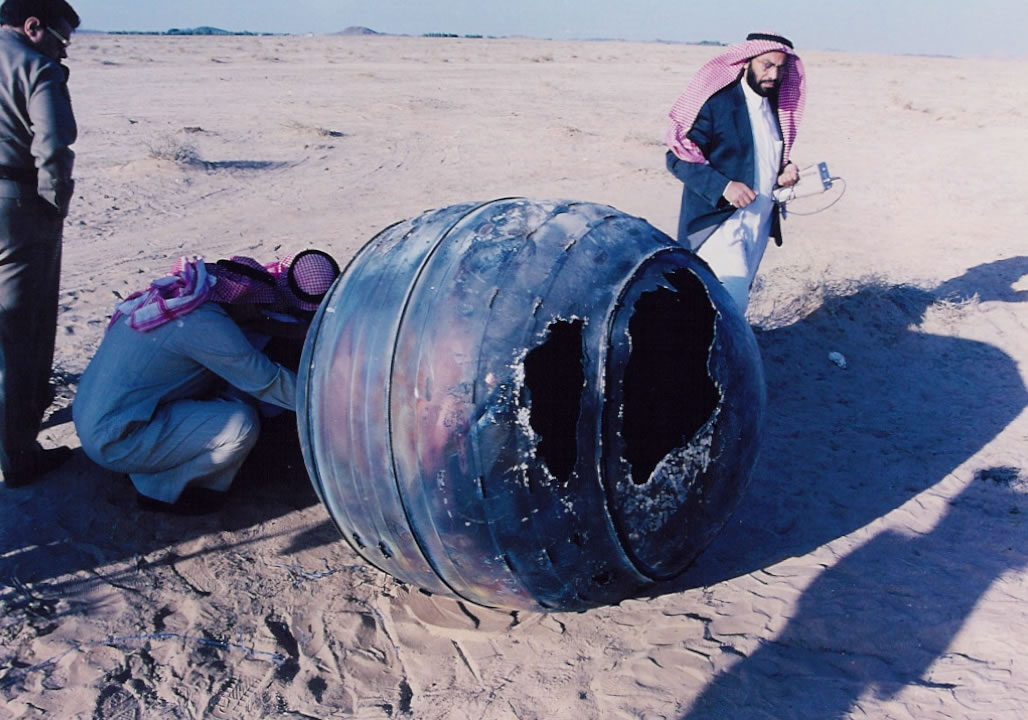
In 1978, COSMOS 954 failed to separate its nuclear reactor core and boost it into the post-mission parking orbit as planned. The reactor remained onboard the satellite and eventually re-entered into the Earth atmosphere and crashed near the Great Slave Lake in Canada’s Northwest Territories. The radioactive fuel was spread over a 124,000 km2 area. The recovery teams retrieved 12 large pieces of the reactor, which comprised only 1% of the reactor fuel. All of these pieces displayed lethal levels of radioactivity.


To highlight how dangerous and how serious the use of nuclear power sources for space mission is, consider these figures: at present, there are 32 defunct nuclear reactors in orbit around the Earth. There are also 13 reactor fuel cores and at least 8 radio-thermal generators (RTGs). The total mass of RTG nuclear fuel in orbit is in the order of 150 kg. The total mass of Uranium-235 reactor fuel in orbit is in the order of 1,000 kg.


RADARSAT-1 is an Earth observation satellite developed in Canada. Equipped with a powerful synthetic aperture radar (SAR) instrument, RADARSAT-1 monitors environmental changes and the planet’s natural resources. Well beyond the planned five-year lifetime, the satellite continues to provide images of the Earth for both scientific and commercial applications.


Following the guidelines of the United Nations Committee on the Peaceful Uses of Outer Space (COPUOS) document entitled Guidelines for Space Debris Mitigation, and implementing mitigation measures required for the space hardware manufacturers in Canada, the Canadian Space Agency has prepared post-mission disposal plans for its remote sensing satellite RADARSAT-1. As a prerequisite to the end of mission procedures, the energy stored in the propellant tanks, the wheels, and the batteries of the satellite will be removed, as suggested in the COPUOS guidelines. Also, the remaining fuel will be used to lower the orbit in addition to orienting the satellite so that drag is maximized. These measures will aim to reduce the orbit life span of the satellite to the lowest possible.


Simulations performed using NASA’s long-term debris environment evolutionary model (LEO-to-GEO Environment Debris model or LEGEND) or ESA’s debris environment long-term analysis tool (DELTA) have shown that even if new launches are not conducted, the existing population of orbital debris will continue to increase. This increase in number is caused by collisions between the objects already orbiting the Earth at the present time. Following the Iridium/Cosmos collision in 2009, the U.S. Air Force has issued hundreds of notifications to Russia and China regarding potential crashes between their satellites and other objects in orbit.


Even if we are contemplating grim future developments like the one mentioned above, international initiatives do not seem to gain enough momentum. NASA (National Aeronautics and Space Administration) and DARPA (Defense Advanced Research Projects Agency) were the sponsors of the first International Conference on Orbital Debris Removal, which was held in Chantilly, Virginia, December 8-10, 2009. The conclusions of the conference included the observation that:


“No evident consensus or conclusions were reached at the conference. Removing existing, non-cooperative objects from Earth orbit is an extremely difficult and likely expensive task. Although some of the techniques for removal discussed at the Conference have the potential of being developed into technically feasible systems, each concept seems to currently suffer from either a lack of development and testing or economic viability.”


  • Facebook
  • Google
  • Slashdot
  • Reddit
  • Live
  • TwitThis


Credits: NASA


Let us see how the areas mentioned in the previous Sustainability in LEO post are covered at national level in the United States.


The United States has implemented a space traffic management program in the form of the Joint Space Operations Center (JSpOC) of the U.S. Strategic Command at Vandenberg Air Force Base in California.


JSpOC conducts periodic conjunction assessments for all NASA programs and projects that operate maneuverable spacecraft in low Earth orbits (LEO) or in geosynchronous orbits (GEO). Depending on the mission, the conjunction assessments can be performed up to three times daily. If JSpOC identifies an object that is expected to come in the proximity of a NASA spacecraft, and the collision risk is high enough (for manned missions the minimal value accepted is 1 in 10,000, while for robotic missions the threshold is 1 in 1,000), a conjunction assessment alert message is sent to the mission control in order to have collision avoidance maneuver commands sent to the spacecraft. The alert messages contain the predicted time and distance at closest approach, as well as the uncertainty associated with the prediction.


The control of the creation of space debris is addressed by orbital debris mitigation standard practices in four major areas: normal operations, accidental explosions, safe flight profile and operational configuration, and post-mission disposal of space structures. There are also NASA standards and processes that aim at limiting the generation of orbital debris.


The commonly-adopted mitigation methods, which focus on minimization of space debris creation, will not preserve the near-Earth environment for the future generations. As a matter of fact, the debris population increase will be worse than predicted by LEGEND-generated models due to ongoing launch activities and unexpected (but possible) major breakups. Here is where active space debris environment remediation comes into play.


The active space debris environment remediation is mainly concerned with the removal of large objects from orbit. Such large objects are defunct spacecraft (i.e. communication satellites that exceeded their operational life), upper stages of launch vehicles, and other mission-related objects. The removal of large objects from orbit is known as Active Debris Removal (ADR). Several innovative concepts are under study. Among them, tethers used for momentum exchange or electro-dynamic drag force, aerodynamic drag, solar sails, and auxiliary propulsion units. LEGEND studies have revealed that ADR is a viable control method as long as an effective removal selection criterion based on mass and collision probability is used, and there are at least five objects removed from orbit every year. The electrodynamic tethers seem to lead the competition so far, as they have a low mass requirement and can remove spent or dysfunctional spacecraft from low Earth orbit rapidly and safely.


Re-entry in the Earth’s atmosphere of space mission related objects is an important aspect to be considered in this context. Even though no casualties or injuries have been reported so far being caused by components of re-entering spacecraft, fragments from space hardware pose a risk to human life and property on the ground. One big concern is caused by the fact that the point of impact from uncontrolled re-entries cannot be calculated exactly. The uncertainties are due to a large number of parameters that affect the trajectory and the heat of ablation of objects re-entering the atmosphere.


  • Facebook
  • Google
  • Slashdot
  • Reddit
  • Live
  • TwitThis


Credits: NASA


Space debris mitigation measures address issues in two major areas: protection from space debris and reduction of the space debris population growth.


Protection methods vary depending on the size of the space debris. Space debris fragments smaller than 0.1 mm in diameter do not have enough energy to penetrate protection panels. Even spacecraft thermal blankets and structural panels can offer protection from such small kinetic impactors.


However, larger debris fragments pose a more serious threat and there are few active measures that can be adopted to minimize the possibility or the consequences of impacts.


First, avoiding space debris is the method that always proves successful, so flying at altitudes and inclinations where space debris density is low should always be considered. Second, orienting sensitive surfaces away from or mounting a bumper on the leading edge can offer more protection for the spacecraft. Multilayered bumpers cause the fragmentation of the space debris and also prevent ejected material from dispersing from the point of impact. Bumpers add mass and volume to the spacecraft and this is why few space missions can exercise this option.


A promising new method for protection from orbital debris impact is shielding with metallic foams. Extensive research and experimental impact campaigns have proven that metallic open-cell foams provide improved protection against hypervelocity impacts with almost no ejecta generated at impact, while offering comparable mechanical and thermal performance to honeycomb structures, which are currently used for shielding. The fact that no ejecta are generated is of great importance, as fragments generated at impact can add to the already existing debris population in Earth orbit.


At this point, it appears that the best protection method is avoiding the creation of space debris.


The long-term projections of the space debris environment generated by models like LEGEND or DELTA have proven that only active methods can maintain a stable environment of artificial objects in Earth orbit. It is quite obvious that unchanged operational practices or even an immediate stop to launch and release activities will not prevent the collisions between already existing space hardware. Scenarios like the one proposed by NASA scientist Donald J. Kessler in 1978 are very likely to occur. In the scenario proposed by Kessler, which is also known as the Kessler Syndrome, space exploration and the use of satellites in proximity of Earth will become unfeasible due to an exponential growth of the debris population caused by collisional cascading. The exponential growth is due to the fact that the material ejected during a hypervelocity impact becomes space debris itself. Laboratory experiments have shown that as a result of such an impact, 1 kg of aluminum can form several hundred thousand 1 mm sized particles.


Failure to address the potential uncontrollable growth of the space debris population will lead to major restrictions on the ability to exploit space. There is a debate in the scientific community over whether or not critical density has already been reached in certain orbital regions and if we are beyond the point where we can address the growth of the debris population.


There are various classifications of the space debris mitigation methods. For example, two broad categories might include, on one hand, measures that restrict the generation of space debris in the near future, such as limiting the production of mission-related objects and the avoidance of breakups, and, on the other hand, measures that restrict their generation for the long term, which include post-mission disposal methods and active measures to remove space debris from protected regions.


There are three major areas that could allow space faring nations to maintain a stable debris environment: space traffic management, control the creation of space debris, and active space debris environment remediation.


  • Facebook
  • Google
  • Slashdot
  • Reddit
  • Live
  • TwitThis


Credits: NASA


Space debris, also known as orbital debris, consist of artificial objects in orbit around Earth that no longer serve any useful purpose.


Most of the space debris population consists of fragments resulted from explosions and collisions, but some are spent rocket stages and satellites that are no longer operational. Fragmentations occur during a satellite breakup or an anomalous event.


A satellite breakup is a destructive disassociation of a payload, rocket body, or structure. Most of the time, breakups generate ejecta with a wide range of velocities, and this affects the evolution of the particle cloud following the breakup. As the ejected particles spread out from the point of breakup with different initial conditions, some of them may remain well correlated for a long time, while others may disperse into dissimilar orbits. Satellite breakups are accidental, but there are exceptions when they are deliberate, as in the case of a space weapon test. An anomalous event is the unplanned separation of one or more detectable objects from the satellite. These separations happen at low velocities and the satellite remains intact. As an example, the separation caused by the deterioration of a thermal blanket or a protective shield is classified as an anomalous event. Clearly, a satellite breakup generates more debris than an anomalous event.


As the space debris are associated with spacecraft launches, the highest densities are found on the most popular altitudes and inclinations. While the altitudes are characteristic to mission types, the orbital inclinations correspond to the latitudes of the current launching facilities.
There are numerous characterizations of the space debris environment. A common method used for describing it is the spatial density of resident space objects, which is a representation of the effective number of spacecraft and other objects as a function of altitude. On such a representation there are several high-density regions that are evident: near 890 km due to Fengyun-1C event, around 780 km where the Iridium constellation of satellites resides, and the region around 1,400 km, inhabited by the GLOBALSTAR constellation. There are certain differences in the distribution in the low Earth orbit region (altitudes of 160-2,000 km) and the distribution in the geosynchronous orbit region (altitudes of 35,000 km). These are caused by the fact that high inclination orbits, characteristic to the LEO region, yield a greater collision rate because objects in these high inclination orbits can collide in the overlapping regions with other objects on complementary orbits, and also the GEO environment is characterized by lower collision velocities.


Another method of characterization is the population distribution by object type (e.g. spacecraft, rocket stage) and by source (e.g. United States, People’s Republic of China). For example, on August 1st, 2007, the U.S. Satellite Catalog presented the following Source vs. Type statistic for on-orbit objects.

Source vs. Type Accounting (on-orbit objects) / 1 August 2007 U.S. Satellite Catalog

  US CIS France PRC India Japan ESA Other Total
Payloads 1,063 1,324 44 61 33 103 36 387 3,051
Rocket bodies 542 837 97 37 8 35 6 27 1,589
Mission related debris 779 507 92 62 1 36 12 5 1,494
Breakup debris 1,666 1,524 126 2,315 97 2 18 35 5,783
Anomalous debris 144 82 3 0 0 0 0 0 229
Totals 4,194 4,274 362 2,475 139 176 72 454 12,146

It is interesting to see that debris is dominant among all sources, and they are mostly due to space activities of the United States, Commonwealth of Independent States, and People’s Republic of China.


Two major collision events in Earth’s orbit are mentioned in the scientific literature: the Chinese Fengyun-1C anti-satellite (ASAT) test in 2007, and the first accidental collision between two large intact satellites, Iridium 33 and Cosmos 2251, in 2009.


Fengyun-1C, a box shaped satellite weighing 950 kg, was launched in May 1999. The satellite was intercepted and destroyed at an altitude of 860 km on January 11, 2007, by a kinetic kill vehicle at a relative speed of approximately 12 km/s. The debris cloud formed as a result of the Chinese ASAT test represents the worst contamination of low Earth orbit in history. It was estimated that the impact generated more than 2,300 trackable objects, and more than 1,000,000 objects 1 mm in diameter or larger. More than half of the fragments created during the impact and identified by ground measurements have present orbits exceeding a mean altitude of 850 km, which means that they will be part of the debris population for decades. As a result of this test, an increase of the population of 69% has been observed. The Fengyun-1C ASAT test was not a first, though. The first artificial satellite used as a target in an ASAT test was Solwind (P78-1), a scientific spacecraft used for coronal research. Launched in February 1999, the P78-1 was experiencing automatic shutdown of the scientific payload due to degradation of the power systems, and it was destroyed by an ASM-135 ASAT suborbital rocket on September 13, 1985.


It is important to mention the details of the collision between the Iridium 33 and the Cosmos 2251 satellites. The event got a lot of media coverage and it seems that it was the catalyst of a number of new initiatives related to the space debris environment in the space industry. Iridium 33 was an operational communication satellite, one of the Iridium Constellation satellites. Cosmos 2251 was a Russian communication satellite, retired at the time of time of the collision. This was the first major collision of two satellites in Earth orbit.


From May 2003 to August 2007, there are twenty-one on-orbit fragmentations and seven anomalous events recorded. The historical total, recorded starting in October 1957, is 194 fragmentations and fifty-one anomalous events.


  • Facebook
  • Google
  • Slashdot
  • Reddit
  • Live
  • TwitThis


Credits: NASA


The Iridium satellite constellation, owned and operated by Iridium Communications Inc., is used to provide voice and data coverage over Earth’s entire surface.


Sixty-six satellites orbiting the Earth in low Earth orbit at 781 km altitude and 86.4 degrees inclination allow for pole-to-pole communication.


The Iridium modems deliver truly global communication capabilities. The solutions that incorporate the Iridium technology range from maritime voice terminals to vehicle tracking solutions. Most recently, we have seen them embedded in maritime robots like the iRobot seagliders collecting data in the Gulf of Mexico after the DeepWater Horizon accident.


Even if the majority of the applications are surface-to-surface communication, there have been attempts made to use the Iridium network for high-altitude communication. As such, weather balloons and sounding rockets have used the network to download data back to Earth.


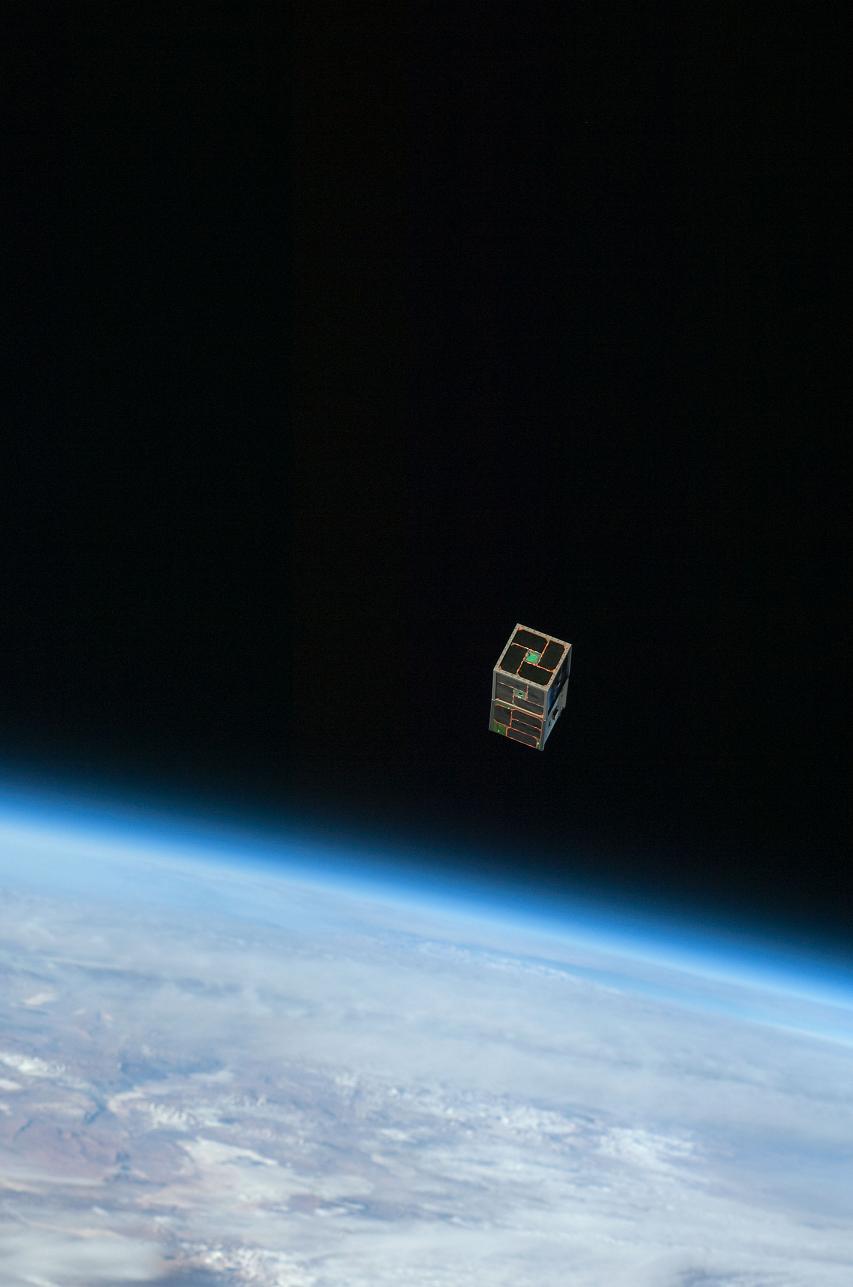
A novel communication method for CUBESAT payloads using the Iridium network is proposed by Henric Boiardt and Christian Rodriguez from Florida International University for the PicoPanther payload, one of the entries in the Florida University Satellite competition.


The main challenges to overcome in order to adapt the Iridium technology to microsatellite communication in low Earth orbit are the miniaturization and the Doppler effects.


The CUBESAT standard was developed by California Polytechnic State University and Stanford. The standard specifies that one unit structure is a 10cm x 10cm x 10cm cube. This is quite a restrictive size-factor constraint.


The Doppler effects have to be considered due to the velocities at which the satellites operate in low Earth orbit. To minimize these effects, the microsatellite using the Iridium network to communicate with the ground station must have an orbit similar to the communication satellites in the network, which is a polar orbit. For the same reasons, Iridium itself supports inter-satellite links only between satellites orbiting in the same direction. Otherwise, the frequency shift due to orbital relative velocities would make communication unreliable.


If the proposed method is proven feasible, the Iridium network would definitely bring near-continuous communication to microsatellite technology.


  • Facebook
  • Google
  • Slashdot
  • Reddit
  • Live
  • TwitThis