OrbitalHub

The place where space exploration, science, and engineering meet

Domain is for sale. $50,000,000.00 USD. Direct any inquiries to contact@orbitalhub.com.

08-30-15

HTV -5 Berthing

Posted by


NASA dixit:

“The Japanese Aerospace Exploration Agency’s (JAXA) “Kounotori” H-II Transfer Vehicle (HTV-5) arrived at the International Space Station Aug. 24 to deliver almost five tons of supplies and scientific experiments to the Expedition 44 crew. The cargo vehicle was launched atop a Japanese H-IIB rocket Aug. 19 from the Tanegashima Space Center in southern Japan.”

Video credit: NASA


  • Facebook
  • Google
  • Slashdot
  • Reddit
  • Live
  • TwitThis
03-5-09

HTV

Posted by


Credits: JAXA


HTV stands for H-II Transfer Vehicle. HTV is an unmanned spacecraft designed and built in Japan. HTV is designed to deliver supplies to the International Space Station (ISS).


The typical mission for HTV starts at the Tanegashima Space Center (TKSC) near Tsukuba, in Japan.


A H-IIB launch vehicle will inject the HTV on a low Earth orbit (LEO). After the separation from the H-IIB second stage, the transfer vehicle is able to navigate independently.


It will take approximately three days for HTV to reach the proximity of the ISS. During this time, it will maintain contact with the Control Center at TKSC (designated as HTV-CC) through the Tracking and Data Relay Satellite System (TDRSS). TDRSS is a network of satellites that allow a spacecraft in LEO to maintain permanent contact with the control center on the ground. HTV will use GPS to position itself at 7 km behind the ISS.


At this point, the berthing phase of the mission starts. HTV will approach the ISS within 500 m and use the Rendezvous Sensor (RVS) to move closer to the ISS. Reflectors that are installed on Kibo will allow HTV to maintain a distance of 10 m below the ISS.


Credits: JAXA


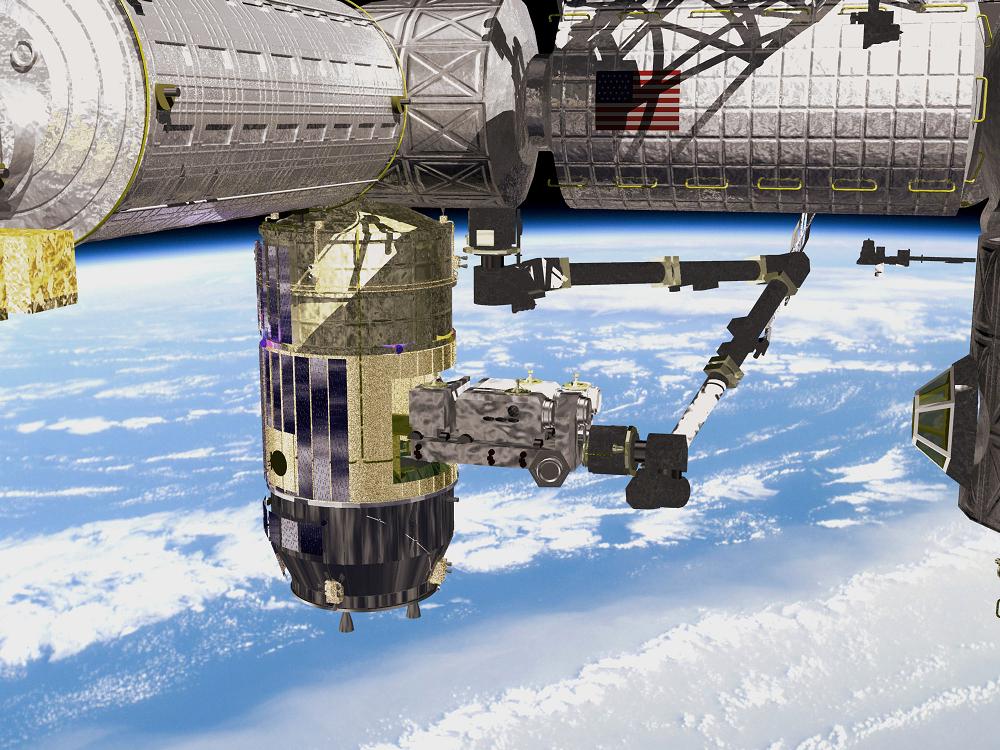
HTV does not have the capability to dock on its own to the ISS (as opposed to the European ATV), so the Canadarm2 robotic arm will be used to grab the transfer vehicle and berth it to the nadir side of the Node 2 module.


While the HTV is berthed to the ISS, supplies from the HTV’s pressurized section are transferred to the space station by the crew, and waste will be loaded from the ISS.


The cargo from the un-pressurized section will be unloaded using the robotic arm and attached either to the Exposed Facility of the Japanese Experiment Module (JEM) or the ISS Mobile Base System.


The HTV mission will end in a similar way to the European ATV: a destructive re-entry above the Pacific Ocean.


Here is some more background information about the HTV. The spacecraft is a cylinder-shaped structure 10 m long and 4.4 m in diameter. It has a total mass of 10,500 kg, of which 6,000 kg is cargo (divided into 4,500 kg pressurized cargo and 1,500 kg un-pressurized cargo). HTV can carry 6,000 kg of waste during the re-entry.


HTV consists of four modules: the Pressurized Logistics Carrier (PLC), the Unpressurized Logistics Carrier (UPLC), the Avionics Module, and the Propulsion Module. The UPLC carries the Exposed Pallet (EP), which can accommodate unpressurized payloads.


Credits: JAXA


The PLC is equipped with a Common Berthing Mechanism (CBM). This will allow the crew present on the station to enter the module in order to unload the supplies and load waste material.


The EP carried by the UPLC can be either Type I or Type III Exposed Pallets. The Type I EPs will carry payloads for the Kibo’s Exposed Facility (EF), while the Type III EPs will be used to deliver the Orbital Replacement Units (ORUs) to the ISS.


The systems in the avionics module enable HTV to execute the autonomous flight to the space station. The module also contains communication and power systems. The thirty-two thrusters installed on the propulsion module provide HTV with the capability to execute orbital adjustments and control the attitude during the mission.


HTV will add to the existing fleet of transfer vehicles that includes the Russian Soyuz and Progress spacecraft, as well as the European ATV. The first HTV mission is scheduled for late 2009.


For more information about HTV, you can visit the H-II Transfer Vehicle page on the JAXA web site.


  • Facebook
  • Google
  • Slashdot
  • Reddit
  • Live
  • TwitThis
01-8-09

Taurus II and Cygnus

Posted by


Credits: NASA


Orbital will employ its Taurus II medium-lift launch vehicle and the Cygnus spacecraft in order to service the International Space Station (ISS) under the Commercial Resupply Services (CRS) contract.


Orbital is one of the two companies awarded CRS contracts under the Commercial Orbital Transportation Services Project (COTS).


NASA announced the COTS project on January 18, 2006. The purpose of the program is to stimulate the development of access to low Earth orbit (LEO) in the private sector. At the time, with the imminent retirement of the Space Shuttle fleet, NASA was faced with the option of buying orbital transportation services on foreign launch systems: the Russian Soyuz / Progress, the European Ariane 5 / ATV, or the Japanese H-II / HTV.


Another factor taken into consideration by NASA was that competition in the free market could lead to the development of more efficient and affordable launch systems compared to launch systems that a government agency could build and operate.
 

Credits: Orbital


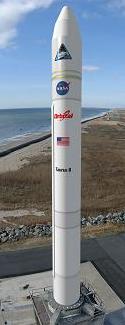
Orbital relies on proven experience in launch vehicle technology. Taurus II is designed to provide low-cost and reliable access to space, and it uses systems from other members of Orbital’s family of successful launchers: Pegasus, Taurus, and Minotaur.


Taurus II is a two-stage launch vehicle that can use an additional third stage for achieving higher orbits. The payloads handled by Taurus II can have a mass of up to 5,400 kg.


Orbital is responsible for overall development and integration of the first stage. The two AJ26-62, designed and produced by Aerojet and Orbital, are powered by liquid oxygen and kerosene. The core design is driven by NPO Yuzhnoye, the designer of the Zenit launchers.


The AJ26-62 engines are basically the NK-33 engines designed by the Kuznetsov Design Bureau for the Russian N-1 launch vehicle, and remarketed by Aerojet under a new designation.


The second stage uses an ATK Castor-30 solid motor with thrust vectoring. This stage evolved from the Castor-120 solid stage.


The optional third stage is developed by Orbital. The stage was dubbed the Orbit Raising Kit (ORK) and it uses a helium pressure regulated bi-propellant propulsion system powered by nitrogen tetroxide and hydrazine. ORK evolved from the Orbital STAR Bus. Because it is a hypergolic stage, it allows several burns to be performed in orbit, and can be used for high-precision injections using various orbital profiles.
 

Credits: Orbital


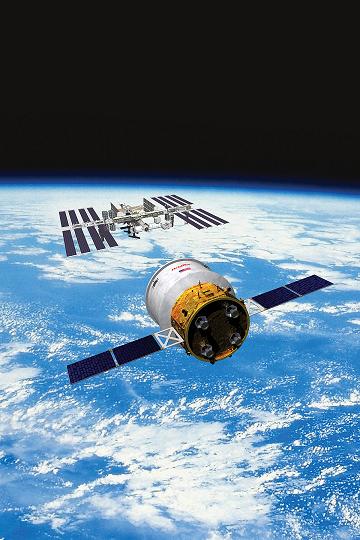
Cygnus will only have cargo capability and will be able to deliver up to 2,300 kg of pressurized or un-pressurized cargo to the ISS. The spacecraft will also be able to return up to 1,200 kg of cargo from ISS to Earth.


The two components of the Cygnus spacecraft will be the service module and the cargo module.


The service module is based on the Orbital STAR bus (like the ORK stage), and will use two solar arrays for producing electrical power for the navigation systems onboard.


The pressurized cargo module is based on the Italian-built Multi-Purpose Logistics Module (MPLM). The un-pressurized cargo module is based on NASA’s ExPRESS Logistics Carrier.


Cygnus will not dock to the ISS in the same manner as the European ATV, but it will be able to maneuver close to the ISS where the Canadarm 2 robotic arm will be used to capture it and berth it to the Node 2 module, similar to the Japanese HTV or SpaceX’s Dragon spacecraft.


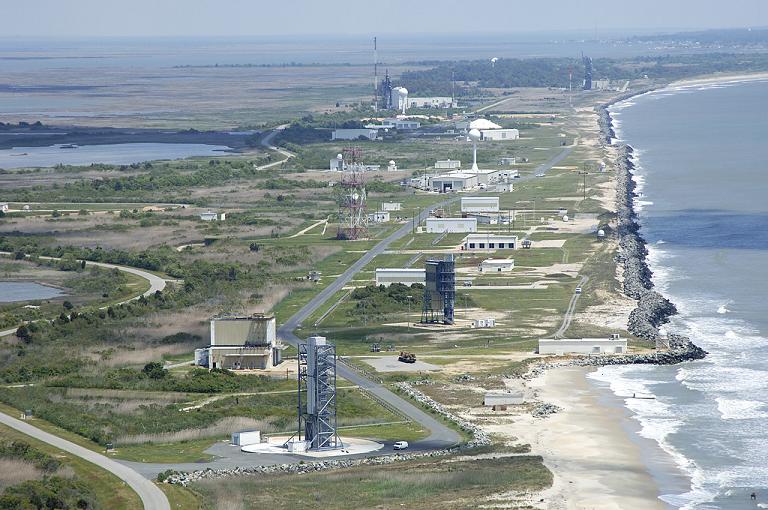
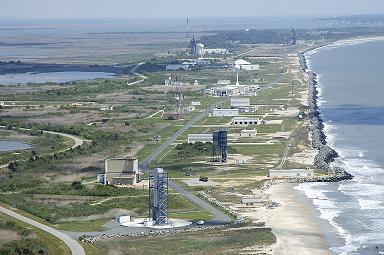
The Mid-Atlantic Regional Spaceport (MARS), located at NASA’s Wallops Island Flight Facility on Virginia’s Eastern shore, was chosen by Orbital to serve as the base of operations for the Taurus II launch vehicle.


MARS has two FAA licensed launch pads for LEO access. MARS also offers access to suborbital launchers, vehicle and payload storage, and processing and launch facilities.
 

Credits: NASA


Due to the location of the spaceport, latitude 37.8 degrees N, longitude 75.5 degrees W, optimal orbital inclinations for the launches performed at MARS are between 38 and 60 degrees. Polar and retrograde orbits can also be serviced with additional in-flight maneuvering.


The first flight of Orbital’s new Taurus II / Cygnus launch system under COTS is scheduled for late 2010.

 

  • Facebook
  • Google
  • Slashdot
  • Reddit
  • Live
  • TwitThis