OrbitalHub

The place where space exploration, science, and engineering meet

Domain is for sale. $50,000,000.00 USD. Direct any inquiries to contact@orbitalhub.com.

03-2-18

U.S. Spacewalk 48 Animation

Posted by


NASA dixit:

“The first task for spacewalkers Mark Vande Hei and Norishige Kanai is to move a Latching End Effector (LEE), or hand, for the Canadian-built robotic arm, Canadarm2, from a payload attachment on the station’s Mobile Base System rail car to the Quest airlock. This LEE was replaced during an Expedition 53 spacewalk in October 2017 and will be returned to Earth to be refurbished and relaunched to the orbiting laboratory as a spare.

Once they have completed that activity, they will move an aging, but functional, LEE that was detached from the arm during a January 23 spacewalk and move it from its temporary storage outside the airlock to a long-term storage location on the Mobile Base System, which is used to move the arm and astronauts along the station’s truss structure.”

Video credit: NASA


  • Facebook
  • Google
  • Slashdot
  • Reddit
  • Live
  • TwitThis
10-23-17

ISS Spacewalk

Posted by


NASA dixit:

“Outside the International Space Station, Expedition 53 Commander Randy Bresnik and Flight Engineer Joe Acaba of NASA conducted a spacewalk on October 20 to continue upgrades to and maintenance of station hardware. It was the third spacewalk in two weeks for Expedition 53 crew members outside the Quest airlock. During the excursion, Bresnik and Acaba replaced a failed camera light on the new Latching End Effector “hand” on the Canadarm2 robotic arm, installed a new high definition camera on the starboard truss of the complex, replaced a fuse on the Dextre Special Dexterous Manipulator attachment for the arm and removed thermal blankets from two spare electrical routing units for future robotic replacement work, if required. It was the fifth spacewalk in Bresnik’s career and the third for Acaba.”

Video credit: NASA


  • Facebook
  • Google
  • Slashdot
  • Reddit
  • Live
  • TwitThis


NASA dixit:

“The SpaceX Falcon 9 rocket launched from the Kennedy Space Center, Florida, on August 14, sent an unpiloted Dragon cargo vehicle on a delivery run to the International Space Station. Loaded with more than three tons of supplies and scientific investigations, the Dragon is scheduled to arrive at the station on August 16 where it will be captured by Expedition 52 crewmembers Jack Fischer of NASA and Paolo Nespoli of the European Space Agency operating the station’s Canadarm2 robotic arm. Dragon will spend about a month attached to the Earth-facing port of the Harmony module.”

Video credit: NASA


  • Facebook
  • Google
  • Slashdot
  • Reddit
  • Live
  • TwitThis
01-8-09

Taurus II and Cygnus

Posted by


Credits: NASA


Orbital will employ its Taurus II medium-lift launch vehicle and the Cygnus spacecraft in order to service the International Space Station (ISS) under the Commercial Resupply Services (CRS) contract.


Orbital is one of the two companies awarded CRS contracts under the Commercial Orbital Transportation Services Project (COTS).


NASA announced the COTS project on January 18, 2006. The purpose of the program is to stimulate the development of access to low Earth orbit (LEO) in the private sector. At the time, with the imminent retirement of the Space Shuttle fleet, NASA was faced with the option of buying orbital transportation services on foreign launch systems: the Russian Soyuz / Progress, the European Ariane 5 / ATV, or the Japanese H-II / HTV.


Another factor taken into consideration by NASA was that competition in the free market could lead to the development of more efficient and affordable launch systems compared to launch systems that a government agency could build and operate.


Credits: Orbital


Orbital relies on proven experience in launch vehicle technology. Taurus II is designed to provide low-cost and reliable access to space, and it uses systems from other members of Orbital’s family of successful launchers: Pegasus, Taurus, and Minotaur.


Taurus II is a two-stage launch vehicle that can use an additional third stage for achieving higher orbits. The payloads handled by Taurus II can have a mass of up to 5,400 kg.


Orbital is responsible for overall development and integration of the first stage. The two AJ26-62, designed and produced by Aerojet and Orbital, are powered by liquid oxygen and kerosene. The core design is driven by NPO Yuzhnoye, the designer of the Zenit launchers.


The AJ26-62 engines are basically the NK-33 engines designed by the Kuznetsov Design Bureau for the Russian N-1 launch vehicle, and remarketed by Aerojet under a new designation.


The second stage uses an ATK Castor-30 solid motor with thrust vectoring. This stage evolved from the Castor-120 solid stage.


The optional third stage is developed by Orbital. The stage was dubbed the Orbit Raising Kit (ORK) and it uses a helium pressure regulated bi-propellant propulsion system powered by nitrogen tetroxide and hydrazine. ORK evolved from the Orbital STAR Bus. Because it is a hypergolic stage, it allows several burns to be performed in orbit, and can be used for high-precision injections using various orbital profiles.


Credits: Orbital


Cygnus will only have cargo capability and will be able to deliver up to 2,300 kg of pressurized or un-pressurized cargo to the ISS. The spacecraft will also be able to return up to 1,200 kg of cargo from ISS to Earth.


The two components of the Cygnus spacecraft will be the service module and the cargo module.


The service module is based on the Orbital STAR bus (like the ORK stage), and will use two solar arrays for producing electrical power for the navigation systems onboard.


The pressurized cargo module is based on the Italian-built Multi-Purpose Logistics Module (MPLM). The un-pressurized cargo module is based on NASA’s ExPRESS Logistics Carrier.


Cygnus will not dock to the ISS in the same manner as the European ATV, but it will be able to maneuver close to the ISS where the Canadarm 2 robotic arm will be used to capture it and berth it to the Node 2 module, similar to the Japanese HTV or SpaceX’s Dragon spacecraft.


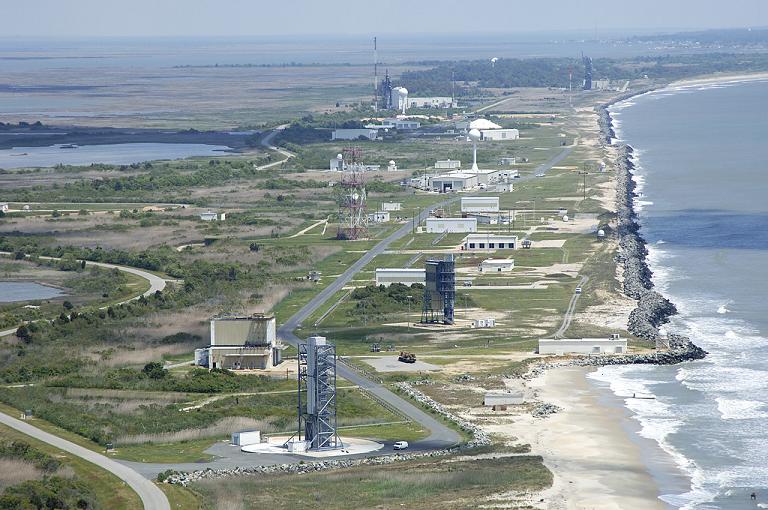
The Mid-Atlantic Regional Spaceport (MARS), located at NASA’s Wallops Island Flight Facility on Virginia’s Eastern shore, was chosen by Orbital to serve as the base of operations for the Taurus II launch vehicle.


MARS has two FAA licensed launch pads for LEO access. MARS also offers access to suborbital launchers, vehicle and payload storage, and processing and launch facilities.


Credits: NASA


Due to the location of the spaceport, latitude 37.8 degrees N, longitude 75.5 degrees W, optimal orbital inclinations for the launches performed at MARS are between 38 and 60 degrees. Polar and retrograde orbits can also be serviced with additional in-flight maneuvering.


The first flight of Orbital’s new Taurus II / Cygnus launch system under COTS is scheduled for late 2010.


  • Facebook
  • Google
  • Slashdot
  • Reddit
  • Live
  • TwitThis
12-12-08

Columbus

Posted by


Credits: ESA/NASA


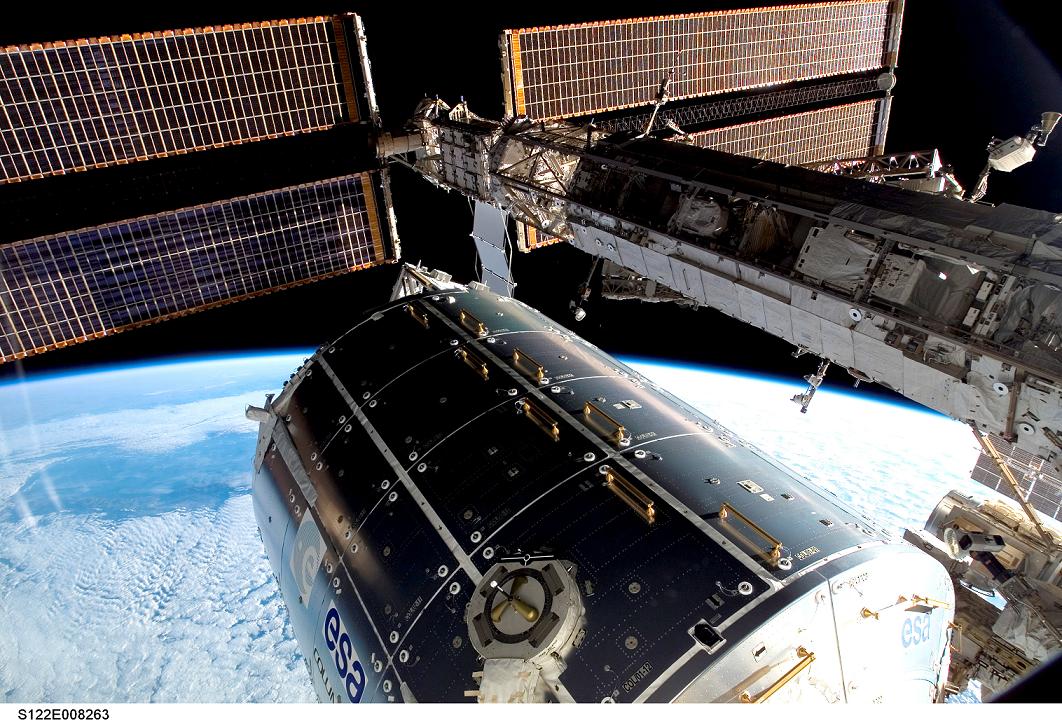
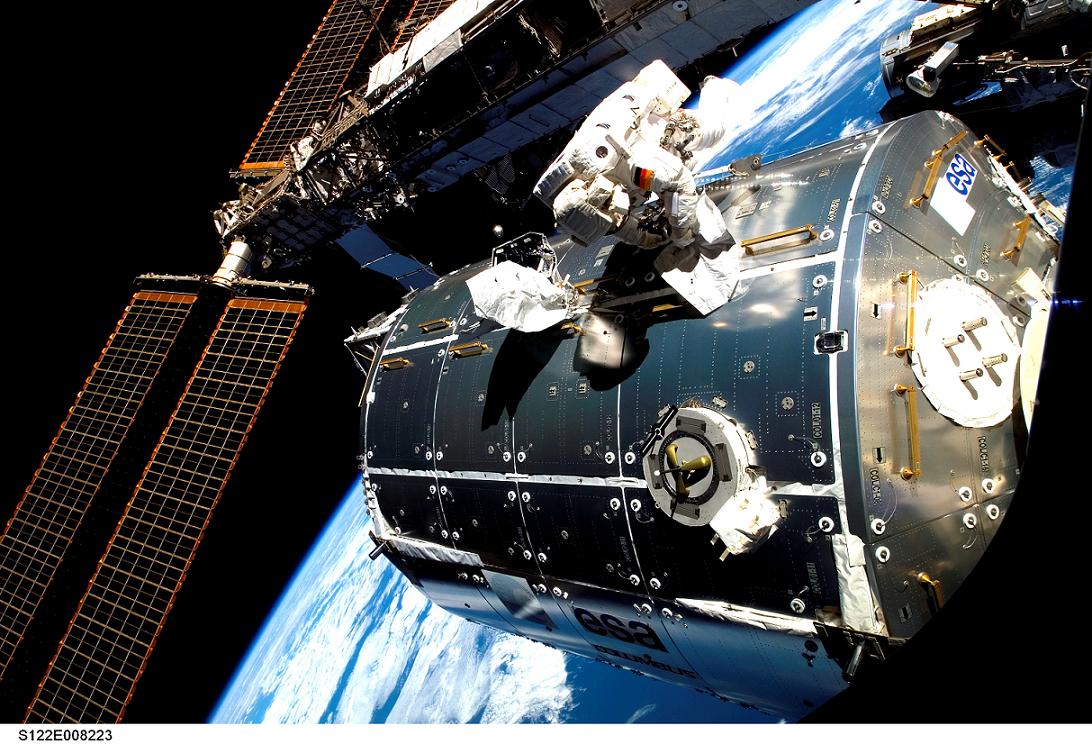
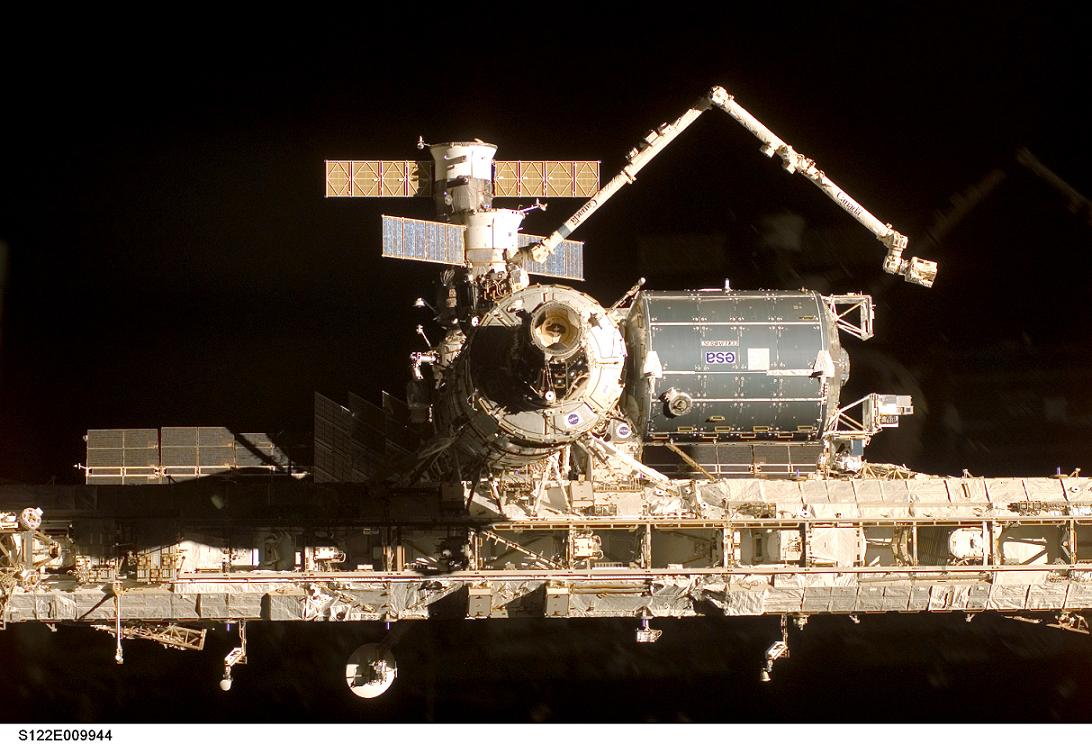
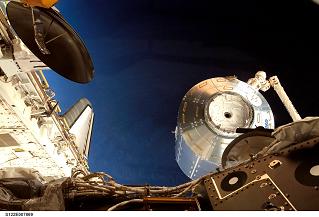
Columbus is an integral part of the International Space Station (ISS), and it is the first European laboratory dedicated to long-term experimentation in zero-g conditions. The projected lifetime of the laboratory is ten years.


The laboratory is named after the famous Italian navigator and explorer Christoforo Columbus, who discovered the Americas in 1492.


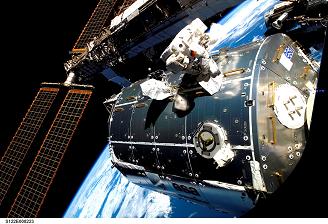
The Columbus Laboratory is a large, pressurized aluminum cylinder measuring 4.5 meters in diameter and 6.9 meters in length. Its side walls contain eight research racks, with another two in the ceiling. Each one of these racks contains its own power and cooling systems. Video and data links systems feed information back to researchers and control centers on the Earth.


Columbus is the smallest ISS laboratory, but it has the same scientific, power, and data handling capacity as the other laboratories owned by Russia, USA, and Japan.
 

Credits: ESA/NASA


Scientific experiments started immediately on the Columbus because the laboratory arrived at the station with four scientific facilities pre-installed.


Columbus is used to carry out experiments in many different disciplines, including biology, biotechnology, fluid and material science, medicine, and human physiology.


The key element in these experiments is the micro gravity. In micro gravity, with gravitational forces much weaker than on the ground, processes that are obscured by gravity become noticeable. The research racks onboard Columbus are designed to investigate how micro gravity affects materials, biological specimens, and people.


Columbus contains the European Physiology Module Facility, the Fluid Science Laboratory, the BioLab, the Material Science Laboratory, and the European Drawer Rack, which can house a variety of small experiments.
 

Credits: ESA/NASA


Problems that are investigated on Columbus include the loss of bone cells by astronauts, plant growth in micro gravity, fluids behavior, and combustion of materials.


Experiments are also conducted outside of Columbus. These experiments are used to study the Earth or to expose materials to the harsh radiation, temperature, and the vacuum of space.


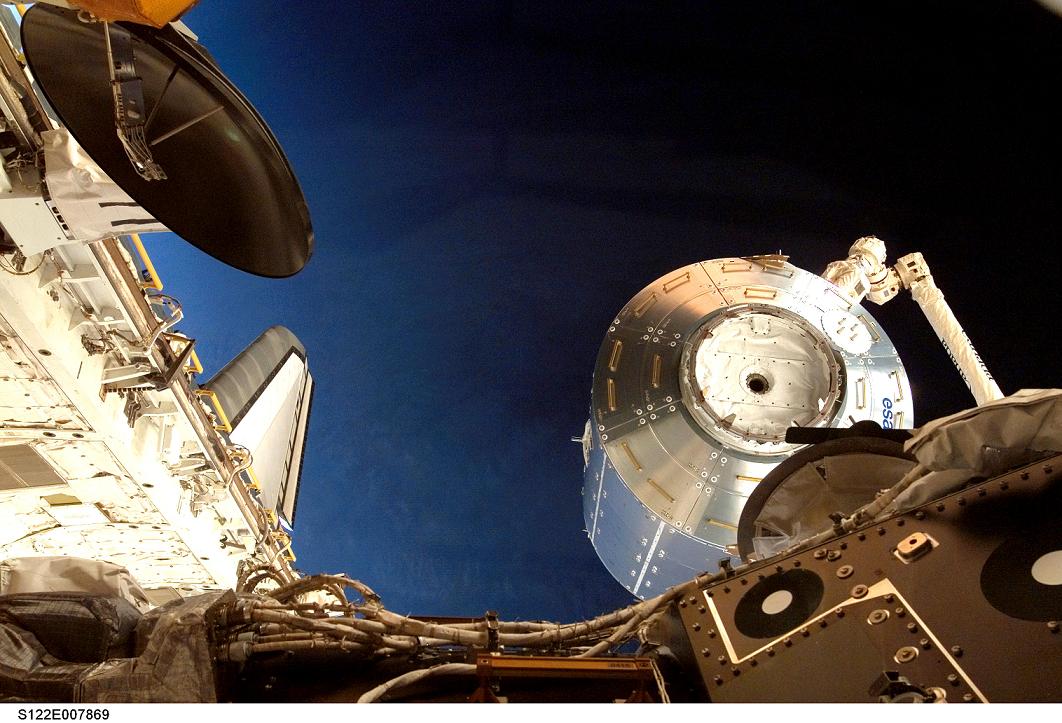
The mission that delivered the Columbus Laboratory to the ISS was STS-122. On February 7, 2008, the Space Shuttle Atlantis lifted off from Cape Canaveral, with Columbus docked into its cargo bay.


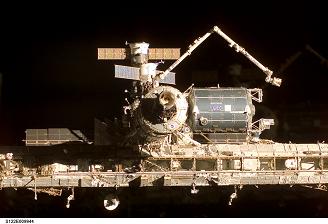
A vital part of the ISS and a prerequisite for the STS-122 mission, the Italian-built Node2 module (a.k.a. Harmony) was delivered to the ISS by the STS-120 mission in October 2007. The node is used as a connecting component for the Columbus Laboratory and the Kibo Laboratory. Node2 is also a docking port for the Space Shuttle.
 

Credits: ESA/NASA


Prior to the STS-122 mission , there were two spacewalks performed by the ISS Expedition 16 crew to prepare Node2 in order to receive the Columbus Laboratory.


ESA astronauts Léopold Eyharts from France and Hans Schlegel from Germany were members of the STS-122 mission. With five other NASA astronauts, they were part of the Columbus assembly and commissioning mission.


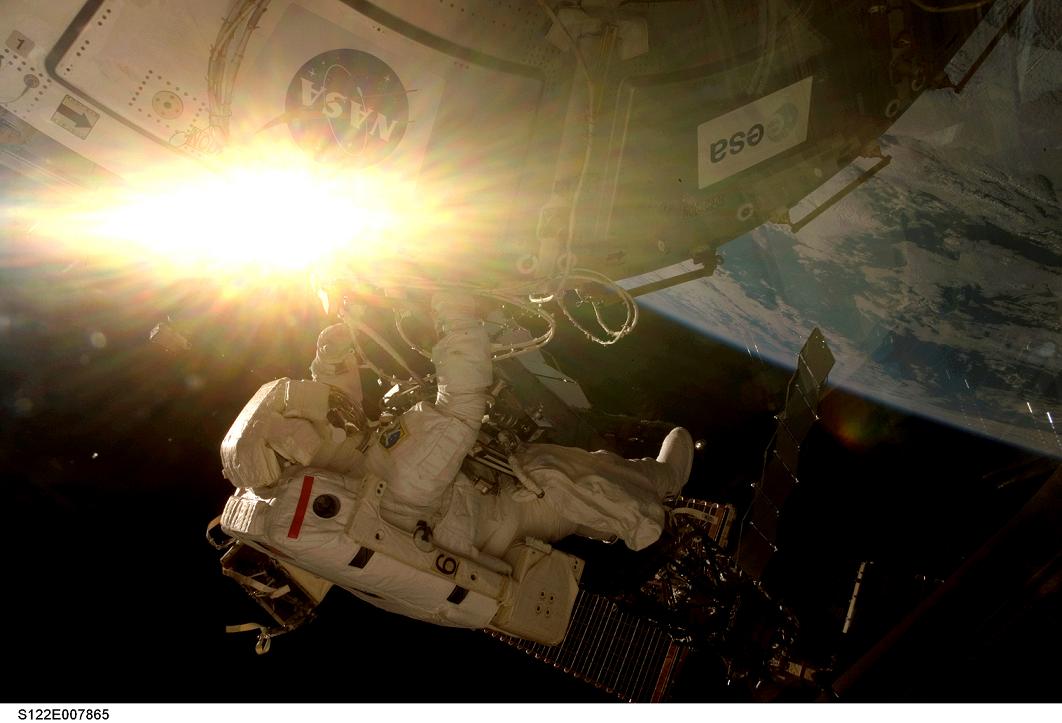
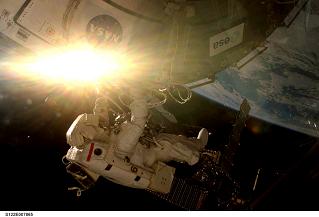
Schlegel spent twelve days in space and undertook two spacewalks to install the laboratory. Eyharts oversaw the installation and the start-up of the laboratory during a longer mission spent onboard the ISS.


Columbus was attached to the Harmony module on February 11, 2008, during the first spacewalk of the STS-122 mission. During this spacewalk, NASA astronauts Stanley Love and Rex Walheim spent nearly eight hours outside the ISS. The ISS robotic arm, Canadarm2, was used to move the laboratory from the cargo bay of the Space Shuttle to the starboard side of the Harmony module.
 

Credits: ESA/NASA


The second spacewalk of the mission lasted six hours and forty-five minutes. Schlegel and Walheim performed a regular station maintenance operation: they replaced the nitrogen tank that is used to pressurize the ammonia cooling system that runs on the ISS.


ESA was quite inspired to name the laboratory Columbus because it will open the world of micro gravity to a multitude of discoveries, in the same way that Christoforo Columbus opened up the New World to European explorers.

 

  • Facebook
  • Google
  • Slashdot
  • Reddit
  • Live
  • TwitThis