
OrbitalHub

The place where space exploration, science, and engineering meet

Domain is for sale. $50,000,000.00 USD. Direct any inquiries to contact@orbitalhub.com.


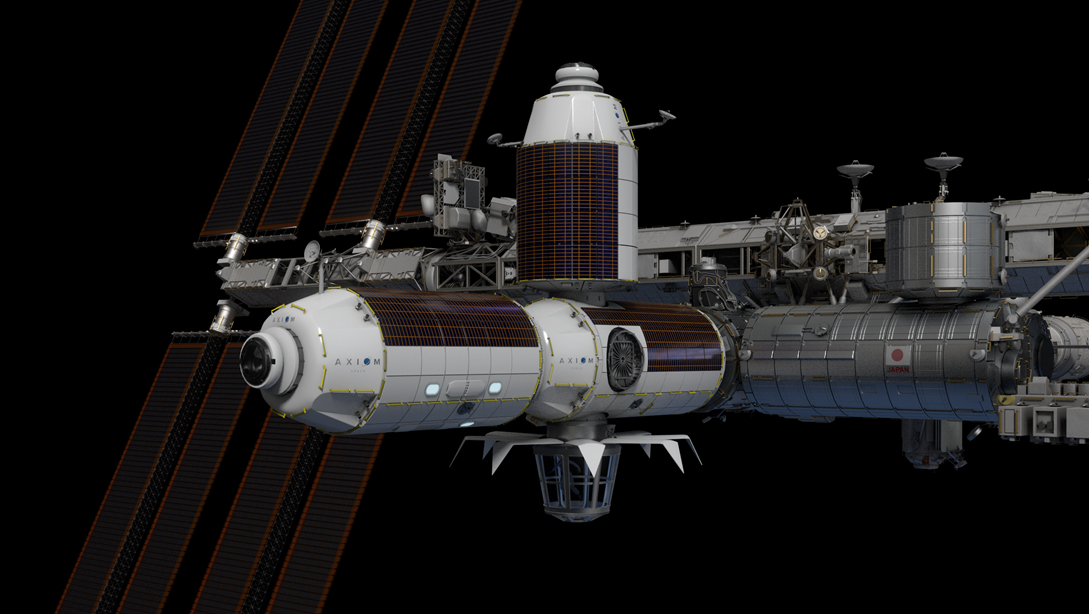
Axiom Space has closed a $350 million financing round in February 2026, accelerating development of what could become the world’s first commercial space station. The Houston-based company is building modular habitats designed to attach to the International Space Station before eventually separating to form a free-flying orbital facility. The funding provides critical capital as the company works toward launching its first module in 2027, pending continued progress on hardware development and NASA approvals.

The company’s architecture begins with the Payload Power Thermal Module, the foundational element that will connect to the ISS and provide infrastructure for research and payload operations. Subsequent modules will expand the station’s capabilities, adding crew quarters, research facilities, and an airlock for spacewalk operations. The station will initially rely on SpaceX Crew Dragon vehicles for crew transportation, with Axiom’s own AxEMU spacesuits providing capabilities for extravehicular activities.

Axiom has now completed NASA’s preliminary and critical design reviews, demonstrating that the proposed architecture meets agency requirements for safety and performance. Thales Alenia Space, the company’s primary manufacturing partner, is producing primary structures at facilities in Europe and the United States. The first flight hardware pieces have arrived in Houston for final integration, though the company still faces substantial work before the modules are ready for launch.

The commercial station concept addresses a critical transition in human spaceflight. The International Space Station, operated continuously since November 2000, faces an uncertain future as participating agencies evaluate options for continued operations beyond 2030. NASA has expressed support for commercial stations as successors to the ISS, believing that commercial operators can provide orbital research capabilities at lower cost than government-operated facilities. Axiom’s station represents the leading effort to make that vision a reality.

The company’s approach emphasizes research and manufacturing capabilities that could benefit from microgravity conditions. Pharmaceutical development, advanced materials processing, and biological research all show promise for improved outcomes when conducted in orbit. Axiom has already demonstrated interest through its private astronaut missions to the ISS, including the Ax-5 mission scheduled for January 2027 that will provide additional experience before the company’s own station becomes operational.

Designing space habitats that attach to existing infrastructure requires careful consideration of mechanical interfaces, power transfer, and data connectivity. The ISS provides power through solar arrays and thermal control through external radiators, but these systems were not designed to support significant additional loads. Axiom’s modules must integrate with existing systems without compromising station operations or crew safety, requiring extensive analysis and testing to verify compatibility.

The station’s expandable design allows for incremental capability growth as demand develops. Initial modules provide basic research and habitation space, with later additions offering specialized facilities for manufacturing or observatory operations. This approach mirrors how the ISS itself grew from a modest facility into a massive research complex over more than two decades of continuous assembly.

Power generation and thermal control present particular challenges for the larger station configuration. As modules are added, power requirements increase proportionally, necessitating expanded solar array capacity and more sophisticated thermal management. The station will need to dissipate heat generated by scientific equipment and life support systems while maintaining comfortable temperatures for crew members.


  • Facebook
  • Google
  • Slashdot
  • Reddit
  • Live
  • TwitThis
06-30-25

Axiom Mission 4

Posted by


Mea AI adiutor dicit:

Axiom Mission 4 (Ax-4) is currently unfolding as a landmark mission in the ongoing expansion of commercial spaceflight. Organized by Axiom Space, in partnership with NASA and SpaceX, Ax-4 is the fourth private astronaut mission to the International Space Station (ISS) and is part of NASA’s Commercial Low Earth Orbit Development program. As the line between government and private spaceflight continues to blur, Ax-4 is demonstrating what multinational, commercially driven space exploration looks like in practice.

Ax-4 launched aboard a SpaceX Falcon 9 rocket from Launch Complex 39A at NASA’s Kennedy Space Center in Florida, carrying the Crew Dragon Freedom spacecraft. After a successful launch and orbital insertion, the spacecraft docked with the ISS, beginning an approximately two-week mission in low Earth orbit.

The Ax-4 crew is led by Peggy Whitson, a former NASA astronaut and Axiom’s Director of Human Spaceflight. Whitson, who holds the U.S. record for cumulative days in space, brings unmatched experience and leadership to the mission. She is joined by three private astronauts representing the emerging generation of global space explorers:

Shubhanshu Shukla (India), a payload specialist and biomedical researcher.

Sławosz Uznański-Wiśniewski (Poland), a European Space Agency (ESA) reserve astronaut and nuclear physicist.

Tibor Kapu (Hungary), a flight and aerospace engineer.

Together, the crew represents a powerful combination of scientific, medical, and operational expertise, with participation from multiple national space programs and agencies.

Ax-4 plays a vital role in the commercialization of low Earth orbit. It serves as a live test case for integrating international and non-agency astronauts into the ISS framework—something that NASA sees as essential to its future LEO strategy. The mission supports NASA’s plan to transition routine orbital operations to commercial providers by the end of the decade, freeing government resources for Artemis missions and Mars exploration.

Furthermore, Ax-4 directly contributes to Axiom Space’s long-term vision of building Axiom Station, a free-flying commercial space station currently under development. Lessons from Ax-4—ranging from crew logistics to science payload management—inform Axiom’s engineering and operational planning for launching its first module, which will initially attach to the ISS before eventually separating into an independent platform.

This mission also sets a precedent for international inclusion in crewed spaceflight. Shubhanshu Shukla’s participation highlights India’s growing role in the commercial space sector, while Sławosz Uznański-Wiśniewski represents a step forward for ESA’s reserve astronaut program. Tibor Kapu’s presence underscores Hungary’s commitment to reentering human spaceflight after decades of absence.

The international nature of Ax-4 reinforces Axiom Space’s role as a facilitator of access to orbit for nations that lack launch capabilities or domestic astronaut corps. By enabling sovereign astronauts to fly as mission specialists, Axiom broadens the scope of participation in space exploration and science.

As Ax-4 continues, the mission is collecting critical data—not just from its scientific payloads, but from the structure and coordination of commercial spaceflight itself. The success of this mission will help define best practices for future mixed-nationality crews, commercial research operations, and astronaut training.

Looking forward, Axiom Mission 5 (Ax-5) is already in planning for 2025, expected to feature even more ambitious goals in terms of duration, research, and international collaboration. As commercial spaceflight moves from novelty to infrastructure, missions like Ax-4 will be remembered as formative efforts that redefined how, and by whom, space is explored.

Video credit: NASA


  • Facebook
  • Google
  • Slashdot
  • Reddit
  • Live
  • TwitThis





