OrbitalHub

The place where space exploration, science, and engineering meet

Domain is for sale. $50,000,000.00 USD. Direct any inquiries to contact@orbitalhub.com.


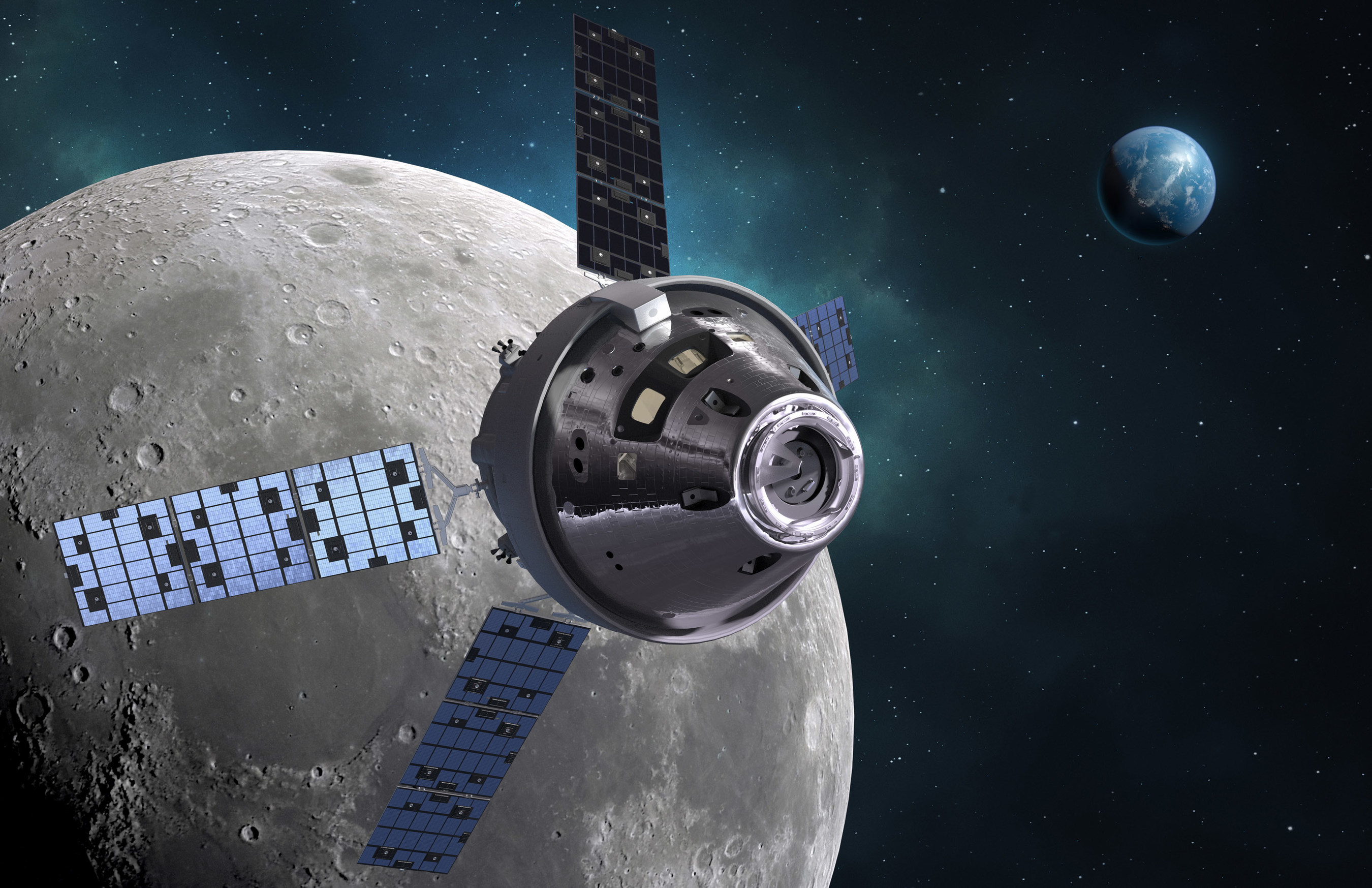
Artemis II represents a critical step in re-establishing human capability beyond low Earth orbit. The mission profile—launch, translunar injection, lunar flyby, and Earth reentry—was designed not as an exploration-first objective, but as a full-system validation of the technologies required for sustained human operations in deep space. At the center of this effort is Orion, a spacecraft engineered to support crewed missions at distances and durations exceeding those of previous programs.

The mission begins with launch and ascent, where structural loads, vibration environments, and propulsion performance are validated under operational conditions. During ascent, Orion must maintain structural integrity while transitioning from atmospheric flight to vacuum conditions. Avionics systems manage guidance, navigation, and control, ensuring that the vehicle achieves the correct orbital parameters for subsequent maneuvers. This phase tests not only propulsion and structural design, but also software systems responsible for real-time decision-making.

Once in Earth orbit, the spacecraft prepares for translunar injection, a high-energy burn that places Orion on a trajectory toward the Moon. This maneuver is governed by orbital mechanics, requiring precise velocity changes to escape Earth’s gravitational influence and intersect the Moon’s sphere of influence. The burn must be executed with high accuracy, as small deviations can propagate into significant trajectory errors over the course of the mission.

Following translunar injection, the spacecraft enters a coast phase in cislunar space. During this period, mission emphasis shifts from propulsion to life support and systems stability. Orion’s Environmental Control and Life Support System maintains a closed-loop environment, regulating oxygen levels, removing carbon dioxide, and controlling temperature and humidity. Water management systems recycle and distribute resources, while pressure control systems ensure a stable cabin environment. These systems must operate continuously and autonomously, as crew safety depends on their reliability.

Thermal control is another key engineering consideration. In deep space, the spacecraft is exposed to extreme temperature gradients, with surfaces alternately facing direct solar radiation and the cold of space. Orion uses a combination of passive insulation and active thermal management systems to maintain internal temperatures within operational limits. Heat generated by onboard electronics and crew activity must be dissipated efficiently, typically through radiative surfaces designed to emit infrared energy into space.

Navigation during the translunar phase relies on a combination of onboard sensors and ground-based tracking. Star trackers provide precise attitude determination by comparing observed star fields with onboard catalogs. Inertial measurement units track changes in velocity and orientation. Ground stations contribute additional data through radio tracking, measuring signal travel time and Doppler shifts to determine position and velocity. These measurements are integrated to maintain accurate knowledge of the spacecraft’s trajectory.

As Orion approaches the Moon, gravitational interactions become more complex. The lunar flyby trajectory is designed to use the Moon’s gravity to alter the spacecraft’s path without requiring significant propulsion. This maneuver tests the spacecraft’s ability to operate in a multi-body gravitational environment, where both Earth and the Moon influence motion. During the flyby, Orion passes behind the Moon relative to Earth, resulting in a temporary communications blackout. This phase validates onboard autonomy, as the spacecraft must maintain correct orientation and trajectory without real-time input from ground control.

Radiation exposure is also assessed during the mission. Outside Earth’s magnetosphere, Orion and its crew are subjected to higher levels of cosmic radiation. Dosimeters and monitoring systems measure exposure, providing data that informs shielding requirements and operational procedures for future missions. Understanding radiation effects is essential for longer-duration missions, such as those planned for lunar surface operations and eventual Mars exploration.

The return trajectory initiates the final major phase of the mission. As Orion re-enters Earth’s gravitational field, it accelerates to high velocities that must be safely reduced during atmospheric entry. The spacecraft’s heat shield is the primary system responsible for managing this phase. Designed as an ablative shield, it absorbs thermal energy by gradually eroding, carrying heat away from the structure. The heat shield must withstand temperatures exceeding several thousand degrees Celsius while maintaining structural integrity.

Reentry dynamics involve complex interactions between the spacecraft and the atmosphere. As Orion descends, air compression generates a high-temperature plasma around the vehicle. This plasma can attenuate radio signals, leading to a temporary communications blackout. The spacecraft’s guidance system must maintain the correct entry angle to balance deceleration forces and thermal loads. Too steep an angle increases heating and structural stress, while too shallow an angle risks skipping off the atmosphere.

Following peak heating, Orion deploys a sequence of parachutes to further reduce velocity. Drogue parachutes stabilize the vehicle, followed by main parachutes that provide controlled descent to the ocean surface. The splashdown phase tests recovery procedures, ensuring that the spacecraft can be safely retrieved and that crew egress can be conducted efficiently.

Throughout the mission, data collection is continuous. Sensors monitor structural loads, thermal conditions, radiation levels, and system performance. This data is essential for validating design models and identifying areas for improvement. Artemis II is not only a demonstration of capability, but also a source of empirical data that informs subsequent missions.

The significance of Artemis II lies in its role as a systems integration test. Individual components—propulsion, life support, navigation, thermal protection—have been developed and tested separately. This mission verifies that they function together as a cohesive system under operational conditions. It demonstrates that human-rated spacecraft can operate reliably in deep space, maintaining crew safety while performing complex maneuvers.

The mission also establishes operational procedures for future flights. Crew training, mission control protocols, and recovery operations are all validated in a real mission environment. These procedures are critical for scaling operations to more complex missions, including lunar landings and extended stays on the Moon.

Artemis II provides a foundation for sustained human presence beyond Earth. By demonstrating that Orion can carry astronauts to the Moon and return safely, it reduces uncertainty in mission planning and increases confidence in the underlying technologies. The mission confirms that the engineering systems required for deep space exploration are not only functional, but operationally viable.

In practical terms, Artemis II transitions human spaceflight from experimental capability to repeatable operation in cislunar space. It establishes the baseline from which future missions will build, enabling the progression from flyby to landing, and from short-duration missions to sustained presence.

Video credit: Lockheed Martin


  • Facebook
  • Google
  • Slashdot
  • Reddit
  • Live
  • TwitThis


NASA has confirmed that the Artemis II mission will launch no earlier than April 1, 2026, marking the first crewed lunar journey since Apollo 17 departed the Moon in December 1972. The mission represents the culmination of years of development and testing of the Space Launch System rocket and Orion spacecraft, both designed to return humans to deep space.

The Artemis II crew consists of four astronauts: Commander Reid Wiseman, Pilot Victor Glover, Mission Specialist Christina Koch, and Canadian Space Agency astronaut Jeremy Hansen. These four will spend approximately 10 days on a trajectory that takes them around the Moon and back to Earth, testing the systems that will be essential for subsequent Artemis missions targeting lunar surface operations.

The flight readiness review process has taken longer than initially planned. Engineers identified and addressed a hydrogen leak in the core stage during earlier launch attempts in February 2026. Then, in late February, technicians discovered issues with helium flow to the upper stage of the rocket. Helium serves multiple critical functions, including propellant line purging and fuel tank pressurization. These technical challenges prompted NASA to roll the rocket back from Launch Complex 39B at Kennedy Space Center for servicing.

The SLS rocket returned to the Vehicle Assembly Building where repairs were completed. NASA announced in mid-March 2026 that the vehicle would roll back to the launch pad no earlier than March 19, with the new launch target of April 1. The agency emphasized that the additional time allowed teams to ensure all systems meet the requirements for a crewed mission.

Artemis II builds directly on the success of Artemis I, an uncrewed test flight that launched in 2022 and sent Orion on a 25-day journey around the Moon. That mission validated the spacecraft’s heat shield, navigation systems, and life support equipment in the harsh environment of deep space. The crewed flight will add the human element, testing how astronauts interact with vehicle systems and how the spacecraft performs with people aboard.

The mission profile involves Orion separating from the Interim Cryogenic Propulsion Stage after reaching Earth orbit, then performing a translunar injection burn to send the spacecraft toward the Moon. The crew will orbit the Moon at a distance of approximately 8,900 kilometers before performing a return trajectory back to Earth. Splashdown in the Pacific Ocean will conclude the mission.

Artemis II serves as a stepping stone toward the ambitious Artemis program goals, which include establishing a sustained human presence on and around the Moon through the Lunar Gateway space station and surface missions with the help of commercial partners. The data gathered from this flight will inform the planning for Artemis III, which aims to land astronauts on the lunar south pole.

The astronauts continue training throughout the delays, maintaining proficiency with vehicle systems and procedures. NASA managers have stated that crew safety remains the paramount consideration in all launch decisions, and the additional time on the ground ensures the mission can proceed with confidence when the conditions are right.


  • Facebook
  • Google
  • Slashdot
  • Reddit
  • Live
  • TwitThis
10-16-25

Rocket Supercomputer Simulation

Posted by


Mea AI adiutor dicit:

When NASA’s Space Launch System (SLS) powers into the sky, it must contend with some of the most extreme and complex aerodynamic conditions ever attempted. The ascent phase—especially during transonic and supersonic transitions and through maximum aerodynamic stress—is a crucible for design and engineering. Rather than rely solely on wind tunnels, NASA has increasingly turned to supercomputer-based computational fluid dynamics (CFD) simulations to model the flows around the twin solid rocket boosters, the core stage, and plume interactions. These simulations feed into aerodynamic databases used across vehicle design, structural loads, control algorithms, and safety margins.

The challenge in modeling the flow around SLS boosters is immense. As the vehicle accelerates, shock waves form, flow separation regions emerge, boundary layers evolve, and the rocket plumes themselves strongly interact with the surrounding airstream. Moreover, during events like booster separation, multiple plumes fire simultaneously—up to 22 different exhaust sources in some analyses, combining output from the core engines, boosters, and separation motors. Resolving those off-body interactions, transient flow features, and the coupling between vehicle aerodynamics and plume dynamics demands very high fidelity simulations. The NASA team has used solvers such as OVERFLOW, FUN3D, and Cart3D to explore a wide envelope of flight conditions.

Running these simulations requires massive computational resources. Each case can consume thousands to tens of thousands of core-hours, depending on flow complexity, grid resolution, and the number of interacting plumes. To build a full aerodynamic database that spans multiple Mach numbers, angles of attack, mass fractions, and thrust conditions, NASA runs hundreds to thousands of individual cases. The supercomputers at the NASA Advanced Supercomputing (NAS) facility, including Pleiades, Electra, and others, serve as the backbone of these efforts. Through careful meshing strategies, solver optimizations, and parallel computing techniques, engineers map out pressure distributions, shear stresses, and load profiles for every relevant component of the booster-core assembly.

These simulation results are not academic exercises—they directly inform the safety and performance of SLS missions. The aerodynamics databases are used by structural engineers to assess bending loads, by guidance and control teams to refine trajectory models, and by separation system designers to ensure that boosters detach cleanly without risking collision with the core. When flight data come in, the models themselves can be validated and refined, closing the loop between simulation and real world performance. As SLS evolves—especially with future variants and heavier payloads—the simulation infrastructure will scale accordingly, enabling continuous improvements in confidence, margin, and mission success.

Video credit: NASA/NAS/Gerrit-Daniel Stich, Michael Barad, Timothy Sandstrom, Derek Dalle


  • Facebook
  • Google
  • Slashdot
  • Reddit
  • Live
  • TwitThis
04-28-25

Artemis II Rocket Core Stage

Posted by


NASA dicit:

​Technicians use massive cranes inside the Vehicle Assembly Building at NASA Kennedy’s Space Center in Florida to lift the fully assembled SLS (Space Launch System) core stage vertically 225-feet above the ground from High Bay 2 to a horizontal position in the facility’s transfer aisle. In the transfer aisle, technicians conducted final preparations of the core stage before it was integrated with the completed twin solid rocket booster segments. NASA is implementing a more efficient stacking process to support future missions to the Moon beginning with the Artemis II test flight.

Video credit: NASA


  • Facebook
  • Google
  • Slashdot
  • Reddit
  • Live
  • TwitThis
02-18-25

Artemis II

Posted by


Wikipedia dicit:

Artemis II is a scheduled mission of the NASA-led Artemis program. It will use the second launch of the Space Launch System (SLS) rocket and include the first crewed mission of the Orion spacecraft. The mission is scheduled to take place no earlier than April 2026. Four astronauts will perform a flyby of the Moon and return to Earth, becoming the first crew to travel beyond low Earth orbit since Apollo 17 in 1972. Artemis II will be the first crewed launch from Launch Complex 39B of the Kennedy Space Center since STS-116 in 2006.

Video credit: NASA


  • Facebook
  • Google
  • Slashdot
  • Reddit
  • Live
  • TwitThis