


NASA Said Artemis 3 Would Land on the Moon. Now It Won’t. Here’s Why That Makes Sense
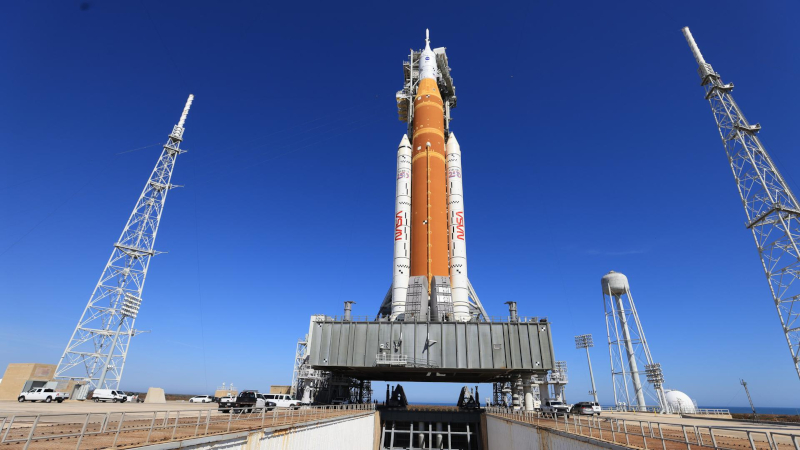
On May 13, 2026, NASA published new details about the Artemis 3 mission and the changes were striking enough to warrant attention not for what they added, but for what they removed. The mission, originally planned as the first crewed lunar landing since Apollo 17, will now send four astronauts to low Earth orbit aboard the Space Launch System and have them dock with prototype lunar landers. No landing. No lunar surface. The Moon is gone from the mission.
The agency confirmed that Artemis 3 will launch from Kennedy Space Center’s Launch Complex 39B no earlier than late 2027, and that the SLS rocket will fly without its usual upper stage. Instead of the Interim Cryogenic Propulsion Stage, the upper stage that has carried Orion to the Moon on previous flights, NASA will install an inert structural spacer — essentially a hollow cylinder with the same mass, dimensions, and interface geometry as the ICPS. The spacer preserves the rocket’s aerodynamic and structural characteristics without consuming propellant that could be allocated elsewhere.
The reason for the change is straightforward: the lunar landers are not ready. SpaceX’s Starship Human Landing System and Blue Origin’s Blue Moon have both experienced development delays. A crewed lunar landing requires those vehicles to perform rendezvous and docking in lunar orbit, execute a descent to the surface, support a stay of variable duration, and then launch back to rendezvous with Orion. Each step involves systems that have not yet been demonstrated in the configuration needed for crewed operations. NASA, having learned hard lessons from the heat shield anomalies encountered on the Artemis 2 flight in April 2026, decided it would not also accept the risk of an unproven lander.
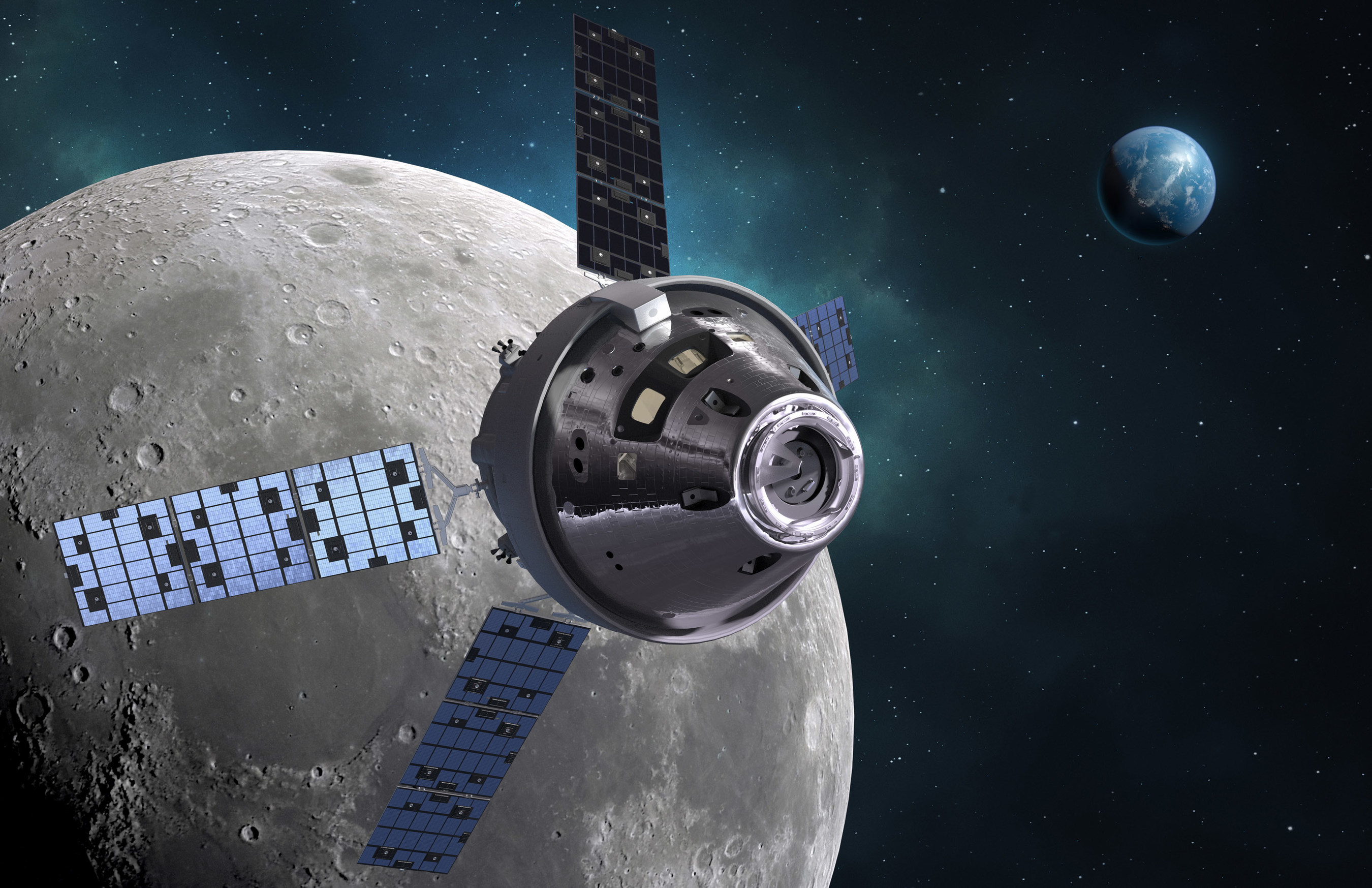
The restructured Artemis 3 instead serves as what the agency describes as a dress rehearsal — similar in concept to Apollo 9, which tested the lunar module in Earth orbit before the first Moon landing. Four astronauts will launch on the Block 1 SLS configuration, which consists of the core stage and twin solid rocket boosters. Orion will separate from the stack and the crew will spend extended time aboard the spacecraft, testing rendezvous and docking with one or both lander prototypes in the relatively safe environment of low Earth orbit, approximately 463 kilometers above Earth at a 33-degree inclination. The European Service Module that powers Orion will handle orbital raising and maneuvering, with the ICPS being preserved for Artemis 4.
The hollow spacer solution was driven in part by hardware availability. The supply of ICPS stages is limited, having been built for the first three Artemis missions, and transitioning to the Exploration Upper Stage on later Block 1B configurations is still years away. Using the final ICPS on Artemis 4 rather than consuming it on an Earth-orbit test mission makes sense from a launch vehicle economics perspective. The spacer, being fabricated at NASA’s Marshall Space Flight Center in Huntsville, Alabama, maintains the structural interface between the Orion stage adapter and the launch vehicle stage adapter while costing nothing in propellant mass.
Artemis 4 remains targeted as the first crewed lunar landing, currently scheduled for no earlier than 2028, and will use the first ICPS from the original batch. The lander situation will need to be resolved by then. SpaceX is expected to conduct an uncrewed Starship HLS test flight before committing a crewed variant. Blue Origin is targeting an end-of-2026 launch of its Blue Moon Pathfinder MK1, an uncrewed cargo mission to validate the BE-7 engine, precision landing systems, and surface operations. Both companies face continued schedule pressure, and the May 2026 grounding of Blue Origin’s New Glenn rocket following an April 19 second-stage failure adds a further complication for Blue Moon’s path to orbit.
The decision to strip the landing from Artemis 3 drew predictable criticism from observers who saw it as another in a long series of delays. But the engineering logic is sound. Artemis 2’s heat shield erosion, traced to an arc-jet test anomaly and now requiring a redesigned thermal protection system for the Orion capsule, consumed program schedule margin. Adding a lunar landing with unproven vehicles on top of a heat shield redesign would have compounded risk in a domain where the cost of failure is measured in human lives. Moving the landing to Artemis 4 preserves schedule integrity for the test flight while keeping the lunar surface objective alive.
The Artemis program has always been a慢 exercise in managed ambition. The original Constellation program was canceled in 2010. The SLS was ordered to replace shuttle hardware that did not exist. The lunar landing has been pushed back repeatedly as funding, politics, and engineering complexity have collided. Stripping Artemis 3 to an Earth-orbit test is not a sign of weakness. It is a sign that the program has decided, perhaps for the first time, to let engineering reality set the schedule rather than politics.



 Subscribe to blog posts using RSS












