OrbitalHub

The place where space exploration, science, and engineering meet

Domain is for sale. $50,000,000.00 USD. Direct any inquiries to contact@orbitalhub.com.

07-24-19

Crew Dragon Parachute Tests

Posted by


Wikipedia dicit:

Dragon 2 is a reusable spacecraft developed and manufactured by U.S. aerospace manufacturer SpaceX, intended as the successor to the Dragon cargo spacecraft. The spacecraft launches atop a Falcon 9 Block 5 rocket and return via ocean splashdown. In comparison to Dragon, Dragon 2 has larger windows, new flight computers and avionics, redesigned solar arrays, and a modified outer mold line.

The spacecraft is planned to have two variants – Crew Dragon, a human-rated capsule capable of carrying up to seven astronauts, and Cargo Dragon, an updated replacement for the original Dragon. Cargo Dragon capsules are repurposed flown Crew Dragon capsules. Crew Dragon is equipped with an integrated launch escape system in a set of four side-mounted thruster pods with two SuperDraco engines each. Crew Dragon has been contracted to supply the International Space Station (ISS) with crew under the Commercial Crew Program, with the initial award occurring in October 2014 alongside Boeing’s CST-100 Starliner.

Video Credit: SpaceX


  • Facebook
  • Google
  • Slashdot
  • Reddit
  • Live
  • TwitThis
06-10-19

Dragon Leaves Station

Posted by


Wikipedia dicit:

Dragon is a reusable cargo spacecraft developed by SpaceX, an American private space transportation company. Dragon is launched into orbit by the company’s Falcon 9 two-stage-to-orbit launch vehicle.

During its maiden flight in December 2010, Dragon became the first commercially built and operated spacecraft to be recovered successfully from orbit. On 25 May 2012, a cargo variant of Dragon became the first commercial spacecraft to successfully rendezvous with and attach to the International Space Station (ISS). SpaceX is contracted to deliver cargo to the ISS under NASA’s Commercial Resupply Services program, and Dragon began regular cargo flights in October 2012. With the Dragon spacecraft and the Orbital ATK Cygnus, NASA seeks to increase its partnerships with domestic commercial aviation and aeronautics industry.

On 3 June 2017, the CRS-11 capsule, largely assembled from previously flown components from the CRS-4 mission in September 2014, was launched again for the first time, with the hull, structural elements, thrusters, harnesses, propellant tanks, plumbing and many of the avionics reused while the heat shield, batteries and components exposed to sea water upon splashdown for recovery were replaced.

SpaceX has developed a second version called Dragon 2, which includes the capability to transport people. Flight testing is scheduled to complete in the first half of 2019 with the first flight of astronauts, on a mission contracted to NASA, scheduled to occur later the same year.

Video Credit: NASA


  • Facebook
  • Google
  • Slashdot
  • Reddit
  • Live
  • TwitThis


NASA dicit:

The unpiloted SpaceX Dragon cargo craft arrived at the International Space Station May 6, two days after launch atop a Falcon 9 rocket from the Cape Canaveral Air Force Station, Florida. Expedition 59 Flight Engineers David Saint-Jacques of the Canadian Space Agency and Nick Hague of NASA used the Canadian-built Canadarm2 robotic arm to capture Dragon before turning the operation over to robotic ground controllers who maneuvered Dragon for its installation to the Earth-facing port of the Harmony module where it was bolted into place for a month-long stay. Dragon is delivering almost three tons of supplies and scientific experiments to the orbital outpost.

Video Credit: NASA


  • Facebook
  • Google
  • Slashdot
  • Reddit
  • Live
  • TwitThis
05-6-19

SpaceX CRS-17 Launch

Posted by


NASA dicit:

Countdown and liftoff of the SpaceX Falcon 9 rocket with the company’s Dragon spacecraft onboard for the company’s 17th Commercial Resupply Services mission to the International Space Station. Launch occurred at 2:48 a.m. EST on May 4 from Launch Complex 40 at Cape Canaveral Air Force Station in Florida.

Video Credit: NASA/SpaceX


  • Facebook
  • Google
  • Slashdot
  • Reddit
  • Live
  • TwitThis


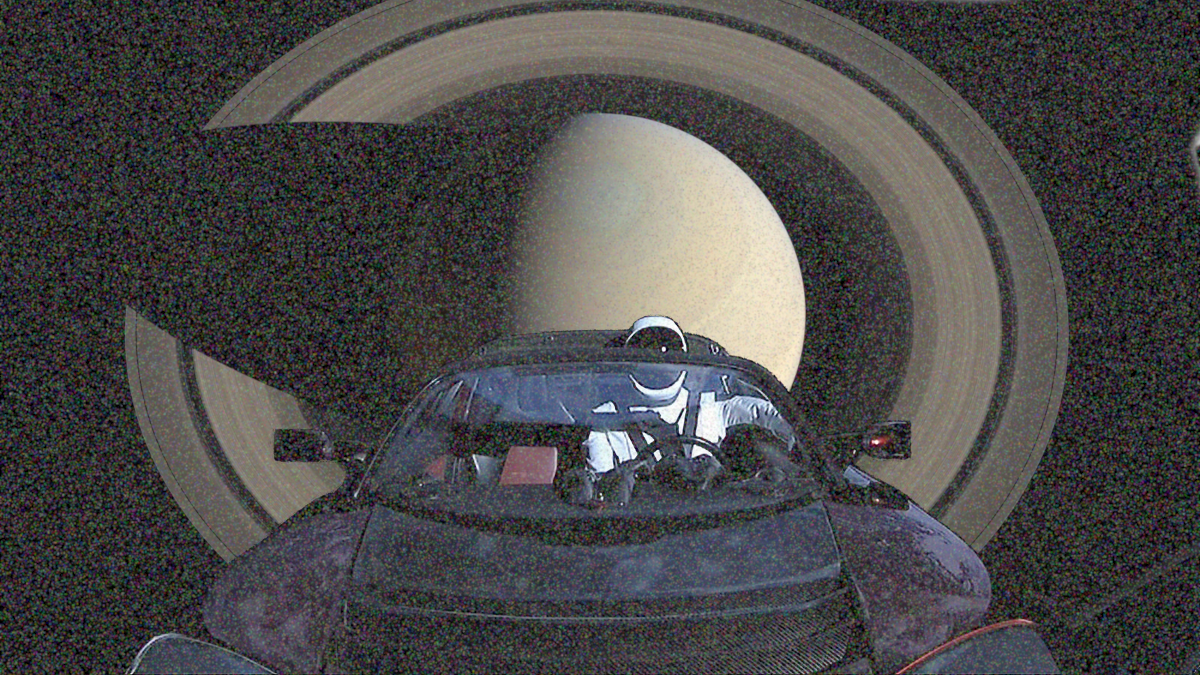
An amateur radio-astronomer from Northern Ontario received this image from Starman and the Falcon Heavy test payload.

There are rumors that SpaceX is developing a revolutionary propulsion system. Clearly, the Falcon Heavy test launch was an opportunity to test this new drive. The payload with Elon Musk’s roadster was the perfect decoy for a mission like this.

In terms of drive performance, the roadster was able to reach the Saturn system in a little more than a year. It took Cassini seven years to reach Saturn. When Earth and Saturn are closest, the distance between them is approximately 1.2 billion kilometers. We can conclude that the roadster drive must be a remarkable piece of engineering. It could be the scientific breakthrough that will allow humans to colonize the Solar System.

Image credit: Zgabeartza Iftode


  • Facebook
  • Google
  • Slashdot
  • Reddit
  • Live
  • TwitThis
03-13-19

SpaceX Crew Dragon Splash Down

Posted by


NASA dicit:

“The SpaceX Crew Dragon spacecraft undocks from the International Space Station on March 8, 2019 after nearly 5 days aboard the orbiting laboratory during the company’s Demo-1 mission for NASA’s Commercial Crew Program and descends to re-enter the Earth’s atmosphere. Just over 5 hours later, the uncrewed spacecraft splashes down in the Atlantic Ocean off the coast of Florida and is recovered by SpaceX teams.”

Video Credit: NASA


  • Facebook
  • Google
  • Slashdot
  • Reddit
  • Live
  • TwitThis