OrbitalHub

The place where space exploration, science, and engineering meet

Domain is for sale. $50,000,000.00 USD. Direct any inquiries to contact@orbitalhub.com.

11-22-08

ESA Prepares For The Next Step

Posted by


Credits: ESA


The European presence in space has become more prominent over the years. The development of the Columbus Laboratory and the introduction of the Automated Transport Vehicle (ATV) are two major milestones that have opened a new era for Europe’s presence in space.


Europe now aspires to consolidate its independence with the Large Cargo Return (LCR) and the Crew Transport Vehicle (CTV).


The LCR and the CTV are the new versions of the ATV that are now being considered by ESA’s Human Spaceflight Directorate. These versions of the ATV reuse the service module of the ATV configuration. A capsule with re-entry capability will replace the integrated cargo carrier. In the first phase, the capsule will bring cargo from the ISS down to Earth. The ultimate goal is to be able to carry a full crew up to the ISS and bring the crew back to Earth.


Credits: ESA


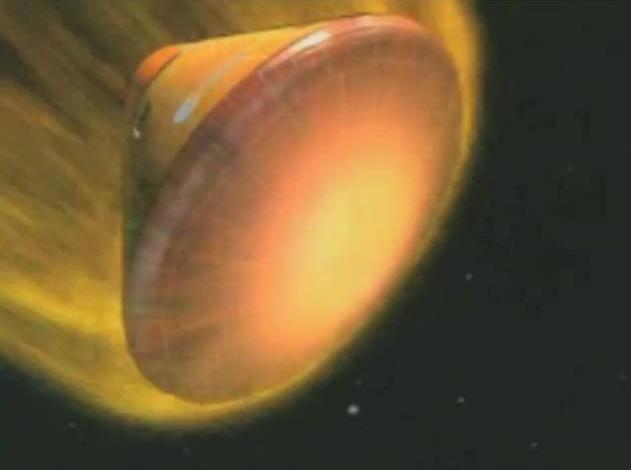
Atmospheric re-entry is not a new challenge for ESA engineers.


Past programs – like the Atmospheric Re-entry Demonstrator – and future programs – like the Intermediate Experimental Vehicle (IXV) – will help validate models used for the simulation of the re-entry phase and also provide a solid base in designing materials for the thermal protection system.


However, one challenge that needs to be addressed is the ejection system for the CTV/Ariane V configuration. The safety of the crew has to be ensured in the case of an anomaly on the launch pad or during the ascent phase of the flight. ESA will have to develop new technologies to satisfy this crucial requirement.
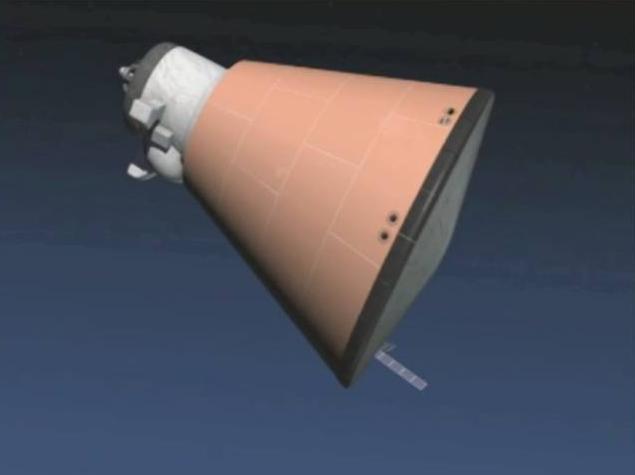
 

Credits: ESA


ESA has already proposed the LCR and the CTV versions of the ATV as the next step in the evolution of the ATV. However, the decision to go forward lies with the Council of the European Space Ministers. If ESA proposals are approved, the first flight of the LCR is expected in 2015, and the CTV could be docking to the ISS by 2020.


Check out ESA’s podcast about the new proposed programs that are based on the ATV.


  • Facebook
  • Google
  • Slashdot
  • Reddit
  • Live
  • TwitThis
11-4-08

SpaceX Enters The Dragon

Posted by


Credits: SpaceX


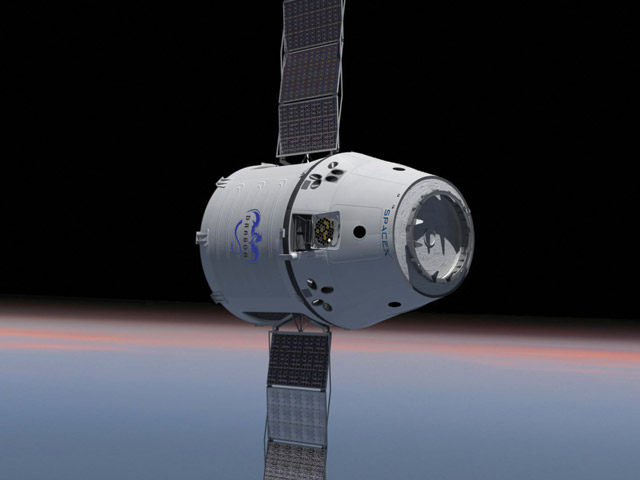
SpaceX just announced the DragonLab Spacecraft. DragonLab is a reusable spacecraft capable of delivering pressurized and un-pressurized payloads to and from space. SpaceX will use Falcon 9 (the heavier version of Falcon 1) to launch the DragonLab spacecraft into orbit.


Dragon will perform two missions in 2009. These missions will test the telemetry, orbital maneuvering and thermal control, and a rendezvous simulation with the Falcon 9 upper stage. The first full cargo mission to ISS is scheduled for 2010.


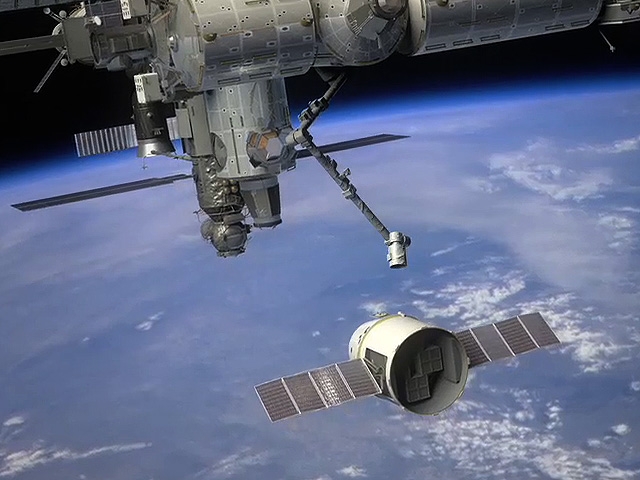
The technical page dedicated to the Dragon spacecraft is quite impressive. Just to mention a few features: down-cargo capability is equal to up-cargo, and up to seven passengers in crew configuration. SpaceX claims fully autonomous rendezvous and docking, but the simulation developed by Odyssey Space Research shows capture operations similar to HTV (the Dragon spacecraft will approach the ISS and then the ISS robotic manipulator will capture the spacecraft and guide it to the docking module).


Credits: NASA/SpaceX


DragonLab will compete with the ATV spacecraft (and the future CTV, LCR versions) that ESA is developing.


SpaceX also announced that it is hosting a workshop on November 6, 2008. Registration is mandatory, so time is of the essence! I am pretty sure the seats are selling like hot cakes…


  • Facebook
  • Google
  • Slashdot
  • Reddit
  • Live
  • TwitThis
10-25-08

Starquakes Detected By COROT

Posted by


Credits: CNES / D. Ducros


Stellar seismology is a relatively new field of study. Since 1995, the ESA/NASA mission SOHO (SOlar Heliospheric Observatory) has pioneered the study of stellar seismology through observations of our own star, the Sun. Despite its name, stellar seismology is the study of stellar pressure waves and not stellar seismic activity (There is no such thing as seismic activity inside a star).


The COROT mission uses a similar approach to study other stars. Three stars similar to the Sun – known as HD499933, HD181420, and HD181906 – have been probed and starquakes have been detected.


Credits: CNES


Starquakes, or oscillations of distant stars, can be detected through variation in the light emitted by the star as sound waves hit the star’s surface.


This method reveals the internal structure of the star, and the patterns that the energy follows when transported from the core to the surface. These observations also allow astronomers to calculate the star’s mass, age, and chemical composition.


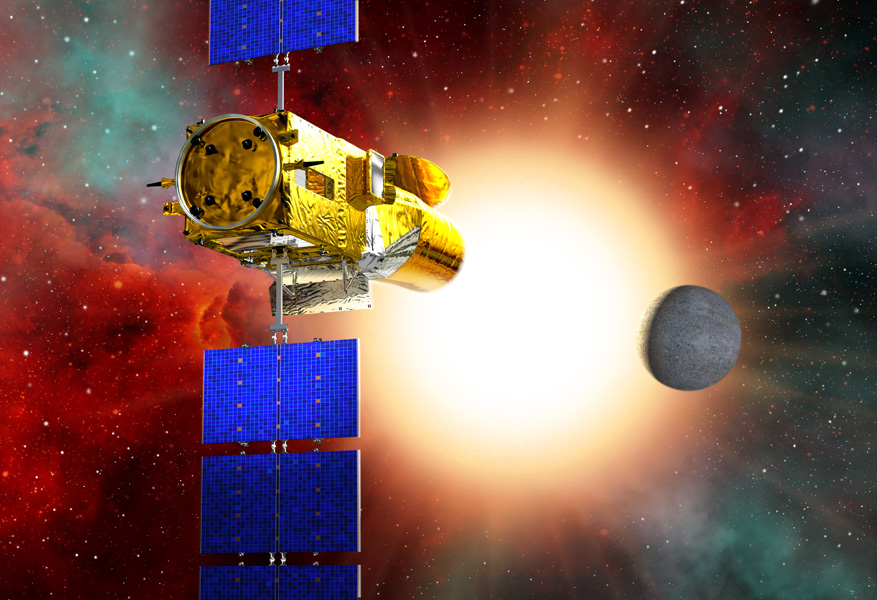
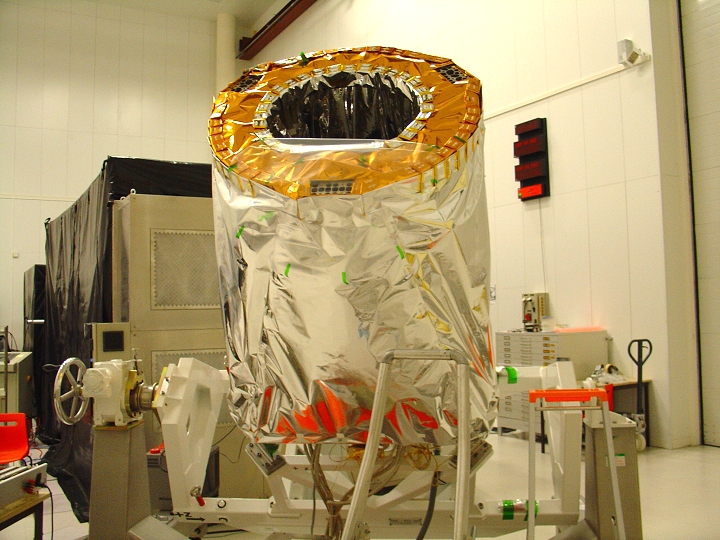
The COROT satellite, carrying a 27 cm diameter telescope, was launched in December 2006 by a Soyuz rocket from the Baikonur Cosmodrome. COROT is a 360 kg satellite and operates on a polar orbit at an altitude of 896 km. COROT is a mission lead by the French Space Agency (CNES); ESA, Austria, Belgium, Germany, Spain, and Brazil also contributed to the mission. The main objectives of the mission are to search for exoplanets and to study stellar interiors.


Credits: CNES


The telescope onboard COROT cannot see exoplanets directly. The method employed by COROT to discover exoplanets is to measure variations in the luminosity of stars. Planets cause such variations as they pass in front of their parent stars. These celestial alignments are called planetary transits. Obviously, the smaller the planet, the higher the telescope’s sensitivity must be in order to detect it.


Ground telescopes have detected more than 200 exoplanets to date (all of them gas giants). COROT continues the search for new worlds outside of our solar system from above the Earth’s atmosphere. Without the distorting effects of the atmosphere, COROT is able to find planets that are made out of rock and are smaller than the gas giants. COROT marks the first step in understanding other solar systems, how planets are formed, and how life can develop on these planets.


From February 2 to February 5, 2009, the first COROT International Symposium will be held in Paris, France.


  • Facebook
  • Google
  • Slashdot
  • Reddit
  • Live
  • TwitThis
10-22-08

Newton Phone Home

Posted by


Credits: ESA


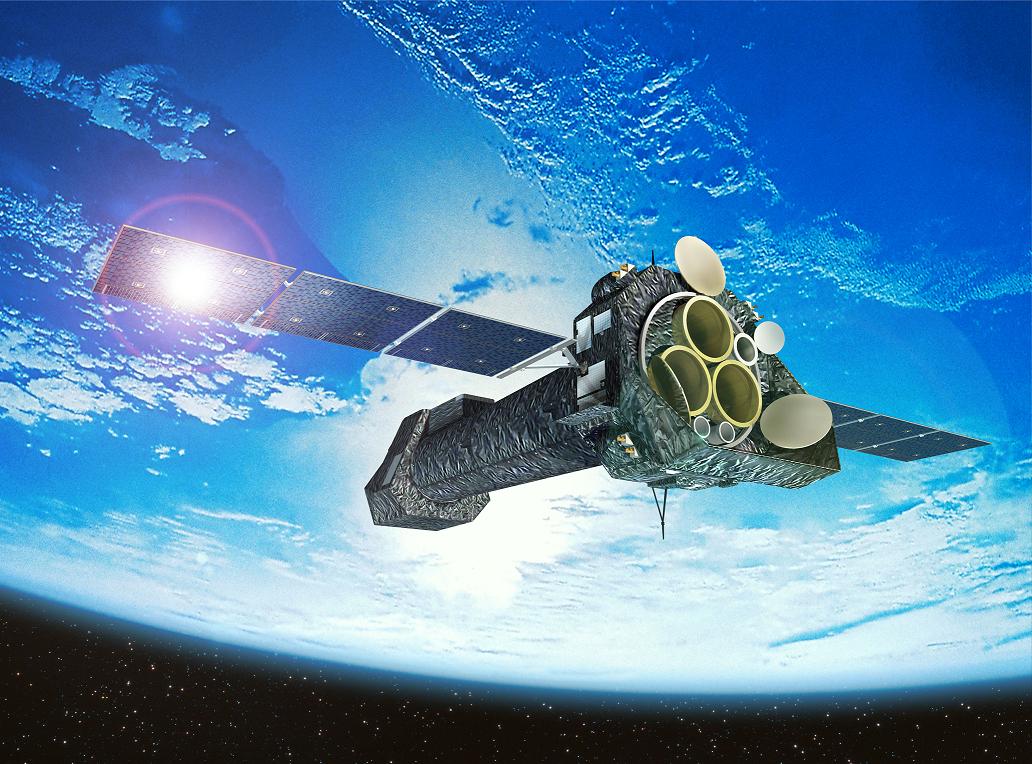
After operating flawlessly in orbit for almost nine years, the XMM-Newton X-ray observatory lost contact with the ESA’s ground stations.


In the case of a space mission, losing contact with a spacecraft can mean anything from a technical problem onboard to a collision with space debris or even a meteorite.


The contact was lost when the satellite switched from one ground station to another. The satellite must perform such operations in orbit in order to maintain radio contact with the ground control center of the mission. The ESA’s ground station in Villafranca, Spain, reported that it was not able to re-establish radio contact with the satellite.


Several astronomic observatories have managed to take images of the satellite in orbit. By now it is clear to the ground investigators that the satellite is intact and it is maintaining a constant altitude on the expected orbit. By using a more powerful ground antenna (the 35m diameter antenna at New Norcia in Australia), a weak radio transmission was received from XMM-Newton, proving that the satellite is still alive. Engineers hope to re-establish nominal radio contact with the satellite.


Credits: NASA/ESA/R. Massey (Caltech)


ESA launched the X-ray Multi-Mirror Mission (XMM-Newton) on December 10th, 1999. The mission has an operational lifetime of ten years. XMM-Newton has a large collecting area due to its three X-ray telescopes. In addition, the high altitude orbit offers the ability to make long uninterrupted exposures.


X-rays are absorbed by the Earth’s atmosphere, so only a space telescope like XMM-Newton can detect and study celestial X-ray sources.


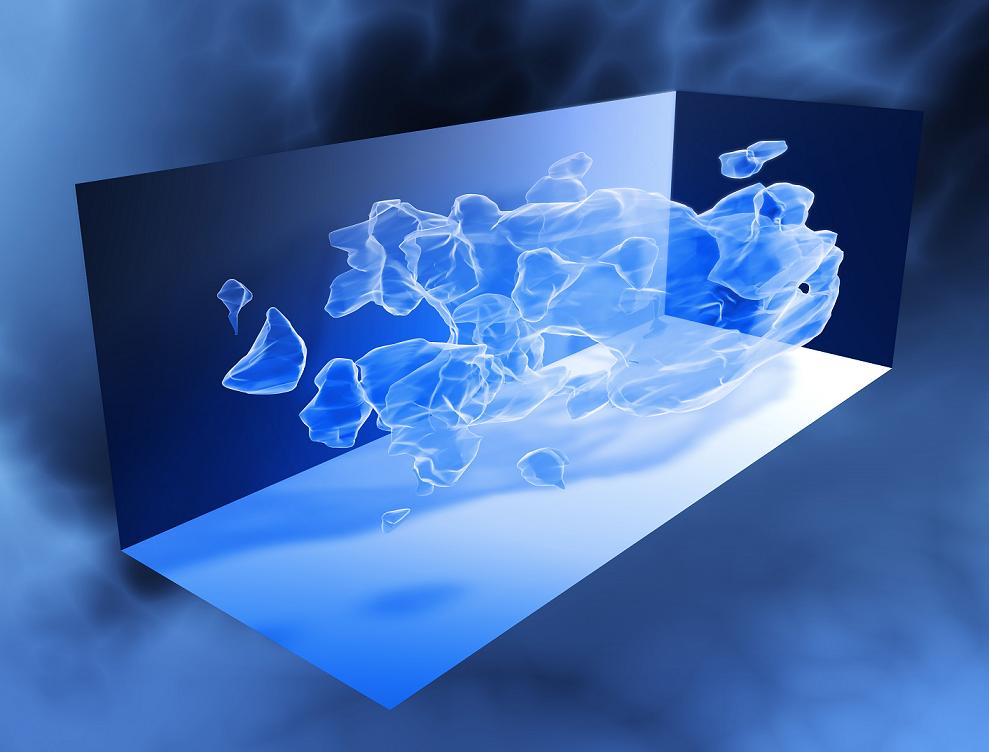
Data collected by the XMM-Newton was used to compile a three-dimensional large-scale map of the dark matter for the first time. The dark matter is an invisible form of matter that accounts for most of the mass of the Universe.


ESA has an entire website dedicated to the XMM-Newton mission. For more details about XMM-Newton you can visit the XMM-Newton Science Operations Center (XMM-Newton SOC) page.


  • Facebook
  • Google
  • Slashdot
  • Reddit
  • Live
  • TwitThis


Courtesy of JAXA/NHK


On September 14th, 2007, the Japan Aerospace Exploration Agency (JAXA) launched the second Japanese lunar explorer, Kaguya. Kaguya was launched by an H-IIA Launch Vehicle from the Tanegashima Space Center (Mitsubishi Heavy Industries, Ltd. has a special page dedicated to the H-IIA No. 13, which was the rocket used for the Kaguya mission).


Kaguya shared the journey to the Moon with two smaller satellites, Okina and Okuna. Once in lunar orbit, Kaguya released the small satellites on elliptical orbits around the Moon. Okina and Okuna play the role of orbiting radio transmitters, relaying the data from Kaguya back to Earth in real time when Kaguya is above the far side of the Moon.


Courtesy of JAXA/NHK


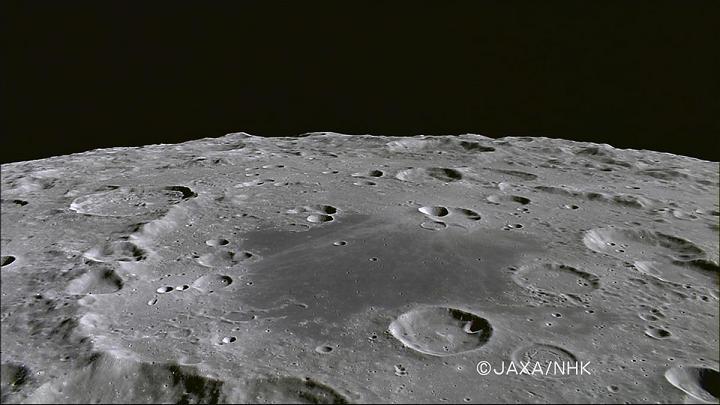
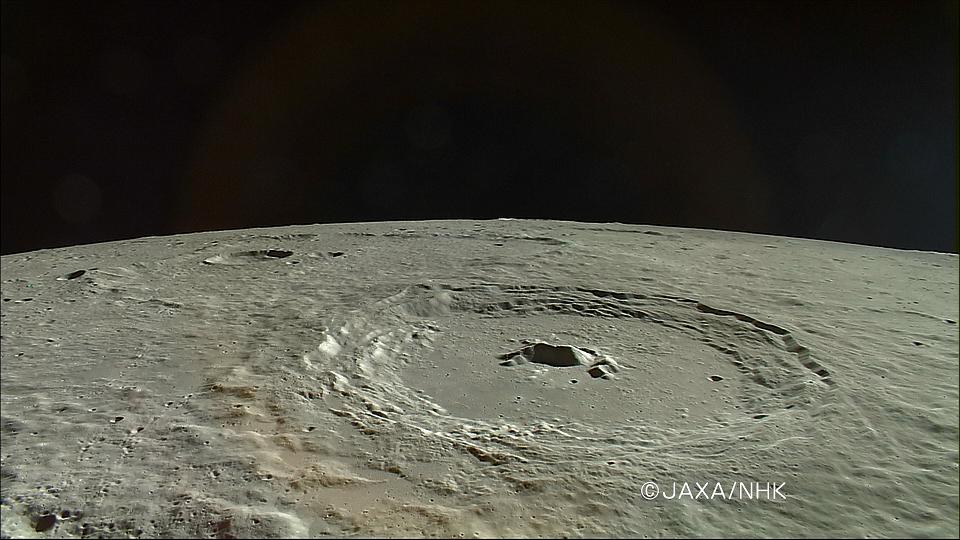
The instruments onboard the spacecraft have measured the composition and the topography of the lunar surface for more than one year.


Mapping of the lunar magnetic field was also performed.


The NHK HDTV cameras on Kaguya recorded stunning movies of the Earth rising and setting over the lunar surface. The movies are now available on JAXA’s web site.


  • Facebook
  • Google
  • Slashdot
  • Reddit
  • Live
  • TwitThis


Credits: NASA GSFC


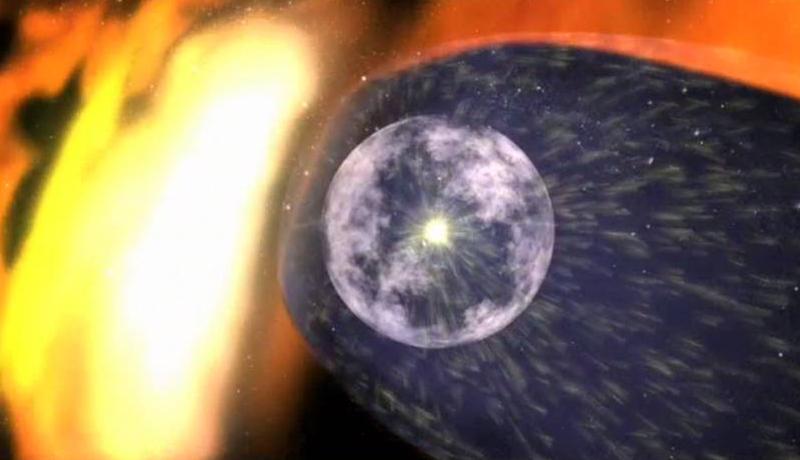
The solar wind generated by our Sun carves out a protective bubble around the solar system, called the heliosphere. The interstellar medium, consisting of the gas and the dust found between the galaxies, interacts with the solar wind and defines the actual boundary, which is called the termination shock.


NASA has designed a mission to map the boundary of the solar system. The mission is called IBEX (Interstellar Boundary Explorer) and it is ready to launch. The data collected by IBEX will allow scientists to understand the interaction between our Sun and the galaxy for the first time. Understanding this interaction will help us protect future astronauts from the danger of galactic cosmic rays.


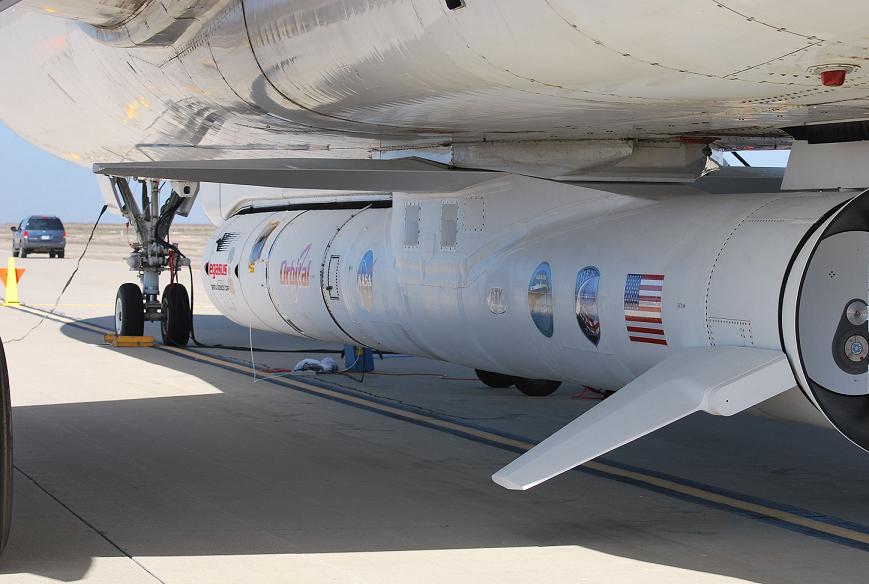
In January 2005, the Orbital Science Corporation was selected to develop, build, and launch a small spacecraft for NASA’s IBEX mission. The IBEX spacecraft is based on an already existing bus: the MicroStar satellite. IBEX will be launched by a Pegasus XL rocket, which will be dropped from an aircraft flying over the Pacific Ocean.


Credits: NASA GSFC


Pegasus began its commercial career in April 1990, and since then it has launched more than 80 satellites into space.


Pegasus is a three-stage launching system used to deploy small satellites weighing up to 1,000 pounds into Low Earth Orbit (LEO). An aircraft carries Pegasus to an altitude of 40,000 feet.


The rocket is released and free-falls before igniting its engines. It takes roughly ten minutes for Pegasus to deliver a satellite into orbit.


Pegasus will place IBEX into a 130 mile altitude orbit. An extra solid-fueled rocket will boost the spacecraft from the LEO. IBEX’s final orbit will be a highly elliptical orbit with the perigee at an altitude of 7,000 km and the apogee at 236,000 km. IBEX has to operate in this orbit because any interference from the Earth’s magnetosphere would make it impossible to take accurate measurements with the scientific instruments onboard.


Credits: NASA GSFC


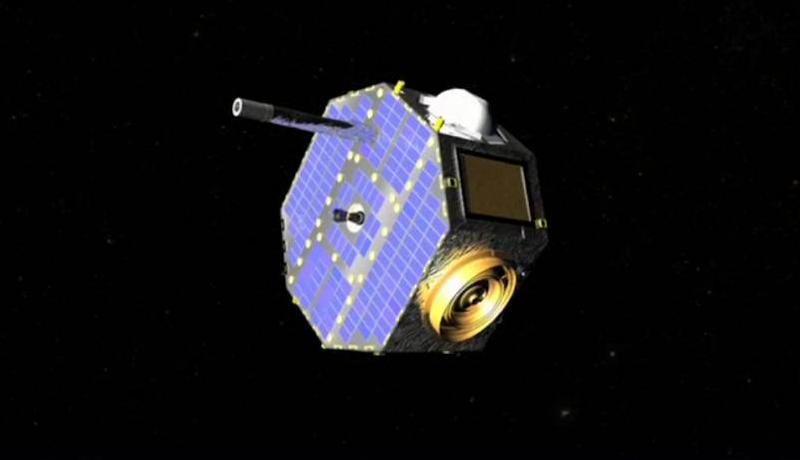
IBEX has a mass of only 83.33 lbs (roughly 38 kg) and is described by NASA as being the size of a bus tire. The instruments onboard IBEX will collect particles called energetic neutral atoms (ENAs). The ENAs are radiated from the termination shock region. The ENA hits recorded by the instruments onboard IBEX will be used to create a map of this region.


The mission is scheduled to launch tomorrow, October 19th, 2008. The spacecraft will be operational for 24 months. You can find out more about the IBEX spacecraft on NASA’s IBEX mission web page.


  • Facebook
  • Google
  • Slashdot
  • Reddit
  • Live
  • TwitThis