OrbitalHub

The place where space exploration, science, and engineering meet

Domain is for sale. $50,000,000.00 USD. Direct any inquiries to contact@orbitalhub.com.

11-22-08

ESA Prepares For The Next Step

Posted by


Credits: ESA


The European presence in space has become more prominent over the years. The development of the Columbus Laboratory and the introduction of the Automated Transport Vehicle (ATV) are two major milestones that have opened a new era for Europe’s presence in space.


Europe now aspires to consolidate its independence with the Large Cargo Return (LCR) and the Crew Transport Vehicle (CTV).


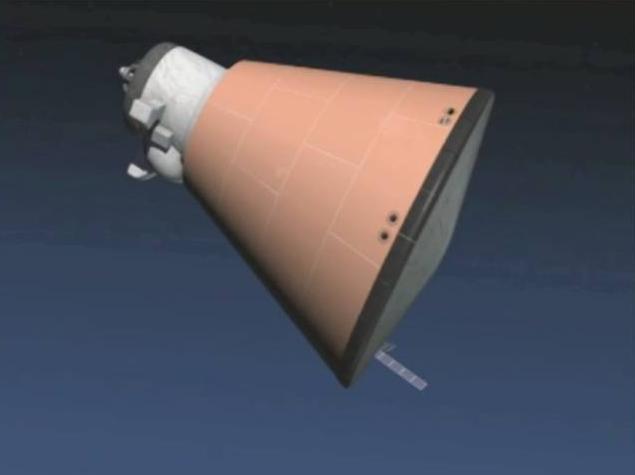
The LCR and the CTV are the new versions of the ATV that are now being considered by ESA’s Human Spaceflight Directorate. These versions of the ATV reuse the service module of the ATV configuration. A capsule with re-entry capability will replace the integrated cargo carrier. In the first phase, the capsule will bring cargo from the ISS down to Earth. The ultimate goal is to be able to carry a full crew up to the ISS and bring the crew back to Earth.


Credits: ESA


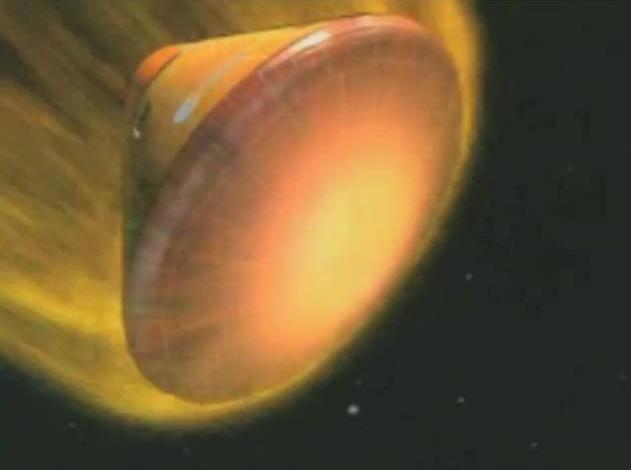
Atmospheric re-entry is not a new challenge for ESA engineers.


Past programs – like the Atmospheric Re-entry Demonstrator – and future programs – like the Intermediate Experimental Vehicle (IXV) – will help validate models used for the simulation of the re-entry phase and also provide a solid base in designing materials for the thermal protection system.


However, one challenge that needs to be addressed is the ejection system for the CTV/Ariane V configuration. The safety of the crew has to be ensured in the case of an anomaly on the launch pad or during the ascent phase of the flight. ESA will have to develop new technologies to satisfy this crucial requirement.
 

Credits: ESA


ESA has already proposed the LCR and the CTV versions of the ATV as the next step in the evolution of the ATV. However, the decision to go forward lies with the Council of the European Space Ministers. If ESA proposals are approved, the first flight of the LCR is expected in 2015, and the CTV could be docking to the ISS by 2020.


Check out ESA’s podcast about the new proposed programs that are based on the ATV.


  • Facebook
  • Google
  • Slashdot
  • Reddit
  • Live
  • TwitThis


Credits: NASA


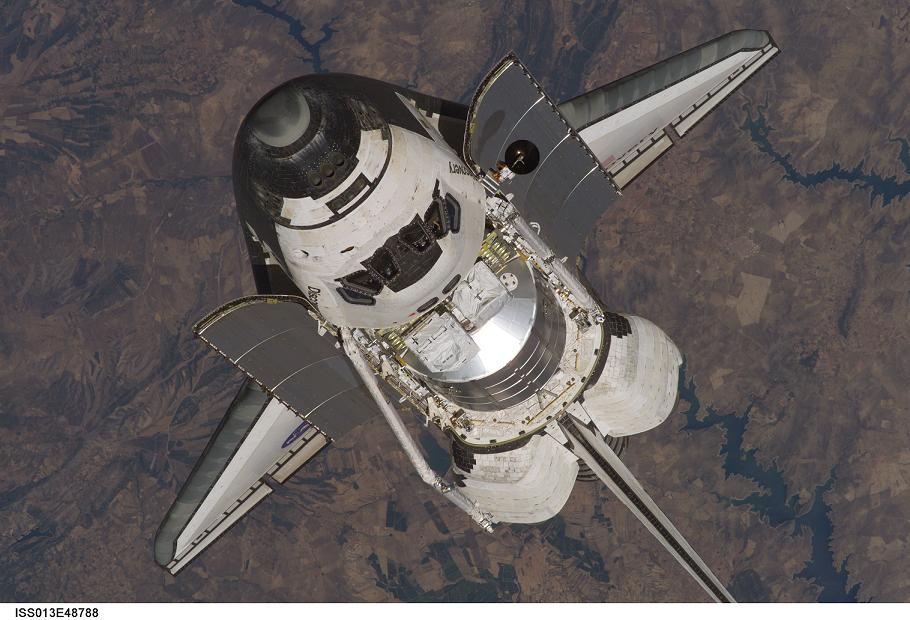
The Multi-Purpose Logistics Module (MPLM) is a pressurized module that is used on Space Shuttle missions to transfer cargo to and from the International Space Station (ISS).


A typical MPLM mission starts in the cargo bay of a Space Shuttle. The MPLM is carried to the ISS and berthed to one of the docking modules by the Canadian robotic arm. The supplies are offloaded and then finished experiments and waste are loaded on to the module. At the end of the mission, the MPLM is moved to the Space Shuttle cargo bay and returned to Earth.


The Italian Space Agency (ASI) provides the modules to NASA. Three MPLMs have been built and delivered to NASA thus far. NASA owns the MPLMs and ASI receives research time on ISS in exchange. The MPLMs were named after great figures in Italian history: Leonardo, Raffaello, and Donatello. However, some of the mission badges display the ninja turtles instead.


The construction of the first MPLM – Leonardo – began in April 1996. Leonardo was delivered to NASA in August 1998. Raffaello and Donatello followed in August 1999 and February 2001, respectively. Each MPLM can make 25 return trips to space.


Credits: NASA


The MPLM is 6.4 meters long and 4.6 meters in diameter. The module weighs 4.5 tons and it can deliver up to 10 tons to the ISS. The design of the module resembles the payload module that is part of the ATV. In addition, ATV has a service module that offers autonomy. Obviously, ATV was the direct beneficiary of the knowledge gained during the design and operational phases of the MPLM.


There is room for sixteen standard payload racks (International Standard Payload Racks – ISPR) in the MPLM. Even if it is not used to carry a human crew, MPLM has its own life-support system. Furthermore, it has a 3 KW internal power supply.


Credits: NASA


The current Space Shuttle mission – STS 126 – has delivered the MPLM Leonardo to the ISS. Leonardo is on its fifth spaceflight and hauled over 14,000 pounds of supplies and equipment to ISS.


Part (a small part) of the payload was turkey, candied yams, stuffing, and dessert for a Thanksgiving meal at the station.


A special piece of equipment, the GLACIER, was also delivered to the station. GLACIER stands for General Laboratory Active Cryogenic ISS Experiment Refrigerator. GLACIER is a double locker cryogenic freezer that will be used for transporting and preserving science experiments. The payload also included a galley for the Destiny laboratory, an advanced Resistive Exercise Device (aRED), and two new crew quarter racks for the expanded station crew.


Credits: NASA


There are two more MPLM missions scheduled before the Space Shuttle retires. STS-128 will carry Leonardo in July 2009, and Raffaello will be docked to ISS during the STS-131 mission in February 2010.


  • Facebook
  • Google
  • Slashdot
  • Reddit
  • Live
  • TwitThis