


NASA to Quadruple Lunar Lander Contract as Moon Base Ambitions Accelerate to Monthly Landings
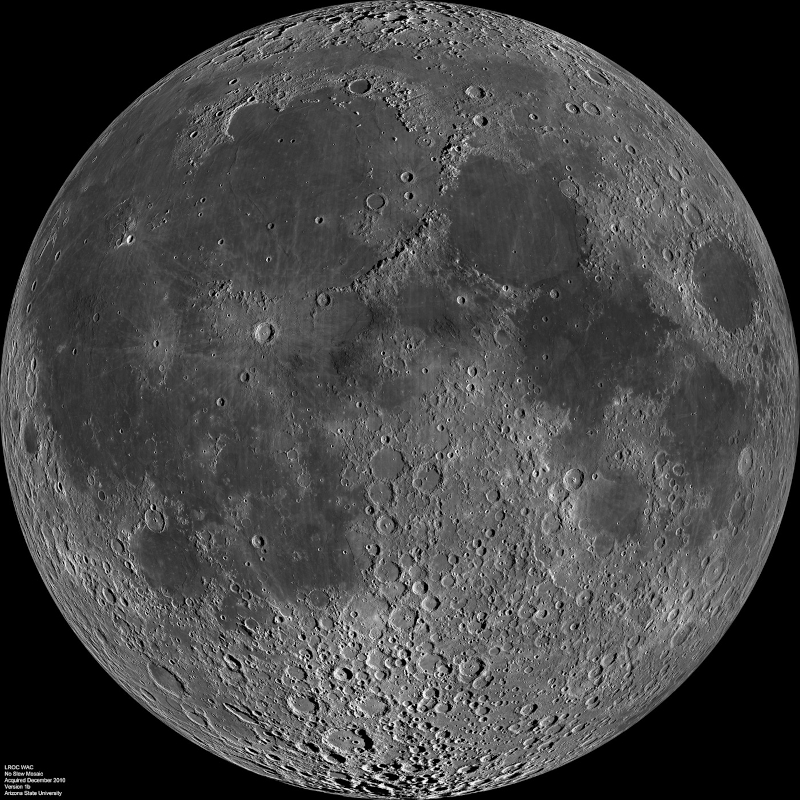
On April 27, 2026, NASA filed paperwork indicating it would increase the maximum value of its Commercial Lunar Payload Services contract from $2.6 billion to $4.2 billion, a move that reflects ambitions laid out in March at an agency event called Ignition, where officials described plans to establish what they simply called a Moon Base and dramatically increase the cadence of robotic landings on the lunar surface. The filing, posted on the System for Award Management, signals that NASA expects to purchase substantially more lunar lander missions over the next two years than the current contract structure was designed to accommodate.
The CLPS program currently lists 13 companies eligible to compete for task orders delivering scientific instruments and technology demonstrations to the Moon. Task orders awarded to date total less than $2 billion, and with the program averaging roughly two awards per year, the original ceiling would not have been reached until 2028. The planned increase to $4.2 billion suggests NASA intends to accelerate that pace considerably, buying missions at a rate that would support the lunar base construction schedule officials described at Ignition.
That schedule calls for nine lunar landings in 2027 and ten in 2028, a dramatic leap from the current flight rate. In 2025, NASA conducted two CLPS missions: one by Firefly Aerospace and another by Intuitive Machines. For 2026, the agency projects up to four lander missions, though internal charts shown at the Ignition event displayed only two projected landings for the year. The gap between the published projection of four and the Ignition chart showing two reflects the uncertainty that industry observers have noted about whether the supply chain and manufacturing capacity can support the proposed cadence.
Speaking at the Lunar Surface Innovation Consortium spring meeting on April 29, Joel Kearns, deputy associate administrator for exploration in NASA’s Science Mission Directorate, acknowledged the agency’s intention to buy more missions. We are looking into opportunities to buy into that ramp of demand for the very short term even as we work on issuing the CLPS 2.0 contract competition, he said. The agency needs to start ramping now into this higher cadence, with a target of monthly landings, to bring some of the things to the surface very, very soon for Moon Base.
The companies vying for CLPS task orders have been expanding their manufacturing capacity in response to the signals from NASA. Firefly Aerospace has three Blue Ghost landers in production, numbered 2, 3, and 4, and has built out additional clean room space capable of supporting eight spacecraft simultaneously. Blue Origin is completing thermal vacuum testing of its first Blue Moon Mark 1 lander, named Endurance, at its Florida factory, and is already manufacturing components for a second Mark 1 to be used for NASA’s VIPER rover in 2027. The company’s Lunar Plant 1 facility spans 190,000 square feet dedicated to lunar lander production.
Astrobotic, which experienced a failure with its first Peregrine lander in January 2024, has scaled its facilities for multiple concurrent lander builds. Intuitive Machines, which has completed three CLPS missions including one that landed successfully in February 2024 and another that tipped over on its side, is working to standardize its lander designs as production rates increase. The company received the IM-5 task order at the Ignition event, with a launch projected for 2030, the same year the company was selected for a south polar landing mission.
One of the central questions about the accelerated cadence is whether the supply chain for lander components can keep pace. Representatives from the CLPS companies noted during the April 29 panel that early landers were essentially bespoke, modified for each mission’s specific payload requirements. Standardization would allow build-to-print manufacturing at higher rates, reducing cost and increasing throughput. The industry response to NASA’s call has been cautious but willing. We have heard the call. We know this is NASA’s initiative, and we want to do more and more, said Farah Zuberi, director of spacecraft mission management at Firefly. Having that signal is really important. We know that this is coming. We can set ourselves up for success.
The Moon Base concept as presented at Ignition represents a shift from NASA’s earlier approach, which emphasized the Gateway, a small space station in lunar orbit that was to serve as a staging point for surface missions. NASA has paused work on the Gateway to focus on surface infrastructure, a decision that affects international partners including the European Space Agency and Japan’s JAXA, which had been developing components for the orbital outpost. The rescaling of plans does not eliminate the need for lunar communication and navigation infrastructure, but it changes the sequence in which capabilities are delivered to the surface.
Scaling lander production from one or two vehicles per year to monthly landings requires changes throughout the manufacturing process. A lunar lander contains thousands of components sourced from dozens of suppliers, and each component must meet the reliability standards that NASA imposes for missions to the Moon. The challenge is not merely assembling more vehicles; it is maintaining quality and traceability across a higher production volume while reducing the per-unit cost enough to make the business case work.
One approach companies are adopting is modular design, where the lander bus remains largely constant across missions while payload accommodation is standardized through interface control documents. This allows the same structural frame, propulsion system, and thermal control to be manufactured in larger batches, improving quality control and reducing the engineering time spent on each individual vehicle. The payload interface, which historically required custom work for each mission’s instruments, is being standardized to the point where a new payload can be integrated without modifying the lander’s core systems.
The supply chain for propulsion components is one of the limiting factors in lander production. Thrusters, valves, propellant tanks, and associated electronics each require precision manufacturing and testing that cannot be accelerated arbitrarily. Companies are responding by qualifying multiple suppliers for critical components, bringing assembly in-house for subsystems where external vendors create bottlenecks, and building inventory of long-lead items in advance of mission awards. These strategies reduce the manufacturing timeline but introduce cost and risk that smaller production runs do not bear.
Testing protocols for landers also require adaptation. A spacecraft destined for the lunar surface must survive the vibration of launch, the vacuum of space, the thermal environment of lunar orbit, and the descent to the surface. Each test requires facilities, equipment, and time that scale with production volume. Companies are investing in additional thermal vacuum chambers and vibration test stands to handle the higher throughput, but the facility investment is substantial and must be justified by a production rate that may not materialize if NASA adjusts its acquisition strategy.
 Subscribe to our RSS feed









There are no comments.
Add A Comment