OrbitalHub

The place where space exploration, science, and engineering meet

Domain is for sale. $50,000,000.00 USD. Direct any inquiries to contact@orbitalhub.com.

07-31-16

Atlas V NROL-61 Launch

Posted by


Ergo dixit:

The NRO satellites are operated by the United States National Reconnaissance Office. The NRO missions are generally classified, so their exact purposes and orbital elements are not available to the public.

Wikipedia dixit:

“The Atlas V was developed by Lockheed Martin Commercial Launch Services as part of the US Air Force Evolved Expendable Launch Vehicle (EELV) program and made its inaugural flight on August 21, 2002. The vehicle operates out of Space Launch Complex 41 at Cape Canaveral Air Force Station and Space Launch Complex 3-E at Vandenberg Air Force Base. Lockheed Martin Commercial Launch Services continues to market the Atlas V to commercial customers worldwide.

The Atlas V first stage, the Common Core Booster (CCB), is 12.5 ft (3.8 m) in diameter and 106.6 ft (32.5 m) in length. It is powered by a single Russian RD-180 main engine burning 627,105 lb (284,450 kg) of liquid oxygen and RP-1. The booster operates for about four minutes, providing about 4 meganewtons (860,000 lbf) of thrust. Thrust can be augmented with up to five Aerojet strap-on solid rocket boosters, each providing an additional 1.27 meganewtons (285,500 lbf) of thrust for 94 seconds. The Atlas V is the newest member of the Atlas family. Compared to the Atlas III vehicle, there are numerous changes. Compared to the Atlas II, the first stage is a near-redesign. There was no Atlas IV. The “1.5 staging” technique was dropped on the Atlas III, although the same RD-180 engine is used. The RD-180 features a dual-combustion chamber, dual-nozzle design and is fueled by a kerosene/liquid oxygen mixture. The main-stage diameter increased from 10 feet to 12.5 feet. As with the Atlas III, the different mixture ratio of the engine called for a larger oxygen tank (relative to the fuel tank) compared to Western engines and stages. The first stage tanks no longer use stainless steel monocoque “balloon” construction. The tanks are isogrid aluminum and are structurally stable when unpressurized. Use of aluminum, with a higher thermal conductivity than stainless steel, requires insulation for the liquid oxygen. The tanks are covered in a polyurethane-based layer. Accommodation points for parallel stages, both smaller solids and identical liquids, are built into first stage structures.

The Centaur upper stage uses a pressure stabilized propellant tank design and cryogenic propellants. The Centaur stage for Atlas V is stretched 5.5 ft (1.68 m) relative to the Atlas IIAS Centaur and is powered by either one or two Aerojet Rocketdyne RL10A-4-2 engines, each engine developing a thrust of 99.2 kN (22,300 lbf). The inertial navigation unit (INU) located on the Centaur provides guidance and navigation for both the Atlas and Centaur, and controls both Atlas and Centaur tank pressures and propellant use. The Centaur engines are capable of multiple in-space starts, making possible insertion into low Earth parking orbit, followed by a coast period and then insertion into GTO. A subsequent third burn following a multi-hour coast can permit direct injection of payloads into geostationary orbit. As of 2006, the Centaur vehicle had the highest proportion of burnable propellant relative to total mass of any modern hydrogen upper stage and hence can deliver substantial payloads to a high energy state.

The standard payload fairing sizes are 4 or 5 meters in diameter. The 4.2-meter fairing, originally designed for the Atlas II booster, comes in three different lengths, the original 9-meter high version, as well as fairings 10 meters (first flown on the AV-008/Astra 1KR launch) and 11 meters (seen on the AV-004/Inmarsat-4 F1 launch) high. Lockheed Martin had the 5.4-meter (4.57 meters usable) payload fairing for the Atlas V developed and built by RUAG Space (former Oerlikon Space) in Switzerland. The RUAG fairing uses carbon fiber composite construction, based on flight-proven hardware from the Ariane 5. Three configurations will be manufactured to support the Atlas V. The short (10-meter long) and medium (13-meter long) configurations will be used on the Atlas V 500 series. The 16-meter long configuration would be used on the Atlas V Heavy. The classic fairing covers only the payload, leaving the Centaur stage exposed to open air. The RUAG fairing encloses the Centaur stage as well as the payload.”

Video credit: United Launch Alliance


  • Facebook
  • Google
  • Slashdot
  • Reddit
  • Live
  • TwitThis
08-1-11

Juno

Posted by


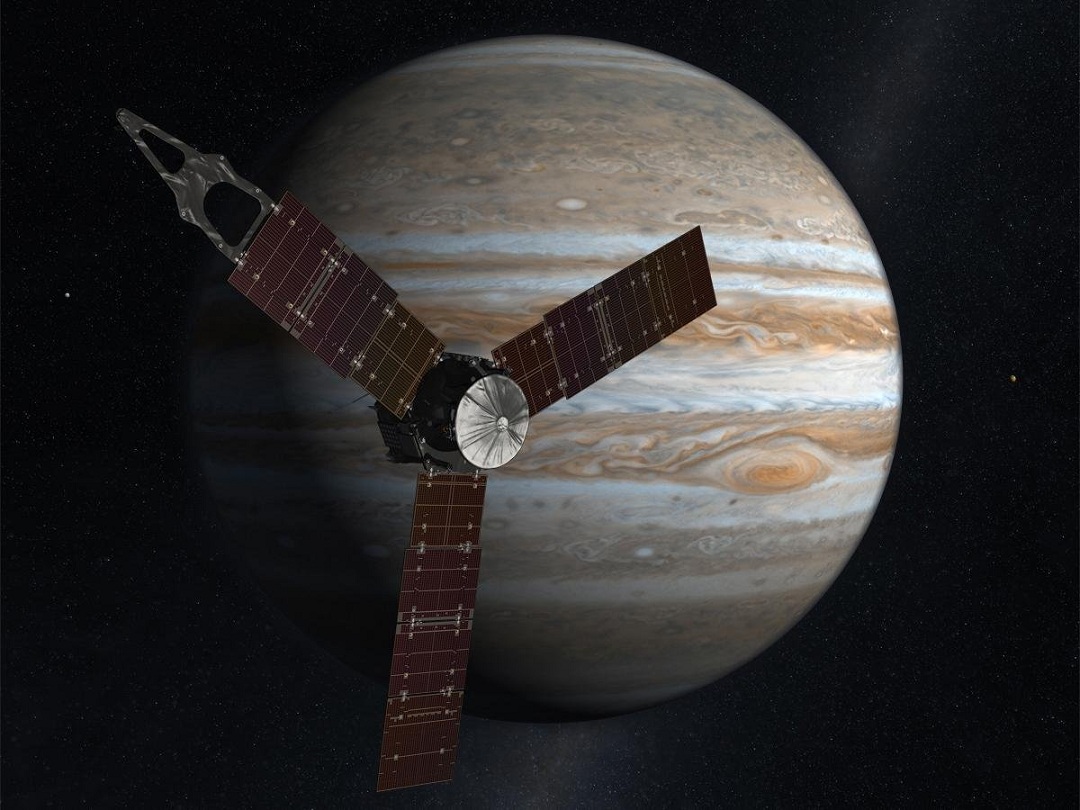
Credits: NASA/JPL


Juno is a NASA spacecraft scheduled to start its journey to Jupiter in a few days. Juno will help scientists understand the origin and evolution of Jupiter. While the dense cover of clouds helps Jupiter keep its secrets away from Earth observers, Juno will get close enough to Jupiter so that fundamental processes and conditions characteristic to the early solar system will be revealed.


First, Juno will try to determine if Jupiter has a solid planetary core. While this is an important piece of the puzzle, it might also help determine how Jupiter’s magnetic field is generated (by the way, scientists are still unclear how Earth’s magnetic field is generated, and there are several theories trying to explain it). Juno will also map Jupiter’s magnetic field, study the auroras, and determine the amount of water and ammonia in the atmosphere.


The launch vehicle to lift off with Juno is the most powerful Atlas rocket ever built, the United Launch Alliance Atlas V 551. In this configuration, an Atlas V launch vehicle can lift 18,810 kg to Low Earth Orbit (LEO) and 8,900 kg to Geosynchronous Transfer Orbit (GTO). However, the Atlas V 551 is not powerful enough to put Juno on a direct trajectory to Jupiter. In order to get as far as Jupiter’s orbit, Juno has to perform a gravity assist maneuver.


Juno will orbit Jupiter in a polar orbit and get as close as 5,000 km above the planet’s top clouds. This will allow the spacecraft to do science below the radiation belt of the planet and allow for a complete coverage of the planet. The low altitude will allow for a detailed analysis of the planet’s atmosphere. The orbit will also allow Juno to take a very close look at the auroras that are forming at the north and south Jovian poles.


The scientific payload carried by Juno includes a gravity/radio science system, a microwave radiometer, a vector magnetometer, particle detectors, ultraviolet and infrared spectrometers, and a color camera to capture images of the Jovian poles.


One interesting feature of the spacecraft is the electronics vault. Even if Juno’s highly elliptical orbit avoids the deadly radiation belts by approaching the planet at the north pole, skimming the clouds below the radiation belts, and exiting over the south pole, as an additional protection measure the onboard electronics are protected by a radiation shielded vault. This will ensure that the computers will not malfunction due to single events, and that the electronics will meet the requirements for the mission lifespan.


While the previous missions to the Jovian system have been powered by Radio Thermal Generators (RTGs), Juno will benefit from advances in solar power cell design. The cells used for Juno’s solar panels are far more efficient and radiation tolerant than the cells available to space systems engineers decades ago. Three solar panels that extend more than 10 meters from the hexagonal body of the spacecraft will provide the power required by the scientific instruments.


The mission is scheduled for launch on August 5, 2011. After coasting for more than two years, in October 2013, Juno will swing by Earth. The gravity assist maneuver will provide the delta V necessary for the spacecraft to reach Jupiter’s orbit. Juno will arrive at Jupiter in July 2016. After performing the Jupiter Orbital Insertion (JOI) maneuver, the spacecraft will start to collect and send back home scientific data.


Juno will send back science and telemetry data through the Deep Space Network (DSN), a network of powerful antennas located in Madrid, Spain; Barstow, California; and Canberra, Australia.


At the end of the mission, planned for October 2017, and after 33 complete revolutions around Jupiter, Juno will fire up its thrusters and decrease its velocity, enter the upper atmosphere of Jupiter, and get incinerated. Why such a tragic end to the Juno mission? Remember the Prime Directive? While the Prime Directive is known only to Star Trek fans… and it might get serious consideration only from Star Fleet officers, the possibility of having Juno crashing on one of the Jovian satellites (especially Europa) has to be eliminated. NASA scientists take contamination of other worlds very seriously.


You can find out more about the Juno mission on NASA’s dedicated web site. The Juno mission is managed by NASA’s Jet Propulsion Laboratory in Pasadena, California. The Principal Investigator for the Juno mission is Dr. Scott Bolton of Southwest Research Institute in San Antonio, Texas. The spacecraft was designed and built by Lockheed Martin of Denver, Colorado.


  • Facebook
  • Google
  • Slashdot
  • Reddit
  • Live
  • TwitThis
02-7-10

Solar Dynamics Observatory

Posted by


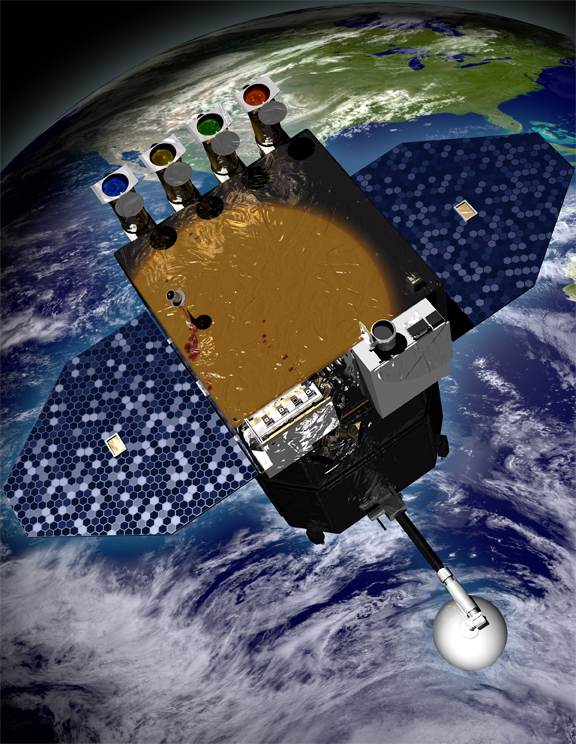
Credits: NASA/Goddard Space Flight Center Scientific Visualization Studio


Predictions of space weather are important as the effects of magnetic storms can be very significant: disruptions in radio communications, radiation hazards to astronauts in LEO, and power lines surges, just to name a few. The goal of NASA’s Living With a Star (LWS) Program is to understand the changing Sun and its effects on the Solar System. The Solar Dynamics Observatory (SDO) is one of NASA’s LWS missions.


SDO will take measurements of the solar activity. There are seven science questions SDO will try to answer. Among them, what is the mechanism that drives the cycles of solar activity? How do the EUV variations relate to the magnetic activity of the Sun? Is it possible to make predictions regarding the space weather and climate? The last question, if answered, will make choosing the launch windows for future interplanetary manned missions an easier task.


The spacecraft is 2.2 x 2.2 x 4.5 m and 3-axis stabilized. At launch, it has a mass of 3200 kg (270 kg the payload and 1400 kg the fuel). The solar panels are 6.5 m across, cover 6.6 m2, and produce up to 1540 W of power.


Credits: NASA


SDO carries three instruments: the Atmospheric Imaging Assembly (AIA), EUV Variability Experiment (EVE), and the Helioseismic and Magnetic Imager (HMI). The instruments will take measurements that will reveal at a very high rate the variations of the Sun.


The HMI was developed at Stanford University and it will extend the SOHO/MDI instrument. The HMI will help to study the origin of variability and the various components of the magnetic activity of the Sun. The measurements aim at understanding the origin and evolution of sunspots, sources and drivers of solar activity and disturbances, connections between the internal processes and the dynamics of the corona and the heliosphere.


You can find more information about the instrument on the HMI page on Stanford University’s web site.


The AIA will capture images of the solar atmosphere in ten wavelengths every ten seconds. The data collected by the instrument will improve the understanding of the activity in the solar atmosphere. The instrument was developed by Lockheed Martin.


EVE was developed at University of Colorado at Boulder. EVE will measure the solar extreme ultraviolet irradiance.


The SDO will launch aboard an Atlas V launch vehicle from SLC 41 at Cape Canaveral. SDO will operate on a geosynchronous orbit, which will allow continuous observations of the Sun. The orbit will also allow a continuous contact with a single dedicated ground station. The high data acquisition rate required such a mission profile, as a large on-board storage system would add to the overall complexity of the system.


You can find more information about SDO on NASA’s website.


  • Facebook
  • Google
  • Slashdot
  • Reddit
  • Live
  • TwitThis


Credits: NASA/JPL

The Mars Reconnaissance Orbiter (MRO) has completed the first phase of its science mission. During this phase, the orbiter returned seventy-three terabits of science data to Earth, which is more than all earlier Mars missions combined. The next phase of the MRO mission will take two years.


The list of scientific discoveries and observations made by MRO is stunning. We know now that Mars has a long history of climate change and that water was present in liquid form on its surface for hundreds of millions of years.


Signatures of a variety of watery environments have been observed, so future missions will be aware of locations that might reveal evidence of past life on Mars, if it ever existed.


MRO has imaged nearly forty percent of the Martian surface at such a high resolution that house-sized objects can be seen in detail. MRO has also conducted a mineral survey of the planet, covering sixty percent of its surface. Global weather maps were assembled using the data returned by MRO, and profiles of the subsurface and the polar caps have been put together using the radar mounted on MRO.


Credits: NASA/KSC

“These observations are now at the level of detail necessary to test hypotheses about when and where water has changed Mars and where future missions will be most productive as they search for habitable regions on Mars,” said Richard Zurek, Mars Reconnaissance Orbiter project scientist.


The images returned by MRO have been used by the Phoenix team to change the spacecraft’s landing site, and will help the NASA scientists select landing sites for future missions, like the Mars Science Laboratory (MSL).


Another role played by MRO was to relay commands to and to return data from the Phoenix lander during the five months the lander was operational on the Martian surface. MRO shared this task with the Mars Odyssey Orbiter.


MRO lifted off on August 12, 2005, from launch Complex 41 at Cape Canaveral Air Force Station. The cruise phase of the mission lasted seven months, the spacecraft reaching Mars orbit on March 10, 2006, after traveling on an outbound arc intercept trajectory.


MRO entered the final low orbit suited for science-data collection on November 2006, after slowing down in the Martian atmosphere by using aerobraking for five months. The first phase of the mission consisted in gathering information about Mars, and the remaining time left of its operational life will be dedicated mainly to using the spacecraft as a communication relay.


Credits: NASA/KSC

The declared goals of the MRO mission are: to determine whether life ever arose on Mars, to characterize the climate of Mars, to characterize the geology of Mars, and to prepare for human exploration.


The launcher of choice for the MRO mission was the Atlas V-401 launch vehicle, the smallest of the Atlas V family. This was the first launch of an Atlas V on an interplanetary mission.


The Atlas V-401 is a two-stage launch vehicle that does not use solid rocket boosters. The Atlas V-401 is fifty-seven meters tall and has a total mass at liftoff of 333,000 kg. Out of this, about 305,000 kg is fuel. In order to reach Mars orbit, MRO was accelerated to 11 km per second.


The first stage of the Atlas V, the Common Core Booster, is powered by liquid oxygen and RP-1. For the MRO mission, the first stage used a RD-180 engine. The RD-180 engine has an interesting story. It is a Russian-developed rocket engine, derived from the RD-170 used for the Zenit rockets.


Credits: NASA/JPL/KSC/Lockheed Martin Space Systems

Rights to use the RD-180 engine were acquired by General Dynamics Space Systems Division (later purchased by Lockheed Martin) in the early 1990s. The engine is co-produced by Pratt & Whitney and all production to date has been in Russia. According to Pratt & Whitney, RD-180 delivers a ten percent performance increase over current operational U.S. booster engines.


The stage weighs approximately 305,000 kg at launch and it provides about four million Newton of thrust for four minutes.


The upper stage of the Atlas V is the Centaur Upper Stage Booster. The Centaur is powered by liquid oxygen and liquid hydrogen. In the case of the MRO mission, it provided the remaining energy necessary to send the spacecraft to Mars.


The payload fairing used for the MRO mission was four meters in diameter. The role of the payload fairing was to protect the spacecraft from the weather on the ground as well as from the dynamic pressure during the atmospheric phase of the launch.


Lockheed Martin Commercial Launch Services developed the Atlas V as part of the US Air Force Evolved Expendable Launch Vehicle (EELV) program.


There are six science instruments, three engineering instruments, and two science-facility experiments carried by the MRO. The low orbit on which MRO is operating allowed the observation of the surface, atmosphere, and subsurface of Mars in unprecedented detail.


The science instruments are the HiRISE camera (High Resolution Imaging Science Experiment), the CTX camera (Context Camera), the MARCI camera (Mars Color Imager), the CRISM spectrometer (Compact Reconnaissance Imaging Spectrometer for Mars), the MCS radiometer (Mars Climate Sounder), and the SHARAD radar (SHAllow RADar).


Credits: HiRISE/MRO/LPL/NASA


The HiRISE camera provided the highest-resolution images from orbit to date, while the SHARAD can probe the subsurface using radar waves in the 15-25 MHz frequency band (these waves can penetrate the Martian crust up to one kilometer).


The engineering instruments assist the spacecraft navigation and communication. The Electra UHF Communications and Navigation Package is used as a communication relay between the Earth and landed crafts on Mars. The Optical Navigation Camera serves as a high-precision camera to guide incoming spacecrafts as they approach Mars. The Ka-band Telecommunications Experiment Package demonstrated the use of the Ka-band for power effective communications.


The science facility experiments are the Gravity Field Investigation Package, used for mapping the gravity field of Mars, and the Atmospheric Structure Investigation Accelerometers, which helped scientists understand the structure of the Martian atmosphere.


For more details on the MRO scientific payload, you can check out the dedicated page on the MRO mission web site.


The MRO was built by Lockheed Martin for NASA’s Jet Propulsion Laboratory in California. Fully loaded, the spacecraft had a mass of almost two tons. The spacecraft carried 1,149 kg of propellant for trajectory correction maneuvers and for the burns needed for the Mars capture.


Credits: NASA/JPL


The main bus of the spacecraft presents two massive solar arrays that can generate 2,000 W of power. On top, the high-gain antenna is the main means of communication with both Earth and other spacecrafts. The SHARAD antenna is the long pole behind the bus.


Other visible features are the HiRISE camera, the Electra telecommunications package, and the Context Imager (CTX).


You can visit the home page of the MRO mission on the NASA web site.


  • Facebook
  • Google
  • Slashdot
  • Reddit
  • Live
  • TwitThis