OrbitalHub

The place where space exploration, science, and engineering meet

Domain is for sale. $50,000,000.00 USD. Direct any inquiries to contact@orbitalhub.com.


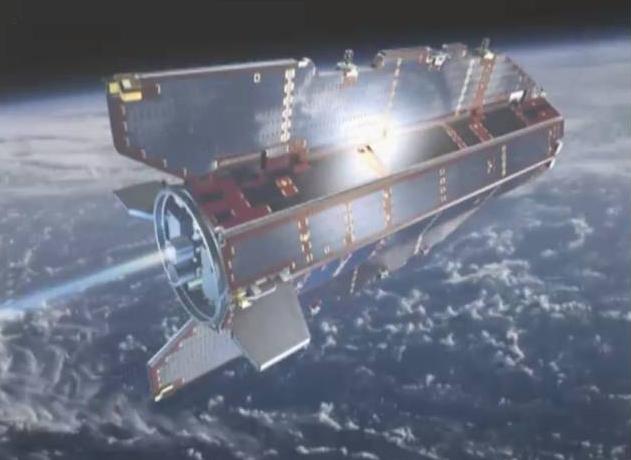
Credits: ESA


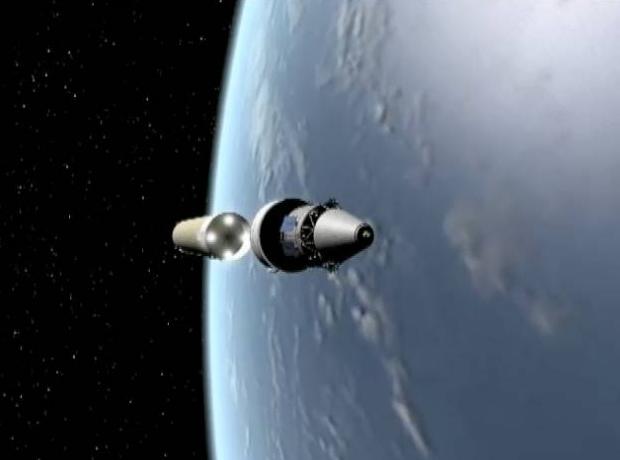
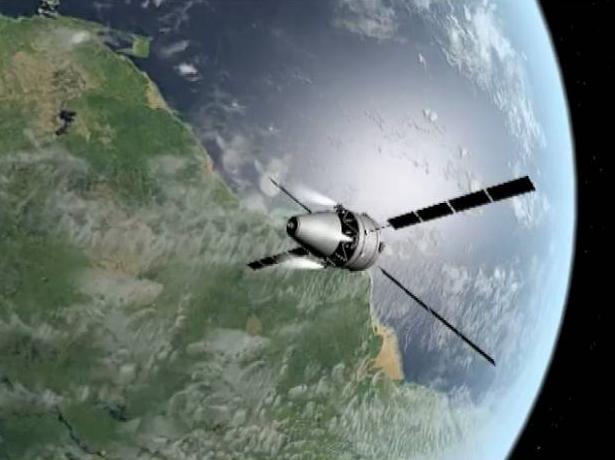
ESA plans to design and build an autonomous lifting and aerodynamically controlled re-entry system. Critical technologies are being tested: instrumentation for aerodynamics and aerothermodynamics, thermal protection and hot-structure solutions, guidance, navigation, and flight control using a combination of jets and aerodynamic flaps. The Intermediate Experimental Vehicle (IXV) will be the European platform for in-flight testing of re-entry technologies.


The design activities are already underway; the development of the spacecraft is scheduled to begin in January 2009.


The mission is planned to launch from the European spaceport at Kourou, French Guiana. In 2012, a new launch vehicle will inject IXV into a low Earth orbit. The small spacecraft will perform a controlled re-entry, its descent slowed by a parachute, and will land in the Pacific Ocean.


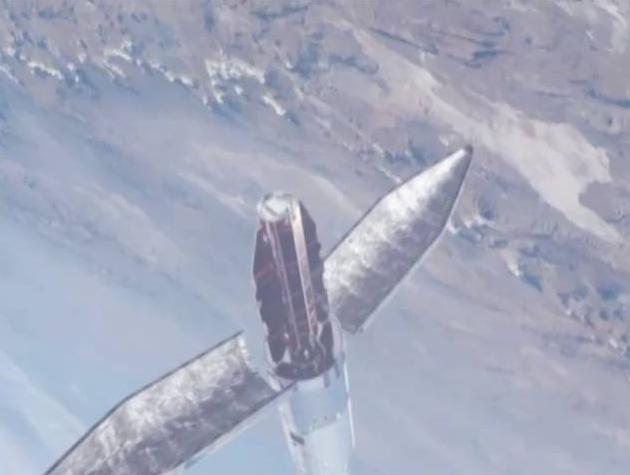
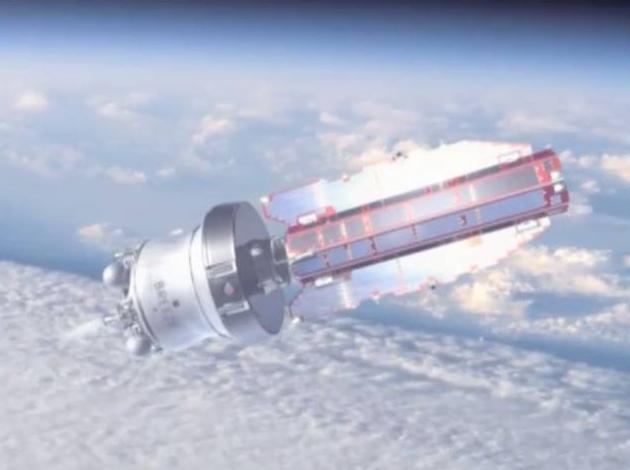
Credits: ESA


ESA released a new video with computer generated animation that presents the planned IXV mission.


  • Facebook
  • Google
  • Slashdot
  • Reddit
  • Live
  • TwitThis
10-8-08

Scouting the Moon (II)

Posted by


We presented in a previous post the Lunar Reconnaissance Orbiter (LRO) mission. The goals of the LRO mission are to map the lunar resources and to create a detailed 3D map of the lunar surface in preparation for future NASA missions to the Moon. However, NASA is not the only space agency that has high hopes regarding the exploration of the Moon. The Indian Space Research Organization (ISRO) is another agency heavily involved in space activities.


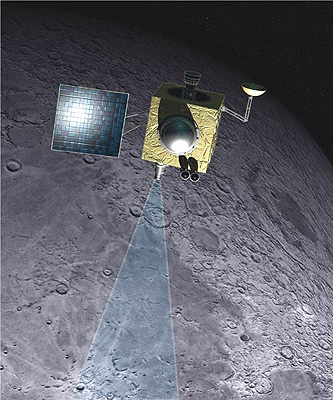
Credits: ISRO


Interest in undertaking a lunar scientific mission was sparked at a meeting of the Indian Academy of Sciences in 1999. One year later, the Astronautical Society of India made a recommendation supporting the idea.


The ISRO formed a National Lunar Mission Task Force that involved leading Indian scientists. The Task Force provided an assessment on the feasibility of such a mission. The mission, called Chandrayaan-1, was approved in November 2003 for an estimated cost of $83 million USD.


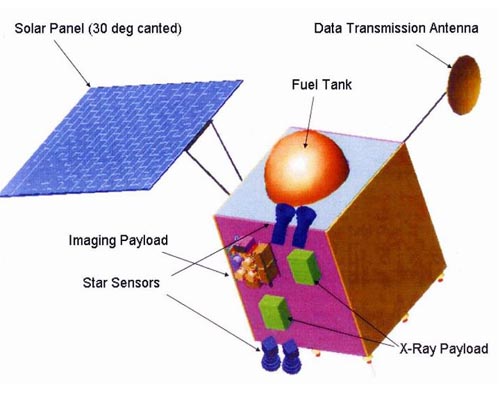
The Chandrayaan-1 spacecraft is a 1.5 meter cube with a weight mass of approximately 523 kg. The spacecraft bus is based on an already developed meteorological satellite. Chandrayaan-1 will carry a 30 kg probe that will be released to penetrate the lunar surface. The power for the onboard systems is generated by a solar panel. The 750 watts generated by the solar panel will be stored by the rechargeable batteries onboard the spacecraft. Maneuvering in the lunar orbit is done using a bipropellant propulsion system.


Credits: ISRO


The scientific payload contains a diverse collection of instruments. The instruments were designed and developed by ISRO, ESA, NASA, and the Bulgarian Space Agency.


There are two instruments that will map the surface of the Moon: the Terrain Mapping Camera (TMC) will produce a 5 meter resolution map of the surface, and the Lunar Laser Ranging Instrument (LLRI) will scan the lunar surface and determine the surface topography.


The X-ray spectrometer onboard the spacecraft has three components: the Imaging X-ray Spectrometer (CIXS), the High Energy X-ray/gamma ray spectrometer (HEX), and the Solar X-ray Monitor (SXM). The X-ray spectrometer will measure the concentration of certain elements on the lunar surface as well as monitor the solar flux in order to normalize the results of the measurements taken.


The mineralogical configuration of the surface will be mapped by four instruments: the Hyper Spectral Imager (HySI), the Sub-keV Atom Reflecting Analyzer (SARA), the Moon Mineralogy Mapper (M3), and the Near-Infrared Spectrometer (SIR-2).


The Radiation Dose Monitor (RADOM-7) will record the radiation levels in the lunar orbit.


Credits: ISRO


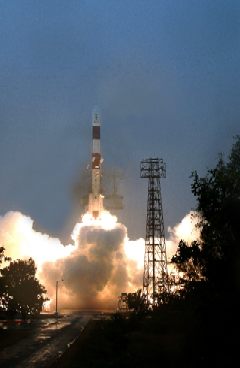
ISRO has two operational launch vehicles: the Polar Satellite Launch Vehicle (PSLV) and the Geosynchronous Satellite Launch Vehicle (GSLV). For Chandrayaan-1, ISRO has chosen to use PSLV as a launch vehicle. The PSLV developmental flights were completed in 1996 and the rocket has had 12 successful missions since then. PSLV is 44.43 meters tall and has a weight of 294 tonnes at launch. It can inject a payload of 1,000 kg – 1,200 kg into a polar orbit.


The launch of the Chandrayaan-1 mission is scheduled for the end of October 2008. The PSLV rocket will take off from the Satish Dhawan Space Center in Sriharikota on the southeast coast of India. The transfer to the lunar orbit will take approximately five days and after additional maneuvers the spacecraft will reach its final polar orbit, 100 km above the surface. The spacecraft will be operational for two years.


The Chandrayaan-1 mission opens the door to future lunar missions. ISRO has already committed to a second Chandrayaan mission that will land a rover on the surface of the Moon. The rover will perform a number of experiments on the lunar surface and the results will be relayed to Earth by the Chandrayaan-2 orbiter.


We will come back with more details about the Chandrayaan-1 mission as the events unfold. Please stay tuned on the OrbitalHub frequency.


  • Facebook
  • Google
  • Slashdot
  • Reddit
  • Live
  • TwitThis


We covered the ATV Jules Verne mission in a previous post (Jules Verne close to the End of its Space Journey) and mentioned that the typical ATV mission ends with a destructive re-entry above the Pacific Ocean. We come back with this post to present the conclusion of the ATV mission.


Credits: NASA


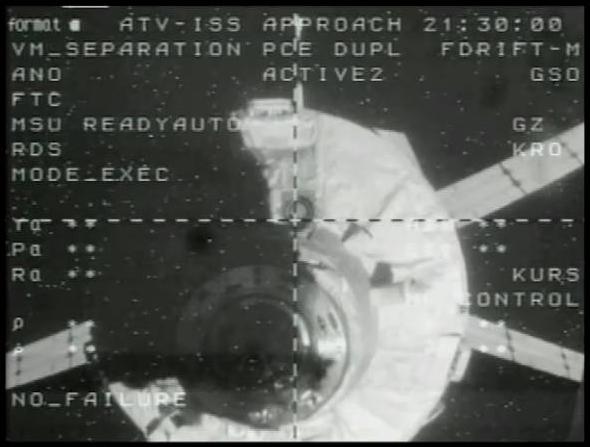
The ATV separated from the International Space Station (ISS) on September 5, 2008, filled with more than 2 tonnes of waste. The ATV undocked from the aft port of the Zvezda Service Module and it was placed in a parking orbit for three weeks. While being parked, a series of tests of the guidance and control systems were performed.

By carrying out re-phasing maneuvers, the ATV positioned itself to a predefined position behind and underneath the ISS. In this way, the crews from the ISS and from two specially equipped observation planes in the skies of the South Pacific were able to view and to record the re-entry.


Credits: NASA


The re-entry was initially modeled on computer in order to anticipate the trajectory and the location of the area where the breakout fragments of the spacecraft will fall. The observations helped determine if the re-entry matched the computer modeling.


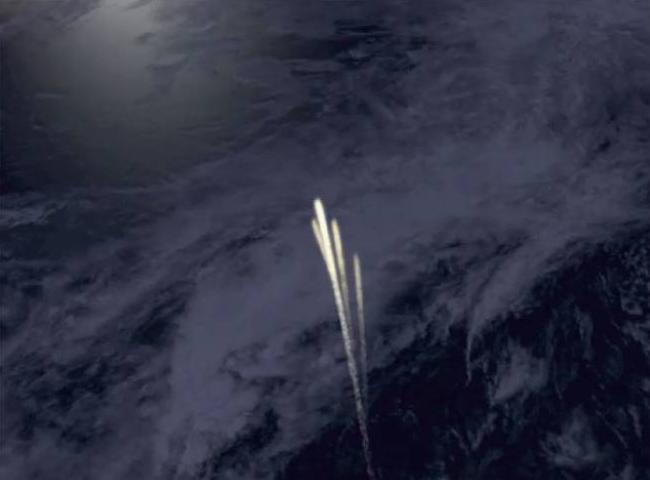
As planned, the first ATV mission concluded on September 29, 2008, when two engine burns de-orbited the spacecraft. ESA scheduled the re-entry on this date because the lighting conditions were appropriate for an imagery experiment and the breakup happened at approximately 75 km above the waters of the Pacific Ocean. The remaining fragments fell into the Pacific some 12 minutes later.


Credits: ESA


This first mission proved the logistical value of the ATV. The delivery of 6 tonnes of cargo to the ISS, the automatic rendezvous and docking capabilities, the attitude control maneuvers performed, they all show how far the European space capabilities have developed.


ESA engineers are already working on the next two ATV spacecrafts. The next ATV mission is scheduled for 2010 and there are many proposals to adapt the ATV to other types of missions.


Credits: ESA


One important variation of the typical ATV mission is the Large Cargo Return (LCR). The LCR configuration will consist of a large cargo capsule capable of bringing back on Earth hundreds of kilograms of cargo and valuable experiment results. LCR would be able to dock to the US side of the ISS that has larger docking ports and would make possible the transfer of complete payload racks.


The video showing the destructive re-entry of Jules Verne is available on the ESA website.


  • Facebook
  • Google
  • Slashdot
  • Reddit
  • Live
  • TwitThis


Some of the most important questions asked in modern science are: how did the Universe begin, how did it evolve to its present state, and how will it continue to evolve in the future? To ask these questions, the remnant radiation that filled the Universe immediately after the Big Bang must be analyzed. This remnant radiation is known as the Cosmic Microwave Background (CMB).


Credits: ESA


ESA plans to answer these questions with Planck: the first European mission to study the birth of the Universe. The Planck Mission will collect CMB radiation measurements using highly sensitive sensors that are operating at very low temperatures. The measurements will be used to map the smallest variations of the CMB detected to date.


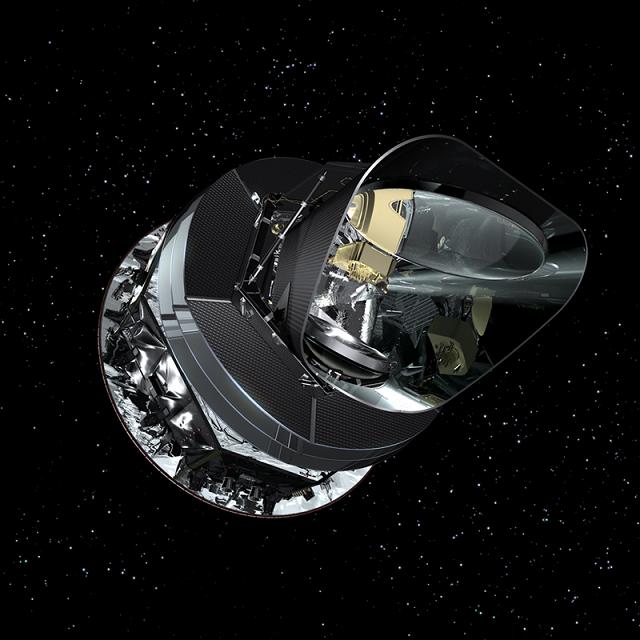
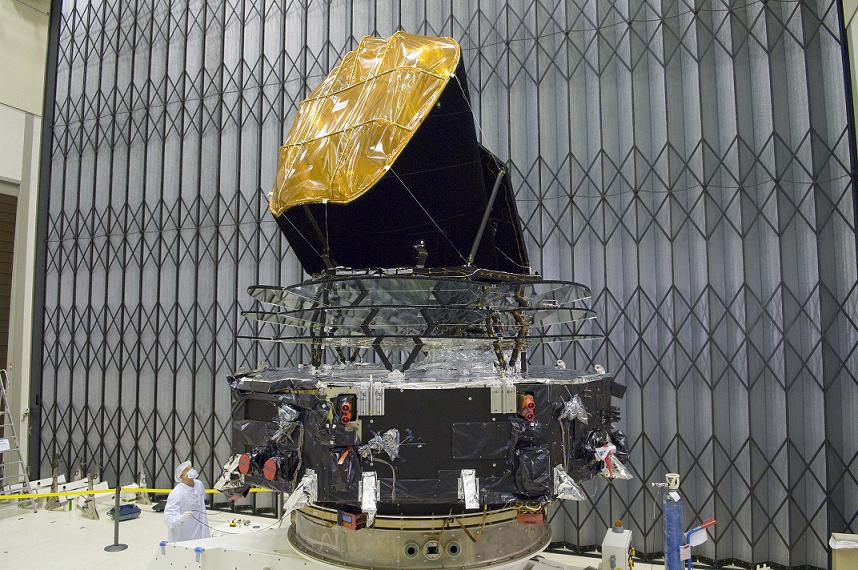
The Planck spacecraft will weigh around 1,900 kg at launch. It is 4.2 m high and has a maximum diameter of 4.2 m. There are two modules that comprise the spacecraft: a service module and the payload module.


The service module contains the systems for power generation, attitude control, data handling and communication, and the warm components of the scientific payload. The payload module contains the telescope, the optical bench, the detectors, and the cooling system (which is of critical importance, as we shall see).


The telescope is an important onboard component. The Planck telescope is a Gregorian telescope with an off-axis parabolic primary mirror 1.75 x 1.5 meters in size. A secondary mirror focuses the incoming microwave radiation on two sets of highly sensitive detectors: the Low Frequency Instrument (LFI) and the High Frequency Instrument (HFI). The Gregorian design offers two key advantages: it is compact and it does not block the optical path.


Credits: ESA/Thales


The LFI will be operating at –253 degrees Celsius. The array of twenty-two tuned radio receivers that comprise LFI will produce high-sensitivity, multi-frequency measurements of the microwave sky in the frequency range of 27 GHz to 77 GHz.


The HFI has to be cooled to –272.9 degrees Celsius in order to operate (one tenth of one degree above the absolute zero!). HFI’s fifty-two bolometric detectors will produce high-sensitivity, multi-frequency measurements of the diffuse sky radiation in the frequency range of 84 GHz to 1 THz.


A baffle surrounds the telescope and instruments. The baffle prevents light from the Sun and the Moon from altering the measurements. A complex system of refrigerators is used onboard the spacecraft in order to achieve the temperatures needed for nominal operation. The detectors have to work at temperatures close to the absolute zero, otherwise their own emissions can alter the measurements.


The two instruments will be used to measure the small variations of the CMB across the sky. By combining the measurements, a full sky map of unprecedented precision will be produced. The map will help astronomers decide which theories on the birth and the evolution of the Universe are correct. Questions like ‘what is the age of the Universe?’ or ‘what is the nature of the dark-matter?’ will be answered.


The mission was initially designed as COBRAS/SAMBA (Cosmic Background Radiation Anisotropy Satellite and Satellite for Measurement of Background Anisotropies) because it grew out of two mission proposals that had similar objectives. When the mission was approved in 1996, it was also renamed as Planck in honor of the German scientist Max Planck (1858 – 1947). Max Planck was awarded the Nobel Prize for Physics in 1918.


Credits: ESA


The mission is a collaborative effort. The Planck spacecraft was designed and built by a consortium led by Alcatel Alenia Space (Cannes, France). The telescope mirrors are manufactured by EADS Astrium (Friedrichshafen, Germany). The Low Frequency Instrument (LFI) was designed and built by a consortium led by the Instituto di Astrofisica Spaziale e Fisica Cosmica (IASF) in Bologna, Italy. The High Frequency Instrument (HFI) was designed and built by a consortium led by the Institut d’Astrophysique Spatiale (CNRS) in Orsay, France.


The Planck Mission has two predecessors: the Cosmic Background Explorer (COBE) and the Wilkinson Microwave Anisotropy Probe (WMAP).


Credits: ESA


The Planck spacecraft will be launched in early 2009 from Kourou, French Guiana. An Ariane 5 booster will place the spacecraft in a trajectory towards the L2 point. The L2 point stands for Second Lagrangian Point and it is located around 1.5 million kilometers away from Earth in a direction diametrically opposite the Sun. It will be a dual launch configuration, as the Herschel spacecraft will be launched together with Planck.


Between four to six months after the launch, Planck will reach its final position. It will take six more months before Planck will be declared operational.


Planck will perform scientific measurements for fifteen months, allowing two complete sky surveys. The spacecraft will be operational as along as there are resources for the cooling systems onboard.


For more details on the ESA’s Planck Mission you can visit the mission’s home page on the ESA website.


  • Facebook
  • Google
  • Slashdot
  • Reddit
  • Live
  • TwitThis
09-11-08

Carnival of Space #70

Posted by


Welcome to The OrbitalHub – the place where space exploration, science, and engineering meet. My name is DJ and I will be your host for this week’s Carnival. This is not only my first time participating in the Carnival, but also my first time hosting it. I hope you will enjoy reading this week’s entries.


Stuart Atkinson at the Cumbrian Sky points out that ESA marked a successful and historic day by beginning to involve the public more in their missions. He reminds us about some past missions that ESA was very reluctant to share with the general public.


Credits: NASA


On October 10, 2008, the Space Shuttle Atlantis will lift off on a fourth service mission to the Hubble Space Telescope. This sky veteran has served astronomers over the past (almost) two decades. On Astronomy at the CCSSC Rosa Williams explains why this mission is important and presents the upgrades that Hubble will undergo.


Space Shuttle flights may end in 2010. Alpha Magnetic Spectrometer, an ambitious cosmic ray experiment, is completed and sitting on the ground without a ride to the Space Station. The AMS mission may coincide with Shuttle retirement. Read The Last Flight at A Babe in the Universe to find out how scientists and the US Congress strongly support an extra mission for AMS. One controversial plan would deliver AMS and retire an Orbiter in space. The AMS mission would be a dramatic end to the Shuttle era.


On Kentucky Space, we can see how The Space Systems Design Studio at Cornell has been studying some superconducting technologies that might enable the building of modular spacecrafts.


Alexander DeClama, on Potentia Tenebras Repellendi, outlines more arguments on why space exploration is justified. Many byproducts of the space industry have migrated into healthcare and other industries over the years, bringing with them increased quality and reliability.


Centauri Dreams, in Cepheid Variables: A Galactic Internet?, looks at a recent paper that speculates on how a super-civilization might be able to modulate the extremely useful (and highly visible) Cepheid variable stars to encode a signal, for broadcast as one type of interstellar beacon. Intriguingly, if such a long-shot scenario turned out to be true, we might actually have data that could confirm it in existing records about Cepheid variables. The authors suggest how we might parse that data, and how future observations could help with such studies.


Ian Musgrave at Astroblog presents an animation of a cloud floating high above the Martian surface. He used Mars Express VMC camera images that ESA has released to the general public for analysis and processing.


Inspired by an article on Centauri Dreams, Music of the Spheres does some virtual space sailing with the help of the Orbiter space flight simulator and a solar sail add-on.


On The Planetary Society Weblog, Emily Lakdawalla covers a hot topic this week in the blogosphere: the encounter of ESA’s Rosetta with asteroid Steins.


David Portree of Altair VI describes the challenges that astronauts must face living and working in microgravity and an ambitious plan for the settlement of Mars in Delivering settlers to Mars (1995). The plan was initially published in the August 1995 issue of the Journal of the British Interplanetary Society by NASA Ames Research Center engineer Gary Allen.


Since the landing on Mars, the Phoenix lander has developed some odd little clumps on one of its legs, leading to speculations about their origin. Read about them on The Meridiani Journal in What is growing on Phoenix?


Even if space is a very harsh environment, it has been demonstrated that the water bears, a sea-monkey-like creature, can survive in the hard vacuum of space. Read all about it on Visual Astronomy in the article that Sean Welton has submitted for this week’s Carnival: Bears in Space?


Any old school astronomy geeks around here? Steinn Sigurdsson presents an illustration of Homeric Epicycles on Dynamics of Cats.


Credits: NASA/Pat Rawlings


Arthur C. Clarke’s vision of the future seems to be closer to reality as advances are made in separating carbon nanotubes. Read Brian Wang’s post Advance in separating carbon nanotubes brings space elevators a step closer at Next Big Future. This is a significant step towards building a space elevator and towards wider scale use of carbon nanotubes for other applications.


The future in space (and on Earth) of the next 20 years is so bright, you’ll probably need shades… Bruce Cordell of 21st Century Waves explains why in the post Why the World is Not Going to End.


It seems like the LHC (Large Hadron Collider) has an abort button! Thankfully, LHC physicists have a sense of humor about all of this doomsday mumbo-jumbo. Dave Mosher of Space Disco posted a picture of the ‘device’ in The LHC’s Abort Button.


At One Astronomer’s Noise, Nicole Gugliucci tells us about the successful attempt to resolve the super massive black hole at the center of our galaxy. Astronomers used what is called 1.3mm VLBI (Very Long Baseline Interferometry). VLBI is a technique that allows you to create a giant virtual telescope by linking multiple telescopes across long distances.


Measuring the positron emissions of the giant black hole at the center of the universe is quite a challenge. Ethan Siegel, at Starts With A Bang!, presents measurements taken by a detector in the gamma-ray domain and why these measurements are up for debate.


On Cosmic Ray, Ray Villard explores the possibility that the satellites of a Jovian-like planet orbiting around Epsilon Eridani, a star only 10 light-years away from our solar system, could harbor the seeds of life.


Credits: MOST Science Team


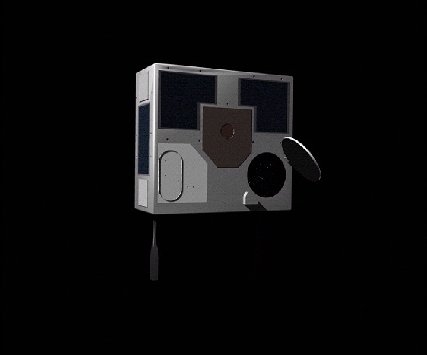
David Gamey, from Mang’s Bat Page, posted three articles about MOST (Microvariability and Oscillations of Stars), the suitcase sized microsatellite designed to probe stars and extra solar planets by measuring tiny light variations undetectable from Earth. By using a computer-controlled telescope, an astronomer from Toronto was able to catch MOST on camera. The MOST also started to offer its services to the public: Canadian amateur astronomers can win time on MOST. Even though it is a small telescope, MOST can be used to detect asteroids in an exo planetary system.


If you are an amateur astronomer, Alan Dyer at What’s Up Astronomy can show you how to catch on camera a cosmic flasher. Under the right conditions, the sunlight, reflected by the solar panels of communication satellites, can be observed from Earth.


The Earth is not left out this week. Phil Plait aka The Bad Astronomer, at Bad Astronomy, presents Ten things you don’t know about the Earth. I do not want to spoil the pleasure of reading the post, but I have to mention one of them: there is a measurable effect due to the centrifugal forces caused by the spinning motion of the Earth. The Earth’s diameter measured across the Equator is ~42km bigger than the diameter measured between the poles!


That’s it for this week’s Carnival! Thanks to everyone who submitted an entry. I enjoyed reading all of the posts and getting to know some members of the community. For more details on the Carnival of Space and past editions, you can check out the Carnival page at Universe Today. Many thanks to Fraser Cain at Universe Today for inviting me to host this Carnival.


  • Facebook
  • Google
  • Slashdot
  • Reddit
  • Live
  • TwitThis


Credits: ESA MPS for OSIRIS Team MPS/UPM/
LAM/IAA/RSSD/INTA/UPM/DASP/IDA


On September 6th, 2008, the ESA’s space probe Rosetta performed the first highlight on its 11 year mission: a close flyby the asteroid 2867 Steins. There are two more important events to occur during the mission, which are another flyby the asteroid 21 Lutetia in 2010 and the actual rendezvous with the comet 67/P Churyumov-Gerasimenko in 2014.


The Rosetta mission is special in many ways. It is the first mission to deploy a lander to the surface of a comet. It will also be the first to orbit the nucleus of a comet and to fly alongside a comet as it heads towards the inner Solar System.


Credits: ESA


Rosetta’s mission began on March 2nd, 2004, when the spacecraft lifted off from Kourou, French Guiana. In order to optimize the use of fuel, the probe has a very complicated trajectory to reach its final target, the comet 67/P Churyumov-Gerasimenko. The long trajectory includes three Earth-gravity assists (2004, 2007, and 2009) and one at Mars (2007). The probe uses the gravity wells of Earth and Mars to accelerate to the speed needed for the rendezvous with the comet. Most of the time, the probe is hibernating with the majority of its systems shut down in order to optimize the power consumption. At the time of the rendezvous, the remaining fuel will be used to slow down the probe to match the speed of the comet.


Credits: ESA/AOES Medialab


After reaching the comet, Rosetta will deploy a lander, called Philae, to the surface. While the probe will study the comet’s nucleus from a close orbit, the lander will take measurements from the comet’s surface. Because the gravity of the comet is very weak, the lander will use a harpoon to anchor itself to the surface.


Rosetta will stay with the comet more than one year, and during this time it will study one of the most primitive materials in the solar system. Scientists hope to discover the secrets of the physical and chemical processes that marked the beginning of the solar system some 5 billion years ago.


Credits: ESA/AOES Medialab


Traditionally, probes sent beyond the main asteroid belt employ radioisotope thermal generators (RTGs) as power generators. RTGs convert the heat from a radioactive source into electricity using an array of thermocouples. Instead, Rosetta is using solar cells for power generation. The probe deploys two impressive solar panels (a total area of 64 square meters). Even when close to the comet, the panels will be able to generate around 400 Watts of power. The panels can be rotated through +/- 180 degrees to track the Sun in every attitude assumed by the probe.


The probe is cube-shaped and measures 2.8×2.1×2.0 meters. At launch, it weighs 3,000 kg, including 1,670 kg of fuel, 165 kg of scientific payload for the orbiter, and 100 kg for the lander. The scientific instruments are accommodated on the lower side of the probe, which will be directed towards the comet during the last phase of the mission. Meanwhile, the probe will orbit the nucleus of the comet. A communication antenna 2.2 meters in diameter will be mounted on one side of the probe and on the opposite side the lander is attached. The other two lateral sides are used for anchoring the solar panels.


Credits: ESA/AOES Medialab


I was able to dig up more information about the probe and the lander in the mission launch kit on the EADS Astrium website.


The prime contractor for the spacecraft is Astrium Germany. The main sub-contractors are Astrium UK, Astrium France, and Alenia Spazio.


For propulsion and attitude control, the probe is using 24x10N bipropellant jets. The propulsion system is at the centre of the probe, where the tanks of propellant are located in the centre of a vertical tube.


I could not find an explanation as to why this design was chosen. Since the ability of the spacecraft to maneuver by using the onboard propulsion system is critical, I am assuming that the fuel tanks have to be protected from possible hits by micro meteorites.


Credits: ESA/AOES Medialab


The scientific instruments onboard Rosetta are: OSIRIS (Optical Spectroscopic and Infrared Remote Imaging System), ALICE (Ultraviolet Imaging Spectrometer), VIRTIS (Visible and Infrared Thermal Imaging System), MIRO (Microwave Instrument for Rosetta Orbiter), ROSINA (Rosetta Orbiter Spectrometer for Ion and Neutral Analysis), COSIMA (Cometary Secondary Ion Mass Analyser), MIDAS (Micro-Imaging Dust Analysis System), CONSERT (Comet Nucleus Sounding Experiment by Radiowave Transmission), GIADA (Grain Impact Analyser and Dust Accumulator), RPC (Rosetta Plasma Consortium), and RSI (Radio Science Investigation).


The lander is provided by a European consortium lead by the DLR (German Aeronautic Research Institute). Members of this consortium include ESA and the Austrian, Finnish, French, Hungarian, Irish, Italian, and British institutes.


Credits: ESA/AOES Medialab


The lander has a polygonal carbon fibre sandwich structure which is covered in solar cells. The antenna transmits data from the lander via the probe orbiting the comet.


There is an impressive collection of scientific instruments mounted on the lander as well: COSAC (Cometary Sampling and Composition experiment), MODULUS PTOMELY (Gas analyser), MUPUS (Multi-Purpose Sensors for Surface and Subsurface Science), ROMAP (Rosetta Lander Magnetometer and Plasma Monitor), SESAME (Surface Electrical Seismic and Acoustic Monitoring Experiments), APXS (Alpha X-ray Spectrometer), CONSERT (Comet Nucleus Sounding Experiment by Microwave Transmission), CIVA (Imager system using panoramic cameras), ROLIS (Rosetta Lander Imaging System used during the descend phase), and SD2 (Sample and Distribution Device, a sample acquisition system).


Credits: ESA


The scientific data collected by the instruments is transmitted to the Rosetta Mission Operations Centre (MOC) through a 8bps link. Due to the narrow bandwidth, the data cannot be sent back to Earth in real-time and has to be stored on the probe before being relayed.


The MOC at the European Space Operations Centre (ESOC) in Darmstadt has been controlling this long term mission since launch using ESA’s DSA 1 deep-space ground station at New Norcia.


It may seem like a long journey, but as in The Days of the Comet, the Rosetta mission could open up a whole new world of possibilities.


  • Facebook
  • Google
  • Slashdot
  • Reddit
  • Live
  • TwitThis