OrbitalHub

The place where space exploration, science, and engineering meet

Domain is for sale. $50,000,000.00 USD. Direct any inquiries to contact@orbitalhub.com.


Credits: SpaceX


Another critical milestone has been reached by SpaceX with the arrival of Falcon 9 hardware at Cape Canaveral.


After the full mission-length firing test of the Falcon 9 first stage engines and the firing test of the Dragon maneuvering thruster, the arrival of the Falcon 9 first stage fuel tank fulfills SpaceX’s commitment to having Falcon 9 hardware at Cape Canaveral by year-end.


“Christmas has arrived a few days early for our team at the Cape,” said Brian Mosdell, Director of Florida Launch Operations for SpaceX. “The packages measure extra large this year, and they will keep everyone busy in the coming weeks.”


All of the Falcon 9 elements and the ground support hardware have already left the SpaceX manufacturing facility in Hawthorne, California. The hardware will make its way to the launch site at Cape Canaveral over the next two weeks. The Falcon 9 will then be assembled on horizontal and raised to vertical on the custom built erector.


Credits: SpaceX


There are four Falcon 9 launches scheduled for 2009. Two of these launches are demonstration flights with the Dragon spacecraft as part of the NASA Commercial Orbital Transportation Services (COTS) competition. A total of three flights of the Falcon 9/Dragon launch system will be conducted under the agreement, in order to demonstrate cargo delivery capability to the International Space Station (ISS).


NASA’s agreement with SpaceX can be extended to include demonstrating transport of crew to and from the ISS.


“2008 has been a year of rapid progress for SpaceX,” said Elon Musk, CEO and CTO of SpaceX. “The delivery of the Falcon 9 to the Cape is a major milestone in designing and deploying the most reliable, cost-efficient fleet of launch vehicles in the world. I applaud our SpaceX team who has worked 24/7 to make this happen.”


SpaceX has made available a video of Elon Musk giving a tour of the SpaceX Falcon 9 launch site at Space Launch Complex 40, Cape Canaveral AFS, Florida.


  • Facebook
  • Google
  • Slashdot
  • Reddit
  • Live
  • TwitThis


Credits: NASA


The propulsion division of SpaceX has performed another important test. After the test of the Falcon 9’s first stage Merlin engines, the smallest engine of the SpaceX family, Draco, has been put to test.


During the test, the thruster fired for ten minutes, paused for ten minutes, and then was restarted for an additional minute.


The test was performed on a new vacuum test stand built by SpaceX, and put into operation in March 2008 at the SpaceX Test Facility outside McGregor, Texas.


“Draco performed perfectly during the entire test, with expected temperatures and excellent performance,” said David Giger, Propulsion Manager, SpaceX. “We also broke the SpaceX record for longest continuous burn previously held by Kestrel, the Falcon 1 second stage engine.”


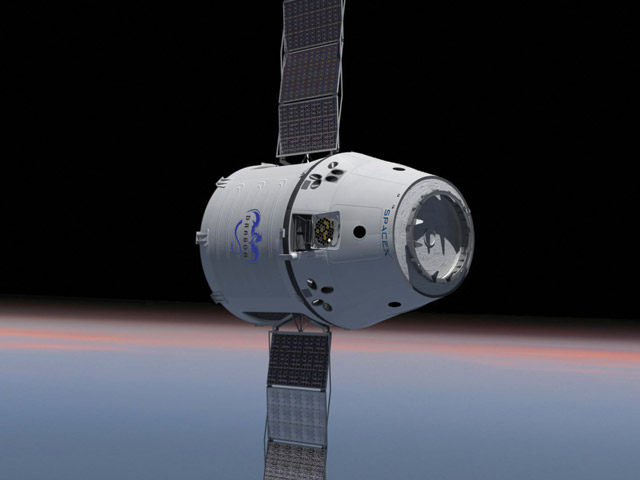
The Dragon spacecraft uses eighteen Draco thrusters for orbital maneuvering, attitude control, and to initiate the atmospheric re-entry. Each Draco thruster can deliver up to 400N of force. The thruster is powered by a combination of mono methyl hydrazine (MMH) and nitrogen tetroxide (NTO), which is the same bipropellant used by the orbital maneuvering system (OMS) of the Space Shuttle.


Credits: NASA


MMH and NTO are used as propellants because they have long on-orbit lifetimes. This will allow the Dragon spacecraft to perform longer missions to the International Space Station (ISS). The goal is to use the spacecraft as an emergency escape capsule for the crew working on the ISS.


SpaceX has released a video of the Draco thruster vacuum firing.


  • Facebook
  • Google
  • Slashdot
  • Reddit
  • Live
  • TwitThis


Credits: SpaceX


The nine Merlin engines that power the first stage of the Falcon 9 launcher have been successfully tested. At the McGregor Test Facility in Texas, a full mission-length firing test of the first stage of the launcher was conducted on November 22, 2008. The engines, fired for 178 seconds, consumed over half a million pounds of propellant.


During the last eighteen seconds of the test, two of the engines were shut down in order to test the ability of the first stage to complete a mission in the event of an engine being lost during flight.


According to SpaceX CEO, Elon Musk, the first liftoff of a Falcon 9 launcher from Cape Canaveral will occur in 2009.


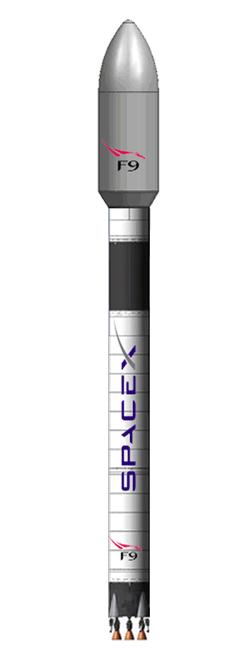
Falcon 9 is a two-stage launch vehicle. It is powered by liquid oxygen and rocket grade kerosene. Nine Merlin engines power the first stage of the launcher. The second stage of the Falcon 9 launcher is powered by one Merlin engine.


Falcon 9 has a length of 54.9 m, a diameter of 3.6 m, and can have a mass of 333,400 kg for a low Earth orbit (LEO) mission, and 332,800 kg for a geosynchronous transfer orbit (GTO) mission. It can inject 12,500 kg payloads into LEO (200 km) and 4,640 kg payloads into GTO (185×35,788 km). SpaceX will charge $36.75M for a LEO mission, and $46.75M for a trans-lunar injection (TLI) mission. For GTO missions, the price ranges from $36.75M to $57.75M.


For more details about the Falcon 9 launcher, you can visit the Falcon 9 overview web page on the SpaceX web site.


Check out the video with the 3 minute test of the Merlin engines on the SpaceX web site.


  • Facebook
  • Google
  • Slashdot
  • Reddit
  • Live
  • TwitThis
11-4-08

SpaceX Enters The Dragon

Posted by


Credits: SpaceX


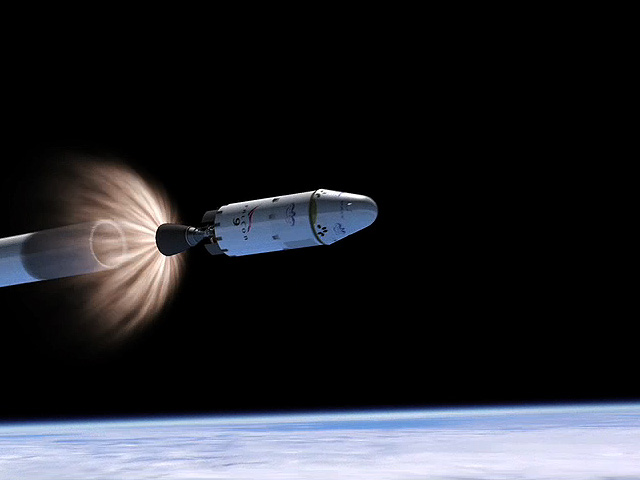
SpaceX just announced the DragonLab Spacecraft. DragonLab is a reusable spacecraft capable of delivering pressurized and un-pressurized payloads to and from space. SpaceX will use Falcon 9 (the heavier version of Falcon 1) to launch the DragonLab spacecraft into orbit.


Dragon will perform two missions in 2009. These missions will test the telemetry, orbital maneuvering and thermal control, and a rendezvous simulation with the Falcon 9 upper stage. The first full cargo mission to ISS is scheduled for 2010.


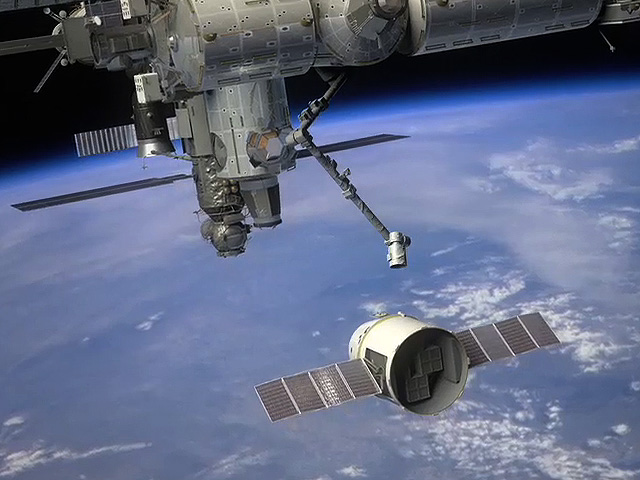
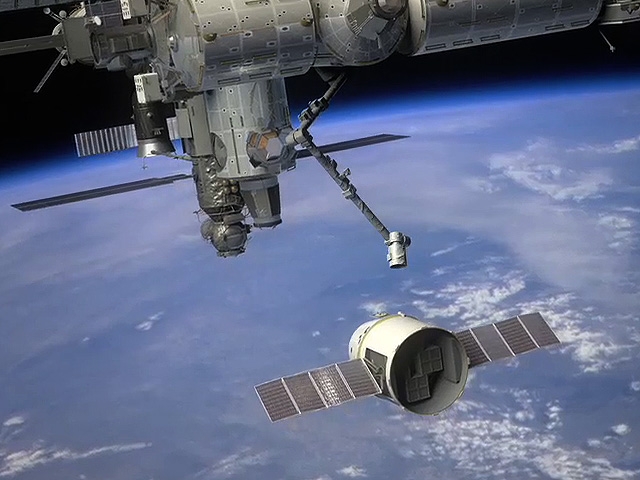
The technical page dedicated to the Dragon spacecraft is quite impressive. Just to mention a few features: down-cargo capability is equal to up-cargo, and up to seven passengers in crew configuration. SpaceX claims fully autonomous rendezvous and docking, but the simulation developed by Odyssey Space Research shows capture operations similar to HTV (the Dragon spacecraft will approach the ISS and then the ISS robotic manipulator will capture the spacecraft and guide it to the docking module).


Credits: NASA/SpaceX


DragonLab will compete with the ATV spacecraft (and the future CTV, LCR versions) that ESA is developing.


SpaceX also announced that it is hosting a workshop on November 6, 2008. Registration is mandatory, so time is of the essence! I am pretty sure the seats are selling like hot cakes…


  • Facebook
  • Google
  • Slashdot
  • Reddit
  • Live
  • TwitThis
09-29-08

Falcon 1 Takes Flight

Posted by


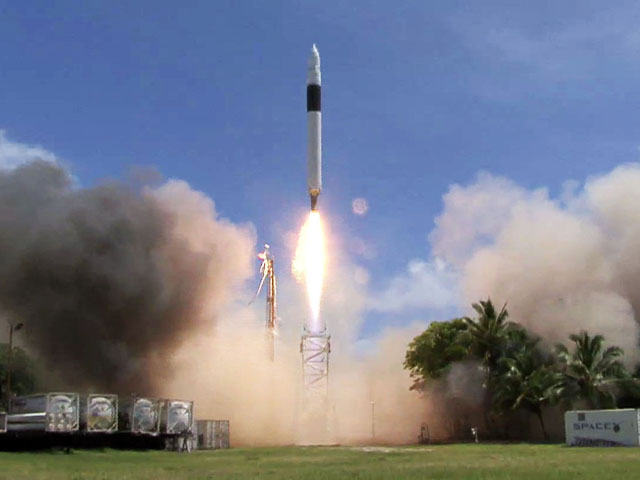
After six years of tremendous effort and more than $100 million USD spent, SpaceX made a successful launch of Falcon 1. Falcon 1 is the first booster built by a private company to ever reach the Earth’s orbit. This is the fourth Falcon 1 mission.


Credits: SpaceX


The booster lifted off yesterday from the testing site on Omelek Island in the Kwajalein Atoll located in the central Pacific some 2,500 miles southwest of Hawaii.


The previous three missions were not successful, but SpaceX managed to remove all the stumbling blocks out of the way. In less than two months from the previous attempt, on August 2nd 2008, SpaceX had another booster ready for launch.


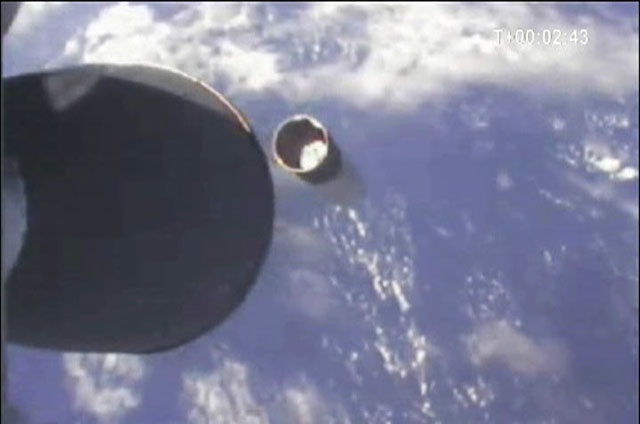
The payload carried by the Flight 4 mission is a mass simulator that weighs around 165 kg. The payload did not separate but remained attached to the second stage as it orbits the Earth.


Falcon 1 is a two-stage booster. It uses liquid oxygen and rocket grade kerosene as fuel. The booster is 21.3 meters long and 1.7 meters in diameter. It weighs 27, 670 kg when ready to launch. The first stage of the booster is powered by a Merlin 1C engine and the upper stage is powered by a Kestrel engine.


The Merlin 1C engine is a turbo pump fed engine, while the smaller Kestrel engine uses tank pressure to inject the fuel into its combustion chamber. In order to simplify the design, the Merlin engine uses the high-pressure kerosene to cool the combustion chamber and the nozzle. In addition, the engine uses the high-pressure kerosene for the hydraulic actuators, thereby eliminating the need for a separate hydraulic power system.


Credits: SpaceX


Falcon 1 is the first in a family of launch vehicles that SpaceX will build and operate. NASA awarded Commercial Orbital Transportation Services (COTS) funding to SpaceX to demonstrate delivery and return of cargo and potentially a human crew to the International Space Station (ISS). In order to achieve these goals, SpaceX is developing a bigger booster, Falcon 9, and a cargo and crew capsule, Dragon.


SpaceX holds a unique position in the launch vehicle market, being able to take over the delivery of supplies and human crews to the ISS, after the Space Shuttle’s retirement in 2010. For more information about SpaceX and its fleet of launch vehicles, check out their website.


  • Facebook
  • Google
  • Slashdot
  • Reddit
  • Live
  • TwitThis