OrbitalHub

The place where space exploration, science, and engineering meet

Domain is for sale. $50,000,000.00 USD. Direct any inquiries to contact@orbitalhub.com.

10-22-09

Rosetta’s Last Visit Home

Posted by


Credits: ESA/AOES Medialab


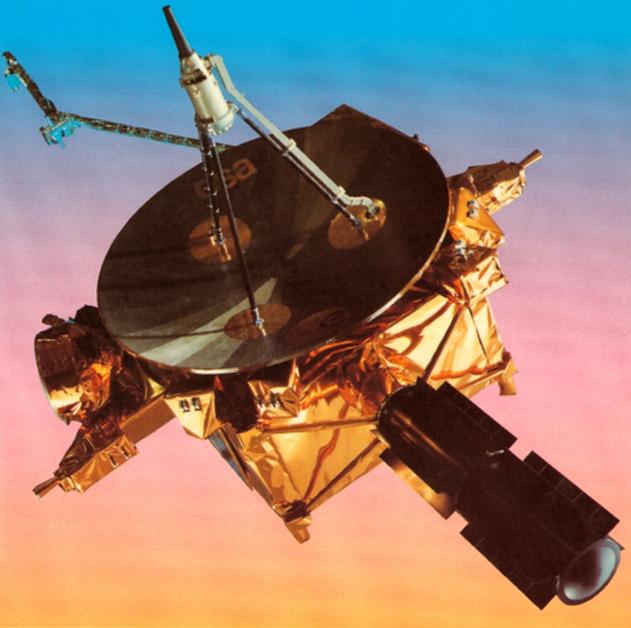
On November 13, 2009, the Rosetta spacecraft will swing by Earth for the last time. This maneuver will provide the boost needed by the spacecraft to reach the outer Solar System. The critical swingby events are described on ESA’s web site.


Rosetta’s mission began on March 2nd, 2004, when the spacecraft lifted off from Kourou, French Guiana. In order to optimize the use of fuel, the probe has a very complicated trajectory to reach its final target, the comet 67/P Churyumov-Gerasimenko. The long trajectory includes three Earth-gravity assists (2004, 2007, and 2009) and one at Mars (2007). The probe uses the gravity wells of Earth and Mars to accelerate to the speed needed for the rendezvous with the comet.


Read more about Rosetta…


  • Facebook
  • Google
  • Slashdot
  • Reddit
  • Live
  • TwitThis
09-28-09

Fly Me to the Moon

Posted by


In Fly Me to the Moon : An insider’s guide to the new science of space travel, Ed Belbruno explains in simple terms advanced mathematical techniques using a general subject called dynamical systems theory. He describes how we can use chaos to change the way we maneuver in space.


Ed Belbruno makes the important point that chaos can be used as a way to get a handle on the unpredictability in sensitive motions of a spacecraft.


The unpredictability results from the subtle combination of gravitational pulls and tugs on a spacecraft moving in space. An immediate application is low-energy transfer trajectories to lunar orbits.


Belbruno tells the stories of Hiten, the Japanese lunar mission rescued in 1991; HGS-1, a commercial Earth orbiting satellite that had strayed into an undesired orbit; LGAS, a low-budget NASA mission; and SMART-1, the ESA mission that tested low-energy lunar transfers in 2003.


The low-energy trajectories can be used for purposes other than sending automated cargo spacecrafts to permanent settlements on the Moon. Ballistic captures, as they are also called, could be used for a robotic mission in the Jovian system, to shed light on the apparently unpredictable trajectories of comets and other Kuiper Belt objects, and to explain the origin of our Moon or the Panspermia hypothesis.


While it is written for a non-technical audience, the book is grounded in solid theoretical research, and would be of interest to engineers and space enthusiasts alike.


  • Facebook
  • Google
  • Slashdot
  • Reddit
  • Live
  • TwitThis
09-14-09

PROBA-2

Posted by


Credits: ESA – P. Carril, 2009


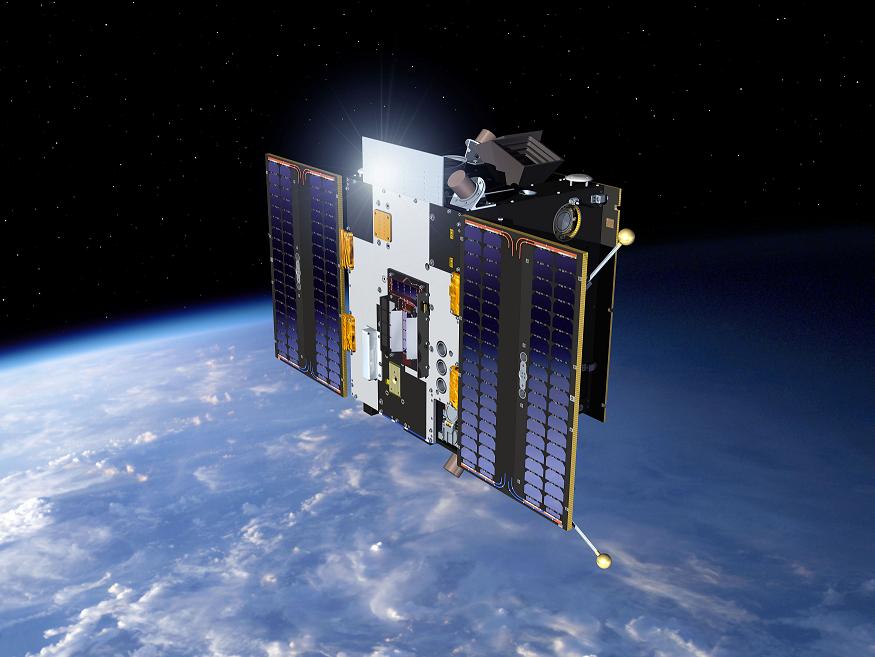
PROBA-2 is part of an ESA program called In-Orbit Technology Demonstration Program, which is dedicated to the demonstration of innovative technologies.


The PROBA-2 payload consists of scientific instruments that will make observations of the Sun in the ultraviolet portion of the spectrum and will measure certain properties of the plasma surrounding the spacecraft.


Among the new equipment and technologies demonstrated by PROBA-2 are new models of star trackers, GPS receivers, and reaction wheels, a new type of lithium-ion battery, an advanced data and power management system, composite carbon-fibre and aluminum structural panels, and magnetometers. PROBA-2 also hosts a digital Sun-sensor, an experimental solar panel, and a xenon gas propulsion system.


PROBA-2 will be launched onboard the same launch vehicle as SMOS. While the SMOS Mission will provide global maps of moisture over the Earth’s landmasses and salinity over the oceans, PROBA-2 is a small technology demonstrator. Launched as a secondary payload, PROBA-2 will orbit in the same plane as SMOS, but at a lower altitude. The planned mission duration is two years.


The spacecraft is a 600 mm x 700 mm x 850 mm box-shaped structure, with a mass of 130 kg. Aluminum honeycomb panels make the primary mechanical structure of the spacecraft. The two deployable solar panels and the one outer solar panel provide a maximum of 110 Watts of electrical power. A lithium-ion battery provides power during eclipse periods. A single 20 mN thruster is used for orbit adjustments.
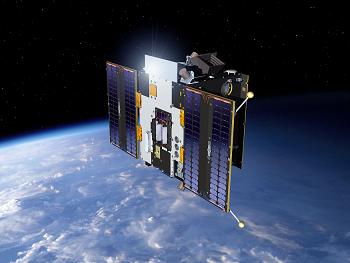
 

Credits: ESA – P. Carril, 2009


PROBA-2 is three-axis stabilized. Attitude changes are performed using four reaction wheels that can be unloaded by magnetorquers, while the attitude determination is provided by star trackers, GPS sensors, and a three-axis magnetometer.


The spacecraft was built by Verhaert Design & Development NV, Belgium.


The scientific payload comprises of four experiments: two for solar observations (LYRA and SWAP) and two for space weather measurements (DSLP and TPMU).


LYRA is a Lyman-Alpha radiometer that will monitor four bands in a very wide ultraviolet spectrum. SWAP (the Sun Watcher using Active Pixel-sensor) will make measurements of the Sun’s corona. DSLP (Dual Segmented Langmuir Probes) will make measurements of the electron density and temperature in the background plasma. TPMU, which is the Thermal Plasma Measurement Unit, will measure ion densities and composition.


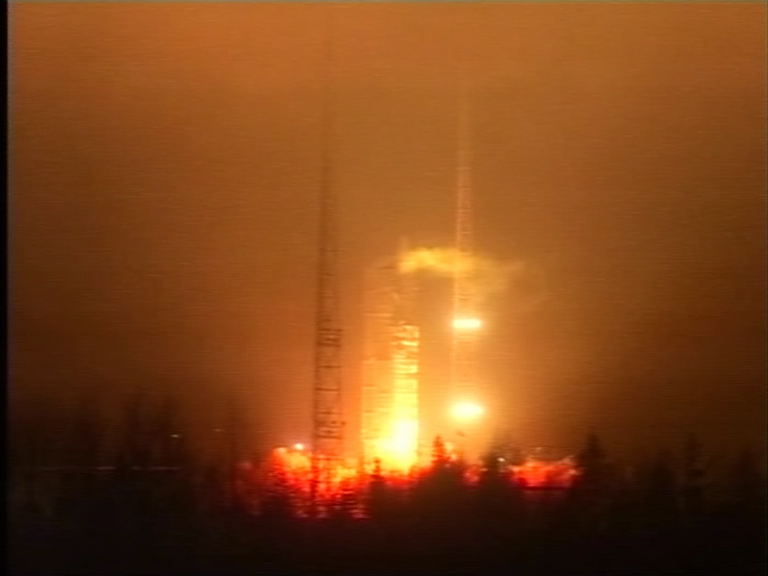
Launch services for the PROBA-2 mission are provided by EUROCKOT Launch Services GmbH. PROBA-2 will achieve its lower orbit by an orbit change maneuver of the Breeze-KM upper stage of the Rockot launch vehicle.
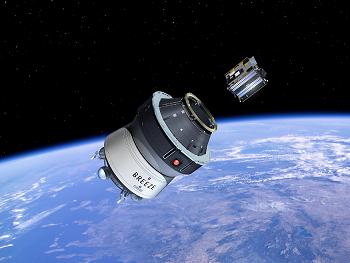
 

Credits: ESA – P. Carril, 2009


Rockot is a three-stage liquid propellant launch vehicle based on the Russian SS-19 Intercontinental Ballistic Missile (ICMB).


Rockot’s first and second stages (provided by SS-19) are completed by a third re-ignitable stage, the Breeze-KM upper stage. Rockot can deliver 1950 kg payloads to Low Earth Orbits (LEOs).


The length of the launch vehicle is 29 m. The external diameter of the stages is 2.5 m, while the payload fairing has an external diameter of 2.6 m and a height of 6.7 m. The mass of the vehicle at launch is 107 metric tons.


PROBA-2 will be carried into orbit from Plesetsk Cosmodrome, Russia. The operational orbit is a 700 km sun-synchronous orbit, with a 98 degree inclination.


You can read more about PROBA-2 on ESA’s dedicated web site. ESA’s web site also provides information about PROBA-1, which is already flying, and future PROBA missions, like PROBA-3 and PROBA-V.

 

  • Facebook
  • Google
  • Slashdot
  • Reddit
  • Live
  • TwitThis


Credits: ISRO


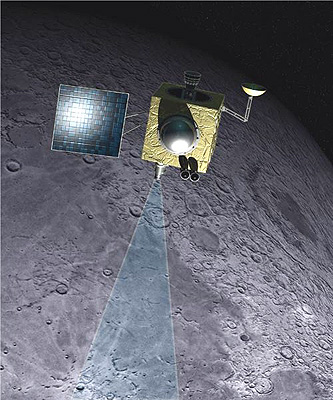
After nine months of operation, Chandrayaan-1 failed to communicate with the base. The Indian Space Research Organization (ISRO) abruptly lost contact with the spacecraft on Saturday, September 29, 2009.


If this is the end of Chandrayaan-1, the mission covered only nine months of its scheduled two-year operational life. I really hope that this is a minor obstacle that the ISRO will be able to overcome. ISRO stated that the Chandrayaan-1 mission was able to meet most of its scientific objectives.


The Chandrayaan-1 scientific payload contains a diverse collection of instruments. The instruments were designed and developed by ISRO, ESA, NASA, and the Bulgarian Space Agency.


There are two instruments that are used to map the surface of the Moon: the Terrain Mapping Camera (TMC) and the Lunar Laser Ranging Instrument (LLRI). The X-ray spectrometer onboard the spacecraft measures the concentration of certain elements on the lunar surface and monitors the solar flux in order to normalize the results of the measurements taken. The mineralogical configuration of the surface is mapped by four instruments: the Hyper Spectral Imager (HySI), the Sub-keV Atom Reflecting Analyzer (SARA), the Moon Mineralogy Mapper (M3), and the Near-Infrared Spectrometer (SIR-2). The Radiation Dose Monitor (RADOM-7) records the radiation levels in the lunar orbit.


You can find out more about Chandrayaan-1 on the ISRO’s dedicated web page.


  • Facebook
  • Google
  • Slashdot
  • Reddit
  • Live
  • TwitThis
07-10-09

End of Journey for Ulysses

Posted by


Credits: ESA – D. Hardy


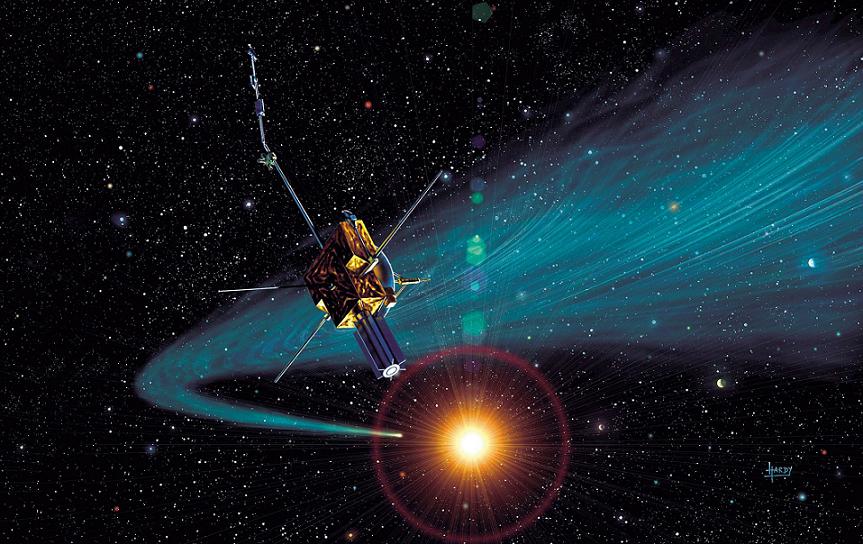
On June 30, 2009, the Ulysses mission came to an end, one year after the predicted mission end date. Ulysses is one of the longest space missions to date, and holds the record for the longest running ESA operated spacecraft, with a total mission duration of 6,842 days (18 years, 8 months, and 24 days).


A joint venture of NASA and ESA, Ulysses was launched on October 6, 1990, from the STS-41 Space Shuttle Discovery mission. Being an Out-Of-The-Ecliptic (OOE) mission, the Ulysses mission studied the Sun at all latitudes. The initial gravity assist at Jupiter on February 8, 1992, injected the spacecraft in an orbit around the Sun with an inclination to the ecliptic of 80.2 degrees.


Besides studying the north and south poles of the Sun, Ulysses also made observations on Jupiter and the comets Hyakutake and McNaught-Hartley.


The spacecraft is box-shaped, 3.2×3.3×2.1 m in size. Three external features of the spacecraft are the High Gain Antenna (HGA), which is a 1.65 m diameter parabolic dish, the Radio-isotope Thermoelectric Generator (RTG), and the two 35 m antennae for the Unified Radio and Plasma (URAP) instrument. The HGA was used for communicating with ground-based stations in both X-band and S-band radio frequency bands.


Credits: ESA


If you are passionate about spacecraft design, an overview of the Ulysses spacecraft, with subsystem schematics and descriptions of all units, is available.


The link contains presentations of the Attitude and Orbit Control Subsystem, the Telemetry, Tracking, and Command Subsystem, the Data Handling Subsystem, and the Power and Thermal Subsystem. It is 1980s technology, but very tasty food for an engineer’s brains.


During its long-duration mission, Ulysses made observations above and below the poles of the Sun. Fundamental scientific discoveries and contributions to our understanding of the Sun and the heliosphere were made. Due to the characteristics of its orbit, Ulysses was able to perform direct measurements of interstellar dust and gas.


You can find out more about Ulysses on ESA’s and NASA’s websites.


Planetary Radio released an interview with Nigel Angold, the ESA Ulysses Mission Operations Manager. Find out how engineers kept the Ulysses spacecraft alive for so long. I invite everyone to listen to it.


  • Facebook
  • Google
  • Slashdot
  • Reddit
  • Live
  • TwitThis
06-19-09

SMOS

Posted by


Credits: ESA-AOES Medialab


The Soil Moisture and Ocean Salinity (SMOS) mission, which is the second Earth Explorer Opportunity mission to be developed as part of ESA’s Living Planet Program, will provide global maps of moisture over the Earth’s landmasses and salinity over the oceans. These observations will improve our understanding of hydrology and ocean circulation patterns.


The science objectives for the SMOS mission are global monitoring of surface soil moisture and surface salinity over oceans, and improving the characterization of ice and snow-covered surfaces.


The SMOS satellite is built around a standard spacecraft bus called Proteus, which was developed by the French space agency CNES (Centre National d’Etudes Spatiales) and Alcatel Alenia Space. Proteus measures one cubic meter and plays the role of a service module, hosting all the subsystems that are required for the satellite to function.


A GPS receiver collects satellite position information. A hydrazine monopropellant system consisting of four 1-Newton thrusters, which are mounted on the base of the spacecraft, provides the thrust for orbit control. Three 2-axis gyroscopes and four small reaction wheels control the attitude of the satellite. A star tracker also provides accurate attitude information for instrument measurements.


The solar panels can produce up to 900 W, covering the 525 W maximum payload consumption. During eclipse periods, the satellite uses a 78 AH Li-ion battery. SMOS has a launch mass of 658 kg: a 275 kg platform, 355 kg payload, and 28 kg of fuel.


The SMOS satellite will deploy a new type of scientific instrument in space: a microwave imaging radiometer that operates between 1,400 – 1,427 MHz (L-band). The instrument is called Microwave Imaging Radiometer using Aperture Synthesis, or MIRAS, for short. MIRAS consists of a central structure and three deployable arms, and uses 69 antenna-receivers (LICEFs) for measuring microwave radiation emitted from the surface of the Earth. The instrument is the result of almost ten years of research and development.


Credits: ESA-AOES Medialab


The data collected by MIRAS needs to go through a validation process. The radiation received by the instrument is a function that depends not only on soil moisture and ocean salinity, other effects need to be considered when instrument data is converted into units of salinity and moisture.


Factors that have to be considered are the distribution of vegetation, the litter layer, the soil type, the varying roughness of the surface, and the physical temperature of the surface of the land and sea.


In order to quantify the effects of factors mentioned above, dedicated campaign activities were conducted. Ground-based and airborne instruments similar to the one mounted on SMOS were used to collect data that was correlated with in-situ observations made by large ground teams. Long-term observations were carried out from an oilrig platform in the Mediterranean and at the Concordia Station in Antarctica.


The Committee on Earth Observation Satellites (CEOS) has defined a number of levels for the SMOS Mission Data Products. They range from Raw Data to Level-3 Data Products, which are Soil Moisture and Ocean Salinity global maps. Level-3 data will be available from the SMOS Level 3/4 Processing Center in Spain.


Eurockot will provide the launch services for the SMOS mission. A Rockot launcher, which is derived from a Russian Intercontinental Ballistic Missile (ICBM) SS-19, will lift off from the Plesetsk Cosmodrome, 800 km north of Moscow. The Rockot launcher will inject the satellite in a 758 km quasi-circular orbit.


The CNES Satellite Operations Ground Segment and ESA/CDTI (Centro para el Desarrollo Technologico Industrial) Data Processing Ground Segment will be responsible for the SMOS mission ground segment.


Initially scheduled for 2008, the launch of the Earth Explorer SMOS satellite will take place some time from July to October 2009.


You can find more details about SMOS on the dedicated page on ESA’s web site.


  • Facebook
  • Google
  • Slashdot
  • Reddit
  • Live
  • TwitThis