OrbitalHub

The place where space exploration, science, and engineering meet

Domain is for sale. $50,000,000.00 USD. Direct any inquiries to contact@orbitalhub.com.

January 13, 2009

Falcon 9 Standing Tall At The Cape

Posted by


Credits: SpaceX


SpaceX has announced that the Falcon 9 launch vehicle was raised to vertical on its launch pad at Space Launch Complex 40 (SLC-40) in Cape Canaveral, Florida.


SpaceX was awarded a Commercial Resupply Service (CRS) contract in December 2008. The Falcon 9 launch vehicle and the Dragon spacecraft will be used as the primary means of transporting cargo to and from the International Space Station (ISS) after the Space Shuttle is retired by NASA.


The Falcon 9 launch vehicle will provide the lowest cost per kilogram to orbit. The 54.9 m long and 3.6 m wide launcher will be able to lift payloads with a mass of 12,500 kg to a low Earth orbit (LEO) for only $36.75 million. For more details on the pricing of the Falcon 9 missions, you can check out the page dedicated to Falcon 9 on SpaceX’s web site.


“This entire process has helped us validate key interfaces and operations prior to executing our launch campaign with the vehicle in its final flight configuration,” said Elon Musk, CEO and CTO of SpaceX. “We encountered no show-stoppers or significant delays. I am highly confident that we will achieve our goal of being able to go from hangar to liftoff in under 60 minutes, which would be a big leap forward in capability compared with the days to weeks required of other launch vehicles.”


  • Facebook
  • Google
  • Slashdot
  • Reddit
  • Live
  • TwitThis
January 13, 2009

Carnival of Space #86

Posted by


Credits: Orbital


Carnival of Space #86 is hosted by collectSPACE.


This week, you can take a tour of the sky, read about rare space artifacts, repulsive quantum forces, and stellar champagne, see images of an atypical galaxy, or take a class about Earth’s orbit around the Sun. The Canadian MOST (Yaay Canada!) is covered this week as well.


OrbitalHub presents Orbital’s Taurus II/Cygnus launch system. Orbital is one of the companies awarded Commercial Resupply Services (CRS) contracts by NASA. Taurus II/Cygnus will service the International Space Station.


  • Facebook
  • Google
  • Slashdot
  • Reddit
  • Live
  • TwitThis


Credits: ESA/CNES/ARIANESPACE-Service Optique CSG 2002


Arianespace accounted for 50 percent of all commercial launches to geostationary transfer orbit during 2008 and retained its strong market share, which represented 72 percent of the orders booked in 2008.


Arianespace was founded in 1980. Among its 23 shareholders are the French space agency CNES with thirty-four percent and EADS Astrium with thirty percent. With only around 300 employees, the company has generated sales of about one billion euros in 2008.


2009 will be the year of the launcher family for Arianespace, as Arianespace Chairman and CEO Jean-Yves Le Gall pointed out during the company’s New Year’s press conference in Paris. The development of the Vega launcher is being finalized, the maiden launch of the medium-lift Soyuz launcher from Kourou in French Guiana will take place this year, and more than six missions are scheduled for Ariane 5.


“As a result of our launcher family strategy, Arianespace has a sustained agility that allows us to be ever more responsive to our customers,” Le Gall told the journalists. “The agility has been demonstrated with our 28 consecutive mission successes for Ariane 5 and the 21 for Soyuz – and is underscored by launches that are on target, and on time.”


With a full range of payload lift capabilities, including Vega, Soyuz, and Ariane 5, Arianespace is able to meet the changing trends in satellite weights, orbiting everything from light weight scientific payloads to heavy telecommunication relay platforms.


  • Facebook
  • Google
  • Slashdot
  • Reddit
  • Live
  • TwitThis
January 9, 2009

IBUKI Closer To Launch

Posted by


Credits: JAXA


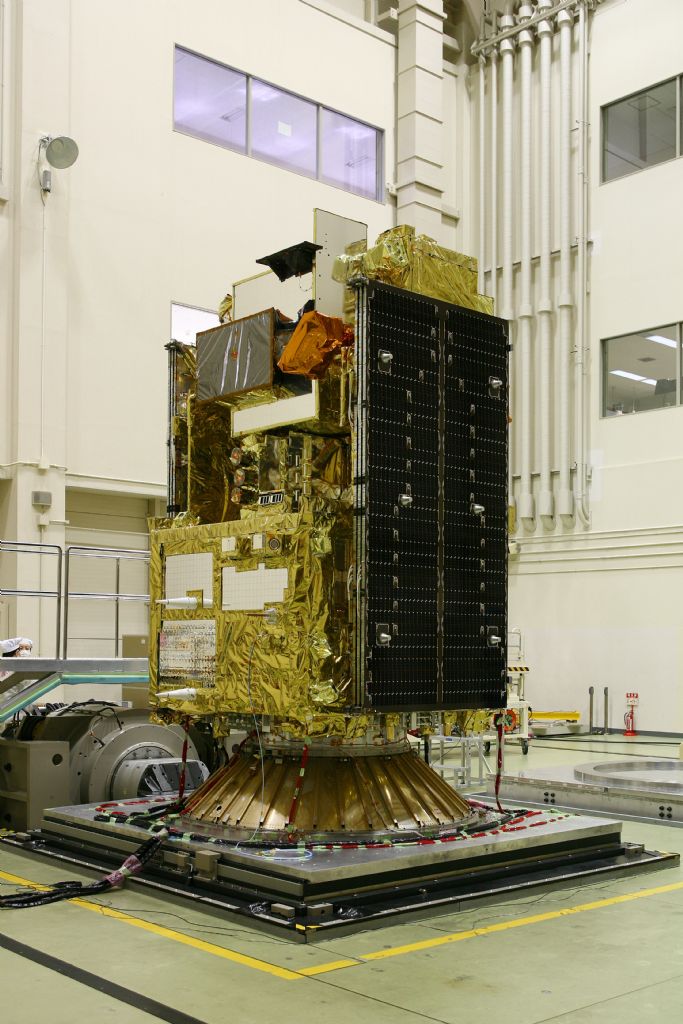
The Greenhouse Gases Observing Satellite or GOSAT for short, is getting closer to the launch scheduled for late January 2009. The chosen nickname for GOSAT is IBUKI, which means breath or puff.


IBUKI was encapsulated in the payload fairing after being mounted on the Payload Attach Fitting (PAF). The PAF is the base that connects the satellite and the launch vehicle. All of the integration operations are performed at the Spacecraft and Fairing Assembly building (SFA) at the Tanegashima Space Center (TNSC).


The final integration with the launch vehicle will be carried out at the Vehicle Assembly Building (VAB).


GOSAT is the first satellite to observe greenhouse gases from space. The main contributors behind GOSAT are the Japan Aerospace Exploration Agency (JAXA), the National Institute for Environmental Studies (NIES), and the Ministry of Environment (MOE).


The data collected by the GOSAT satellite will help us make better estimates as to how different areas on Earth contribute to global warming through the emission of greenhouse gases. The data will also help us understand the behavior of the greenhouse gases by combining global observation data collected on orbit with data collected on the ground, and it will also help us improve simulation models.


  • Facebook
  • Google
  • Slashdot
  • Reddit
  • Live
  • TwitThis
January 8, 2009

Taurus II and Cygnus

Posted by


Credits: NASA


Orbital will employ its Taurus II medium-lift launch vehicle and the Cygnus spacecraft in order to service the International Space Station (ISS) under the Commercial Resupply Services (CRS) contract.


Orbital is one of the two companies awarded CRS contracts under the Commercial Orbital Transportation Services Project (COTS).


NASA announced the COTS project on January 18, 2006. The purpose of the program is to stimulate the development of access to low Earth orbit (LEO) in the private sector. At the time, with the imminent retirement of the Space Shuttle fleet, NASA was faced with the option of buying orbital transportation services on foreign launch systems: the Russian Soyuz / Progress, the European Ariane 5 / ATV, or the Japanese H-II / HTV.


Another factor taken into consideration by NASA was that competition in the free market could lead to the development of more efficient and affordable launch systems compared to launch systems that a government agency could build and operate.
 

Credits: Orbital


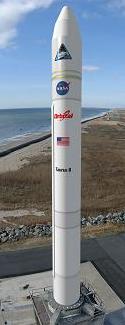
Orbital relies on proven experience in launch vehicle technology. Taurus II is designed to provide low-cost and reliable access to space, and it uses systems from other members of Orbital’s family of successful launchers: Pegasus, Taurus, and Minotaur.


Taurus II is a two-stage launch vehicle that can use an additional third stage for achieving higher orbits. The payloads handled by Taurus II can have a mass of up to 5,400 kg.


Orbital is responsible for overall development and integration of the first stage. The two AJ26-62, designed and produced by Aerojet and Orbital, are powered by liquid oxygen and kerosene. The core design is driven by NPO Yuzhnoye, the designer of the Zenit launchers.


The AJ26-62 engines are basically the NK-33 engines designed by the Kuznetsov Design Bureau for the Russian N-1 launch vehicle, and remarketed by Aerojet under a new designation.


The second stage uses an ATK Castor-30 solid motor with thrust vectoring. This stage evolved from the Castor-120 solid stage.


The optional third stage is developed by Orbital. The stage was dubbed the Orbit Raising Kit (ORK) and it uses a helium pressure regulated bi-propellant propulsion system powered by nitrogen tetroxide and hydrazine. ORK evolved from the Orbital STAR Bus. Because it is a hypergolic stage, it allows several burns to be performed in orbit, and can be used for high-precision injections using various orbital profiles.
 

Credits: Orbital


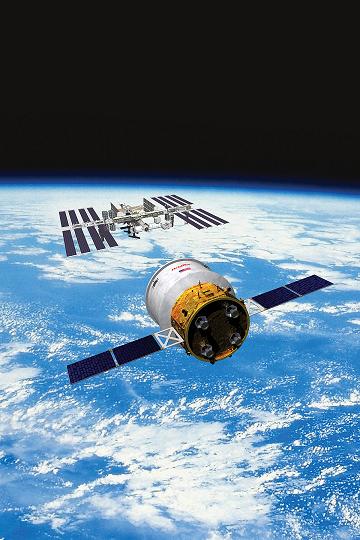
Cygnus will only have cargo capability and will be able to deliver up to 2,300 kg of pressurized or un-pressurized cargo to the ISS. The spacecraft will also be able to return up to 1,200 kg of cargo from ISS to Earth.


The two components of the Cygnus spacecraft will be the service module and the cargo module.


The service module is based on the Orbital STAR bus (like the ORK stage), and will use two solar arrays for producing electrical power for the navigation systems onboard.


The pressurized cargo module is based on the Italian-built Multi-Purpose Logistics Module (MPLM). The un-pressurized cargo module is based on NASA’s ExPRESS Logistics Carrier.


Cygnus will not dock to the ISS in the same manner as the European ATV, but it will be able to maneuver close to the ISS where the Canadarm 2 robotic arm will be used to capture it and berth it to the Node 2 module, similar to the Japanese HTV or SpaceX’s Dragon spacecraft.


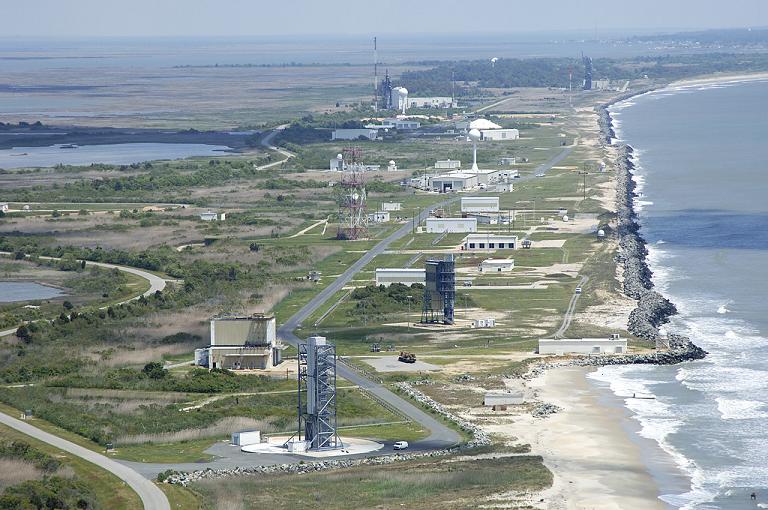
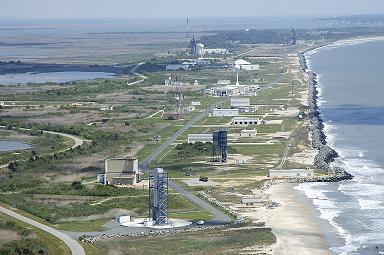
The Mid-Atlantic Regional Spaceport (MARS), located at NASA’s Wallops Island Flight Facility on Virginia’s Eastern shore, was chosen by Orbital to serve as the base of operations for the Taurus II launch vehicle.


MARS has two FAA licensed launch pads for LEO access. MARS also offers access to suborbital launchers, vehicle and payload storage, and processing and launch facilities.
 

Credits: NASA


Due to the location of the spaceport, latitude 37.8 degrees N, longitude 75.5 degrees W, optimal orbital inclinations for the launches performed at MARS are between 38 and 60 degrees. Polar and retrograde orbits can also be serviced with additional in-flight maneuvering.


The first flight of Orbital’s new Taurus II / Cygnus launch system under COTS is scheduled for late 2010.

 

  • Facebook
  • Google
  • Slashdot
  • Reddit
  • Live
  • TwitThis
January 4, 2009

Carnival of Space #85

Posted by


Credits: NASA


Carnival of Space #85 is hosted by CHEAP ASTRONOMY.


The first Carnival of Space for 2009 presents interesting stories. You can read about the future of human space flight, the Small Pressurized Rover (SPR), an interview with Elon Musk, 2,000 year-long space missions, the space elevator, the 40th anniversary of Apollo 8, and many more.


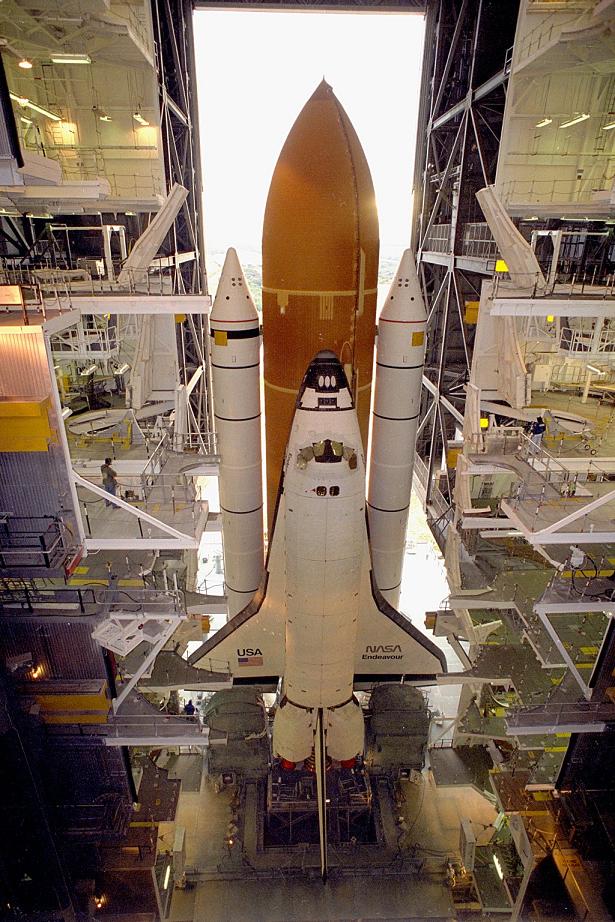
OrbitalHub presents an MIT Systems Engineering Course that focuses on the Space Shuttle. The course is part of the MIT OpenCourseware program.


  • Facebook
  • Google
  • Slashdot
  • Reddit
  • Live
  • TwitThis