OrbitalHub

The place where space exploration, science, and engineering meet

Domain is for sale. $50,000,000.00 USD. Direct any inquiries to contact@orbitalhub.com.

Archive for March, 2026


Space exploration has always depended on a quiet but essential capability: communication. Long before a spacecraft sends back a breathtaking image of a distant world or a rover begins exploring the surface of another planet, an invisible thread must connect that machine to Earth. Through that thread flows everything that makes exploration possible—commands, telemetry, navigation data, and scientific discoveries. As humanity prepares to venture deeper into the Solar System than ever before, NASA’s Space Communications and Navigation program, known as SCaN, is reshaping how that thread is woven.

The story of SCaN begins with a fundamental challenge of spaceflight. Spacecraft travel vast distances, and those distances make communication both difficult and delicate. Signals must cross millions or even billions of kilometers while remaining strong enough to be detected by receivers on Earth. At the same time, spacecraft require precise navigation, relying on radio signals to determine their position and trajectory with astonishing accuracy. These capabilities demand networks of antennas, relay satellites, sophisticated signal processing systems, and extremely stable clocks.

For decades NASA has operated three major communications networks to support these needs. The Deep Space Network, with its giant radio antennas located in California, Spain, and Australia, provides the primary link to spacecraft exploring the outer reaches of the Solar System. The Near Space Network supports missions closer to Earth, including satellites in Earth orbit and lunar missions. The Space Network, anchored by the Tracking and Data Relay Satellite System, connects spacecraft in low Earth orbit to ground stations without requiring constant direct contact with Earth. Together, these systems have enabled generations of missions, from the Voyager probes to the International Space Station.

Yet the future of space exploration is rapidly changing. NASA’s Artemis program aims to establish a sustained human presence on the Moon. Robotic missions are being planned across the Solar System, while commercial companies are launching satellites, building spacecraft, and developing lunar landers at an unprecedented pace. The volume of data flowing between Earth and space is increasing dramatically. A single modern spacecraft can produce terabytes of information through high-resolution imaging, radar observations, and scientific measurements. Supporting this growing demand requires a communications architecture that is more flexible, scalable, and resilient than ever before.

This is where the SCaN program enters the story. Rather than expanding NASA’s networks alone, SCaN is taking a new approach by working closely with commercial partners to build a hybrid infrastructure that blends government capabilities with private-sector innovation. The idea is both practical and transformative. By integrating commercial communication services into NASA’s operations, the agency can expand its capacity while encouraging the development of an emerging space communications economy.

The science behind space communications may appear simple at first glance. Radio waves, after all, are just electromagnetic signals traveling through space. But sending information across millions of kilometers requires engineering precision at every level. Spacecraft transmitters must encode data onto radio-frequency carriers, modulating the signal in ways that maximize information density while minimizing errors caused by noise. On Earth, enormous antennas collect these faint signals, and sophisticated receivers decode them using advanced algorithms designed to recover data even when the signal is barely distinguishable from background radiation.

Navigation relies on many of the same principles. By measuring the travel time of radio signals between Earth and a spacecraft, engineers can determine the distance to the spacecraft with extraordinary accuracy. Doppler measurements—tiny shifts in the frequency of the signal caused by the spacecraft’s motion—reveal its velocity relative to Earth. Combined with precise models of gravitational forces and spacecraft propulsion, these measurements allow mission controllers to guide spacecraft across the Solar System with pinpoint precision.

SCaN’s efforts to modernize these capabilities extend far beyond traditional radio systems. One of the most exciting developments is the growing use of optical communications, which transmit data using lasers rather than radio waves. Optical communication systems can send significantly more information per second because the higher frequencies of laser light allow much greater bandwidth. In practical terms, this means spacecraft could one day transmit high-definition video from deep space or relay massive datasets from distant planets far more quickly than today’s systems allow.

Integrating commercial providers into this evolving architecture is a major engineering challenge in itself. NASA must ensure that signals transmitted through commercial networks meet strict standards for reliability, security, and interoperability. Spacecraft from different missions must be able to communicate seamlessly with both NASA and commercial ground stations. Achieving this requires standardized communication protocols, precise timing systems, and carefully designed interfaces between spacecraft and network infrastructure.

Commercial companies are already building ground station networks, relay satellites, and data services that can complement NASA’s existing systems. By partnering with these providers, SCaN can expand coverage, reduce operational costs, and encourage innovation across the space industry. At the same time, these partnerships help commercial companies develop services that could support not only NASA missions but also private spacecraft, lunar landers, and future Mars expeditions.

The importance of this work becomes even clearer when imagining the future of space exploration. Missions to the Moon will require continuous communications to support astronauts, robotic vehicles, and scientific instruments operating across the lunar surface. Navigation systems must allow spacecraft to land safely in complex terrain and guide rovers across unfamiliar landscapes. Beyond the Moon, human missions to Mars will depend on robust communication networks capable of operating across tens of millions of kilometers while managing delays that can stretch to more than twenty minutes.

In this environment, communications infrastructure becomes more than just a support system—it becomes the backbone of exploration itself. Without reliable networks, spacecraft cannot be controlled, astronauts cannot be guided, and scientific discoveries cannot be shared with the world.

SCaN’s strategy recognizes that the scale of future exploration will require collaboration. By combining NASA’s decades of experience with the agility and innovation of commercial industry, the program aims to build a communications architecture that grows alongside humanity’s ambitions in space.

In many ways, this effort represents a quiet transformation in how space exploration is conducted. Instead of a single agency building every component of the system, a network of partners is emerging, each contributing technologies, services, and expertise. The result is a communications ecosystem capable of supporting not just a handful of missions, but a thriving presence across the Solar System.

As spacecraft venture farther from Earth and human explorers prepare to return to the Moon and eventually travel to Mars, the invisible web of signals connecting them to home will become more vital than ever. Through the work of the SCaN program and its commercial partners, that web is being strengthened and expanded—ensuring that wherever humanity travels next, the connection to Earth will remain unbroken.

Video credit: NASA


  • Facebook
  • Google
  • Slashdot
  • Reddit
  • Live
  • TwitThis


Defense technology company Anduril Industries announced on March 11, 2026, that it has signed a definitive agreement to acquire ExoAnalytic Solutions, a firm specializing in space situational awareness and missile defense tracking. The acquisition will significantly expand Anduril’s presence in the space surveillance market and support the company’s ambitions in national security capabilities.

ExoAnalytic Solutions, based in Orange County, California, provides satellite and missile tracking services to government and commercial customers. The company operates a network of sensors capable of detecting, tracking, and cataloging objects in Earth orbit. This capability has become increasingly important as concerns grow about orbital congestion, potential collisions, and the militarization of space.

Anduril plans to fully absorb ExoAnalytic, adding approximately 130 employees to its space sector workforce. The company stated that the acquisition will significantly scale the impact available for national security missions. The deal aligns with broader Pentagon interests in enhancing space-based surveillance and tracking capabilities.

The acquisition comes amid heightened U.S. government focus on space domain awareness. The Department of Defense maintains the United States Space Surveillance Network, which tracks objects larger than approximately 10 centimeters in low Earth orbit and larger objects at greater distances. Commercial providers like ExoAnalytic supplement government capabilities with additional sensor networks and data analysis services.

Anduril has positioned itself as a defense technology disruptor, developing autonomous systems, sensors, and software for military applications. The company has expanded rapidly in recent years, pursuing contracts across multiple domains including air defense, maritime surveillance, and now space operations.

The deal also reflects growing interest in space-based assets for missile defense and early warning purposes. ExoAnalytic’s tracking capabilities can support detection of missile launches, trajectory prediction, and assessment of reentry vehicles. These functions align with U.S. missile defense architecture and have gained urgency given evolving global threat landscapes.

Industry analysts note that consolidation in the space surveillance market reflects broader trends in defense contracting, where established primes and emerging technology companies are competing to provide capabilities for next-generation military space systems. Anduril’s acquisition of ExoAnalytic positions the company to compete for contracts related to the U.S. Space Force’s space surveillance and tracking requirements.

The announcement did not disclose financial terms of the acquisition. Anduril stated that ExoAnalytic will continue operating from its current locations while integrating into Anduril’s broader platform and capabilities portfolio.


  • Facebook
  • Google
  • Slashdot
  • Reddit
  • Live
  • TwitThis


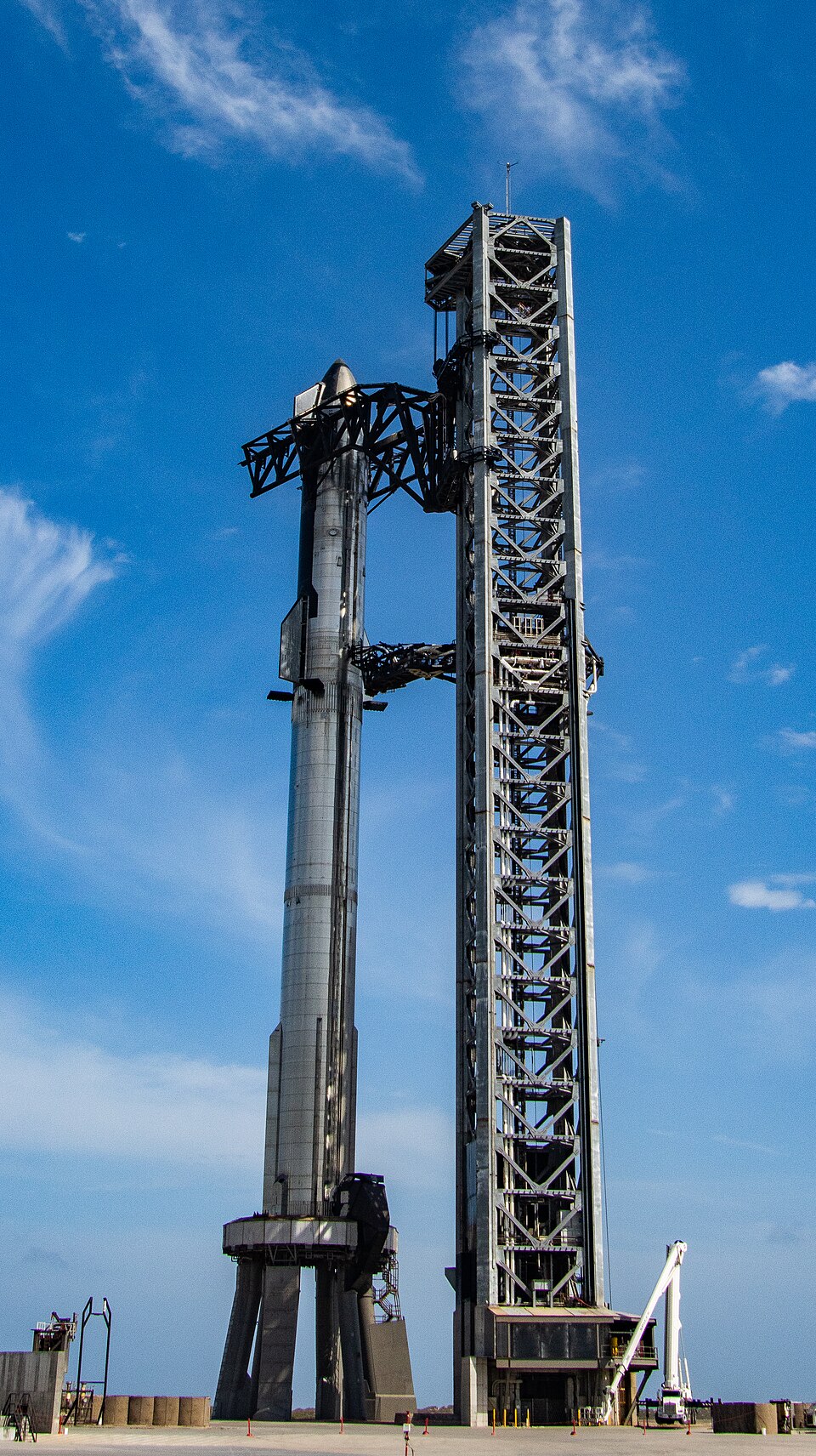
SpaceX has completed cryoproof testing of the Starship upper stage assigned to the next flight, designated Ship 39, moving the company closer to its first Starship launch of 2026. During testing the week of March 7, 2026, engineers examined the vehicle’s redesigned propellant system and its structural strength, including squeeze tests that mimic the forces involved in future ship catches by the Mechazilla arms at Starbase in Texas.

CEO Elon Musk stated on social media that the launch is approximately four weeks away, targeting April 2026 for Flight 12. This marks another delay from earlier projections, as the company continues to refine the vehicles and procedures necessary for the massive fully-stacked Starship system.

The testing conducted in early March represented one of the final major milestones before the launch authorization process begins. SpaceX has pursued an aggressive testing schedule with Starship, using each flight to gather data and implement improvements for subsequent vehicles. Ship 39 incorporates several design changes from earlier test articles, particularly in the propellant storage and delivery systems that are critical to achieving the vehicle’s performance goals.

Starship consists of two stages: the Super Heavy booster and the Starship upper stage. Together, the system stands approximately 123 meters tall and uses liquid methane and liquid oxygen as propellants. The vehicle is designed to be fully reusable, with both stages intended to return to Earth for refurbishment and reflight. This reusability is central to SpaceX’s vision for dramatically reducing the cost of accessing space.

The company has conducted six full-stack Starship flights to date, with varying degrees of success. Each mission has provided engineering data that informed modifications to later vehicles. The program has progressed from initial short hops to increasingly complex maneuvers, including attempts at booster catches using the tower-based Mechazilla system.

SpaceX operates Starship from its Starbase facility in Boca Chica, Texas, where the company has constructed extensive production and launch infrastructure. The location on the Gulf Coast provides access to convenient launch trajectories and recovery areas. The company has also received approval to launch Starship from Kennedy Space Center Launch Complex 39A for future missions.

NASA’s Artemis program depends on a human-rated version of Starship serving as the lunar lander for Artemis III and subsequent missions. The space agency selected Starship for this critical role based on its technical capabilities and development progress. Continued successful testing of the SpaceX system remains important to NASA’s lunar exploration timeline.

The upcoming Flight 12 will represent another step in SpaceX’s iterative development approach, gathering additional data on vehicle performance and operational procedures. The company has not announced specific objectives for the mission beyond the standard goals of testing flight characteristics and system reliability.


  • Facebook
  • Google
  • Slashdot
  • Reddit
  • Live
  • TwitThis


Astronomy often reveals the universe in slow motion. Galaxies drift apart over billions of years, stars evolve over millions, and planetary systems assemble over spans so vast that human observers usually see only the end results. Yet every once in a while, the cosmos offers a fleeting glimpse of something far more dynamic. NASA’s Hubble Space Telescope has captured such a moment near the bright star Fomalhaut, observing what appears to be the aftermath of a massive collision between two large bodies in a distant planetary system. It is a rare cosmic accident caught almost in real time, and it offers scientists an extraordinary opportunity to study how planetary systems evolve through violence as much as through calm.

Fomalhaut itself is not an obscure star. Located roughly twenty-five light-years away in the constellation Piscis Austrinus, it is one of the brightest stars visible in Earth’s night sky. Astronomers have long known that Fomalhaut is surrounded by a vast disk of debris composed of dust, ice, and rocky fragments. Such debris disks are thought to be the leftover building materials of planetary systems, similar to the asteroid belt and Kuiper Belt in our own Solar System. Within these disks, countless objects—from dust grains to planet-sized bodies—move along intersecting paths, occasionally colliding and reshaping the architecture of the system.

For years, astronomers suspected that something unusual was happening inside the Fomalhaut system. In 2008, Hubble captured images of what appeared to be a faint object moving within the debris disk, initially thought to be a possible exoplanet. However, as scientists continued to observe the region over the following years, the object behaved strangely. Instead of remaining compact like a planet, it gradually expanded and faded. The mysterious cloud appeared to grow larger while becoming dimmer, suggesting that it was not a solid body at all, but rather an expanding cloud of dust created by a catastrophic collision.

The idea that Hubble might have witnessed the aftermath of a massive collision between two planetary building blocks was both surprising and exciting. Planetary collisions are thought to be common during the early stages of solar system formation. Our own Moon likely formed when a Mars-sized body struck the young Earth billions of years ago. But observing such an event directly in another star system has proven extraordinarily difficult. The distances involved, combined with the relatively small size of planetary bodies, usually make these collisions invisible to telescopes. What Hubble saw near Fomalhaut may represent the first clear observation of the debris from a large-scale collision unfolding over time.

Understanding this event requires both scientific insight and remarkable engineering. The Hubble Space Telescope, launched in 1990 and operating more than 500 kilometers above Earth, was designed to observe the universe without the distortions caused by Earth’s atmosphere. Its 2.4-meter mirror collects light with extraordinary clarity, and its suite of cameras and spectrographs allows astronomers to study objects across multiple wavelengths. Over the decades, upgrades performed by astronauts during servicing missions transformed Hubble into one of the most capable astronomical observatories ever built.

The observations of the Fomalhaut collision relied on Hubble’s ability to capture extremely high-contrast images. Observing faint structures near bright stars is notoriously difficult because the star’s glare overwhelms nearby objects. To overcome this problem, Hubble uses a technique called coronagraphy. A coronagraph blocks the intense light from a star, allowing astronomers to see faint material orbiting nearby. With this method, Hubble was able to reveal the faint expanding cloud of debris around Fomalhaut.

By comparing images taken over several years, scientists noticed that the dust cloud was moving outward and expanding. Careful analysis showed that the cloud’s growth was consistent with the debris from a collision between two large objects, likely hundreds of kilometers in diameter. When such bodies collide at high speeds—often several kilometers per second—the impact releases enormous energy. Instead of forming a single merged object, the bodies can shatter, producing a spray of fragments and dust that expands outward into space.

Computer models helped researchers reconstruct what might have happened. In the dense debris disk surrounding Fomalhaut, two large planetesimals—primitive building blocks of planets—may have crossed paths. The collision would have instantly vaporized or shattered large portions of both bodies, sending material outward in a rapidly expanding cloud. Over time, radiation from the star and interactions with surrounding dust gradually disperse the debris, causing the cloud to expand and fade until it eventually becomes indistinguishable from the background disk.

What makes the Fomalhaut event so compelling is that it offers a glimpse of the chaotic processes that shape planetary systems. Planet formation is often described as a gradual process in which small particles stick together and slowly grow into larger bodies. Yet collisions play an equally important role. Throughout the history of a planetary system, impacts can destroy worlds as easily as they create them. Asteroids collide, planetary embryos merge, and occasionally entire planets can be reshaped or even obliterated.

Observations like this one help astronomers understand how often such events occur and how they influence the final arrangement of planets. The Fomalhaut debris disk is thought to resemble the early Solar System billions of years ago, when Earth, Mars, and the other rocky planets were still forming. Watching a collision unfold in that distant system is almost like peering back into our own planet’s past.

The event also highlights the importance of long-term observations. Hubble did not capture a single dramatic explosion. Instead, it recorded subtle changes over many years, allowing scientists to piece together the story gradually. The expanding cloud revealed itself through patience and persistence, reminding us that astronomy often advances through careful observation rather than sudden discovery.

Even after more than three decades in orbit, Hubble continues to produce groundbreaking science. Its ability to track faint objects over long periods makes it uniquely suited to studying phenomena like the Fomalhaut collision. Newer observatories such as the James Webb Space Telescope may provide additional insights by observing the system in infrared wavelengths, where warm dust and debris are easier to detect.

For now, the expanding cloud around Fomalhaut remains a rare window into the violent processes that shape planetary systems. It reminds us that the serene appearance of the night sky hides a universe filled with collisions, transformations, and dramatic events. Somewhere in the distant reaches of that system, two ancient bodies met in a catastrophic encounter, scattering fragments across space. And thanks to the engineering triumph of the Hubble Space Telescope, humanity has been able to witness the aftermath of that cosmic crash unfolding light-years away.

Video credit: NASA Goddard


  • Facebook
  • Google
  • Slashdot
  • Reddit
  • Live
  • TwitThis


The microgravity research sector crossed $4 billion in market value during early 2026, according to industry analysis published in March. This milestone reflects growing commercial interest in conducting scientific experiments and manufacturing processes in orbital environments where gravity’s effects are dramatically reduced.

Commercial satellite launches have accelerated at approximately 15 percent annually, according to the same analysis, creating expanded infrastructure for payload deployment and in-orbit operations. The convergence of more launch opportunities and increased research interest is driving investment in dedicated commercial space platforms.

The International Space Station remains the primary venue for microgravity research, hosting experiments from NASA, ESA, JAXA, and commercial customers. However, private stations planned for launch later in the decade will add significant capacity. Companies including Axiom Space, Voyager Space, and Orbital Reef are developing commercial orbital outposts designed specifically for research and manufacturing.

Research conducted in microgravity spans multiple disciplines. Protein crystallization experiments have demonstrated improved crystal quality compared to Earth-based methods, potentially accelerating pharmaceutical development. Materials processing leverages the absence of convection and sedimentation to create novel alloys and optical components. Biological studies examine how organisms adapt to spaceflight, providing insights relevant to long-duration human space missions.

The United Kingdom opened a microgravity research centre in Swansea in March 2026, joining a growing list of national programs supporting orbital science. Space Forge, a UK-based company, successfully generated plasma in orbit in late 2025, demonstrating conditions necessary for advanced crystal growth aboard commercial spacecraft. Such capabilities could eventually enable manufacturing processes impractical on Earth.

Defense contractors have also increased investment in orbital research, driven by applications including advanced materials for aircraft and spacecraft, sensors for surveillance systems, and fundamental physics investigations. The intersection of commercial and defense interests is creating a broader industrial base for space-based research.

The $4 billion figure encompasses launch services, orbital platform operations, experiment hardware, and downstream data analysis. Market researchers project continued growth as more commercial stations come online and as pharmaceutical and materials companies demonstrate returns on orbital research investments. Whether the sector maintains current growth rates will depend partly on launch cost trends and the success of early commercial station deployments.


  • Facebook
  • Google
  • Slashdot
  • Reddit
  • Live
  • TwitThis


NASA Administrator Jared Isaacman announced sweeping changes to the Artemis program in late February 2026, reshaping the path to lunar exploration. The overhaul aims to restore momentum, reduce technical risk, and establish a sustainable cadence for crewed lunar missions. Industry partners have largely endorsed the streamlined approach, though aligning the extensive SLS supply chain and workforce to the new plan presents implementation challenges.

The revised plan standardizes hardware configurations, adds a critical integrated systems test flight, increases launch cadence to roughly one SLS mission every 10 months, and maintains the target for the first crewed lunar landing in 2028, potentially with two landings that year.

Artemis II remains the immediate priority. The first crewed Orion flight will loop around the Moon, with launch now targeted for April 2026. The SLS upper stage, known as ICPS, was rolled back to the Vehicle Assembly Building after a helium leak caused by a dislodged seal in the quick-disconnect system was identified during preparations. Repairs required special access platforms in High Bay 3, with rollout to Launch Pad 39B projected around March 19, 2026. It was during this repair period that Isaacman announced the comprehensive replan.

The most significant change affects Artemis III. Originally planned as the first crewed lunar landing in 2027, the mission has been reconfigured as an all-up systems test in low Earth orbit. Orion will rendezvous and dock with one or both commercial Human Landing Systems, SpaceX’s Starship HLS and Blue Origin’s Blue Moon MK2, validating in-space operations, life support, propulsion, docking interfaces, and Axiom Space’s lunar EVA suits. The mission explicitly mirrors Apollo 9, which tested the lunar module in Earth orbit before Apollo 11’s moon landing. This approach eliminates the high-risk direct jump to surface operations without prior integrated testing.

Artemis IV will deliver the first crewed lunar landing in early 2028, with Artemis V following later that year for a second touchdown and initial outpost development. NASA intends to sustain at least one crewed landing per year thereafter, building toward an enduring lunar presence.

To achieve this faster tempo, the agency is standardizing future SLS flights on a near-Block 1 configuration, canceling the planned Exploration Upper Stage and associated Block 1B upgrades. Production lines will focus on repeatable, high-rate manufacturing to rebuild workforce muscle memory. The replacement for the ICPS will be Centaur V, confirmed through a NASA contract award.

Isaacman framed the changes as a return to fundamentals. He emphasized standardizing vehicle configuration, increasing flight rate, and progressing through objectives in a phased approach, describing it as the approach that achieved the near-impossible in 1969 and would enable its repetition. The overhaul adds one mission, reduces technical risk, and establishes a sustainable cadence capable of supporting long-term lunar infrastructure rather than isolated flags-and-footprints achievements.


  • Facebook
  • Google
  • Slashdot
  • Reddit
  • Live
  • TwitThis