OrbitalHub

The place where space exploration, science, and engineering meet

Domain is for sale. $50,000,000.00 USD. Direct any inquiries to contact@orbitalhub.com.

Archive for 2025

April 24, 2025

Lucy Mission Update

Posted by


Mea AI adiutor dicit:

NASA’s Lucy mission, launched on October 16, 2021, is the first space mission specifically designed to study the Trojan asteroids, a unique group of asteroids that orbit the Sun in two large swarms around Jupiter—one leading and one trailing the gas giant. These celestial bodies are believed to be remnants from the early solar system, offering valuable clues about the formation of the planets. Named after the fossilized human ancestor “Lucy,” whose discovery shed light on human evolution, this spacecraft similarly seeks to uncover the ancient history of the solar system.

The Lucy mission has four primary scientific goals:

Surface Geology – Analyze surface features to determine the history of cratering, layering, and possible past activity like volcanism.

Surface Composition – Identify the composition of the asteroids’ surfaces to infer the origins of their materials.

Interior and Bulk Properties – Measure mass, density, and structure of each asteroid to understand their internal makeup.

Satellites and Rings – Search for small moons and ring systems, which may help scientists understand how Trojan asteroids have evolved.

By studying these diverse objects, Lucy is expected to provide insights into planetary formation processes and the dynamics of the early solar system.

Lucy’s mission trajectory is one of the most complex ever attempted. It involves multiple gravity assists and a looping journey through the inner solar system to reach different groups of Trojan asteroids. After launching from Cape Canaveral aboard an Atlas V rocket, Lucy began a 12-year journey involving three Earth gravity assists:

First Earth flyby: October 2022

Second Earth flyby: December 2024

Third Earth flyby: December 2030

These assists help shape Lucy’s path to visit eight asteroids in total—a record for a single NASA mission. These include:

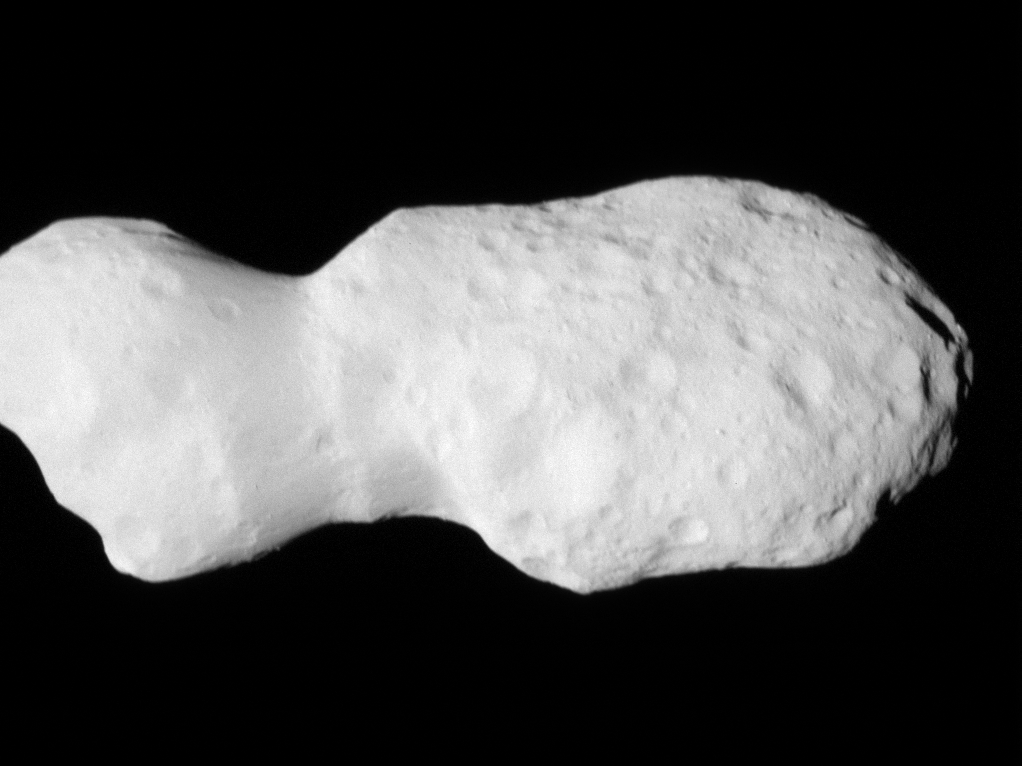
Donaldjohanson (Main Belt asteroid, 2025) – Named after the discoverer of the Lucy hominid fossil.

Eurybates and its satellite Queta (leading Trojan swarm, 2027)

Polymele (2027)

Leucus (2028)

Orus (2028)

Patroclus and Menoetius (binary pair in the trailing Trojan swarm, 2033)

The spacecraft’s ability to fly by both leading and trailing Trojan camps is made possible by its unique and precisely calculated orbit, using Earth’s gravity to slingshot itself across vast distances.

To fulfill its objectives, Lucy is equipped with a suite of three main science instruments:

L’LORRI (Lucy LOng Range Reconnaissance Imager): A high-resolution telescopic camera designed to capture detailed images of the surface features of the Trojan asteroids, similar to what New Horizons used for Pluto.

L’Ralph: This instrument includes both a color visible camera and an infrared spectrometer to analyze surface composition and detect ices, organics, and minerals.

L’TES (Lucy Thermal Emission Spectrometer): Measures the heat emitted from asteroid surfaces, helping scientists estimate the texture and composition of the materials.

In addition to these, Lucy uses a high-gain antenna and radio tracking to precisely measure the gravitational tug of the asteroids during flybys—key for calculating mass and internal structure.

The mission timeline is as follows:

Launch: October 16, 2021

Earth Flyby 1: October 2022 (completed successfully)

Main Belt asteroid Donaldjohanson flyby: April 2025

Trojan flybys (Eurybates, Queta, Polymele, Leucus, Orus): 2027–2028

Return to Earth for gravity assist: December 2030

Patroclus and Menoetius (binary system) flyby: March 2033

End of Primary Mission: Late 2033 (though the spacecraft may continue as an extended mission platform depending on health and power)

NASA’s Lucy mission is a bold and pioneering effort to study some of the oldest and most distant relics of our solar system. Through its ambitious trajectory and carefully selected instruments, Lucy will give scientists an unprecedented look into the origins and evolution of our planetary neighborhood. By exploring a diverse array of Trojan asteroids—each with its own unique story—Lucy stands to revolutionize our understanding of how the planets formed and why our solar system looks the way it does today.

Video credit: NASA Goddard


  • Facebook
  • Google
  • Slashdot
  • Reddit
  • Live
  • TwitThis
April 23, 2025

MS-26 Undocking

Posted by


Mea AI adiutor dicit:

​NASA astronaut Don Pettit, along with Roscosmos cosmonauts Alexey Ovchinin and Ivan Vagner, successfully concluded a 220-day mission aboard the International Space Station (ISS) with a safe landing in Kazakhstan on April 20, 2025. Their spacecraft, Soyuz MS-26, touched down southeast of Dzhezkazgan at 6:20 a.m. local time (9:20 p.m. EDT on April 19), coinciding with Pettit’s 70th birthday.​

The trio launched from the Baikonur Cosmodrome on September 11, 2024, and participated in Expeditions 71 and 72. During their time on the ISS, they orbited Earth 3,520 times, covering approximately 93.3 million miles.​

Throughout the mission, the crew conducted various scientific experiments. Pettit focused on enhancing in-orbit metal 3D printing capabilities, advancing water sanitization technologies, exploring plant growth under varying water conditions, and investigating fire behavior in microgravity.​

Following their return, the crew underwent routine medical evaluations. Pettit was transported to NASA’s Johnson Space Center in Houston, while Ovchinin and Vagner returned to the Gagarin Cosmonaut Training Center in Star City, Russia.​

Video credit: NASA


  • Facebook
  • Google
  • Slashdot
  • Reddit
  • Live
  • TwitThis
April 22, 2025

Blue Ghost Mission 1 Concludes

Posted by


Mea AI adiutor dicit:

​Firefly Aerospace’s Blue Ghost Mission 1, launched on January 15, 2025, and landed on the Moon on March 2, 2025, marked a significant milestone as the first fully successful commercial lunar landing. Operating for over 14 Earth days on the lunar surface, the mission achieved all its objectives, collecting and transmitting approximately 119 gigabytes of data, including high-definition images of lunar phenomena such as sunsets and a total solar eclipse.​

The Blue Ghost lander carried ten NASA-sponsored science and technology payloads designed to advance lunar exploration and prepare for future human missions:​

Lunar Instrumentation for Subsurface Thermal Exploration with Rapidity (LISTER): Developed by Honeybee Robotics, LISTER utilized pneumatic drilling to measure the Moon’s thermal gradient and conductivity up to depths of 2–3 meters, providing insights into the lunar interior’s heat flow.

Lunar PlanetVac (LPV): Also from Honeybee Robotics, LPV demonstrated a rapid, low-mass method for collecting and sorting lunar regolith using bursts of gas, aiding in sample collection for analysis or potential return to Earth.​

Next Generation Lunar Retroreflector (NGLR): Provided by the University of Maryland, this instrument served as a target for Earth-based lasers to precisely measure the Earth-Moon distance, enhancing our understanding of lunar geophysics and fundamental physics.​

Regolith Adherence Characterization (RAC): Developed by Aegis Aerospace, RAC assessed how lunar dust adheres to various materials over time, informing the design of dust-resistant surfaces for future lunar equipment.​

Radiation Tolerant Computer (RadPC): From Montana State University, RadPC tested a computing system capable of withstanding the Moon’s harsh radiation environment, crucial for long-duration lunar missions.​

Electrodynamic Dust Shield (EDS): Developed by NASA’s Kennedy Space Center, EDS employed electric fields to remove dust from surfaces, demonstrating a self-cleaning technology for lunar habitats and instruments.​

Lunar Environment Heliospheric X-ray Imager (LEXI): A collaboration between Boston University, NASA Goddard Space Flight Center, and Johns Hopkins University, LEXI captured X-ray images of interactions between the solar wind and Earth’s magnetosphere, contributing to space weather research.​

Lunar Magnetotelluric Sounder (LMS): From Southwest Research Institute, LMS measured electric and magnetic fields to study the Moon’s mantle structure and composition, enhancing our knowledge of lunar geology.​

Lunar GNSS Receiver Experiment (LuGRE): A joint effort by the Italian Space Agency and NASA Goddard Space Flight Center, LuGRE tested the reception of GPS and Galileo signals on the Moon, paving the way for lunar navigation systems.​

Stereo Cameras for Lunar Plume-Surface Studies (SCALPSS): Developed by NASA Langley Research Center, SCALPSS recorded high-resolution images of the lander’s descent, analyzing the effects of rocket plumes on the lunar surface to inform future landing strategies.​

Blue Ghost Mission 1’s success not only demonstrated the viability of commercial lunar missions but also provided valuable data to support NASA’s Artemis program and the broader scientific community’s understanding of the Moon.

Video credit: NASA’s Marshall Space Flight Center


  • Facebook
  • Google
  • Slashdot
  • Reddit
  • Live
  • TwitThis
April 21, 2025

Mars Night Sky

Posted by


Mea AI adiutor dicit:

The night sky on Mars shares some familiar features with what we see from Earth, but also presents a few dramatic differences. Since Mars is farther from the Sun than Earth, its sky becomes darker more quickly after sunset, revealing a clearer and more brilliant canopy of stars. With a thinner atmosphere and less light pollution, the stars on Mars appear sharp and more numerous to the naked eye. The Milky Way stretches across the sky much like it does on Earth, but with a bit more clarity due to the reduced atmospheric scattering.

One of the most striking differences in the Martian night sky is the presence of its two small moons, Phobos and Deimos. These irregularly shaped satellites are far smaller than Earth’s Moon, so they don’t dominate the sky in the same way. Phobos, the closer and faster-moving moon, rises in the west and sets in the east in just over 4 hours, appearing several times in a single Martian night. It looks like a bright star or a small disk moving rapidly across the sky. Deimos is smaller and more distant, moving slowly and appearing like a faint star that drifts lazily overhead.

Because of Mars’ distance from Earth, familiar constellations still appear in similar patterns, though slightly shifted. From the Martian perspective, Earth is just a bright bluish “star” in the sky, never appearing larger than a dot without a telescope. Depending on the season and viewing direction, other planets like Jupiter, Saturn, and Venus are also visible, and occasionally even brighter than they are from Earth. Meteor showers can still be seen on Mars, though they originate from different sources due to the planet’s unique orbit.

Another beautiful phenomenon visible on Mars is the aurora, which unlike Earth’s polar-focused light displays, can occur all over the planet due to Mars’ lack of a global magnetic field. These auroras are typically ultraviolet and would require special instruments to see, but they add to the mysterious charm of Martian nights. Overall, the Martian sky offers a uniquely serene and otherworldly view of the cosmos, blending the familiar with the alien in a way that’s both humbling and awe-inspiring.

Video credit: NASA/JPL-Caltech/MSSS/ESO/Bill Dunford


  • Facebook
  • Google
  • Slashdot
  • Reddit
  • Live
  • TwitThis
April 16, 2025

SCALPSS Captures Landing on the Moon

Posted by


Wikipedia dicit:

Firefly Aerospace Blue Ghost, or simply Blue Ghost, is a class of lunar landers designed and manufactured by American private company Firefly Aerospace. Firefly plans to operate Blue Ghost landers to deliver small payloads to the surface of the Moon. The first Blue Ghost mission was launched at 1:11 a.m. EST (06:11 UTC) on January 15, 2025. It successfully landed on the Moon on March 2, 2025. The landers are named after the firefly species Phausis reticulata, known as blue ghosts.

Firefly is the prime contractor for lunar delivery services using Blue Ghost landers. Firefly provides or subcontracts Blue Ghost payload integration, launch from Earth, landing on the Moon and mission operations. Firefly’s Cedar Park facility serves as the company’s mission operations center and the location of payload integration. Firefly operates a 50,000-square-foot (4,600 m2) spacecraft facility with two mission control centers and an ISO-8 cleanroom to accommodate multiple landers.

Blue Ghost has four landing legs. It supplies data, power, and thermal resources for payload operations through transit to the Moon, in lunar orbit, and on the lunar surface. The spacecraft is designed and built to be easily adapted to each customer’s cislunar needs. Blue Ghost can be customized to support larger, more complex missions, including lunar night operations, surface mobility, and sample return, and is compatible with multiple launch providers. Firefly asserts that in-house end-to-end manufacturing and testing of the Blue Ghost structure is a differentiator among the CLPS landers.

NASA awarded Firefly the first Blue Ghost lunar delivery task order in February 2021 as part of the Commercial Lunar Payload Services (CLPS) initiative.

Video credit: NASA Langley Research Center


  • Facebook
  • Google
  • Slashdot
  • Reddit
  • Live
  • TwitThis
April 15, 2025

Vertical Solar Array Technology

Posted by


NASA dicit:

NASA is planning a lunar landing near the moon’s South Pole in the 2026 time period, this mission is to be followed by the establishment of a lunar base later in the same decade. The Vertical Solar Array Technology (VSAT) project is focused on the development of solar array technologies necessary for sustained presence on the lunar surface circa 2030. Existing solar array structures and deployment system technologies are designed for either zero-g or horizontal surface deployment. VSAT will explore deployment of vertical arrays on masts of up to 10m in length in order to capture continuous sun light at the lunar south pole. The VSAT system must also be capable of stable deployment on uneven terrain and autonomous retraction to enable system mobility on the moon’s surface.

Finally, given the nature of space operations and the fuel requirements associated with a lunar landing, VSAT will be designed to be as lightweight as possible. The VSAT project objective is to engage industry in the development of the underlying technologies necessary for solar array deployments at the moon’s south pole. As part of the engagement process, the project will develop a reference mission and design to guide industry efforts. It is also expected that the project will fabricate high-risk elements of the reference design for development and test purposes. After creation of the reference missions and designs the project will solicit industry studies and analysis for the purpose of contracting with several vendors for eventual hardware development.

The VSAT project design goals are:
Vertical array deployment on extended mast in uneven terrain
Deployment mechanisms, and array system, designed for reliable, autonomous retraction and system mobility
Array system designed to be modular, adaptable to multiple mission architectures, and to minimize mass and packing volume

Video credit: Lockheed Martin


  • Facebook
  • Google
  • Slashdot
  • Reddit
  • Live
  • TwitThis