On June 5, 2011, a Soyuz-FG launch vehicle with the manned spacecraft Soyuz TMA-02M rolled out from the Assembly and Test Facility at the Baikonur cosmodrome.



On June 5, 2011, a Soyuz-FG launch vehicle with the manned spacecraft Soyuz TMA-02M rolled out from the Assembly and Test Facility at the Baikonur cosmodrome.


Copenhagen Suborbitals is an open source and non-profit endeavour. The founders are Peter Madsen and Kristian von Bengtson. The launch of the HEAT-1X rocket with Tycho Brahe spacecraft went pretty much as planned. However, the parachute failed to deploy and Tycho Brahe plunged into the sea at dive speed. Watch Kristian von Bengtson present Copenhagen Suborbitals at a TEDx Conference.
Read more about Copenhagen Suborbitals…
Space Shuttle Endeavour landed from its last mission at NASA\’s Kennedy Space Center in Florida. The STS-134 crew spent 16 days in space.
The Lunabotics Mining Competition encourages the development of lunar excavation concepts. The competition is open to teams consisting of university students. Each team has to build a remote controlled or autonomous excavator that can collect and deposit a minimum of 10 kilograms of lunar simulant within 15 minutes. Two Canadian teams were among the competitors this year: Team Production from Laurentian University and McGill LunarEx Team from McGill University. Laurentian University\’s team won the competition this year. Go Canada!
Read more about Team Production…
 |
| Credits: Pat Rawlings |
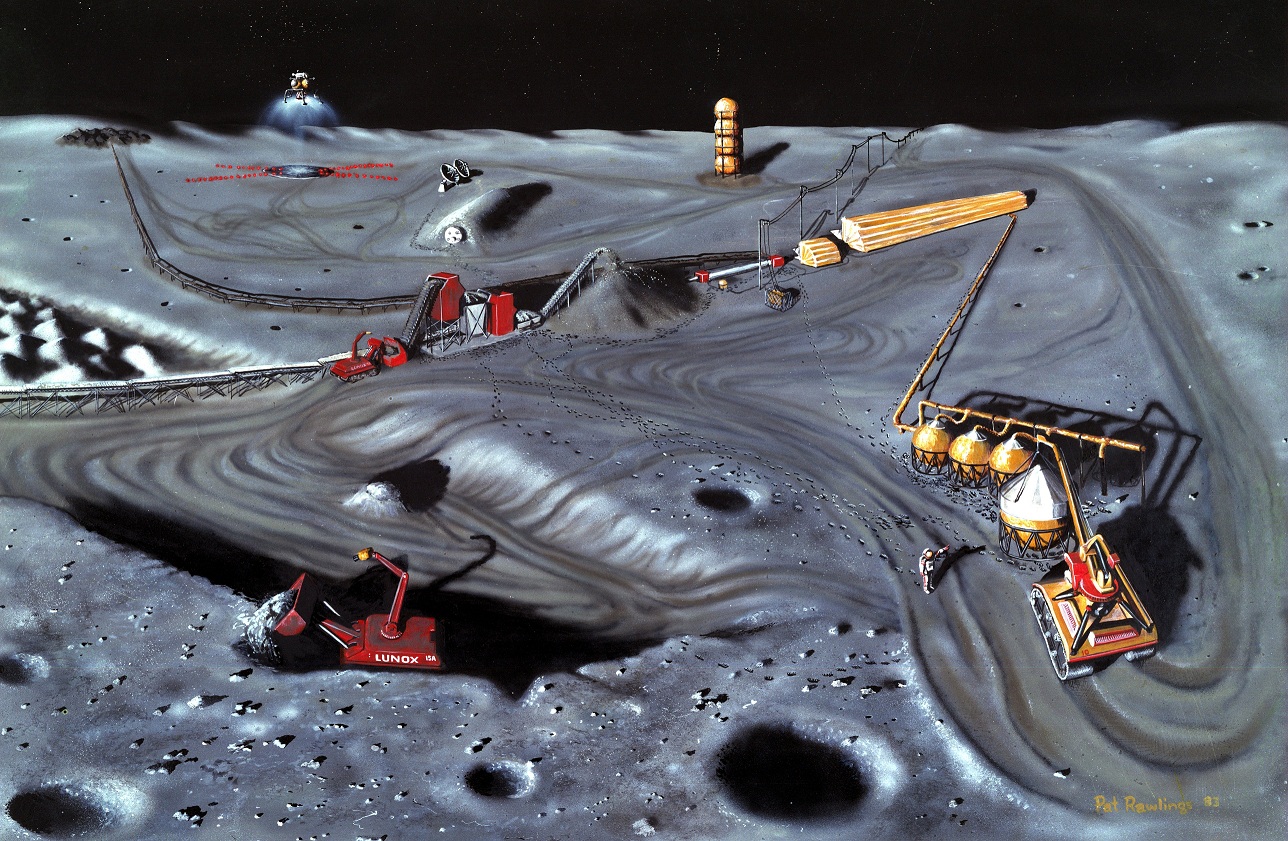
Excavation is a necessary first step towards extracting resources from the lunar regolith and building human settlements on the moon. NASA’s Lunabotics Mining Competition is designed to promote the development of interest in lunar regolith mining, which is especially challenging due to the unique properties of the lunar regolith, reduced gravity, and vacuum.
A Canadian team took first place in the second edition of NASA’s Lunabotics Mining Competition. Team Production of Laurentian University of Sudbury, Ontario, consisted of 4th year mechanical engineering students. The team had to compete with teams from 40 other universities from the U.S., Canada, India, Chile, and Bangladesh.
The competition was conducted at Kennedy Space Center, from May 23 to May 28, 2011. The minimum excavation requirement was 10 kilograms and the maximum excavation hardware mass was 80 kilograms. The lunabots performed in an enclosure (a.k.a. Lunarena) filled with compacted lunar regolith simulant.
The Canadian lunabot was able to excavate 237.4 kilograms of synthetic lunar regolith in 15 minutes. The team won a $5,000 cash prize and VIP passes to the final launch of the Space Shuttle Atlantis in July.
On May 20, 2011, a Proton-M/Breeze-M launch vehicle lifted off from the Baikonur cosmodrome. Proton-M carried to orbit an American satellite: Telstar-14P.
Read more about Proton-M launch vehicle and Breeze-M upper stage…













 Subscribe to blog posts using RSS