OrbitalHub

The place where space exploration, science, and engineering meet

Domain is for sale. $50,000,000.00 USD. Direct any inquiries to contact@orbitalhub.com.

Archive for 2009

May 10, 2009

Looking inside Herschel

Posted by


The objectives that ESA set for the Herschel Space Observatory are ambitious: the study of the galaxies in the early universe, the investigation of the creation of stars, the observation of the chemical composition of the atmosphere and surfaces of comets, planets and satellites, as well as examining the molecular chemistry of the universe.

Herschel will observe the sky from the second Lagrangean Point (L2) of the Sun-Earth system. The instruments onboard Herschel will collect long-wavelength infrared radiation. Herschel will be the only space observatory to cover the spectral range from the far infrared to sub-millimeter.

Read more about Herschel


  • Facebook
  • Google
  • Slashdot
  • Reddit
  • Live
  • TwitThis
May 4, 2009

Carnival of Space #101

Posted by


Credits: NASA


Carnival of Space #101 is hosted by David Portree at Robot Explorers.


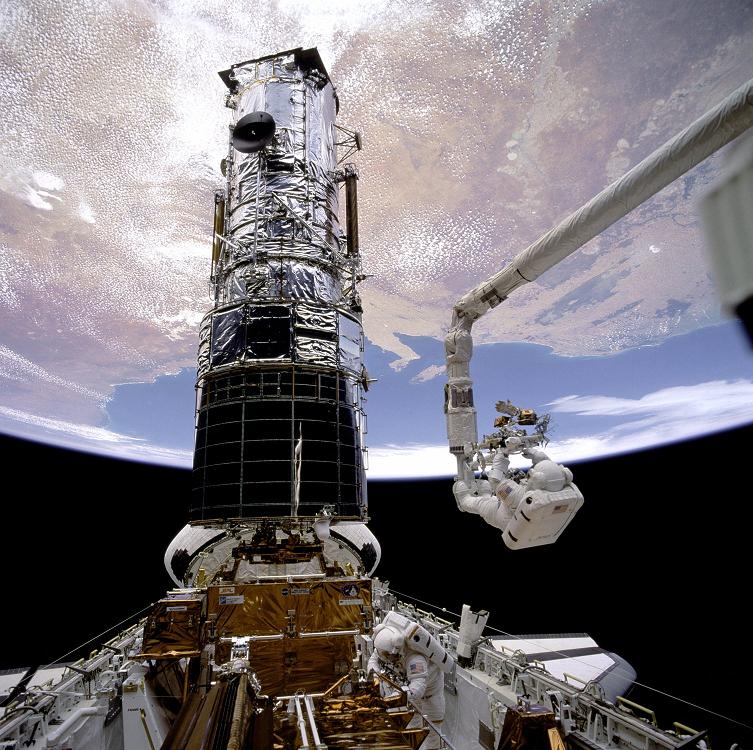
This week you can read about dark matter, the Hubble space telescope, solar sails, maverick scientists, near Earth objects, and much more.


  • Facebook
  • Google
  • Slashdot
  • Reddit
  • Live
  • TwitThis


Credits: SpaceX


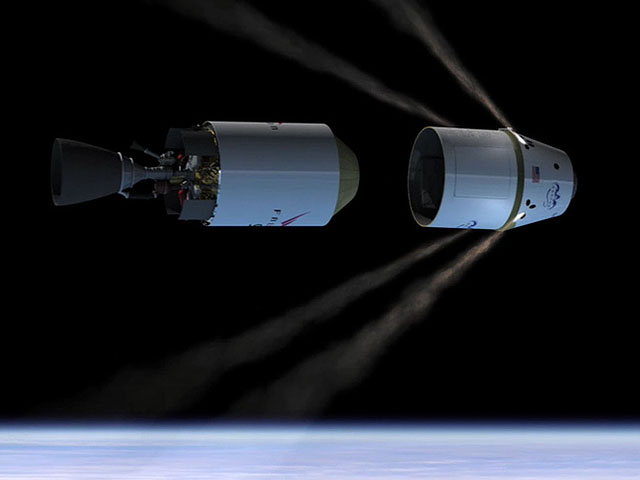
The Draco thruster and the Draco propulsion tank completed qualification tests at the SpaceX Test Facility in McGregor, Texas.


The certification test included 42 firings with over 4,600 pulses of varying lengths. The tests are performed in a vacuum test chamber in order to simulate the space environment. The total firing time on a single thruster was over 50 minutes.


“The Draco thrusters allow Dragon to maneuver in close proximity to the ISS in preparation for berthing or docking,” said Tom Mueller VP Propulsion, SpaceX. “Maximum control during these procedures is critical for the safety of the station and its inhabitants.”


The Dragon spacecraft utilizes 18 Draco thrusters for maneuvering, attitude control, and to initiate the return to Earth. One important characteristic of the thrusters is that they are powered by storable propellants with long on-orbit lifetimes. This will allow the Dragon spacecraft to remain berthed at the International Space Station for up to a year.


The inaugural flight of Falcon 9 is scheduled for late 2009 from SpaceX’s launch site in Cape Canaveral, Florida.


  • Facebook
  • Google
  • Slashdot
  • Reddit
  • Live
  • TwitThis
May 3, 2009

Dragon/Falcon 9 Launch System

Posted by


Dragon spacecraft can carry up to seven passengers in crew configuration. SpaceX also claims fully autonomous rendezvous and docking capabilities for the Dragon spacecraft. Falcon 9 is a two-stage launch vehicle powered by liquid oxygen and rocket grade kerosene. Nine Merlin engines power the first stage of the launcher. The second stage of the Falcon 9 launcher is powered by one Merlin engine.

For more information about SpaceX and the Dragon/Falcon 9 launch system, you can visit the SpaceX website.


  • Facebook
  • Google
  • Slashdot
  • Reddit
  • Live
  • TwitThis
April 28, 2009

Carnival of Space #100

Posted by


Credits: NASA/ESA/STScI/AURA


Carnival of Space #100 is hosted by Brian Ventrudo at One-Minute Astronomer.


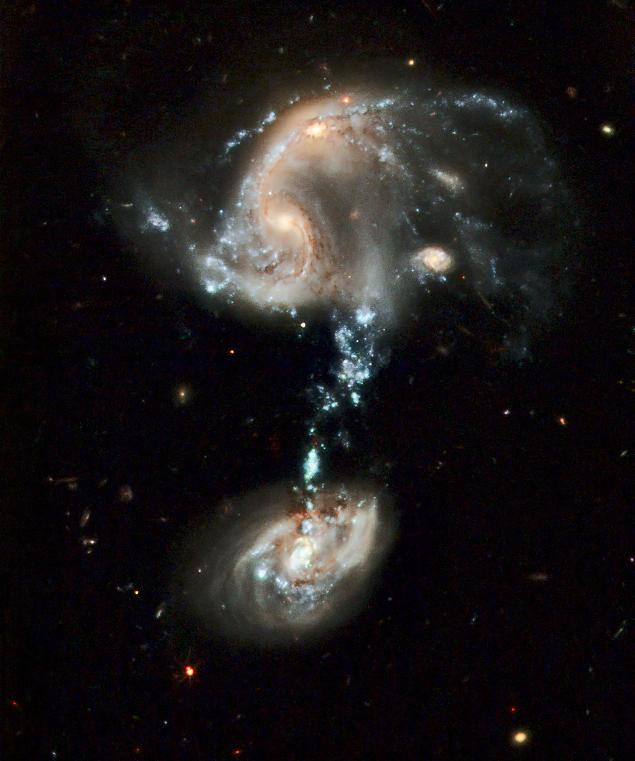
This week you can read about the Kepler space telescope, Ky-Sat 1, brown dwarf stars, see spectacular images of Saturn, and much more.


OrbitalHub presents Q&A With An Alien Hunter, a Q&A session with Seth Shostak, senior astronomer at the SETI Institute.


April 25 marked the 19th anniversary of the Hubble Space Telescope. Hubble has made more than 880,000 observations and taken over 570,000 images of 29,000 celestial objects. The Hubble Space Telescope is a project of international cooperation between ESA and NASA.


  • Facebook
  • Google
  • Slashdot
  • Reddit
  • Live
  • TwitThis
April 28, 2009

Herschel and Planck

Posted by


The objectives that ESA set for the Herschel Space Observatory are ambitious: the study of the galaxies in the early universe, the investigation of the creation of stars, the observation of the chemical composition of the atmosphere and surface of comets, planets and satellites, as well as examining the molecular chemistry of the universe.

ESA plans to answer questions like how did the Universe begin, how did it evolve to its present state, and how will it continue to evolve in the future with Planck. The Planck Mission will collect CMB radiation measurements using highly sensitive sensors that operate at very low temperatures. The measurements will be used to map the smallest variations of the CMB detected to date.

Read more about Herschel and Planck


  • Facebook
  • Google
  • Slashdot
  • Reddit
  • Live
  • TwitThis