Spacewalkers were John Olivas and Christer Fuglesang. The STS-128 EVA #2 total time was six hours and thirty-nine minutes.



Spacewalkers were John Olivas and Christer Fuglesang. The STS-128 EVA #2 total time was six hours and thirty-nine minutes.


 |
| Credits: NASA |
Carnival of Space #118 is live at Cumbrian Sky.
This week you can read about the Mars Reconnaissance Orbiter, fractal patterns, the Wide-field Infrared Survey Explorer, the ten-year anniversary of the release of the historic first-light image by Chandra, space tethers and their many uses, learn how robotic spacecraft get to a specific and precise destination, and much more.
Spacewalkers were John Olivas and Nicole Stott. The STS-128 EVA #1 total time was six hours and thirty-five minutes.
XCOR Aerospace has reached several significant milestones in the 5K18 rocket engine test program. The engine is powered by liquid oxygen and kerosene and can produce up to 2900 lbf of thrust. The XCOR\’s Lynx suborbital spacecraft will use four 5K18 engines and it will be able to perform suborbital flights.
“Like all of our rocket engines, this engine has demonstrated the ability to be stopped and re-started using our safe and reliable spark torch ignition system”, said XCOR CEO Jeff Greason. “The basic cooling design has also been completed and the engine is able to run continuously at thermal equilibrium. With those milestones reached, the 5K18 test program is now moving forward into a second phase of tuning and optimization, in which we will also greatly increase our cumulative run time.”
Read more about XCOR Aerospace…
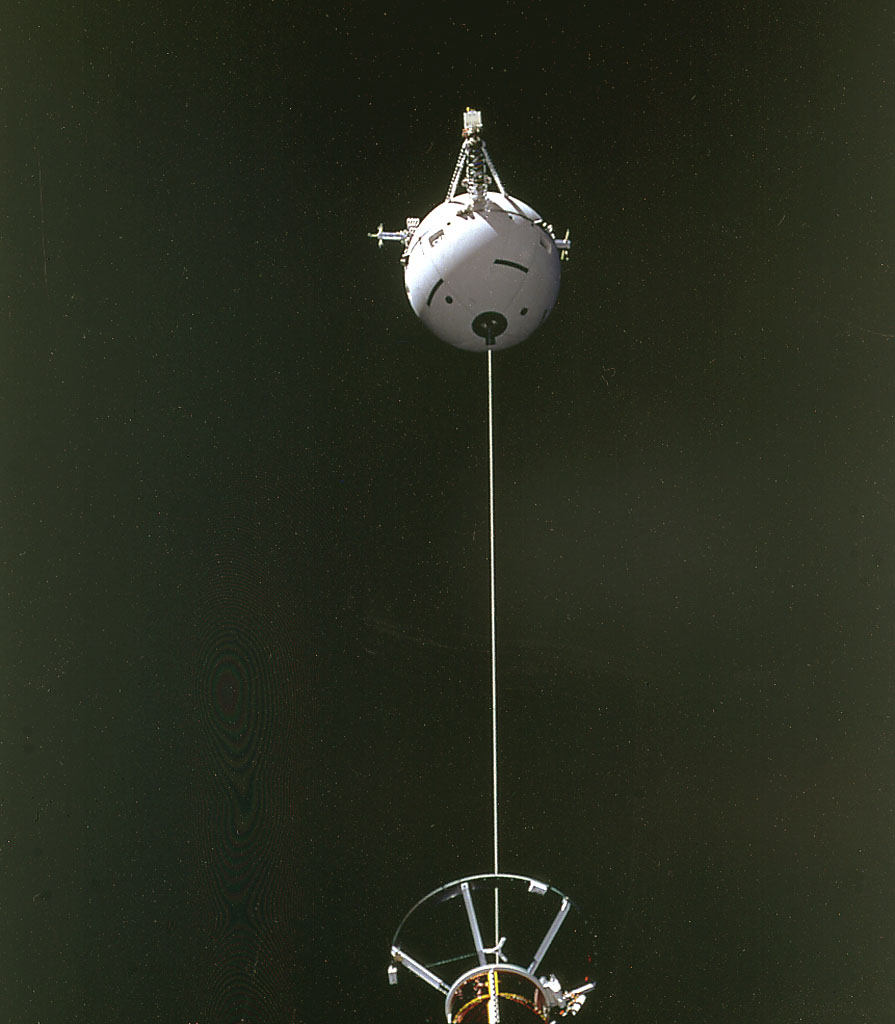
On STS-128, NASA is testing a new system during the rendezvous, docking, undocking, and fly-around phases of the mission. The new vision system is called TriDAR and it is developed by Neptec, a Canadian company based in Ottawa. Neptec is a prime contractor to NASA since 1995. Neptec range of products for the space industry also includes the Laser Camera System (LCS) and the Space Vision System (SVS).
 |
| Credits: ISRO |
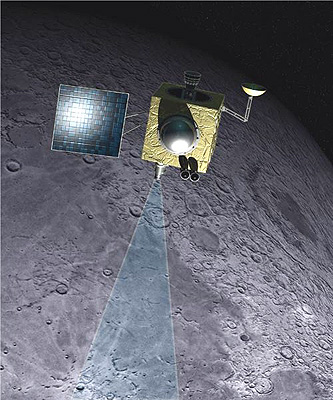
After nine months of operation, Chandrayaan-1 failed to communicate with the base. The Indian Space Research Organization (ISRO) abruptly lost contact with the spacecraft on Saturday, September 29, 2009.
If this is the end of Chandrayaan-1, the mission covered only nine months of its scheduled two-year operational life. I really hope that this is a minor obstacle that the ISRO will be able to overcome. ISRO stated that the Chandrayaan-1 mission was able to meet most of its scientific objectives.
The Chandrayaan-1 scientific payload contains a diverse collection of instruments. The instruments were designed and developed by ISRO, ESA, NASA, and the Bulgarian Space Agency.
There are two instruments that are used to map the surface of the Moon: the Terrain Mapping Camera (TMC) and the Lunar Laser Ranging Instrument (LLRI). The X-ray spectrometer onboard the spacecraft measures the concentration of certain elements on the lunar surface and monitors the solar flux in order to normalize the results of the measurements taken. The mineralogical configuration of the surface is mapped by four instruments: the Hyper Spectral Imager (HySI), the Sub-keV Atom Reflecting Analyzer (SARA), the Moon Mineralogy Mapper (M3), and the Near-Infrared Spectrometer (SIR-2). The Radiation Dose Monitor (RADOM-7) records the radiation levels in the lunar orbit.
You can find out more about Chandrayaan-1 on the ISRO’s dedicated web page.













 Subscribe to blog posts using RSS