OrbitalHub

The place where space exploration, science, and engineering meet

Domain is for sale. $50,000,000.00 USD. Direct any inquiries to contact@orbitalhub.com.

Archive for the International Space Station category

December 23, 2008

SpaceX and Orbital Awarded CRS Contracts

Posted by


Credits: SpaceX


NASA has awarded two International Space Station (ISS) Commercial Resupply Services (CRS) contracts to Space Exploration Technologies (SpaceX) and Orbital Sciences Corporation (Orbital).


NASA has ordered eight flights valued at about $1.9 billion from Orbital and twelve flights valued at about $1.6 billion from SpaceX.


The maximum potential value of each contract is roughly $3.1 billion. Based on known requirements, the value of both contracts combined is projected at $3.5 billion.


Credits: Orbital


The awarded contracts are fixed-price indefinite delivery, indefinite quantity contracts. They will begin January 1, 2009, and are effective through December 31, 2016. SpaceX and Orbital each will have to deliver a minimum of twenty metric tons of cargo to the space station, and they will also have to deliver non-standard services in support of the cargo resupply, including analysis and special tasks as the government deems necessary.


SpaceX will service the ISS with its Falcon9/Dragon system.


“The SpaceX team is honored to have been selected by NASA as the winner of the Cargo Resupply Services contract,” said Elon Musk, CEO and CTO, SpaceX. “This is a tremendous responsibility, given the swiftly approaching retirement of the Space Shuttle and the significant future needs of the Space Station. This also demonstrates the success of the NASA COTS program, which has opened a new era for NASA in US Commercial spaceflight.”


Orbital will employ the Taurus IITM medium-lift launch vehicle and the CygnusTM maneuvering space vehicle.


“We are very appreciative of the trust NASA has placed with us to provide commercial cargo transportation services to and from the International Space Station, beginning with our demonstration flight scheduled in late 2010,” said Mr. David W. Thompson, Orbital’s Chairman and Chief Executive Officer. “The CRS program will serve as a showcase for the types of commercial services U.S. space companies can offer NASA, allowing the space agency to devote a greater proportion of its resources for the challenges of human spaceflight, deep space exploration and scientific investigations of our planet and the universe in which we live.”


Both Orbital and SpaceX have issued press releases with more details about the CRS contracts.


  • Facebook
  • Google
  • Slashdot
  • Reddit
  • Live
  • TwitThis
December 12, 2008

Columbus

Posted by


Credits: ESA/NASA


Columbus is an integral part of the International Space Station (ISS), and it is the first European laboratory dedicated to long-term experimentation in zero-g conditions. The projected lifetime of the laboratory is ten years.


The laboratory is named after the famous Italian navigator and explorer Christoforo Columbus, who discovered the Americas in 1492.


The Columbus Laboratory is a large, pressurized aluminum cylinder measuring 4.5 meters in diameter and 6.9 meters in length. Its side walls contain eight research racks, with another two in the ceiling. Each one of these racks contains its own power and cooling systems. Video and data links systems feed information back to researchers and control centers on the Earth.


Columbus is the smallest ISS laboratory, but it has the same scientific, power, and data handling capacity as the other laboratories owned by Russia, USA, and Japan.


Credits: ESA/NASA


Scientific experiments started immediately on the Columbus because the laboratory arrived at the station with four scientific facilities pre-installed.


Columbus is used to carry out experiments in many different disciplines, including biology, biotechnology, fluid and material science, medicine, and human physiology.


The key element in these experiments is the micro gravity. In micro gravity, with gravitational forces much weaker than on the ground, processes that are obscured by gravity become noticeable. The research racks onboard Columbus are designed to investigate how micro gravity affects materials, biological specimens, and people.


Columbus contains the European Physiology Module Facility, the Fluid Science Laboratory, the BioLab, the Material Science Laboratory, and the European Drawer Rack, which can house a variety of small experiments.


Credits: ESA/NASA


Problems that are investigated on Columbus include the loss of bone cells by astronauts, plant growth in micro gravity, fluids behavior, and combustion of materials.


Experiments are also conducted outside of Columbus. These experiments are used to study the Earth or to expose materials to the harsh radiation, temperature, and the vacuum of space.


The mission that delivered the Columbus Laboratory to the ISS was STS-122. On February 7, 2008, the Space Shuttle Atlantis lifted off from Cape Canaveral, with Columbus docked into its cargo bay.


A vital part of the ISS and a prerequisite for the STS-122 mission, the Italian-built Node2 module (a.k.a. Harmony) was delivered to the ISS by the STS-120 mission in October 2007. The node is used as a connecting component for the Columbus Laboratory and the Kibo Laboratory. Node2 is also a docking port for the Space Shuttle.


Credits: ESA/NASA


Prior to the STS-122 mission , there were two spacewalks performed by the ISS Expedition 16 crew to prepare Node2 in order to receive the Columbus Laboratory.


ESA astronauts Léopold Eyharts from France and Hans Schlegel from Germany were members of the STS-122 mission. With five other NASA astronauts, they were part of the Columbus assembly and commissioning mission.


Schlegel spent twelve days in space and undertook two spacewalks to install the laboratory. Eyharts oversaw the installation and the start-up of the laboratory during a longer mission spent onboard the ISS.


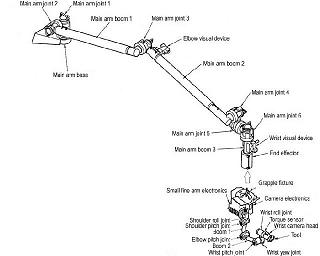
Columbus was attached to the Harmony module on February 11, 2008, during the first spacewalk of the STS-122 mission. During this spacewalk, NASA astronauts Stanley Love and Rex Walheim spent nearly eight hours outside the ISS. The ISS robotic arm, Canadarm2, was used to move the laboratory from the cargo bay of the Space Shuttle to the starboard side of the Harmony module.


Credits: ESA/NASA


The second spacewalk of the mission lasted six hours and forty-five minutes. Schlegel and Walheim performed a regular station maintenance operation: they replaced the nitrogen tank that is used to pressurize the ammonia cooling system that runs on the ISS.


ESA was quite inspired to name the laboratory Columbus because it will open the world of micro gravity to a multitude of discoveries, in the same way that Christoforo Columbus opened up the New World to European explorers.


  • Facebook
  • Google
  • Slashdot
  • Reddit
  • Live
  • TwitThis
November 22, 2008

ESA Prepares For The Next Step

Posted by


Credits: ESA


The European presence in space has become more prominent over the years. The development of the Columbus Laboratory and the introduction of the Automated Transport Vehicle (ATV) are two major milestones that have opened a new era for Europe’s presence in space.


Europe now aspires to consolidate its independence with the Large Cargo Return (LCR) and the Crew Transport Vehicle (CTV).


The LCR and the CTV are the new versions of the ATV that are now being considered by ESA’s Human Spaceflight Directorate. These versions of the ATV reuse the service module of the ATV configuration. A capsule with re-entry capability will replace the integrated cargo carrier. In the first phase, the capsule will bring cargo from the ISS down to Earth. The ultimate goal is to be able to carry a full crew up to the ISS and bring the crew back to Earth.


Credits: ESA


Atmospheric re-entry is not a new challenge for ESA engineers.


Past programs – like the Atmospheric Re-entry Demonstrator – and future programs – like the Intermediate Experimental Vehicle (IXV) – will help validate models used for the simulation of the re-entry phase and also provide a solid base in designing materials for the thermal protection system.


However, one challenge that needs to be addressed is the ejection system for the CTV/Ariane V configuration. The safety of the crew has to be ensured in the case of an anomaly on the launch pad or during the ascent phase of the flight. ESA will have to develop new technologies to satisfy this crucial requirement.


Credits: ESA


ESA has already proposed the LCR and the CTV versions of the ATV as the next step in the evolution of the ATV. However, the decision to go forward lies with the Council of the European Space Ministers. If ESA proposals are approved, the first flight of the LCR is expected in 2015, and the CTV could be docking to the ISS by 2020.


Check out ESA’s podcast about the new proposed programs that are based on the ATV.


  • Facebook
  • Google
  • Slashdot
  • Reddit
  • Live
  • TwitThis
November 20, 2008

MPLM Has Two More Missions To Go

Posted by


Credits: NASA


The Multi-Purpose Logistics Module (MPLM) is a pressurized module that is used on Space Shuttle missions to transfer cargo to and from the International Space Station (ISS).


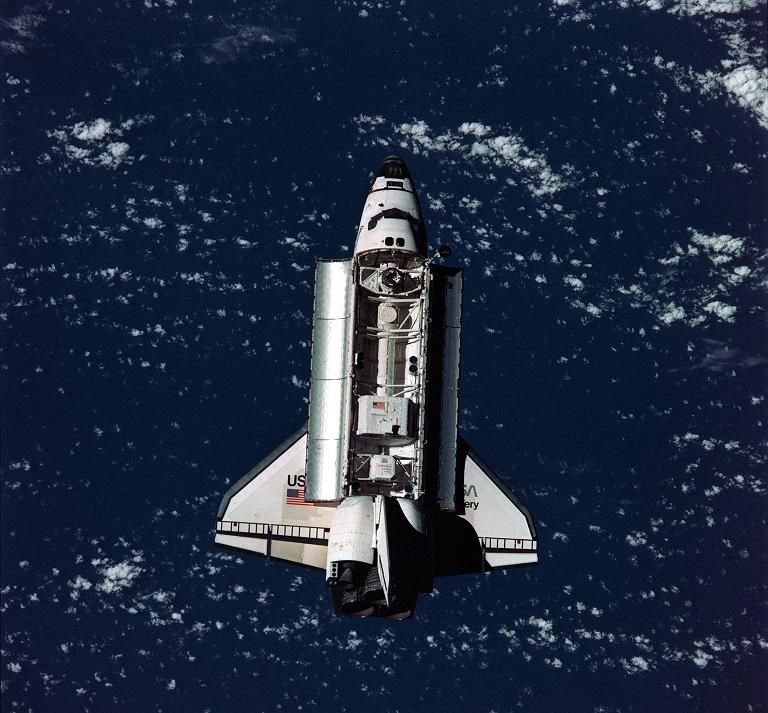
A typical MPLM mission starts in the cargo bay of a Space Shuttle. The MPLM is carried to the ISS and berthed to one of the docking modules by the Canadian robotic arm. The supplies are offloaded and then finished experiments and waste are loaded on to the module. At the end of the mission, the MPLM is moved to the Space Shuttle cargo bay and returned to Earth.


The Italian Space Agency (ASI) provides the modules to NASA. Three MPLMs have been built and delivered to NASA thus far. NASA owns the MPLMs and ASI receives research time on ISS in exchange. The MPLMs were named after great figures in Italian history: Leonardo, Raffaello, and Donatello. However, some of the mission badges display the ninja turtles instead.


The construction of the first MPLM – Leonardo – began in April 1996. Leonardo was delivered to NASA in August 1998. Raffaello and Donatello followed in August 1999 and February 2001, respectively. Each MPLM can make 25 return trips to space.


Credits: NASA


The MPLM is 6.4 meters long and 4.6 meters in diameter. The module weighs 4.5 tons and it can deliver up to 10 tons to the ISS. The design of the module resembles the payload module that is part of the ATV. In addition, ATV has a service module that offers autonomy. Obviously, ATV was the direct beneficiary of the knowledge gained during the design and operational phases of the MPLM.


There is room for sixteen standard payload racks (International Standard Payload Racks – ISPR) in the MPLM. Even if it is not used to carry a human crew, MPLM has its own life-support system. Furthermore, it has a 3 KW internal power supply.


Credits: NASA


The current Space Shuttle mission – STS 126 – has delivered the MPLM Leonardo to the ISS. Leonardo is on its fifth spaceflight and hauled over 14,000 pounds of supplies and equipment to ISS.


Part (a small part) of the payload was turkey, candied yams, stuffing, and dessert for a Thanksgiving meal at the station.


A special piece of equipment, the GLACIER, was also delivered to the station. GLACIER stands for General Laboratory Active Cryogenic ISS Experiment Refrigerator. GLACIER is a double locker cryogenic freezer that will be used for transporting and preserving science experiments. The payload also included a galley for the Destiny laboratory, an advanced Resistive Exercise Device (aRED), and two new crew quarter racks for the expanded station crew.


Credits: NASA


There are two more MPLM missions scheduled before the Space Shuttle retires. STS-128 will carry Leonardo in July 2009, and Raffaello will be docked to ISS during the STS-131 mission in February 2010.


  • Facebook
  • Google
  • Slashdot
  • Reddit
  • Live
  • TwitThis
October 2, 2008

Jules Verne Ends the Space Journey

Posted by


We covered the ATV Jules Verne mission in a previous post (Jules Verne close to the End of its Space Journey) and mentioned that the typical ATV mission ends with a destructive re-entry above the Pacific Ocean. We come back with this post to present the conclusion of the ATV mission.


Credits: NASA


The ATV separated from the International Space Station (ISS) on September 5, 2008, filled with more than 2 tonnes of waste. The ATV undocked from the aft port of the Zvezda Service Module and it was placed in a parking orbit for three weeks. While being parked, a series of tests of the guidance and control systems were performed.

By carrying out re-phasing maneuvers, the ATV positioned itself to a predefined position behind and underneath the ISS. In this way, the crews from the ISS and from two specially equipped observation planes in the skies of the South Pacific were able to view and to record the re-entry.


Credits: NASA


The re-entry was initially modeled on computer in order to anticipate the trajectory and the location of the area where the breakout fragments of the spacecraft will fall. The observations helped determine if the re-entry matched the computer modeling.


As planned, the first ATV mission concluded on September 29, 2008, when two engine burns de-orbited the spacecraft. ESA scheduled the re-entry on this date because the lighting conditions were appropriate for an imagery experiment and the breakup happened at approximately 75 km above the waters of the Pacific Ocean. The remaining fragments fell into the Pacific some 12 minutes later.


Credits: ESA


This first mission proved the logistical value of the ATV. The delivery of 6 tonnes of cargo to the ISS, the automatic rendezvous and docking capabilities, the attitude control maneuvers performed, they all show how far the European space capabilities have developed.


ESA engineers are already working on the next two ATV spacecrafts. The next ATV mission is scheduled for 2010 and there are many proposals to adapt the ATV to other types of missions.


Credits: ESA


One important variation of the typical ATV mission is the Large Cargo Return (LCR). The LCR configuration will consist of a large cargo capsule capable of bringing back on Earth hundreds of kilograms of cargo and valuable experiment results. LCR would be able to dock to the US side of the ISS that has larger docking ports and would make possible the transfer of complete payload racks.


The video showing the destructive re-entry of Jules Verne is available on the ESA website.


  • Facebook
  • Google
  • Slashdot
  • Reddit
  • Live
  • TwitThis


Credits: ESA


In September 2008, the first Automated Transport Vehicle (ATV) mission will come to an end. It is a significant achievement for the European space industry, marking another first in space exploration: the ATV spacecraft is capable of performing rendezvous and docking procedures to the International Space Station (ISS) in a fully autonomous manner. In comparison, the Russian spacecrafts used for carrying supplies and crews to the station (Progress and Soyuz) need the cooperation of the station for docking procedures.


The ATV program started back in 1995 and it has so far cost approximately 1.3 billion euros.


I will start by presenting some of the technical data of the ATV spacecraft. It will not be an exhaustive presentation by far, but I think it is important to have the orders of magnitude at least.


Credits: ESA


ATV has a mass of almost 21 tonnes (20,750 kg) at launch, of which up to 7 tonnes is on-board propellants and payload. The pressurized cabin section used for cargo storage has 48 cubic meters in volume. ATV is the largest spacecraft ever developed in Europe.


In the on orbit configuration, the spacecraft has a length of 9.794 m, maximum diameter of 4.480m, and the solar arrays span of 22.281 m.


The launch vehicle used by ATV missions is Ariane 5. The ATV is deployed by the Ariane 5 rocket on a low Earth orbit (260×260 km, inclination 51.6 degrees).


Credits: ESA


The ATV spacecraft consists of two main modules, the avionics/propulsion module, called the ATV Service Module, and the Integrated Cargo Carrier (ICC), which docks with the International Space Station (ISS).


Credits: ESA


The ICC represents 60% of the total ATV volume. It is used to deliver two types of supplies to the ISS: the dry cargo (like hardware and personal parcels) and the fluid cargo (like propellant for the ISS’s own propulsion system, water, and gas).


Cargo mass can be distributed as follows:
· dry cargo: 1,500 kg – 5,500 kg;
· water: 0 – 840 kg;
· gas (nitrogen, oxygen, air, 2 gases/flight): 0 – 100 kg;
· ISS re-boost and attitude control propellant: 0 – 4,700 kg;
The total cargo upload capacity: 7,667 kg.


Credits: ESA

The waste download capacity is 6,340 kg (5,500 kg dry cargo + 840 kg wet cargo).


The front of the ICC contains the docking system. The docking system is Russian made and it is a state-of-the-art docking mechanism. It has evolved over the years from the original docking system used for the Salyut space station program in the late 1960s. The docking system enables crew access to the ICC pressurized module, but also provides electrical and propellant connections between the ATV and the ISS.


In order to make docking a safe procedure, the ICC is equipped with quite an impressive array of sensors and active components: two telegoniometers (used to calculate the distance and direction from ATV to ISS), two videometers (used to compute distance and orientation of the ISS), two star trackers, and two visual video targets (used by the ISS crew to monitor visually the ATV’s final approach).


Credits: ESA

The ATV Service Module includes the propulsion systems, the electrical power, computers, the communications, and the avionics.


The main propulsion system of the spacecraft is comprised of 4 x 490 N thrusters. The attitude control system relies on 28 x 220 N thrusters. The ATV propulsion system is a pressure fed liquid bi-propellant system using monomethyl hydrazine fuel and nitrogen tetroxide oxidizer. The fuel is pressurized by helium stored in two high pressure tanks.


The four solar panels ATV is equipped with can generate 4,800 W on average during the 6 month mission in space.


The typical ATV mission starts in French Guiana, at the Kourou launch site. An Ariane 5 rocket deploys the ATV spacecraft on a circular Low Earth Orbit (LEO) at an altitude of 260 km. ATV then activates its navigation systems and fires its thrusters to reach the transfer orbit to the ISS.


After two or three days, and raising its orbit to 400 km, ATV will be in sight of ISS. It will start the approaching phase of the mission from about 30 km behind and 5 km below the station.


Even if the approach and the docking procedures are fully automatic, the flight controllers can at any time call on the spacecraft and back away from the station. The ISS crew can also reject the spacecraft in case any anomalies are noticed.


Once the spacecraft is safely docked to the ISS, the station’s crew can access the pressurized cargo section and remove the payload. After the payload is removed, the crew fills the cargo section with used hardware and waste materials.

At intervals of 10 to 14 days, the main thrusters of the ATV will be used to boost the station’s altitude.

Once the mission is accomplished, the ATV separates from the ISS, and performs a controlled and safe destructive re-entry somewhere above the Pacific Ocean.


The first ATV mission is called Jules Verne, after the French author Jules Gabriel Verne (1828 – 1905) who pioneered the science-fiction genre.

The Jules Verne ATV had to pass many tests in order to qualify for the mission. An interesting test was the acoustic testing at the ESA’s test facilities in Noordwijk in the Netherlands.

The spacecraft has to withstand the vibrations caused by the extreme noise levels generated during the launch by the Ariane 5 rocket. The ATV was locked in a closed space with huge speakers that simulate the noise levels recorded during an Ariane 5 launch.


Credits: ESA

Even though the ATV is able to perform the rendezvous and the docking procedures on its own, the ground control experts from ESA and CNES, the French space agency, were involved in the operations. They determined the route the spacecraft must follow in order to dock with the ISS. The two ISS control centers were also involved in ATV operations: the Mission Control Centre in Moscow and the Mission Control Center in Houston, Texas.


The Jules Verne mission is the first in a series to come. There are already five ATV missions scheduled between now and 2015. Under the coordination of ESA and the prime contractor EADS Astrium, European engineers have contributed to this new generation spacecraft. Major sub-contractors are Thales Alenia Space (Italy), Astrium (Germany and France), Oerlikon Space (Switzerland), Dutch Space (The Netherlands), with Russian partners providing the advanced docking system.


The Jules Verne mission liftoff occurred on March 9th, 2008 at 05:03 CET (04:03 UT) at the Kourou Spaceport in French Guiana.


ATV Jules Verne had to perform what the media called orbital rehearsals for ISS docking. The initial test, performed on March 14th, demonstrated the Collision Avoidance Manoeuvre (CAM). During this initial test, an automated system took control of the spacecraft and moved it to a safe distance from the ISS.


The following two tests demonstrated the flying capabilities of the spacecraft in the proximity of the station. On March 29th, ATV manoeuvred around the ISS using relative GPS navigation. Two days later, the ATV tested close proximity manoeuvring and control. The ATV approached first within 20 meters of the station, retreated, then approached even nearer, to only 12 meters from the docking port on the ISS Russian Zvezda module, before again backing off to a safe distance from the station.


On April 3rd, 2008 ATV Jules Verne docked to the ISS.

The ATV will undock from the ISS at the beginning of September 2008 and it will complete its mission at the end of September 2008 above the Pacific Ocean.


Due to its remarkable capabilities, ATV will serve the ISS for many years and it will become a major player after the Space Shuttle retirement in 2010.


There are quite a few ATV evolution scenarios already considered by ESA in the present. To mention here only two of the configurations: the Large Cargo Return (LCR) and the Crew Transport Vehicle (CTV). The LCR configuration presents a large cargo re-entry capsule able to bring back hundreds of kilograms of cargo and valuable experiment results. In the CTV configuration, the Integrated Cargo Carrier component of the spacecraft would be transformed into a manned re-entry capsule for crew transportation. Because of the re-entry capabilities, the CTV could be used as a crew rescue capsule for the ISS.


  • Facebook
  • Google
  • Slashdot
  • Reddit
  • Live
  • TwitThis