OrbitalHub

The place where space exploration, science, and engineering meet

Domain is for sale. $50,000,000.00 USD. Direct any inquiries to contact@orbitalhub.com.

Archive for the The Best Of category

October 29, 2008

Herschel, Planck’s Big Brother

Posted by


Credits: ESA/AOES Medialab


In a previous post, we presented the Planck spacecraft. We would like to dedicate this post to Planck’s big brother, Herschel. Why b(r)other? Because Planck and Herschel will be launched into space by the same Ariane 5 launcher and they will share the fairing section during the launch phase of the mission. Why big? Well, because Herschel is a larger spacecraft than Planck… actually Herschel is the largest space telescope ever built.


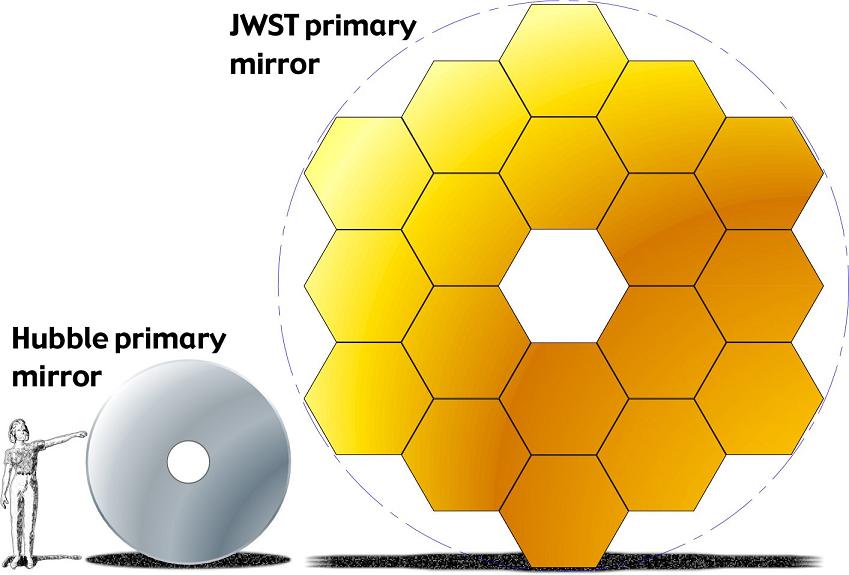
Just to have an idea about the size of the infrared telescope onboard the Herschel spacecraft, the primary mirror has a diameter of 3.5 m and a mass of only 350 kg. In comparison, the mirror of the Hubble space telescope has a diameter of 2.4 m and a mass of 1.5 tons. Obviously, a great deal of effort has been put into minimizing the mass of the telescope, an advance made possible by present-day technology.


The infrared telescope will become operational four months after its launch and will have a nominal mission lifetime of three years. The objectives that ESA set for the Herschel Space Observatory are ambitious: the study of the galaxies in the early universe, the investigation of the creation of stars, the observation of the chemical composition of the atmosphere and surfaces of comets, planets and satellites, as well as examining the molecular chemistry of the universe.


Like Planck, Herschel will observe the sky from the second Lagrangean Point (L2) of the Sun-Earth system. The instruments onboard Herschel will collect long-wavelength infrared radiation. Herschel will be the only space observatory to cover the spectral range from the far infrared to sub-millimeter, which is the reason why the initial name of the space observatory was Far Infrared and Sub-millimeter Telescope (FIRST).


Credits: ESA


The Herschel spacecraft will have 3.3 tons at launch, with a length of 7.5 m and a cross section of 4×4 m. The spacecraft comprises of two modules: the service module and the payload module. While the service module contains the systems for power conditioning, attitude control, data handling and communications, and the warm parts of the scientific instruments, the payload module contains the telescope, the optical bench, the cold parts of the scientific instruments and the cooling system. A sunshield protects the telescope and the cryostat from solar radiation. The sunshield also carries solar cells for power generation.


In order to make accurate observations of the infrared spectrum, parts of the scientific instruments onboard have to be cooled to temperatures close to absolute zero. Two thousand liters of liquid helium will be used for primary cooling during the mission. In addition, each detector onboard is equipped with additional cooling systems.


Credits: ESA/Guarniero


Herschel will not be the first infrared telescope launched into space. There are three predecessors that we would like to mention here: IRAS, the US-Dutch-British satellite launched in 1983, ISO – launched by ESA in 1995, and the NASA’s Spitzer Space Telescope – launched in 2003. However, these three infrared space telescopes were operated on Earth orbits. As we mentioned, Herschel will operate in the L2 point, away from any interference that would affect the scientific instruments onboard. Operating in the L2 point will also help with regard to thermal stability because the spacecraft will not move in and out of eclipse regions.


The launch date is set for early 2009. The journey to the final operational position will take around four months. The European Space Operations Control Center (ESOC) in Darmstadt will coordinate the mission.


  • Facebook
  • Google
  • Slashdot
  • Reddit
  • Live
  • TwitThis
October 15, 2008

Scouting the Moon (III)

Posted by


Credits: NASA


In the previous two posts in this series, we presented NASA’s Lunar Reconnaissance Orbiter (LRO) and the Chandrayaan-1 mission, which was designed and developed by ISRO. These two missions are typical lunar scouting missions: the spacecraft with onboard remote-sensing instruments will orbit the Moon, collect scientific data, and relay it back to Earth.


NASA will launch another lunar scouting spacecraft on the same Atlas V rocket with LRO: the Lunar Crater Observation and Sensing Satellite (LCROSS). This mission is not a typical scouting mission and we will see why in this post.


In 1999, a precursor of LRO and LCROSS called the Lunar Prospector detected traces of concentrated hydrogen at the lunar poles. As a result, the LCROSS mission’s main goal is to confirm the presence or absence of water in a permanently shadowed crater near a lunar polar region. At the present time, landing a probe on the lunar surface and performing excavations or drilling would be very expensive. A less expensive solution for the LCROSS mission is to use a kinetic impactor to excavate a crater on the surface of the Moon.


Credits: NASA


After the launch, LRO will separate from LCROSS, and continue on a solo journey to the Moon. LCROSS will remain attached to the Centaur upper stage of the Atlas V launch system.


While LRO will follow a trajectory that will place it in a polar lunar orbit, LCROSS will execute a flyby of the Moon, and use an elongated Earth orbit to position itself on an impact trajectory. During this time, the LCROSS mission team will perform instrument calibration and corrections for the impact trajectory. The target of the impact will be the lunar south pole.


Seven minutes before the impact, LCROSS will separate from Centaur. The Centaur will be used as a kinetic impactor. Having a mass of approximately 2,200 kg, on impact, it will excavate a crater 20 meters wide and 3 meters deep. According to NASA scientists, more than 250 tons of lunar material will be propelled into space.


Credits: NASA


LCROSS will then fly through the debris of the previous impact. The instruments onboard LCROSS will collect scientific data and the spacecraft will relay it back to Earth. LCROSS will end its mission four minutes after the Centaur impact by creating its own impact crater on the lunar surface. The last S in LCROSS should stand for Smasher instead of Satellite considering the final act of the mission!


The scientific instruments onboard LCROSS cover a wide spectrum: two near-infrared spectrometers, a visible light spectrometer, two mid-infrared cameras, two near-infrared cameras, a visible camera, and a visible radiometer. The instruments can detect traces of organics, hydrocarbons, hydrated minerals, water ice, and water vapor. More details about the LCROSS scientific payload can be found on LCROSS mission page.


I wonder to what extent the debris caused by the impact of Centaur and LCROSS will interfere with the scientific instruments onboard LRO and Chandrayaan-1. Both LRO and Chandrayaan-1 will be orbiting the Moon on polar orbits at that time.


  • Facebook
  • Google
  • Slashdot
  • Reddit
  • Live
  • TwitThis


Credits: ESA


ESA is about to launch a satellite capable of measuring very small variations in the Earth’s gravitational field. Even if it is a common-sense assumption that the force of gravity on the surface of the Earth has a constant value, there are subtle variations caused by the rotation of the Earth, the position of the mountains and ocean trenches, and by the variations of the Earth’s inner density. Determining the variations in the Earth’s gravitational field will improve our knowledge of ocean circulation, and will also help to make advances in geodesy and surveying.


The Gravity field and steady-state Ocean Circulation Explorer (GOCE) satellite will measure the small variations of the gravitational field. GOCE is the most advanced gravity space mission to date. Scientists will build a detailed map of Earth’s gravity using data collected by GOCE.


Credits: ESA


In order to make accurate measurements, the GOCE satellite will orbit in a low altitude orbit, around 250 km above the surface of the Earth.


An elongated shape has been chosen for the satellite design to minimize the atmospheric drag. GOCE is five meters long, one meter in diameter, and has a mass of roughly 1050 kg.


The heart of the GOCE satellite is a scientific instrument called gradiometer. The gradiometer consists of three pairs of accelerometers, and it measures acceleration variations over short distances between proof masses inside the satellite. One important thing to mention here is that the calibration of the gradiometer takes place after launch. The reason? The instrument cannot be calibrated on the ground, under the force of gravity.


Credits: ESA


You can find out more about the calibration of the GOCE instrument by reading an interesting article on ESA’s website.


Daniel Lamarre, a Canadian national working at ESA’s European Space Research and Technology Centre (ESTEC), is the inventor and the developer of the method used for the calibration of the instrument. He won an ESA award for developing the calibration method.


The GOCE satellite will be launched from the Plesetsk Cosmodrome in northern Russia. Eurockot Launch Services GmbH, a company that provides commercial launch services with the Rockot launch system, will be the launch provider for the GOCE mission. Eurockot was formed in 1993. EADS Astrium, located in Bremen, Germany, holds 51 percent of the company. The Khrunichev State Research and Production Space Center in Moscow, Russia, owns the remaining 49 percent.


Credits: ESA


The Rockot launcher is based on the SS-19 Intercontinental Ballistic Missiles. The upper stage of the launch system, Breeze KM, extends the performance capabilities of the Rockot lower stages. The system is capable of injecting a 1950 kg payload into Low Earth Orbit (LEO). The re-ignitable main engine of the Breeze KM allows various injection schemes for the payload. The length of the launch vehicle is 29 meters, with a launch mass of 107 tons. The external diameter of the three stages is 2.5 meters, while the payload fairing has an external diameter of 2.6 meters and a height of 6.7 meters.


The initial launch date was postponed due to an anomaly identified in the guidance and navigation subsystem of the Breeze KM upper stage. The new launch date has been scheduled for Monday, October 27th, 2008.


  • Facebook
  • Google
  • Slashdot
  • Reddit
  • Live
  • TwitThis
October 8, 2008

Scouting the Moon (II)

Posted by


We presented in a previous post the Lunar Reconnaissance Orbiter (LRO) mission. The goals of the LRO mission are to map the lunar resources and to create a detailed 3D map of the lunar surface in preparation for future NASA missions to the Moon. However, NASA is not the only space agency that has high hopes regarding the exploration of the Moon. The Indian Space Research Organization (ISRO) is another agency heavily involved in space activities.


Credits: ISRO


Interest in undertaking a lunar scientific mission was sparked at a meeting of the Indian Academy of Sciences in 1999. One year later, the Astronautical Society of India made a recommendation supporting the idea.


The ISRO formed a National Lunar Mission Task Force that involved leading Indian scientists. The Task Force provided an assessment on the feasibility of such a mission. The mission, called Chandrayaan-1, was approved in November 2003 for an estimated cost of $83 million USD.


The Chandrayaan-1 spacecraft is a 1.5 meter cube with a weight mass of approximately 523 kg. The spacecraft bus is based on an already developed meteorological satellite. Chandrayaan-1 will carry a 30 kg probe that will be released to penetrate the lunar surface. The power for the onboard systems is generated by a solar panel. The 750 watts generated by the solar panel will be stored by the rechargeable batteries onboard the spacecraft. Maneuvering in the lunar orbit is done using a bipropellant propulsion system.


Credits: ISRO


The scientific payload contains a diverse collection of instruments. The instruments were designed and developed by ISRO, ESA, NASA, and the Bulgarian Space Agency.


There are two instruments that will map the surface of the Moon: the Terrain Mapping Camera (TMC) will produce a 5 meter resolution map of the surface, and the Lunar Laser Ranging Instrument (LLRI) will scan the lunar surface and determine the surface topography.


The X-ray spectrometer onboard the spacecraft has three components: the Imaging X-ray Spectrometer (CIXS), the High Energy X-ray/gamma ray spectrometer (HEX), and the Solar X-ray Monitor (SXM). The X-ray spectrometer will measure the concentration of certain elements on the lunar surface as well as monitor the solar flux in order to normalize the results of the measurements taken.


The mineralogical configuration of the surface will be mapped by four instruments: the Hyper Spectral Imager (HySI), the Sub-keV Atom Reflecting Analyzer (SARA), the Moon Mineralogy Mapper (M3), and the Near-Infrared Spectrometer (SIR-2).


The Radiation Dose Monitor (RADOM-7) will record the radiation levels in the lunar orbit.


Credits: ISRO


ISRO has two operational launch vehicles: the Polar Satellite Launch Vehicle (PSLV) and the Geosynchronous Satellite Launch Vehicle (GSLV). For Chandrayaan-1, ISRO has chosen to use PSLV as a launch vehicle. The PSLV developmental flights were completed in 1996 and the rocket has had 12 successful missions since then. PSLV is 44.43 meters tall and has a weight of 294 tonnes at launch. It can inject a payload of 1,000 kg – 1,200 kg into a polar orbit.


The launch of the Chandrayaan-1 mission is scheduled for the end of October 2008. The PSLV rocket will take off from the Satish Dhawan Space Center in Sriharikota on the southeast coast of India. The transfer to the lunar orbit will take approximately five days and after additional maneuvers the spacecraft will reach its final polar orbit, 100 km above the surface. The spacecraft will be operational for two years.


The Chandrayaan-1 mission opens the door to future lunar missions. ISRO has already committed to a second Chandrayaan mission that will land a rover on the surface of the Moon. The rover will perform a number of experiments on the lunar surface and the results will be relayed to Earth by the Chandrayaan-2 orbiter.


We will come back with more details about the Chandrayaan-1 mission as the events unfold. Please stay tuned on the OrbitalHub frequency.


  • Facebook
  • Google
  • Slashdot
  • Reddit
  • Live
  • TwitThis
October 6, 2008

Power Generation Onboard Spacecrafts (IV)

Posted by


In the previous three posts we presented the most common solutions employed by spacecraft designers in order to generate the power needed by onboard systems during a space mission: the batteries, the solar panels, and the radioisotope thermoelectric generators. We will conclude by presenting two more existing solutions: the fuel cells and the nuclear reactors.


Credits: NASA


Fuel cells are devices that convert chemical energy into electricity. Even if using the same type of energy conversion, fuel cells are more efficient than the batteries. Electricity is produced directly from an oxidation reaction. The fuel and an oxidant react in the presence of a catalytic material inside the cell. By eliminating the reaction products and maintaining the input flows, fuel cells can operate continuously. For space applications, only hydrogen and oxygen have been used as reactants. Other sources rich in hydrogen that can be used as fuel are methane, methanol, and ethanol.

Regenerative fuel cells are a viable option for energy storage in large space systems. They could successfully replace the secondary batteries. The regenerative fuel cells would use stored hydrogen and oxygen to generate electricity during eclipse periods and would use solar arrays to generate electricity to recharge the fuel cells during the illuminated portion of the orbit. The generated electricity would be used to produce oxygen and hydrogen by electrolyzing the water produced by the fuel cells during normal operation. As far as we know, there are no direct applications of regenerative fuel cells in the space industry to date.


The nuclear reactors used by spacecrafts for power generation are smaller versions of the nuclear reactors used onboard nuclear submarines or nuclear aircraft carriers. They are the only compact solution for large power levels, hundreds of kilowatts to megawatts. In principle, the controlled nuclear reaction generates the heat, while an agent carries the heat away and is used to generate steam. The steam is used to drive a turbine that generates electricity. I was not able to find any technical details on the cooling agent and the liquid (or gas) used to drive the turbine (or even if a turbine is used) for the SP-100. SP-100 is the only nuclear reactor destined to power space systems built by the US. I was able to dig up the information that the Russian-built nuclear reactors that operated on the RORSAT reconnaissance satellites used NaK-78 as cooling agent (NaK-78 is a sodium and potassium fusible alloy with a low melting point).


SP-100 initially was supposed to have a mass of approximately 3,000 kg and generate 100 kWe. The SP-100 program was eventually canceled due to the fact that as the design matured the weight exceeded the acceptable limit.


Credits: NASA/JPL


The RORSAT Russian satellites have an interesting story… they had active radars onboard and had to be placed in low Earth orbits in order to have the surveillance equipment work effectively. Orbiting in LEOs, RORSAT missions had a shorter lifespan and had to perform a destructive re-entry in the atmosphere. In order to avoid the re-entry of any radioactive material, the nuclear reactor’s core was ejected in a so-called disposal orbit (a high orbit that would postpone the re-entry of the core for a couple of hundreds of years).

Failures were recorded. Most notably, in 1978, a RORSAT mission failed to boost the radioactive core into the disposal orbit and radioactive material entered the atmosphere above the Northwest Territories in Canada. The affected area had over 124,000 square kilometers.


A major disadvantage of the deployment of nuclear reactors is that for manned missions, heavy shielding is required. The shield mass can be reduced by employing designs that use geometric separation, but this is attainable only for large configurations. Other disadvantages are the reduction in reliability due to the moving parts and the possible mechanical interferences due to the vibrations that any dynamic system generates. Despite all these drawbacks, nuclear reactors offer a considerable promise for the future.


Power systems are essential for a space mission and, due to the challenges raised by the space environment, finding the right solution for a space mission requires careful consideration of many factors. Each solution comes with its own advantages and disadvantages making the work of space systems design engineers hard and rewarding in the same time.


We hope you enjoyed reading this series of posts and that you found them interesting. We are looking forward to your feedback and welcome your comments.


  • Facebook
  • Google
  • Slashdot
  • Reddit
  • Live
  • TwitThis
October 1, 2008

ESA to Study the Birth of the Universe

Posted by


Some of the most important questions asked in modern science are: how did the Universe begin, how did it evolve to its present state, and how will it continue to evolve in the future? To ask these questions, the remnant radiation that filled the Universe immediately after the Big Bang must be analyzed. This remnant radiation is known as the Cosmic Microwave Background (CMB).


Credits: ESA


ESA plans to answer these questions with Planck: the first European mission to study the birth of the Universe. The Planck Mission will collect CMB radiation measurements using highly sensitive sensors that are operating at very low temperatures. The measurements will be used to map the smallest variations of the CMB detected to date.


The Planck spacecraft will weigh around 1,900 kg at launch. It is 4.2 m high and has a maximum diameter of 4.2 m. There are two modules that comprise the spacecraft: a service module and the payload module.


The service module contains the systems for power generation, attitude control, data handling and communication, and the warm components of the scientific payload. The payload module contains the telescope, the optical bench, the detectors, and the cooling system (which is of critical importance, as we shall see).


The telescope is an important onboard component. The Planck telescope is a Gregorian telescope with an off-axis parabolic primary mirror 1.75 x 1.5 meters in size. A secondary mirror focuses the incoming microwave radiation on two sets of highly sensitive detectors: the Low Frequency Instrument (LFI) and the High Frequency Instrument (HFI). The Gregorian design offers two key advantages: it is compact and it does not block the optical path.


Credits: ESA/Thales


The LFI will be operating at –253 degrees Celsius. The array of twenty-two tuned radio receivers that comprise LFI will produce high-sensitivity, multi-frequency measurements of the microwave sky in the frequency range of 27 GHz to 77 GHz.


The HFI has to be cooled to –272.9 degrees Celsius in order to operate (one tenth of one degree above the absolute zero!). HFI’s fifty-two bolometric detectors will produce high-sensitivity, multi-frequency measurements of the diffuse sky radiation in the frequency range of 84 GHz to 1 THz.


A baffle surrounds the telescope and instruments. The baffle prevents light from the Sun and the Moon from altering the measurements. A complex system of refrigerators is used onboard the spacecraft in order to achieve the temperatures needed for nominal operation. The detectors have to work at temperatures close to the absolute zero, otherwise their own emissions can alter the measurements.


The two instruments will be used to measure the small variations of the CMB across the sky. By combining the measurements, a full sky map of unprecedented precision will be produced. The map will help astronomers decide which theories on the birth and the evolution of the Universe are correct. Questions like ‘what is the age of the Universe?’ or ‘what is the nature of the dark-matter?’ will be answered.


The mission was initially designed as COBRAS/SAMBA (Cosmic Background Radiation Anisotropy Satellite and Satellite for Measurement of Background Anisotropies) because it grew out of two mission proposals that had similar objectives. When the mission was approved in 1996, it was also renamed as Planck in honor of the German scientist Max Planck (1858 – 1947). Max Planck was awarded the Nobel Prize for Physics in 1918.


Credits: ESA


The mission is a collaborative effort. The Planck spacecraft was designed and built by a consortium led by Alcatel Alenia Space (Cannes, France). The telescope mirrors are manufactured by EADS Astrium (Friedrichshafen, Germany). The Low Frequency Instrument (LFI) was designed and built by a consortium led by the Instituto di Astrofisica Spaziale e Fisica Cosmica (IASF) in Bologna, Italy. The High Frequency Instrument (HFI) was designed and built by a consortium led by the Institut d’Astrophysique Spatiale (CNRS) in Orsay, France.


The Planck Mission has two predecessors: the Cosmic Background Explorer (COBE) and the Wilkinson Microwave Anisotropy Probe (WMAP).


Credits: ESA


The Planck spacecraft will be launched in early 2009 from Kourou, French Guiana. An Ariane 5 booster will place the spacecraft in a trajectory towards the L2 point. The L2 point stands for Second Lagrangian Point and it is located around 1.5 million kilometers away from Earth in a direction diametrically opposite the Sun. It will be a dual launch configuration, as the Herschel spacecraft will be launched together with Planck.


Between four to six months after the launch, Planck will reach its final position. It will take six more months before Planck will be declared operational.


Planck will perform scientific measurements for fifteen months, allowing two complete sky surveys. The spacecraft will be operational as along as there are resources for the cooling systems onboard.


For more details on the ESA’s Planck Mission you can visit the mission’s home page on the ESA website.


  • Facebook
  • Google
  • Slashdot
  • Reddit
  • Live
  • TwitThis