OrbitalHub

The place where space exploration, science, and engineering meet

Domain is for sale. $50,000,000.00 USD. Direct any inquiries to contact@orbitalhub.com.

Archive for the The Best Of category

February 17, 2009

Dawn and the Flyby of Mars

Posted by


Credits: NASA/JPL


The Dawn spacecraft is currently performing the Mars flyby phase of its mission. The purpose of the Mars flyby is to alter the trajectory of the spacecraft in order to rendezvous with its first scientific target in the main asteroid belt.


The spacecraft will come within 549 km of the surface of Mars on February 17, 2009, at 4:28 PST.


The flyby is a gravity assist maneuver used in orbital mechanics to alter the trajectory of a spacecraft. The gravity assist is also known as a gravitational slingshot. The first ever gravity assist maneuver was performed by Mariner 10 in February 1974, and most of the interplanetary missions have made use of it since then.


The scientific objective of the Dawn mission is to answer important questions about the origin and the evolution of our solar system. The currently accepted theory about the formation of our solar system states that Jupiter’s gravity interfered with the accretion process, thereby preventing a planet from forming in the region between Jupiter and Mars. This led to the formation of the asteroid belt.


The asteroids chosen as scientific targets for the Dawn mission are Vesta and Ceres. Due to their size, they have survived the collisional phase, and it is believed that they have preserved the physical and chemical conditions of the early solar system. The asteroids have followed different evolutionary paths and have dissimilar characteristics, which makes them perfect research subjects.


Credits: NASA/JPL


The design of the Dawn spacecraft is based on Orbital’s STAR-2 series, and uses flight-proven components from other Orbital and JPL spacecraft: the propulsion system is based on the design used on Deep Space 1, the attitude control system used on Orbview, a hydrazine-based reaction control system used on the Indostar spacecraft, and command and data handling, as well as flight software, from the Orbview program.


The core structure of the spacecraft is a graphite composite cylinder, while the panels are aluminum core with aluminum/composite face sheets.


The central cylinder hosts the hydrazine and xenon tanks. The hydrazine tank can store 45 kg of fuel, while the xenon tank has a capacity of 450 kg.


The attitude control system (ACS) uses star trackers to estimate attitudes in cruise mode. A coarse Sun sensor (CSS) allows ACS to keep the solar panels normal to the Sun-spacecraft line. ACS also uses the hydrazine-based reaction control system for the control of attitude and for desaturation of the reaction wheels.


Credits: NASA/George Shelton


The solar panels are capable of producing more than 10 kW at 1 AU and 1 kW at 3 AU (on Ceres’ orbit).


The command and data handling system (CDHS) is based on a RAD6000 board running VxWorks. The software is written in C. There are 8GB available on the board as storage for engineering and scientific data.


The scientific payload consists of the Framing Camera (FC), the Gamma Ray and Neutron Detector (GRaND), and the visible and infrared (VIR) mapping spectrometer.


The FC will be used for determining the bulk density, the gravity field, for obtaining images of the surface, and for compiling topographic maps of Vesta and Ceres. In addition, the FC will capture images for optical navigation in the proximity of the asteroids. For reliability purposes, the payload includes two identical cameras that can run independently.


GRaND will serve for the determination of the elemental composition of the asteroids. GRaND is the result of the expertise accumulated during the Lunar Prospector and Mars Odyssey programs.


Credits: NASA/Jack Pfaller


VIR will help map the surface mineralogy of the asteroids. The instrument is a modified version of the visible and infrared spectrometer flying on the Rosetta mission.


The Dawn spacecraft uses ion propulsion to make its journey to Vesta and Ceres. Ion propulsion will also be used by Dawn during the low altitude flights over the asteroids.


While the fact that Dawn’s engines have a thrust of only 90 mN can hardly impress a reader, the important detail to mention when discussing propulsion systems is the specific impulse. Dawn’s engines have a specific impulse of 3100 s. For a chemical rocket, the specific impulse ranges from 250 s for solid rockets to 450 s for bipropellant liquid rockets. The only drawback (if this can be regarded as a drawback) is that the ion engines must be fired for much longer in order to achieve an equivalent trajectory.


With such high specific impulse engines, Dawn makes use of the fuel onboard in a very efficient way. The fuel used is xenon, a heavy noble gas placed in group 8A of the periodic table. The power produced by the large solar panels is used to ionize the fuel and then accelerate it with an electric field between two grids. In order to maintain a neutral plasma, electrons are injected into the beam after acceleration.


Credits: NASA/Amanda Diller


Dawn was launched from Cape Canaveral Air Force Station and injected on an interplanetary trajectory by a Delta II launch vehicle.


The main contributors to the Dawn mission are the University of California in Los Angeles (science lead, science operations, data products, archiving, and analysis), the Jet Propulsion Laboratory (project management, systems engineering, mission assurance, payload, navigation, mission operations, level zero data), and the Orbital Sciences Corporation (spacecraft design and fabrication, quality assurance, and payload integration).


The scientific payload was provided by the Los Alamos National Laboratory, the German Aerospace Center, the Max Planck Institute, and the Italian Aerospace Center. The Deep Space Network is responsible for data return from the spacecraft.


For more information about Dawn, you can visit the Dawn Mission Home Page on the JPL web site.


  • Facebook
  • Google
  • Slashdot
  • Reddit
  • Live
  • TwitThis
February 12, 2009

KIBO

Posted by


Credits: NASA


The Japanese Experiment Module (JEM) a.k.a. Kibo is the first contribution of the Japan Aerospace Exploration Agency (JAXA) to the International Space Station (ISS) program.


Kibo improves the research capabilities of the ISS by accommodating a maximum of four astronauts who can conduct scientific research activities and experiments in orbit.


JEM has six major components: the Pressurized Module (PM), the Exposed Facility (EF), the Experiment Logistics Module – Pressurized Section (ELM-PS), the Experiment Logistics Module – Exposed Section (ELM-ES), the Remote Manipulator System (JEMRMS), and the Inter-Orbit Communication System (ICS).


The PM is the largest component of JEM. It has a cylindrical shape, 4.4 m in diameter and 11.2 m in length. A total of twenty-three racks can be installed in the PM, six racks on each of the four walls, except for the zenith wall, which can accommodate a maximum of 5 racks. Some of the visible features are the airlock (which allows access to the EF), the two windows located above the airlock, the berthing mechanism for the EF (EFBM), an Active Common Berthing Mechanism (ACBM) on the zenith side for berthing the ELM-PS, and a Passive Common Berthing Mechanism (PCBM) used to connect with the port side ACBM of the Harmony module.


Credits: NASDA


The EF is a box-shaped structure, which is 5.0 m wide, has a length of 5.2 m, and a height of 3.8 m. The EF has 12 payload attachment locations. Each payload location can accommodate a science experiment that must be conducted in the exposed environment.


Kibo’s robotic arm (JEMRMS) is used for attaching and removing the payloads.


The ELM-PS is a cylindrical structure 4.4 m in diameter and 4.2 m in length. The ELM-PS contains a total of eight rack locations. ELM-PS can be used as storage space for experiments, samples, and spare items.


The ELM-ES provides storage space for up to three payloads. ELM-ES will be attached to the end of the EF. Besides the function of in-orbit exposed storage facility, the ELM-ES can also be used to return scientific payloads to Earth. The ELM-ES is a frame structure 4.9 m wide, with a length of 4.1 m, and a height of 2.2 m.


Credits: NASDA


The JEMRMS is a robotic manipulator system. JEMRMS will have two roles: supporting the experiments conducted on Kibo, and assisting with Kibo’s maintenance tasks.


A 10 m long Main Arm (MA), a 2.2 m long Small Fine Arm (SFA), and a robotic control workstation are the components of the robotic manipulator system.


The ICS has two subsystems: a Pressurized Module (ICS-PM) and an Exposed Facility (ICS-EF). The ICS-PM occupies a rack inside the PM, and provides command and data handling functions. The ICS-EF is basically the antenna used for communication.


Kibo is a large structure and more Space Shuttle missions are required to complete the deployment of all the components.


STS-123 Space Shuttle Endeavour delivered the ELM-PS component and ICS-PS to the ISS. JAXA astronaut Takao Doi was part of the STS-123 crew as mission specialist. During the mission, the ELM-PS was berthed to the zenith port of the Node 2 (Harmony) module. The ELM-PS carried the system racks and the experiment racks that are operated in the PM.


Credits: NASA


STS-124 Space Shuttle Discovery delivered the PM and the JEMRMS components to the ISS. The JAXA astronaut assigned to STS-124 as mission specialist was Akihiko Hoshide. STS-124 had to perform a number of operations in order to activate and assemble the pressurized components of JEM: installation and activation of PM, rack deployment, installation of JEMRMS, and the relocation of the ELM-PS from the zenith port of Node 2 to the zenith side of the PM.


The EF is the last major component of Kibo that has to be hauled to the ISS. The STS-127 mission will carry the EF, together with the ELM-ES and the ICS-EF components. The completion of Kibo will be done in two steps: the EF will be attached to the PM through the EFBM, and the ELM-ES will be attached to the EF as the last step. JAXA astronaut Koichi Wakata will be on board the ISS to supervise the operation as mission specialist.


The Japan Aerospace Exploration Agency has a web page dedicated to Kibo.


  • Facebook
  • Google
  • Slashdot
  • Reddit
  • Live
  • TwitThis
January 29, 2009

Kepler – The Exo-Planet Hunter

Posted by


Credits: NASA


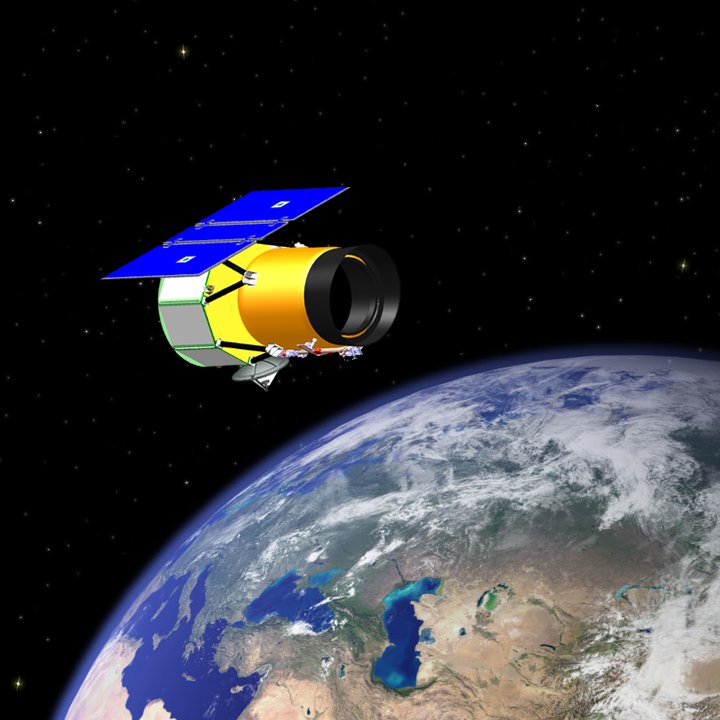
Kepler is the first NASA mission capable of finding terrestrial exo-planets. Of particular interest are the planets orbiting in the so-called habitable zone, where conditions are met so that liquid water can exist on the surface of the planet.


The observations made so far have brought clear evidence that planets orbiting around other stars are a common thing, rather than the exception to the rule. Due to the limitations of present technology, only gas giants, hot-super Earths in short period orbits, and ice giants have been discovered.


The Kepler mission, part of NASA’s Discovery Program, is designed to survey a portion of our region of the Milky Way. Kepler will survey a large number of stars, and explore the structure and diversity of many planetary systems.


The scientific objectives of the mission are very ambitious: determine the fraction of terrestrial planets in or near the habitable zone, determine the distribution of sizes and the orbits of exo-planets in the surveyed planetary systems, determine reflectivity, size, and density of short-period giant planets, estimate how many planets are in multiple-star systems, and determine the characteristics of the stars that have planets orbiting around them. Scientists hope to discover additional members of the planetary systems surveyed using other indirect techniques.


Credits: NASA/Ball Aerospace


The duration of the mission must be selected to allow the detection and confirm the periodic nature of the planet transits in or near the habitable zone. Due to the characteristics of orbits of such planets, a lifetime of three and a half years (as currently envisioned) would allow a four-transit detection of most orbits up to one year in length and a three-transit detection of orbits of length up to 1.75 years.


The mission lifetime will be extendible to at least six years. The extension will permit the detection of planets smaller than Earth with two-year orbits.


Kepler will be inserted in an Earth-trailing heliocentric orbit, then the spacecraft will slowly drift away from Earth. The selected orbit offers a very stable pointing attitude, and it avoids the high radiation dosage associated with an Earth orbit. However, Kepler will be exposed occasionally to solar flares.


The communication protocol with the spacecraft includes establishing contact twice a week for commanding, health, and status, and science data downlink contact once a month.


Credits: Jon Lomberg


There are two requirements that dictated the selection of the target field. The first requirement is the ability to monitor continuously the stars surveyed because transits last only a fraction of a day. This can be achieved by having the field of view out of the ecliptic plane, so the Sun will not interfere with the observations at any time during the year. The second requirement is to have the largest possible number of stars in the field of view.


To meet both requirements, a region in the Cygnus and Lyra constellations of our galaxy has been selected as the field of view.


Kepler will use the transit method for detecting exo-planets. The sensitivity of the photometer will allow the discovery of terrestrial exo-planets (planets comparable in size and composition to Earth that are orbiting other stars).


The transit occurs when a planet passes in front of its star as viewed by an observer. Depending on the size of the planet, the change in the brightness of the star has different amplitudes. Transits of terrestrial planets cause a change in the star’s brightness of about 1/10,000, and they last from two to sixteen hours.


Credits: NASA


Changes in star brightness that are produced by a planet transit must be periodic, and all transits produced by the same planet must cause the same variation of brightness and last the same amount of time.


Of course, the case when two or more planets are in transit at the same time must be considered, and this can make the detection method a little bit more complicated.


The method allows for the calculation of the orbit, the mass, and the characteristic temperature of the exo-planet. Once we know the characteristic temperature of an exo-planet, the question of whether or not the planet is habitable (by our standards) can be answered.


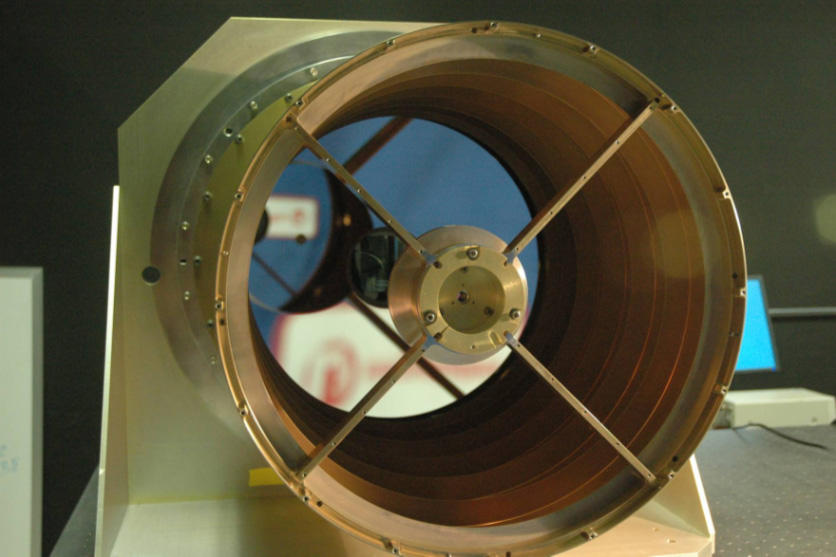
The Kepler instrument is a special telescope called photometer or light meter. The telescope has a very large field of view for an astronomical telescope, 105 square degrees. The primary mirror of the telescope is 0.95 m in diameter. The telescope needs a large field of view because it has to continuously monitor the brightness of more than 100,000 stars for the duration of the mission.


Credits: Ball Aerospace


The photometer is composed of one instrument, which is an array of charge-coupled devices (CCD), 42 in total. Each CCD is 50mm x 25mm and has 2200 x 1024 pixels. Data from the individual pixels that make up each star are recorded continuously and simultaneously.


The primary mirror of the photometer was coated with enhanced silver, which allows more light to reach the telescope’s detectors.


The spacecraft provides power, attitude control, and telemetry for the photometer. The mission requirements contributed to the simple design of the spacecraft. The only moving parts are the reaction wheels used to control the attitude of the spacecraft.


The launcher selected for the mission is Delta II. Delta II is a versatile launcher, and can be configured in two or three-stage vehicles in order to accommodate a variety of requirements.


Ball Aerospace is the prime contractor for the Kepler mission, building the photometer and the spacecraft, as well as managing the system integration and testing of the spacecraft. The Jet Propulsion Laboratory is managing mission development, while NASA Ames Research Center is responsible for ground system development, mission operations, and science data analysis.


Once the first observation results are downloaded from Kepler and made available to scientists, we will be able to place our solar system within the context of planetary systems in our galaxy.


The launch of Kepler is planned for March 5, 2009. For more information about the Kepler mission, you can visit the Kepler mission web page.


  • Facebook
  • Google
  • Slashdot
  • Reddit
  • Live
  • TwitThis
January 8, 2009

Taurus II and Cygnus

Posted by


Credits: NASA


Orbital will employ its Taurus II medium-lift launch vehicle and the Cygnus spacecraft in order to service the International Space Station (ISS) under the Commercial Resupply Services (CRS) contract.


Orbital is one of the two companies awarded CRS contracts under the Commercial Orbital Transportation Services Project (COTS).


NASA announced the COTS project on January 18, 2006. The purpose of the program is to stimulate the development of access to low Earth orbit (LEO) in the private sector. At the time, with the imminent retirement of the Space Shuttle fleet, NASA was faced with the option of buying orbital transportation services on foreign launch systems: the Russian Soyuz / Progress, the European Ariane 5 / ATV, or the Japanese H-II / HTV.


Another factor taken into consideration by NASA was that competition in the free market could lead to the development of more efficient and affordable launch systems compared to launch systems that a government agency could build and operate.


Credits: Orbital


Orbital relies on proven experience in launch vehicle technology. Taurus II is designed to provide low-cost and reliable access to space, and it uses systems from other members of Orbital’s family of successful launchers: Pegasus, Taurus, and Minotaur.


Taurus II is a two-stage launch vehicle that can use an additional third stage for achieving higher orbits. The payloads handled by Taurus II can have a mass of up to 5,400 kg.


Orbital is responsible for overall development and integration of the first stage. The two AJ26-62, designed and produced by Aerojet and Orbital, are powered by liquid oxygen and kerosene. The core design is driven by NPO Yuzhnoye, the designer of the Zenit launchers.


The AJ26-62 engines are basically the NK-33 engines designed by the Kuznetsov Design Bureau for the Russian N-1 launch vehicle, and remarketed by Aerojet under a new designation.


The second stage uses an ATK Castor-30 solid motor with thrust vectoring. This stage evolved from the Castor-120 solid stage.


The optional third stage is developed by Orbital. The stage was dubbed the Orbit Raising Kit (ORK) and it uses a helium pressure regulated bi-propellant propulsion system powered by nitrogen tetroxide and hydrazine. ORK evolved from the Orbital STAR Bus. Because it is a hypergolic stage, it allows several burns to be performed in orbit, and can be used for high-precision injections using various orbital profiles.


Credits: Orbital


Cygnus will only have cargo capability and will be able to deliver up to 2,300 kg of pressurized or un-pressurized cargo to the ISS. The spacecraft will also be able to return up to 1,200 kg of cargo from ISS to Earth.


The two components of the Cygnus spacecraft will be the service module and the cargo module.


The service module is based on the Orbital STAR bus (like the ORK stage), and will use two solar arrays for producing electrical power for the navigation systems onboard.


The pressurized cargo module is based on the Italian-built Multi-Purpose Logistics Module (MPLM). The un-pressurized cargo module is based on NASA’s ExPRESS Logistics Carrier.


Cygnus will not dock to the ISS in the same manner as the European ATV, but it will be able to maneuver close to the ISS where the Canadarm 2 robotic arm will be used to capture it and berth it to the Node 2 module, similar to the Japanese HTV or SpaceX’s Dragon spacecraft.


The Mid-Atlantic Regional Spaceport (MARS), located at NASA’s Wallops Island Flight Facility on Virginia’s Eastern shore, was chosen by Orbital to serve as the base of operations for the Taurus II launch vehicle.


MARS has two FAA licensed launch pads for LEO access. MARS also offers access to suborbital launchers, vehicle and payload storage, and processing and launch facilities.


Credits: NASA


Due to the location of the spaceport, latitude 37.8 degrees N, longitude 75.5 degrees W, optimal orbital inclinations for the launches performed at MARS are between 38 and 60 degrees. Polar and retrograde orbits can also be serviced with additional in-flight maneuvering.


The first flight of Orbital’s new Taurus II / Cygnus launch system under COTS is scheduled for late 2010.


  • Facebook
  • Google
  • Slashdot
  • Reddit
  • Live
  • TwitThis
December 15, 2008

MRO Completed First Phase of Its Mission

Posted by


Credits: NASA/JPL

The Mars Reconnaissance Orbiter (MRO) has completed the first phase of its science mission. During this phase, the orbiter returned seventy-three terabits of science data to Earth, which is more than all earlier Mars missions combined. The next phase of the MRO mission will take two years.


The list of scientific discoveries and observations made by MRO is stunning. We know now that Mars has a long history of climate change and that water was present in liquid form on its surface for hundreds of millions of years.


Signatures of a variety of watery environments have been observed, so future missions will be aware of locations that might reveal evidence of past life on Mars, if it ever existed.


MRO has imaged nearly forty percent of the Martian surface at such a high resolution that house-sized objects can be seen in detail. MRO has also conducted a mineral survey of the planet, covering sixty percent of its surface. Global weather maps were assembled using the data returned by MRO, and profiles of the subsurface and the polar caps have been put together using the radar mounted on MRO.


Credits: NASA/KSC

“These observations are now at the level of detail necessary to test hypotheses about when and where water has changed Mars and where future missions will be most productive as they search for habitable regions on Mars,” said Richard Zurek, Mars Reconnaissance Orbiter project scientist.


The images returned by MRO have been used by the Phoenix team to change the spacecraft’s landing site, and will help the NASA scientists select landing sites for future missions, like the Mars Science Laboratory (MSL).


Another role played by MRO was to relay commands to and to return data from the Phoenix lander during the five months the lander was operational on the Martian surface. MRO shared this task with the Mars Odyssey Orbiter.


MRO lifted off on August 12, 2005, from launch Complex 41 at Cape Canaveral Air Force Station. The cruise phase of the mission lasted seven months, the spacecraft reaching Mars orbit on March 10, 2006, after traveling on an outbound arc intercept trajectory.


MRO entered the final low orbit suited for science-data collection on November 2006, after slowing down in the Martian atmosphere by using aerobraking for five months. The first phase of the mission consisted in gathering information about Mars, and the remaining time left of its operational life will be dedicated mainly to using the spacecraft as a communication relay.


Credits: NASA/KSC

The declared goals of the MRO mission are: to determine whether life ever arose on Mars, to characterize the climate of Mars, to characterize the geology of Mars, and to prepare for human exploration.


The launcher of choice for the MRO mission was the Atlas V-401 launch vehicle, the smallest of the Atlas V family. This was the first launch of an Atlas V on an interplanetary mission.


The Atlas V-401 is a two-stage launch vehicle that does not use solid rocket boosters. The Atlas V-401 is fifty-seven meters tall and has a total mass at liftoff of 333,000 kg. Out of this, about 305,000 kg is fuel. In order to reach Mars orbit, MRO was accelerated to 11 km per second.


The first stage of the Atlas V, the Common Core Booster, is powered by liquid oxygen and RP-1. For the MRO mission, the first stage used a RD-180 engine. The RD-180 engine has an interesting story. It is a Russian-developed rocket engine, derived from the RD-170 used for the Zenit rockets.


Credits: NASA/JPL/KSC/Lockheed Martin Space Systems

Rights to use the RD-180 engine were acquired by General Dynamics Space Systems Division (later purchased by Lockheed Martin) in the early 1990s. The engine is co-produced by Pratt & Whitney and all production to date has been in Russia. According to Pratt & Whitney, RD-180 delivers a ten percent performance increase over current operational U.S. booster engines.


The stage weighs approximately 305,000 kg at launch and it provides about four million Newton of thrust for four minutes.


The upper stage of the Atlas V is the Centaur Upper Stage Booster. The Centaur is powered by liquid oxygen and liquid hydrogen. In the case of the MRO mission, it provided the remaining energy necessary to send the spacecraft to Mars.


The payload fairing used for the MRO mission was four meters in diameter. The role of the payload fairing was to protect the spacecraft from the weather on the ground as well as from the dynamic pressure during the atmospheric phase of the launch.


Lockheed Martin Commercial Launch Services developed the Atlas V as part of the US Air Force Evolved Expendable Launch Vehicle (EELV) program.


There are six science instruments, three engineering instruments, and two science-facility experiments carried by the MRO. The low orbit on which MRO is operating allowed the observation of the surface, atmosphere, and subsurface of Mars in unprecedented detail.


The science instruments are the HiRISE camera (High Resolution Imaging Science Experiment), the CTX camera (Context Camera), the MARCI camera (Mars Color Imager), the CRISM spectrometer (Compact Reconnaissance Imaging Spectrometer for Mars), the MCS radiometer (Mars Climate Sounder), and the SHARAD radar (SHAllow RADar).


Credits: HiRISE/MRO/LPL/NASA


The HiRISE camera provided the highest-resolution images from orbit to date, while the SHARAD can probe the subsurface using radar waves in the 15-25 MHz frequency band (these waves can penetrate the Martian crust up to one kilometer).


The engineering instruments assist the spacecraft navigation and communication. The Electra UHF Communications and Navigation Package is used as a communication relay between the Earth and landed crafts on Mars. The Optical Navigation Camera serves as a high-precision camera to guide incoming spacecrafts as they approach Mars. The Ka-band Telecommunications Experiment Package demonstrated the use of the Ka-band for power effective communications.


The science facility experiments are the Gravity Field Investigation Package, used for mapping the gravity field of Mars, and the Atmospheric Structure Investigation Accelerometers, which helped scientists understand the structure of the Martian atmosphere.


For more details on the MRO scientific payload, you can check out the dedicated page on the MRO mission web site.


The MRO was built by Lockheed Martin for NASA’s Jet Propulsion Laboratory in California. Fully loaded, the spacecraft had a mass of almost two tons. The spacecraft carried 1,149 kg of propellant for trajectory correction maneuvers and for the burns needed for the Mars capture.


Credits: NASA/JPL


The main bus of the spacecraft presents two massive solar arrays that can generate 2,000 W of power. On top, the high-gain antenna is the main means of communication with both Earth and other spacecrafts. The SHARAD antenna is the long pole behind the bus.


Other visible features are the HiRISE camera, the Electra telecommunications package, and the Context Imager (CTX).


You can visit the home page of the MRO mission on the NASA web site.


  • Facebook
  • Google
  • Slashdot
  • Reddit
  • Live
  • TwitThis
December 12, 2008

Columbus

Posted by


Credits: ESA/NASA


Columbus is an integral part of the International Space Station (ISS), and it is the first European laboratory dedicated to long-term experimentation in zero-g conditions. The projected lifetime of the laboratory is ten years.


The laboratory is named after the famous Italian navigator and explorer Christoforo Columbus, who discovered the Americas in 1492.


The Columbus Laboratory is a large, pressurized aluminum cylinder measuring 4.5 meters in diameter and 6.9 meters in length. Its side walls contain eight research racks, with another two in the ceiling. Each one of these racks contains its own power and cooling systems. Video and data links systems feed information back to researchers and control centers on the Earth.


Columbus is the smallest ISS laboratory, but it has the same scientific, power, and data handling capacity as the other laboratories owned by Russia, USA, and Japan.


Credits: ESA/NASA


Scientific experiments started immediately on the Columbus because the laboratory arrived at the station with four scientific facilities pre-installed.


Columbus is used to carry out experiments in many different disciplines, including biology, biotechnology, fluid and material science, medicine, and human physiology.


The key element in these experiments is the micro gravity. In micro gravity, with gravitational forces much weaker than on the ground, processes that are obscured by gravity become noticeable. The research racks onboard Columbus are designed to investigate how micro gravity affects materials, biological specimens, and people.


Columbus contains the European Physiology Module Facility, the Fluid Science Laboratory, the BioLab, the Material Science Laboratory, and the European Drawer Rack, which can house a variety of small experiments.


Credits: ESA/NASA


Problems that are investigated on Columbus include the loss of bone cells by astronauts, plant growth in micro gravity, fluids behavior, and combustion of materials.


Experiments are also conducted outside of Columbus. These experiments are used to study the Earth or to expose materials to the harsh radiation, temperature, and the vacuum of space.


The mission that delivered the Columbus Laboratory to the ISS was STS-122. On February 7, 2008, the Space Shuttle Atlantis lifted off from Cape Canaveral, with Columbus docked into its cargo bay.


A vital part of the ISS and a prerequisite for the STS-122 mission, the Italian-built Node2 module (a.k.a. Harmony) was delivered to the ISS by the STS-120 mission in October 2007. The node is used as a connecting component for the Columbus Laboratory and the Kibo Laboratory. Node2 is also a docking port for the Space Shuttle.


Credits: ESA/NASA


Prior to the STS-122 mission , there were two spacewalks performed by the ISS Expedition 16 crew to prepare Node2 in order to receive the Columbus Laboratory.


ESA astronauts Léopold Eyharts from France and Hans Schlegel from Germany were members of the STS-122 mission. With five other NASA astronauts, they were part of the Columbus assembly and commissioning mission.


Schlegel spent twelve days in space and undertook two spacewalks to install the laboratory. Eyharts oversaw the installation and the start-up of the laboratory during a longer mission spent onboard the ISS.


Columbus was attached to the Harmony module on February 11, 2008, during the first spacewalk of the STS-122 mission. During this spacewalk, NASA astronauts Stanley Love and Rex Walheim spent nearly eight hours outside the ISS. The ISS robotic arm, Canadarm2, was used to move the laboratory from the cargo bay of the Space Shuttle to the starboard side of the Harmony module.


Credits: ESA/NASA


The second spacewalk of the mission lasted six hours and forty-five minutes. Schlegel and Walheim performed a regular station maintenance operation: they replaced the nitrogen tank that is used to pressurize the ammonia cooling system that runs on the ISS.


ESA was quite inspired to name the laboratory Columbus because it will open the world of micro gravity to a multitude of discoveries, in the same way that Christoforo Columbus opened up the New World to European explorers.


  • Facebook
  • Google
  • Slashdot
  • Reddit
  • Live
  • TwitThis