OrbitalHub

The place where space exploration, science, and engineering meet

Domain is for sale. $50,000,000.00 USD. Direct any inquiries to contact@orbitalhub.com.

Archive for the The Best Of category

May 18, 2009

Glory In The Sky

Posted by


Credits: NASA


Understanding the Earth’s energy balance is important in order to anticipate changes to the climate. The Glory mission will make a significant contribution towards explaining the Earth’s energy budget.


There are two scientific objectives set for the Glory mission: mapping the global distribution, properties, and chemical composition of natural and anthropogenic aerosols, and the continued measurement of solar irradiance. Both will lead to a reliable quantification of the aerosol and Sun’s direct and indirect effects on Earth’s climate.


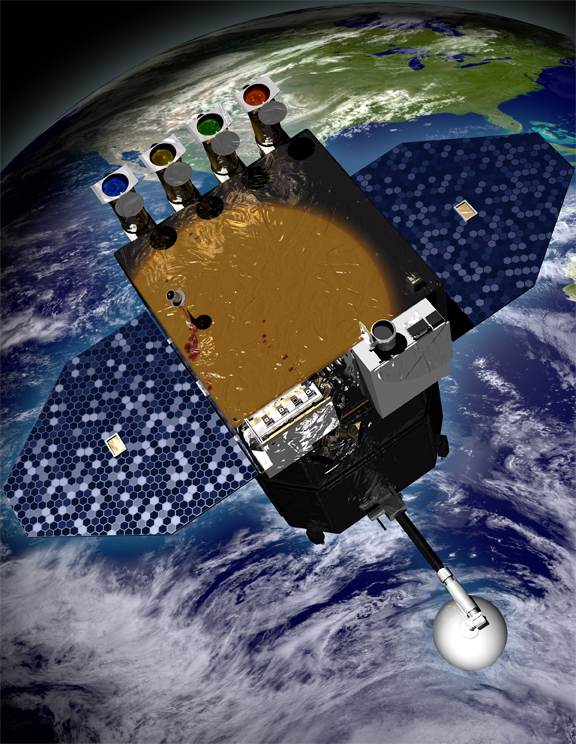
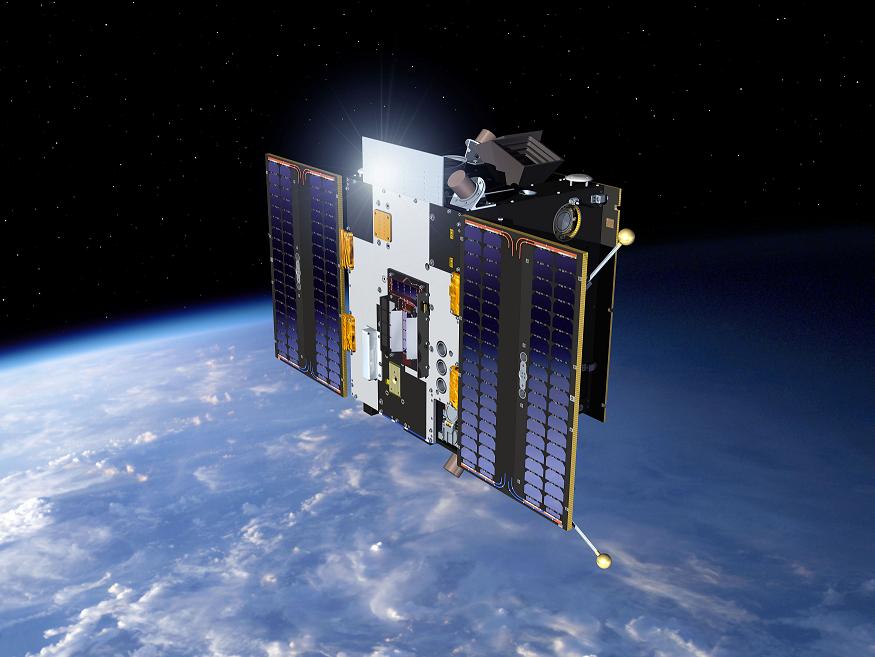
The Glory spacecraft uses Orbital’s LEOStar bus design. The structure of the bus consists of an octagonal aluminum space frame with two 750 W deployable solar panels and a 100 W body-mounted solar panel. Glory will have a launch mass of 545 kg.


Forty-five kilograms of hydrazine powers a propulsion module, which will provide orbital maneuvering and attitude control capabilities for the projected 36-month lifespan of the spacecraft. The spacecraft bus also provides 3-axis stabilization, X-band/S-band RF communication capabilities, payload power, command, telemetry, science data interfaces, and an attitude control subsystem to support science instrument requirements.


Credits: NASA


Three instruments will be mounted on Glory: the Aerosol Polarimetry Sensor (APS), the Total Irradiance Monitor (TIM), and the Cloud Camera Sensor Package (CCSP).


The APS will map the global aerosol distribution by measuring the light reflected within the solar reflective spectrum region of Earth’s atmosphere (which is visible, near- infrared, and short-wave infrared light scattered from aerosols).


TIM will collect measurements of the total solar irradiance (TSI), which is the amount of solar radiation in the Earth’s atmosphere over a period of time. TIM consists of four electrical substitution radiometers (ESRs) that are pointed towards the Sun, independently of the position of the spacecraft. TIM was developed by the University of Colorado’s Laboratory for Atmospheric and Space Physics (LASP). TIM inherited the design of an instrument flown on SORCE satellite, which was launched in 2003. A presentation of the TIM design and on-orbit functionality was published by Greg Kopp, George Lawrence, and Gary Rottman of LASP.


The CCSP will be used to distinguish between measurements done on clear or cloud- filled areas, as clouds can have a significant impact on the quality of the measurements. CCSP is a dual-band (blue and near-infrared) imager that uses non-scanning detector arrays similar to those used in star trackers.


Credits: NASA


Glory will be launched from Vandenberg Air Force Base, California, on top of a Taurus XL launch vehicle. The operational orbit is a 705 km, sun-synchronous, circular, 98.2 degree inclination, low Earth orbit (LEO). The launch date is set for Fall 2009.


Read more about Glory at the Glory Mission page on NASA Goddard Space Flight Center’s website. A Glory Fact Sheet is also available on Orbital Sciences Corporation’s website.


  • Facebook
  • Google
  • Slashdot
  • Reddit
  • Live
  • TwitThis
April 22, 2009

Q&A With An Alien Hunter

Posted by


Credits: SETI Institute


SETI stands for Search for Extraterrestrial Intelligence. Initially a program supported by NASA, SETI is now a privately funded institute that conducts research activities to detect intelligent extraterrestrial life.


SETI Institute is currently collaborating with the Radio Astronomy Laboratory at UC Berkley to develop the Allen Telescope Array, which is a specialized radio telescope array designed for SETI studies.


Seth Shostak, senior astronomer at the SETI Institute, kindly answered a few questions related to the search for extraterrestrial intelligence.


DJ: Why did you choose to work for SETI?
Seth Shostak: It probably sounds too easy, and thoroughly trite, but I’ve been interested in the idea of extraterrestrial intelligence since I was ten years old. When, quite by chance, the opportunity arose to work for the SETI Institute, it was like finding that a dream was suddenly reality.


DJ: Besides listening for transmissions in the microwave range of radio frequencies, which methods do you think are most likely to prove successful for SETI?
S.Shostak: I happen to be a big fan of so-called Optical SETI, as well as traditional radio SETI. In other words, look for laser flashes that might be sent our way by extraterrestrial societies trying to get in touch. This would be a great way to initiate contact, as the transmitting civilization could “ping” many thousands — indeed, many millions — of star systems in short order, and then do it again. This would be a sort of endless ping to so many star systems that it might reliably generate some reaction. In any case, I think we need to expand our search for these quick flashes in the sky.


DJ: Is SETI looking only for carbon-based ET? Are there any other possibilities to consider when searching for extraterrestrial intelligence?
S.Shostak: SETI searches are agnostic when it comes to the biochemistry of the aliens. After all, from our point of view, what makes them “intelligent” is their ability to build a radio transmitter or a powerful laser. The details of their construction are of no consequence for the search — except insofar as they might not be living on planets surrounding an ordinary star. If they are machine intelligence, they may have migrated away from their natal solar system, and of course that WOULD affect our search strategies.


DJ: Do new discoveries made by astronomers using space telescopes (for example, discovery of exo-planets, detection of their atmospheres, and the study of the composition of these atmospheres using spectral lines, etc.) have any implications for the way SETI conducts searches? Is SETI using this information to fine-tune the search?
S.Shostak: One of the first SETI experiments planned for the Allen Telescope Array is to examine star systems that are known to have planets (the work of astronomers during the past dozen years). Of course, we would like to know which star systems have HABITABLE planets, but that information still eludes us. NASA’s Kepler Mission will give us invaluable insight into what fraction of the cosmos might be suitable for life — and life of the intelligent variety, as well.


DJ: How do you see a two-way communication with ET? What concepts can be considered universal so that they can be used for such communication?
S.Shostak: Given the likely distance between societies, I don’t think that two-way communication is very likely or practical. But there’s still the problem that any deliberate transmissions should be encoded in such a way that the recipients can figure out what is being said. Lots of thought has gone into this problem — should the aliens send dictionaries, mathematics, music, or just a lot of pictures? In general, I figure that the more information they send, the greater the chance that we’ll understand at least some of it.


DJ: Can you make a prediction as to when an ET radio transmission could be picked up by terrestrial receivers? Besides the pace at which terrestrial technology is evolving, what other factors should be considered when making such a prediction?
S.Shostak: The most important parameter affecting SETI success these days is money: do we have sufficient funds to keep up the search? But if the money is forthcoming, then technical developments in the coming decades will allow us to examine a million or more star systems by 2025 or so. I think a million star systems is the right number to expect success, so that’s my prediction — we’ll find ET by 2025. Otherwise, I’ll be disappointed and slightly embarassed.


Seth Shostak’s new book, Confessions of An Alien Hunter: A Scientist’s Search for Extraterrestrial Intelligence, tells the true story of SETI. The book contains answers to many questions about SETI: what frequencies are monitored, where the antennas are aimed, how we should respond if a signal is received, etc. By reading this book, I have learned a great deal about the search for extraterrestrial intelligence.

Paul Gilster of Centauri Dreams has posted a review of the book. I invite everyone to read it.


  • Facebook
  • Google
  • Slashdot
  • Reddit
  • Live
  • TwitThis
April 2, 2009

NuSTAR And Hard X-Ray Astronomy

Posted by


Credits: NASA/JPL


The Nuclear Spectroscopic Telescope Array (NuSTAR) is a high-energy X-ray space telescope that will expand our understanding of the origins and the development of stars and galaxies.


NuSTAR was proposed to NASA in May 2003. In 2006, while NuSTAR was undergoing an extended feasibility study, NASA cancelled the program due to budgetary constraints. However, in September 2007, the program was restarted.


In 2007, Orbital Sciences Corporation was selected by NASA to design, manufacture, and test the NuSTAR telescope.


The spacecraft is based on a proven design, used by Orbital for other NASA Small Explorer missions: SORGE, GALEX, AIM, and OCO. NuSTAR will have a launch mass of 360 kg, and will be powered by articulated solar arrays providing 600 W.


The spacecraft incorporates a ten-meter long extendable mast. The mast allows the telescope to fit into a small launch vehicle.


The technology used to build the telescope is not new. A team of researchers, led by Dr. Fiona Harrison, professor of physics and astronomy at Caltech, has been improving the NuSTAR technology for the last ten years. A previous high energy X-ray telescope (High Energy Focusing Telescope or HEFT) was developed as part of a high altitude balloon payload.


The currently operational X-ray telescopes, Chandra and XMM-Newton, observe the sky in the low energy X-ray spectrum (X-ray energies less than 10 keV). NuSTAR will make observations in a higher range, up to 79 keV. As much of the energy emitted by a black hole is absorbed by the surrounding gas and dust, observations in the high-energy X-ray spectrum can reveal in greater detail what is happening closer to the event horizon.


Credit: NASA/CXC/CfA/R.Kraft et al./MPIfR/ESO/APEX/A.Weiss et al./ESO/WFI


The NuSTAR telescope will have a sensitivity two orders of magnitude greater than any other instrument used to detect black holes. NuSTAR will help scientists understand how black holes are distributed throughout the universe, and what powers the most active galaxies.


The NuSTAR instrument consists of two co-aligned hard X-ray telescopes. The ten-meter mast mentioned above separates the mirrors and the imaging detectors. The detectors are Cadmium Zinc Telluride (CdZnTe) detectors and do not require cryogenic operation.


On February 9, 2009, NASA awarded Orbital the launch services contract for the NuSTAR mission. The telescope will be launched in 2011 aboard a Pegasus XL launch vehicle. Pegasus XL will be carried beneath a L-1011 aircraft and released over the Pacific Ocean. The air-launch system is very cost-effective, providing flexibility during operation and requiring minimal ground support.


NuSTAR will be deployed into a 525×525 km low Earth orbit (LEO) with a twenty-seven degree inclination.


For more details about the science of NuSTAR, you can visit the mission’s home page at Caltech. Orbital has also posted a NuSTAR fact sheet on their web site.


  • Facebook
  • Google
  • Slashdot
  • Reddit
  • Live
  • TwitThis
March 21, 2009

Taurus

Posted by


Credits: Orbital


Taurus is a four-stage, inertially guided, all solid fuel, ground launched vehicle, designed and built by Orbital Sciences Corporation. In a typical mission, Taurus can inject a 1,350 kg payload in low Earth orbit (LEO).


Taurus lifted off for the first time on March 13, 1994. Since then, Taurus has conducted six of eight successful missions.


Taurus is well suited for LEO missions to a wide range of altitudes. Different orbital profiles can be attained through launches from more than one launch site. An additional fifth stage can boost the performance of the launch vehicle, making possible high energy and geosynchronous transfer orbit (GTO) missions.


Depending on configuration, Taurus can have up to 5 stages.


Stage 0 is an ATK Thiokol Castor 120 Solid Rocket Motor (SRM). Castor 120 is a commercial version of the Peacekeeper first stage. The stage is 9.06 m long and 2.38 m in diameter, with a mass of approximately 49 tons. The first Taurus used the Peacekeeper first stage as Stage 0.


Peacekeeper was an Inter-Continental Ballistic Missile (ICMB) deployed by the United States beginning in 1986. The Peacekeeper ICMB could carry up to ten re-entry vehicles, each armed with a 300-kiloton warhead (just to have an idea about the order of magnitude, that is twenty times the power of the bomb dropped on Hiroshima). The last Peacekeeper was decommissioned in 2005.


Stage 1 is an ATK Orion 50S SRM, 7.53 m long and 1.28 m in diameter, with a mass of approximately 12 tons. In the XL configuration, the stage is 8.94 m long and has a mass of approximately 15 tons. Stage 2 is an ATK Orion 50 SRM, 2.64 m long and 1.28 m in diameter, with a mass around 3 tons. In the XL configuration, the stage is 3.11 m long and almost 4 tons. Stage 3 is an ATK Orion 38 SRM. Stage 3 has a mass of around 800 kg, a length of 1.34 m, and a diameter of 97 cm.


The payload fairing comes in two versions: the 63” diameter fairing, manufactured by Vermont Composites, and the 92” diameter fairing, manufactured by Texas Composites. The fairing encapsulates and protects the payload during ground handling, integration operations, and flight. The payload mating is done late in the launch operations flow, so the designs of both fairings provide for off-line encapsulation of the payload and transportation to the launch site.


Taurus can be assembled in different configurations, depending on the specific requirements of the mission. The configurations are designated using a four-digit code. The first digit indicates the vehicle configuration (1 – SSLV Taurus with Peacekeeper first stage used as Stage 0; 2 – Commercial Taurus Standard with Castor 120 Stage 0 and standard-length Stage 1 and Stage 2; 3 – Commercial Taurus XL with Castor 120 Stage 0 and XL-length Stage 1 and Stage 2), the second digit designates the fairing size (1 for 63” fairing and 2 for 92” fairing), and the third and fourth indicate the Stage 3 motor (0 if there is no Stage 3 in configuration, 1 for Orion 38, and 3 for STAR 37), and the Stage 4 motor (0 if there is no Stage 4 in configuration, and 3 for STAR 37) respectively.


Credits: Orbital


The primary launch site used for Taurus is Site 576E on North Vandenberg Air Force Base (VAFB). Launches from North VAFB provide flight azimuths from 158 to 235 degrees, allowing payload injection on high inclination orbits (60 to 140 degrees).


For other mission profiles, there are a number of alternate sites that Taurus can launch from: South Vandenberg Air Force Base (VAFB), Cape Canaveral Air Force Station (CCAFS) Launch Complex 46, Wallops Flight Facility (WFF), and Reagan Test Site on the Kwajalein atoll in the western Pacific.


Taurus was designed to be launched from minimalist launch sites. The main requirement for the launch site is a 40×40 inch concrete pad that is able to support the weight of the launch vehicle.


For more information about the Taurus launch vehicle, you can visit the dedicated web page on Orbital’s website. There is also a Taurus User Guide available from Orbital. The guide is an exhaustive document, presenting the vehicle performance, the payload interfaces, an overview of the payload integration, among other things.


  • Facebook
  • Google
  • Slashdot
  • Reddit
  • Live
  • TwitThis


Credits: NASA/RASA


The Alpha Magnetic Spectrometer (AMS) is a high-energy particle detector. AMS will detect electrons, positrons, protons, antiprotons, and nuclei in cosmic radiation.


AMS is a cooperative project that involved more than 200 scientists from 31 institutions and 15 countries. The data gathered by AMS during its three-year mission will help scientists answer important questions about antimatter and invisible mass in the Universe. AMS could detect many types of particles predicted by theorists and determine their astrophysical sources.


AMS could reveal to scientists unusual astrophysical objects like antimatter galaxies, dark matter, strangelets, microquasars, and primordial black holes.


AMS actually refers to two particle experiments: AMS-01 and AMS-02. AMS-01 flew in low Earth orbit (LEO) with Space Shuttle Discovery STS-91 in June 1998. AMS-01 was an AMS prototype (a simplified version of the spectrometer) and was used to test particle physics technology in LEO. AMS-02 is the Alpha Magnetic Spectrometer designed to be mounted and operated on the ISS.


Credits: NASA


AMS-02 is a cube-shaped structure with a mass of 6,731 kg. The spectrometer consists of a huge superconducting magnet and six specialized detectors, and requires 2,000 watts of power.


The experiment has a 10Gb/sec internal data pipeline and will have a dedicated 2MB/sec connection to ground stations. AMS-02 will gather approximately 200 TB of scientific data during its mission. Four 750 MHz PowerPC computers running Linux will provide the computing power.


The spectrometer also contains two star tracker cameras, which detect the orientation in space, and a thermal control system that will control the temperature of the whole experiment. The thermal control system is quite complex. Heat is collected from the detectors and the magnet, and then pushed through conductors to the radiators mounted on the outside of the AMS and radiated into space.


AMS-02 has a little bit of history associated with it … due to the Space Shuttle accidents, which reduced the number of orbiters available, and the decision to retire the Space Shuttle fleet, AMS-02 faced cancellation (a long list of elements meant to be part of the ISS were cancelled for the same reasons). Because an additional shuttle flight was added to the launch manifest, most likely AMS-02 will make it to the space station.


The plan for AMS-02 is that it will be attached to the zenith side of the S3 section of the Integrated Truss Structure on the ISS. A Payload Attachment System will be used to keep the spectrometer in place on the truss segment.


Credits: NASA


According to the missions schedule, AMS-02 will be installed on ISS as part of the Space Shuttle Discovery STS-134 mission, together with the last ExPRESS Logistics Carrier (ELC-4), in late 2010.


STS-134 will be the last Space Shuttle flight before the deadline set to end Space Shuttle operations on September 30, 2010.


To make things more interesting (and Space Shuttle operations cheaper), it has been proposed that the last mission should end through a destructive re-entry. In this scenario, the reduced crew of three will remain on the space station and return to Earth onboard Soyuz spacecraft.


You can read more about AMS-02 on a dedicated web page at MIT. There is also a web page dedicated to AMS-02 at CERN.


  • Facebook
  • Google
  • Slashdot
  • Reddit
  • Live
  • TwitThis
March 5, 2009

HTV

Posted by


Credits: JAXA


HTV stands for H-II Transfer Vehicle. HTV is an unmanned spacecraft designed and built in Japan. HTV is designed to deliver supplies to the International Space Station (ISS).


The typical mission for HTV starts at the Tanegashima Space Center (TKSC) near Tsukuba, in Japan.


A H-IIB launch vehicle will inject the HTV on a low Earth orbit (LEO). After the separation from the H-IIB second stage, the transfer vehicle is able to navigate independently.


It will take approximately three days for HTV to reach the proximity of the ISS. During this time, it will maintain contact with the Control Center at TKSC (designated as HTV-CC) through the Tracking and Data Relay Satellite System (TDRSS). TDRSS is a network of satellites that allow a spacecraft in LEO to maintain permanent contact with the control center on the ground. HTV will use GPS to position itself at 7 km behind the ISS.


At this point, the berthing phase of the mission starts. HTV will approach the ISS within 500 m and use the Rendezvous Sensor (RVS) to move closer to the ISS. Reflectors that are installed on Kibo will allow HTV to maintain a distance of 10 m below the ISS.


Credits: JAXA


HTV does not have the capability to dock on its own to the ISS (as opposed to the European ATV), so the Canadarm2 robotic arm will be used to grab the transfer vehicle and berth it to the nadir side of the Node 2 module.


While the HTV is berthed to the ISS, supplies from the HTV’s pressurized section are transferred to the space station by the crew, and waste will be loaded from the ISS.


The cargo from the un-pressurized section will be unloaded using the robotic arm and attached either to the Exposed Facility of the Japanese Experiment Module (JEM) or the ISS Mobile Base System.


The HTV mission will end in a similar way to the European ATV: a destructive re-entry above the Pacific Ocean.


Here is some more background information about the HTV. The spacecraft is a cylinder-shaped structure 10 m long and 4.4 m in diameter. It has a total mass of 10,500 kg, of which 6,000 kg is cargo (divided into 4,500 kg pressurized cargo and 1,500 kg un-pressurized cargo). HTV can carry 6,000 kg of waste during the re-entry.


HTV consists of four modules: the Pressurized Logistics Carrier (PLC), the Unpressurized Logistics Carrier (UPLC), the Avionics Module, and the Propulsion Module. The UPLC carries the Exposed Pallet (EP), which can accommodate unpressurized payloads.


Credits: JAXA


The PLC is equipped with a Common Berthing Mechanism (CBM). This will allow the crew present on the station to enter the module in order to unload the supplies and load waste material.


The EP carried by the UPLC can be either Type I or Type III Exposed Pallets. The Type I EPs will carry payloads for the Kibo’s Exposed Facility (EF), while the Type III EPs will be used to deliver the Orbital Replacement Units (ORUs) to the ISS.


The systems in the avionics module enable HTV to execute the autonomous flight to the space station. The module also contains communication and power systems. The thirty-two thrusters installed on the propulsion module provide HTV with the capability to execute orbital adjustments and control the attitude during the mission.


HTV will add to the existing fleet of transfer vehicles that includes the Russian Soyuz and Progress spacecraft, as well as the European ATV. The first HTV mission is scheduled for late 2009.


For more information about HTV, you can visit the H-II Transfer Vehicle page on the JAXA web site.


  • Facebook
  • Google
  • Slashdot
  • Reddit
  • Live
  • TwitThis