OrbitalHub

The place where space exploration, science, and engineering meet

Domain is for sale. $50,000,000.00 USD. Direct any inquiries to contact@orbitalhub.com.

Archive for the School Ain’t Over category

May 28, 2017

Space Debris

Posted by


ESA dixit:

“Space debris – a journey to Earth takes the audience on a journey from the outer solar system back to our home planet. The objects encountered along the way are man made. Originally designed to explore the universe, these are now a challenge for modern space flight. An estimated number of 700,000 objects larger than 1 cm and 170 million objects larger than 1 mm are expected to reside in Earth orbits.

The video gives a closer look at the different regions used for space flight and explains how mitigation and removal measures could preserve future usage of these orbits.”

Video credit: ESA/ID&Sense/ONiRiXEL, CC BY-SA 3.0 IGO


  • Facebook
  • Google
  • Slashdot
  • Reddit
  • Live
  • TwitThis
May 24, 2017

Solar Eruption

Posted by


NASA Goddard dixit:

“From long, tapered jets to massive explosions of solar material and energy, eruptions on the sun come in many shapes and sizes. Since they erupt at such vastly different scales, jets and the massive clouds — called coronal mass ejections, or CMEs — were previously thought to be driven by different processes.

Scientists from Durham University in the United Kingdom and NASA now propose that a universal mechanism can explain the whole spectrum of solar eruptions. They used 3-D computer simulations to demonstrate that a variety of eruptions can theoretically be thought of as the same kind of event, only in different sizes and manifested in different ways.

The study was motivated by high-resolution observations of filaments from NASA’s Solar Dynamics Observatory, or SDO, and the joint Japan Aerospace Exploration Agency/NASA Hinode satellite. Filaments are dark, serpentine structures that are suspended above the sun’s surface and consist of dense, cold solar material. The onset of CME eruptions had long been known to be associated with filaments, but improved observations have recently shown that jets have similar filament-like structures before eruption too. So the scientists set out to see if they could get their computer simulations to link filaments to jet eruptions as well.

Solar scientists can use computer models like this to help round out their understanding of the observations they see through space telescopes. The models can be used to test different theories, essentially creating simulated experiments that cannot, of course, be performed on an actual star in real life.

The scientists call their proposed mechanism for how these filaments lead to eruptions the breakout model, for the way the stressed filament pushes relentlessly at — and ultimately breaks through — its magnetic restraints into space. They previously used this model to describe CMEs; in this study, the scientists adapted the model to smaller events and were able to reproduce jets in the computer simulations that match the SDO and Hinode observations. Such simulations provide additional confirmation to support the observations that first suggested coronal jets and CMEs are caused in the same way.”

Video credit: NASA’s Goddard Space Flight Center/Genna Duberstein


  • Facebook
  • Google
  • Slashdot
  • Reddit
  • Live
  • TwitThis
May 17, 2017

Maximizing Rocket Performance

Posted by


Wikipedia dixit:

“Orbital mechanics or astrodynamics is the application of ballistics and celestial mechanics to the practical problems concerning the motion of rockets and other spacecraft. The motion of these objects is usually calculated from Newton’s laws of motion and Newton’s law of universal gravitation. It is a core discipline within space mission design and control. Celestial mechanics treats more broadly the orbital dynamics of systems under the influence of gravity, including both spacecraft and natural astronomical bodies such as star systems, planets, moons and comets. Orbital mechanics focuses on spacecraft trajectories, including orbital maneuvers, orbit plane changes, and interplanetary transfers, and is used by mission planners to predict the results of propulsive maneuvers.

In orbital mechanics, the Hohmann transfer orbit is an elliptical orbit used to transfer between two circular orbits of different radii in the same plane. The orbital maneuver to perform the Hohmann transfer uses two engine impulses, one to move a spacecraft onto the transfer orbit and a second to move off it.

A geosynchronous transfer orbit or geostationary transfer orbit (GTO) is a Hohmann transfer orbit used to reach geosynchronous or geostationary orbit using high thrust chemical engines. Geosynchronous orbits (GSO) are useful for various civilian and military purposes, but demand a great deal of Delta-v to attain. Since, for station-keeping, satellites intended for this orbit typically carry highly efficient but low thrust engines, total mass delivered to GSO is generally maximized if the launch vehicle provides only the Delta-v required to be at high thrust–i.e., to escape Earth’s atmosphere and overcome gravitational losses–and the satellite provides the Delta-v required to turn the resulting intermediate orbit, which is the GTO, into the useful GSO.

GTO is a highly elliptical Earth orbit with an apogee of 42,164 km (26,199 mi), or 35,786 km (22,236 mi) above sea level, which corresponds to the geostationary altitude. The period of a standard geosynchronous transfer orbit is about 10.5 hours. The argument of perigee is such that apogee occurs on or near the equator. Perigee can be anywhere above the atmosphere, but is usually restricted to a few hundred kilometers above the Earth’s surface to reduce launcher delta-V requirements and to limit the orbital lifetime of the spent booster so as to curtail space junk. If using low-thrust engines such as electrical propulsion to get from the transfer orbit to geostationary orbit, the transfer orbit can be supersynchronous (having an apogee above the final geosynchronous orbit). This method however takes much longer to achieve due to the low thrust injected into the orbit. The typical launch vehicle injects the satellite to a supersynchronous orbit having the apogee above 42,164 km. The satellite’s low thrust engines are thrusted continuously around the geostationary transfer orbits in an inertial direction. This inertial direction is set to be in the velocity vector at apogee but with an outer plane direction. The outer plane direction removes the initial inclination set by the initial transfer orbit while the inner plane direction raises simultaneously the perigee and lowers the apogee of the intermediate geostationary transfer orbit. In case of using the Hohmann transfer orbit, only a few days are required to reach the geosynchronous orbit. By using low thrust engines or electrical propulsion, months are required until the satellite reaches its final orbit.

The inclination of a GTO is the angle between the orbit plane and the Earth’s equatorial plane. It is determined by the latitude of the launch site and the launch azimuth (direction). The inclination and eccentricity must both be reduced to zero to obtain a geostationary orbit. If only the eccentricity of the orbit is reduced to zero, the result may be a geosynchronous orbit but will not be geostationary. Because the Delta V required for a plane change is proportional to the instantaneous velocity, the inclination and eccentricity are usually changed together in a single manoeuvre at apogee where velocity is lowest.”

Video credit: ULA


  • Facebook
  • Google
  • Slashdot
  • Reddit
  • Live
  • TwitThis
July 18, 2009

MIT OpenCourseware – Astrodynamics

Posted by


Credits: MIT


MIT Open Courseware has made available the course 16.346 Astrodynamics, taught by Professor Richard Battin.


The course covers the fundamentals of astrodynamics. The focus is on the two-body orbital initial-value and boundary-value problems. The course applications include space vehicle navigation and guidance for lunar and planetary missions.


  • Facebook
  • Google
  • Slashdot
  • Reddit
  • Live
  • TwitThis


Credits: NASA


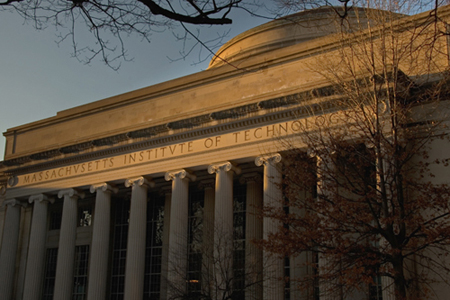
If you want free lecture notes, exams, and videos from MIT, without any registration required, you can find them at MIT Open Courseware.


MIT Open Courseware reflects most of the undergraduate and graduate subjects taught at MIT. One of the courses that caught my eye was an engineering course called Aircraft Systems Engineering.


Even if the formal title of the course is Aircraft Systems Engineering, the lectures are focused on Space Shuttle design. If you are a space enthusiast and have a technical background, you will probably enjoy these lectures.


The course was taught by Professor Jeff Hoffman and Professor Aaron Cohen.


Jeff Hoffman is a former Space Shuttle astronaut. He was a NASA astronaut from 1978 to 1997, having made five space flights and becoming the first astronaut to log 1,000 hours of flight time aboard the Space Shuttle. In 2001, Jeff Hoffman joined the MIT faculty, where he teaches courses on space operations and design and space policy. His principal areas of research are advanced EVA systems, space radiation protection, management of space science projects, and space systems architecture.


Aaron Cohen served as Director of NASA’s Lyndon B. Johnson Space Center in Houston, Texas. He was Manager of the Command and Service Module in the Apollo Spacecraft Program Office. In 1972, he was appointed Space Shuttle Orbiter Project Manager, responsible for design, development, production, and test flights. He also served for a year as the Acting Deputy Administrator for NASA.


One of the guest lecturers is Dale D. Myers. He was NASA Deputy Administrator between October 6, 1986 and May 13, 1989. In the first lecture of the course, Dale D. Myers gives a presentation on the beginning of the Space Shuttle program and describes how the external environment generated the requirements that forced the configuration of the Space Shuttle. This is a must-see, like any other lecture given by someone who has many years of experience under his/her belt. Watching this lecture reminded me of one of my professors back in university, who used to say that the must-have organ for a good engineer is the nose.


The course covers the subsystems of the Space Shuttle, including the requirements that shaped the design, the testing of each subsystem, and how they were operated. The structure of the orbiter, the thermal protection subsystem, the Space Shuttle main engines, landing and mechanical systems, the power systems, accident investigation, etc. are all covered by guest lecturers that were directly involved in the design and construction of the Space Shuttle.


I hope you enjoy the videos as much as I have. Happy New Year and all the best for 2009!


  • Facebook
  • Google
  • Slashdot
  • Reddit
  • Live
  • TwitThis
October 6, 2008

Power Generation Onboard Spacecrafts (IV)

Posted by


In the previous three posts we presented the most common solutions employed by spacecraft designers in order to generate the power needed by onboard systems during a space mission: the batteries, the solar panels, and the radioisotope thermoelectric generators. We will conclude by presenting two more existing solutions: the fuel cells and the nuclear reactors.


Credits: NASA


Fuel cells are devices that convert chemical energy into electricity. Even if using the same type of energy conversion, fuel cells are more efficient than the batteries. Electricity is produced directly from an oxidation reaction. The fuel and an oxidant react in the presence of a catalytic material inside the cell. By eliminating the reaction products and maintaining the input flows, fuel cells can operate continuously. For space applications, only hydrogen and oxygen have been used as reactants. Other sources rich in hydrogen that can be used as fuel are methane, methanol, and ethanol.

Regenerative fuel cells are a viable option for energy storage in large space systems. They could successfully replace the secondary batteries. The regenerative fuel cells would use stored hydrogen and oxygen to generate electricity during eclipse periods and would use solar arrays to generate electricity to recharge the fuel cells during the illuminated portion of the orbit. The generated electricity would be used to produce oxygen and hydrogen by electrolyzing the water produced by the fuel cells during normal operation. As far as we know, there are no direct applications of regenerative fuel cells in the space industry to date.


The nuclear reactors used by spacecrafts for power generation are smaller versions of the nuclear reactors used onboard nuclear submarines or nuclear aircraft carriers. They are the only compact solution for large power levels, hundreds of kilowatts to megawatts. In principle, the controlled nuclear reaction generates the heat, while an agent carries the heat away and is used to generate steam. The steam is used to drive a turbine that generates electricity. I was not able to find any technical details on the cooling agent and the liquid (or gas) used to drive the turbine (or even if a turbine is used) for the SP-100. SP-100 is the only nuclear reactor destined to power space systems built by the US. I was able to dig up the information that the Russian-built nuclear reactors that operated on the RORSAT reconnaissance satellites used NaK-78 as cooling agent (NaK-78 is a sodium and potassium fusible alloy with a low melting point).


SP-100 initially was supposed to have a mass of approximately 3,000 kg and generate 100 kWe. The SP-100 program was eventually canceled due to the fact that as the design matured the weight exceeded the acceptable limit.


Credits: NASA/JPL


The RORSAT Russian satellites have an interesting story… they had active radars onboard and had to be placed in low Earth orbits in order to have the surveillance equipment work effectively. Orbiting in LEOs, RORSAT missions had a shorter lifespan and had to perform a destructive re-entry in the atmosphere. In order to avoid the re-entry of any radioactive material, the nuclear reactor’s core was ejected in a so-called disposal orbit (a high orbit that would postpone the re-entry of the core for a couple of hundreds of years).

Failures were recorded. Most notably, in 1978, a RORSAT mission failed to boost the radioactive core into the disposal orbit and radioactive material entered the atmosphere above the Northwest Territories in Canada. The affected area had over 124,000 square kilometers.


A major disadvantage of the deployment of nuclear reactors is that for manned missions, heavy shielding is required. The shield mass can be reduced by employing designs that use geometric separation, but this is attainable only for large configurations. Other disadvantages are the reduction in reliability due to the moving parts and the possible mechanical interferences due to the vibrations that any dynamic system generates. Despite all these drawbacks, nuclear reactors offer a considerable promise for the future.


Power systems are essential for a space mission and, due to the challenges raised by the space environment, finding the right solution for a space mission requires careful consideration of many factors. Each solution comes with its own advantages and disadvantages making the work of space systems design engineers hard and rewarding in the same time.


We hope you enjoyed reading this series of posts and that you found them interesting. We are looking forward to your feedback and welcome your comments.


  • Facebook
  • Google
  • Slashdot
  • Reddit
  • Live
  • TwitThis