OrbitalHub

The place where space exploration, science, and engineering meet

Domain is for sale. $50,000,000.00 USD. Direct any inquiries to contact@orbitalhub.com.

Archive for the Space Exploration category

November 27, 2008

GOSAT a.k.a. IBUKI Scheduled For Launch

Posted by


Credits: JAXA


If measures are not taken to address the effects of the greenhouse gases produced by our civilization, extreme climate changes will occur: droughts, heat waves, and floods.


Understanding the behavior of greenhouse gases is critical for developing effective measures to fight climate change.


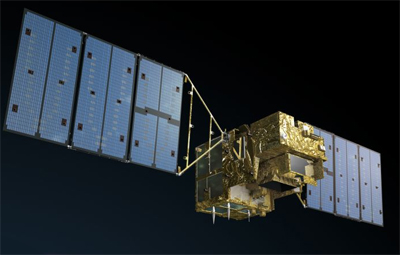
The Greenhouse Gases Observing Satellite (GOSAT) is the first satellite to observe greenhouse gases from space. The main contributors behind GOSAT are the Japan Aerospace Exploration Agency (JAXA), the National Institute for Environmental Studies (NIES), and the Ministry of Environment (MOE). The chosen nickname for GOSAT is IBUKI, which means breath or puff.


The data collected by the GOSAT satellite will help us make better estimates as to how different areas on Earth contribute to global warming through the emission of greenhouse gases. The data will also help us understand the behavior of the greenhouse gases by combining global observation data collected on orbit with data collected on the ground, and it will also help us improve simulation models.
 

Credits: JAXA


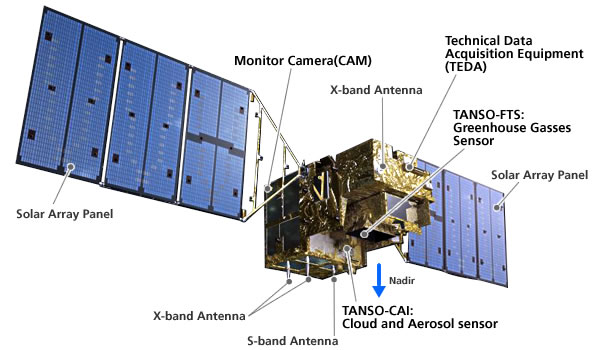
The observation instrument onboard GOSAT is called the Thermal And Near-infrared Sensor for carbon Observation (TANSO).


There are two sensors that collect data for the instrument: a Fourier Transform Spectrometer (FTS) and a Cloud Aerosol Imager (CAI).


The sensors will observe the infrared light from the Earth’s surface and will return measurements that can be used to calculate the abundance of carbon dioxide (CO2) and methane (CH4).


The operational orbit will allow GOSAT to circle the Earth in roughly 100 minutes and to return above the same Earth coordinates every three days. One thing to mention here is that the observations can be done only on cloud-free areas, meaning that on average only ten percent of the total number of measurements can be used for calculating the abundance of CO2 and CH4. However, the number of measurement points surpasses the current number of ground measuring points (under 200) and areas that have never been monitored will be covered by GOSAT observations.
 

Credits: JAXA / MHI


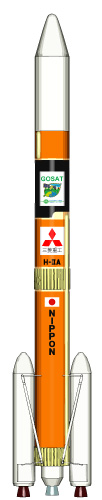
A Mitsubishi H-IIA launch vehicle will inject GOSAT into its predetermined orbit: a sun-synchronous sub-recurrent orbit at a perigee altitude of 667 km, apogee altitude of 683 km, and an inclination of 98 degrees. It will be the fifteenth flight of an H-IIA. The model used for this launch, H2A202, has two solid rocket boosters.


Besides GOSAT, which is the main payload, the payload includes several piggyback payloads. In the case of an excessive launch capability, it is common practice to include in the payload small satellites that are made by private companies or universities.


Seven micro-satellites, six selected through public tender and one JAXA satellite, will be launched by the H-IIA launch vehicle with Ibuki: KAGAYAKI / SORUN CORPORATION (debris detection and Aurora electric current observation mission), STARS / Kagawa University (tether space robot demonstration), KKS-1 / Tokyo Metropolitan College of Industrial Technology (demonstration of the micro cluster and three axis attitude control functions), PRISM / The University of Tokyo (earth image acquisition by using an expandable refracting telescope), SOHLA-1 / ASTRO TECHNOLOGY SOHLA (measurements of thunder and lightning), SPRITE-SAT / Tohoku University (observations of the sprite phenomenon and gamma radiation of the Earth’s origin), and Small Demonstration Satellite-1 (SDS-1) / JAXA (on-orbit verification of the space wire demonstration).


For more details on the additional payload for the GOSAT/Ibuki mission, you can check out the piggyback payload web page on the JAXA web site. Some of the links on the page require knowledge of Japanese or hands-on experience with the Google translation tool.


The launch date for GOSAT/Ibuki has been set. The H-IIA Launch Vehicle No.15 will liftoff sometime between 12:54 and 1:16 PM on January 21, 2009.


Check out the GOSAT / IBUKI program page on the JAXA web site for more information.


  • Facebook
  • Google
  • Slashdot
  • Reddit
  • Live
  • TwitThis
November 22, 2008

Carnival of Space #80

Posted by


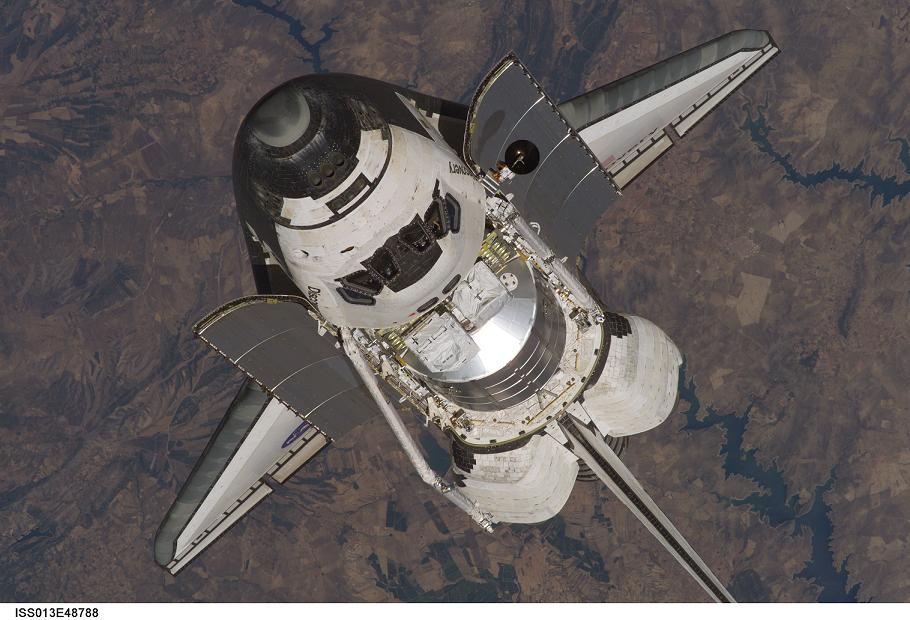
Credits: NASA


The Carnival of Space #80 is up at Starts With A Bang!. This edition of the Carnival of Space is orbiting around an Authentic Thanksgiving menu. Oceans on Mars, Russian cosmonauts, the ISS, and Moon rovers are among the topics you can read about at this carnival.


OrbitalHub has added to the menu a post about the European-built MPLM.


  • Facebook
  • Google
  • Slashdot
  • Reddit
  • Live
  • TwitThis
November 18, 2008

Carnival of Space #79

Posted by


Credits: ESA – S. Corvaja 2007


The Carnival of Space #79 is hosted by Nicole at One Astronomer’s Noise.


There are a lot of interesting stories to be found in this edition of the carnival: garden shed-sized nuclear reactors, alien abductions, space and politics, the Phoenix Mars Lander, and Kuiper Belt Objects, among other topics. OrbitalHub submitted a post about the Russian Soyuz launch vehicle.


  • Facebook
  • Google
  • Slashdot
  • Reddit
  • Live
  • TwitThis
November 7, 2008

Carnival of Space #78

Posted by


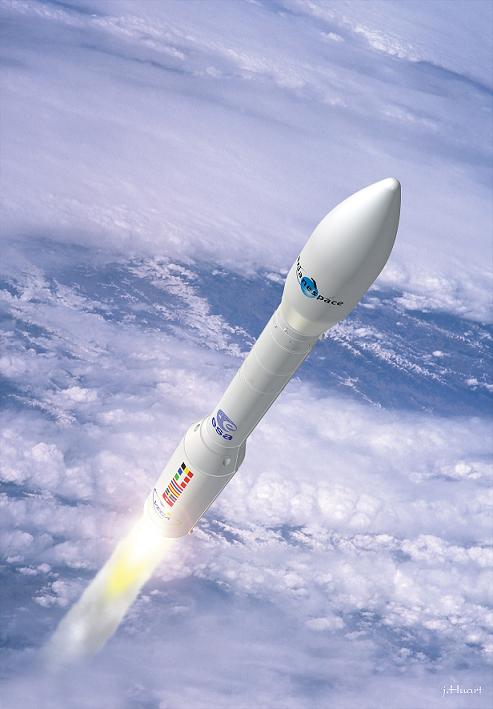
Credits: ESA – J. Huart


The Carnival of Space #78 is hosted by Mike Simonsen at SIMOSTRONOMY. OrbitalHub has submitted a post about Vega – the new European small launcher.


  • Facebook
  • Google
  • Slashdot
  • Reddit
  • Live
  • TwitThis
November 4, 2008

SpaceX Enters The Dragon

Posted by


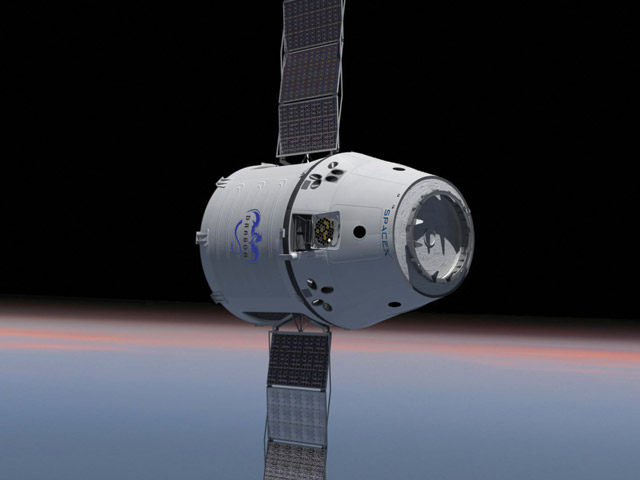
Credits: SpaceX


SpaceX just announced the DragonLab Spacecraft. DragonLab is a reusable spacecraft capable of delivering pressurized and un-pressurized payloads to and from space. SpaceX will use Falcon 9 (the heavier version of Falcon 1) to launch the DragonLab spacecraft into orbit.


Dragon will perform two missions in 2009. These missions will test the telemetry, orbital maneuvering and thermal control, and a rendezvous simulation with the Falcon 9 upper stage. The first full cargo mission to ISS is scheduled for 2010.


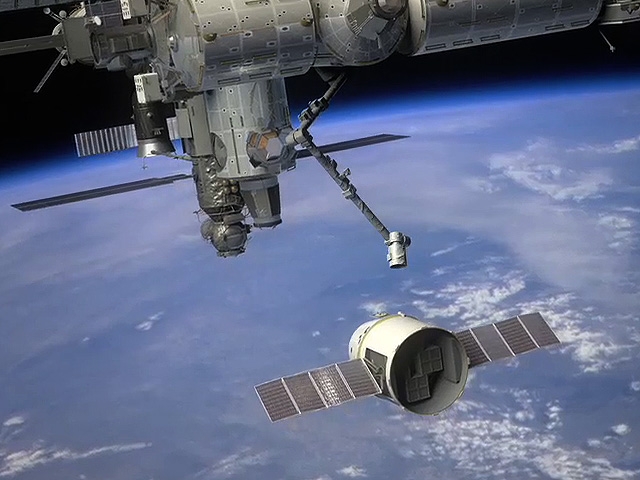
The technical page dedicated to the Dragon spacecraft is quite impressive. Just to mention a few features: down-cargo capability is equal to up-cargo, and up to seven passengers in crew configuration. SpaceX claims fully autonomous rendezvous and docking, but the simulation developed by Odyssey Space Research shows capture operations similar to HTV (the Dragon spacecraft will approach the ISS and then the ISS robotic manipulator will capture the spacecraft and guide it to the docking module).


Credits: NASA/SpaceX


DragonLab will compete with the ATV spacecraft (and the future CTV, LCR versions) that ESA is developing.


SpaceX also announced that it is hosting a workshop on November 6, 2008. Registration is mandatory, so time is of the essence! I am pretty sure the seats are selling like hot cakes…


  • Facebook
  • Google
  • Slashdot
  • Reddit
  • Live
  • TwitThis


Credits: ESA – J. Huart


The small-payload market is rapidly expanding. Institutional programs (mostly Earth observation and scientific missions) drive this emerging market. In order to meet the demands of the small-payload market, ESA has transformed the small launcher program initiated by the Italian Space Agency (ASI) in the 1990s into Vega, a co-operative project with other Member States within the ESA framework.


The small-payload market consists of satellites up to 3,000 kg and it stands at around five missions per year. There are many classifications for the satellites in this market, so we will present just one classification for informational purposes. The satellites in this class are divided into three categories: micro-satellites (up to 300 kg), mini-satellites (from 300 kg to 1,000 kg), and small satellites (from 1,000 kg to 3,000 kg).


The orbits required for the deployment of these satellites are mainly Sun Synchronous Orbits (SSO) and Low Earth Orbits (LEO). Vega’s in-orbit launch capability benchmark is 1,500 kg into a 700 km altitude polar orbit. Being designed to cope with a wide range of missions, Vega will address the various market requirements for this class of satellites.


Credits: ESA


Vega is a single-body launcher composed of four stages. The first three stages are solid propellant stages, while the fourth stage has a liquid propellant engine. Vega is 30 meters high, has a maximum diameter of three meters and a total of 137 tons at lift-off.


There are three main sections: the Lower Composite, the Restartable Upper Module and the Payload Composite.


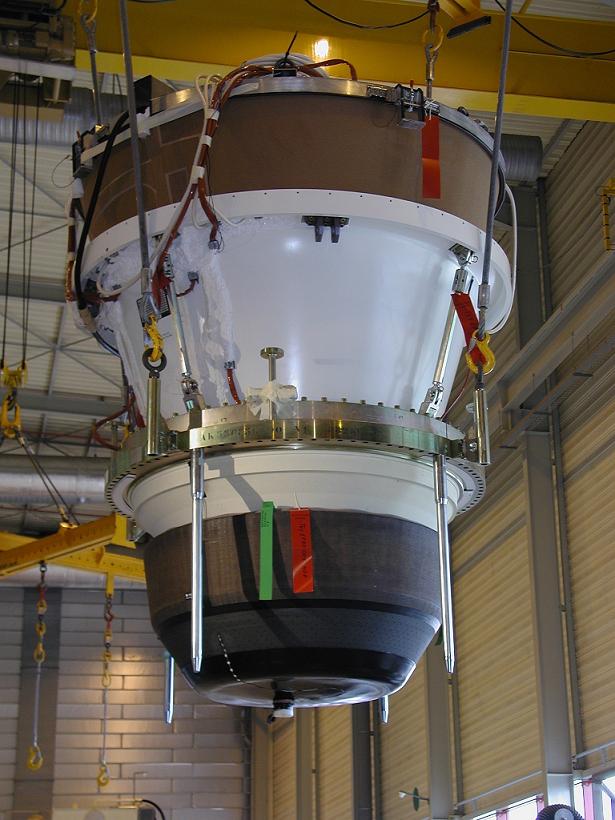
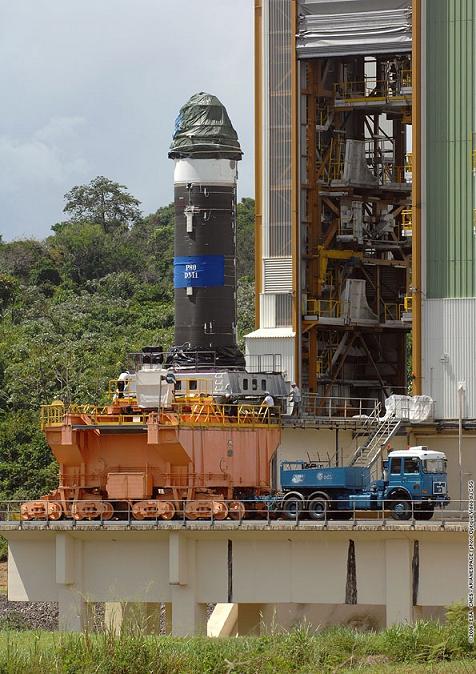
The Lower Composite section consists of the first three stages (the solid propellant stages). The first stage is equipped with a P80-FW motor containing 88 tons of propellant. The second stage contains a Zefiro 23 motor with 23 tons of propellant. The third stage consists of a Zefiro 9 motor with 10 tons of propellant and the stage-interfacing structures.


The technology for the three solid-propellant stages (P80, Z23, Z9) is derived from the Zefiro 16 rocket motor. These motors benefit from the experience acquired by Europe in the field of solid propulsion. Each motor is composed of a thermal-insulated carbon-epoxy monolithic case, the solid propellant HTPB 1912, a nozzle, a thrust vector control system driven by two electro-actuators that operate the movable nozzle, and a control unit that provides pitch and yaw control during the flight. Each stage also includes an ignition subsystem, a safety subsystem, and the interfaces to the other stages.


Credits: ESA/CNES-SOV


The P80 engine was designed for the Vega small launcher, and it helps validate technologies applicable to a new generation of solid boosters for the Ariane 5 launch vehicle. This new design was driven by the goal of minimizing recurring costs, a significant reduction being made with respect to the current metal case boosters.


The Restartable Upper Module is the fourth stage of the launcher. It is also known as the Altitude and Vernier Upper Module (AVUM). The AVUM consists of two modules: the AVUM Propulsion Module and the AVUM Avionics Module.


The propulsion system uses NTO (Nitrogen Tetroxide) and UDMH (Unsymmetrical dimethyl hydrazine) as propellants. The propellants are stored in two identical titanium tanks pressurized by helium. Depending on the mission, the propellant load can be between 250 kg and 500 kg.


The avionics system is largely adapted from existing hardware and/or components already under development (namely subsystems already in use by the Ariane 5 launch vehicle).


The Payload Composite section is composed of the fairing and the payload/launcher interface structure. The fairing is composed of two shells that are jettisoned during flight after the separation of the second stage. The payload/launcher interface is an Adaptor 937, which is a standard interface used on the European launchers. Additional payload adapters can be added for multi-payload missions.


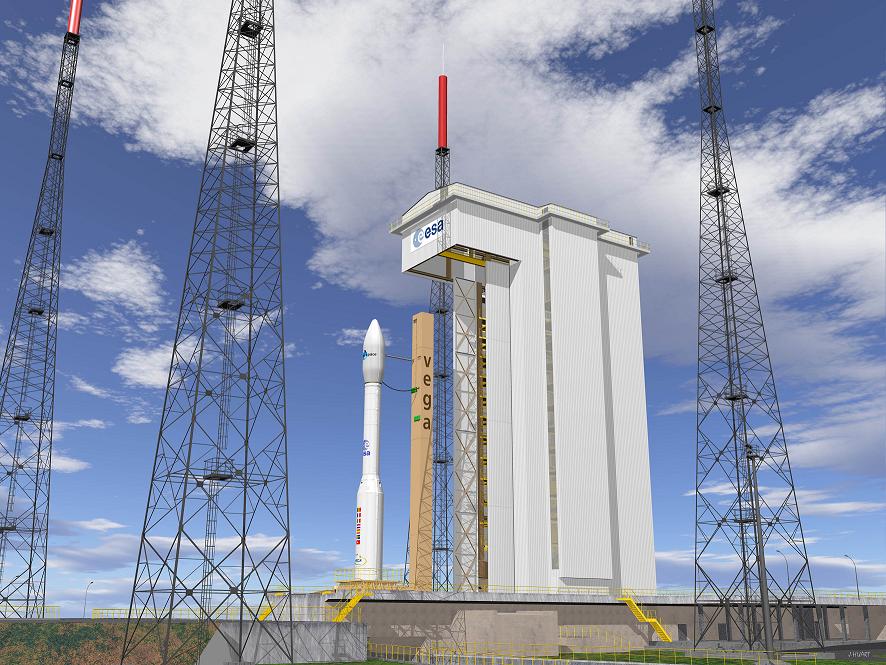
Credits: ESA – J. Huart


The dedicated Ground Segment for the Vega launcher comprises of the Launch Zone (ZLV – Zone de Lancement Vega) and the Operational Control Center, all located at the European Spaceport at Kourou, in French Guiana. ESA also built a Payload Preparation Complex that will be used for satellite and equipment unpacking, mechanical inspections, the checkout of the payloads, and the final integration of the payload composite before mounting it on top of the launcher.


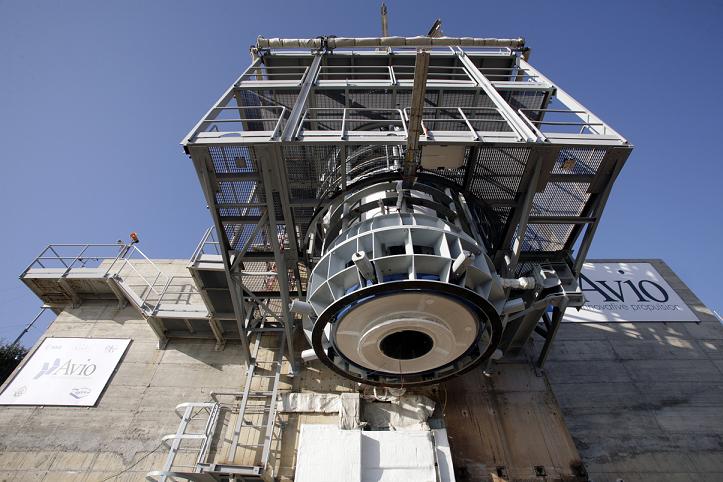
On October 24, 2008, the Zefiro 9 rocket engine passed the first qualification test. There is one additional firing test left for the engine. The Vega launcher’s qualification flight is scheduled to take place by the end of 2009.


Credits: Avio SpA (Italy)


ESA is responsible for the qualification of the launch service and also for sustaining the qualification status during the exploitation phase. Ariane Space will be responsible for Vega’s commercialization and launch operations. The expected launch rate for Vega will be up to four launches per year.


Please stay tuned on the OrbitalHub frequency. We will keep you posted!


  • Facebook
  • Google
  • Slashdot
  • Reddit
  • Live
  • TwitThis