Greetings from Toronto! Welcome to the second edition of the Carnival of Space hosted by OrbitalHub.
 |
| Credits: Karen Wehrstein |
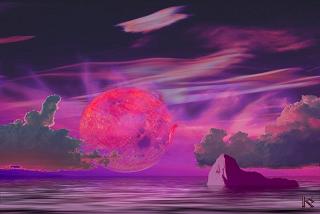
For this edition of the carnival, Centauri Dreams sends Prospects for Red Dwarf ‘Earths’. Paul Gilster analyzes a new paper by Greg Laughlin and Ryan Montgomery that looks at whether Earth-class planets might be found in the habitable zone around red dwarfs. These stars make up over 70 percent of the galactic population, so such a result would mean vast numbers of potentially habitable planets.
At Astroblog, Ian Musgrave presents another chapter from Galileo’s The Starry Messenger. Ian has published a series of posts in honor of the International Year of Astronomy, and the 400th anniversary of Galileo peering through a telescope at the heavens.
The Lounge of the Lab Lemming warns us about a new speculative market in The habitable planet bubble. Read about how certain characteristics of the terrestrial planets determine the price of these planets. The post has an interesting conclusion: ‘Compared to this planetary overvaluation, the housing bubble is imperceptible.’
Ethan Siegel at Starts With A Bang! presents The Hunt for Planet X: New Worlds and the Fate of Pluto. This is a very detailed book about the Solar System, its history, and the neighborhood around our Sun. Thank Ethan for sharing this with us!
At Dynamics of Cats, Steinn Sigurdsson presents discoveries made by the Fermi Gamma-ray Telescope and the implications they have for astrophysics research.
We also have a post from Chandra’s blog. Check out the post for an update on the From Earth to the Universe project.
It seems that Big Bang Needs Your Help. Shortcomings with the Big Bang Theory have led to fixes like inflation and ‘dark energy.’ Other ideas include a cyclic Universe and even a changing speed of light. Read all about it at A Babe in the Universe.
At The Spacewriter’s Ramblings, discover what you can find in the skies if you look deep in A Space Oddity. Read an interesting analysis of an image released by the European Southern Observatory.
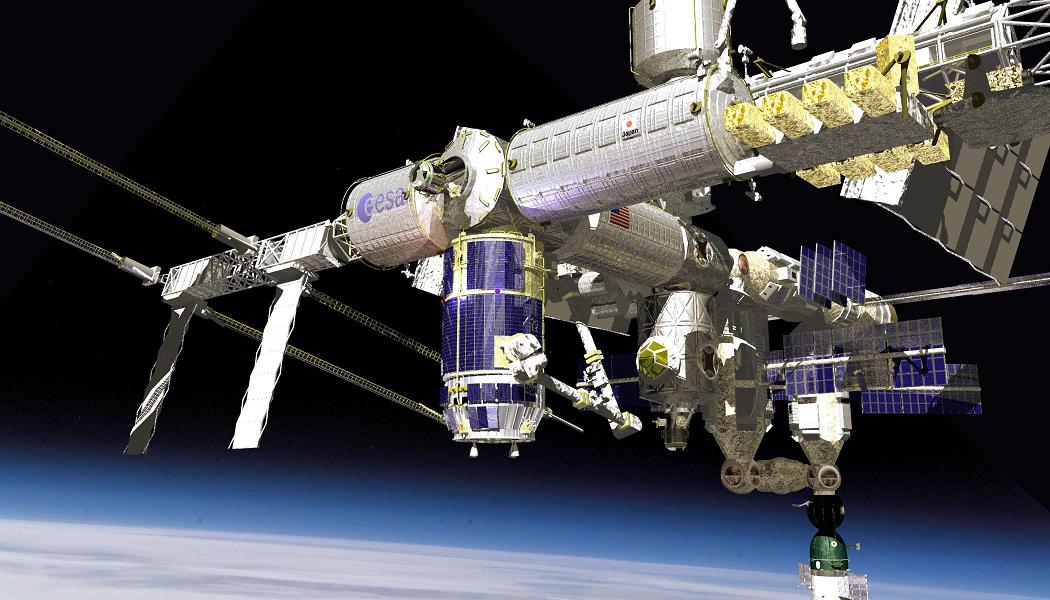
Everybody was so excited about the launch of Space Shuttle Discovery STS-119, especially after many postponements of the mission. The S6 truss segment with the remaining solar arrays made it to the International Space Station. But this was not the highlight! Ian O’Neill from astroENGINE has all the details for you. A bat attached itself to the external tank of the Space Shuttle. The bat also got a name… Brian, and there is a foundation set up in its memory.
There are many speculations about the fate of this unfortunate little guy. My guess is that it got its tongue stuck on the external tank… triple bat dare! What a way to go.
 |
| Credits: NASA |
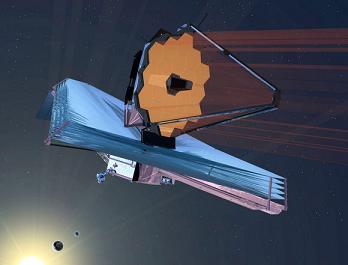
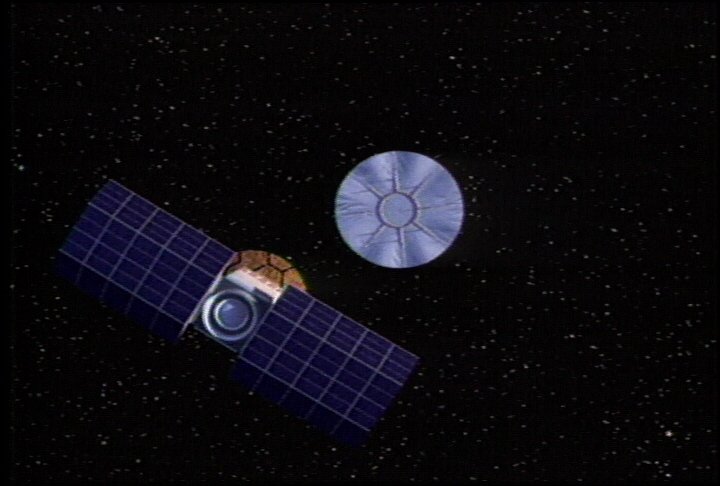
Planned for launch in 2013, the James Webb Space Telescope is the next generation space telescope, the successor of Hubble. Nancy Atkinson, writer for Universe Today, has an Q&A with Dr. John Mather on JWST. Dr. Mather is co-recipient of the 2006 Nobel Prize in Physics for his work with the Cosmic Background Explorer (COBE).







 Subscribe to blog posts using RSS











