OrbitalHub

The place where space exploration, science, and engineering meet

Domain is for sale. $50,000,000.00 USD. Direct any inquiries to contact@orbitalhub.com.

Archive for the Space Exploration category


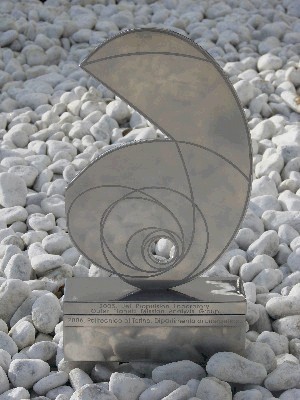
Credits: CNES


Back in January 2009, I announced the 4th Global Trajectory Optimization Competition organized by CNES (Centre National d’Etudes Spatiales).


The purpose of the competition is to stimulate research of techniques for finding the optimal trajectory for different space missions. I came across the GTOC4 competition results and I would like to share them.


A total of 47 teams registered for the competition! The competition problem was disclosed on March 2, 2009, while March 30, 2009, was the deadline for submitting the solutions. In June the presenters were selected and in September 2009 the teams presented their methods and solutions during a one-day workshop held in Toulouse, France.


The problem proposed to the teams this year was called How to maximize the relevance of a rendezvous mission to a given NEA by visiting the largest set of intermediate asteroids.


The formulation of the problem proposed by CNES was


“… let us assume that a spacecraft is launched from the Earth. This spacecraft has to visit (flyby) a maximum number of asteroids (from a given list of NEAs). Finally, it must rendezvous with a last asteroid of that same list within ten years from departure.


The performance index to be maximized is the number of visited asteroids, but when two solutions are associated with the same number of visited NEAs, a secondary performance index has to be maximized: the final mass of the spacecraft.


Moreover, we assume that the spacecraft is equipped with an electric propulsion system and that gravity assists are not allowed during the mission.”


The CNES team mentioned that the proposed problem aimed at fulfilling some important criteria: “the design space is large and leads to an important number of local optima, the problem is complex but in any case it can be solved within the 4-week period allowed for the competition, its formulation is simple enough so that it can be solved by researchers not experienced in astrodynamics, and even if some registered teams have already developed their own optimization tools for interplanetary missions, the problem specificities make it new to all the teams.”


The winner of the GTOC4 competition is Moscow State University, followed closely by The Aerospace Corporation and the Advanced Concepts Team, ESA.


  • Facebook
  • Google
  • Slashdot
  • Reddit
  • Live
  • TwitThis
November 3, 2009

Carnival of Space #126

Posted by


Credits: NASA/JPL


Carnival of Space #126 is hosted by Jason Perry at The Gish Bar Times.


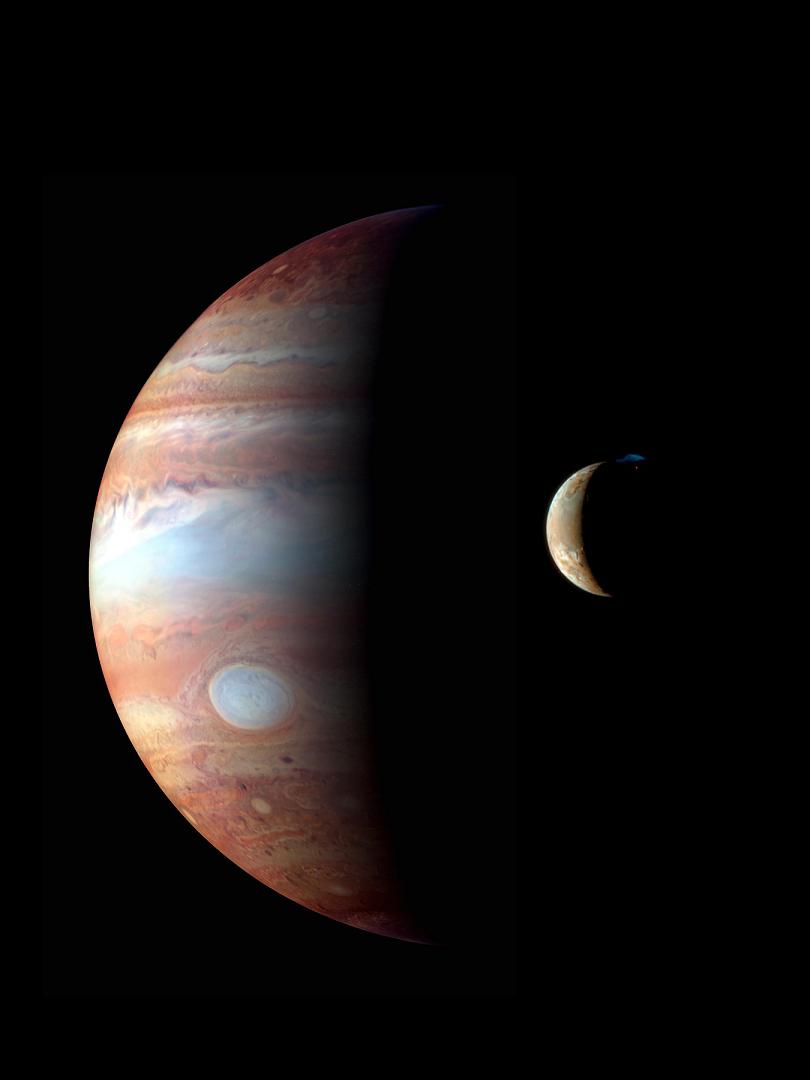
The blog posts cover topics like LCROSS and Kaguya missions, the final report of the Augustine Commission, the potential of moonbases, the Space Elevator Games beaming competition, a new geologic map of the volcano Prometheus on Io, a new visualization of the Chandra Source Catalog, and much more.


  • Facebook
  • Google
  • Slashdot
  • Reddit
  • Live
  • TwitThis
November 3, 2009

SMOS And PROBA-2 Launch

Posted by


Credits: ESA


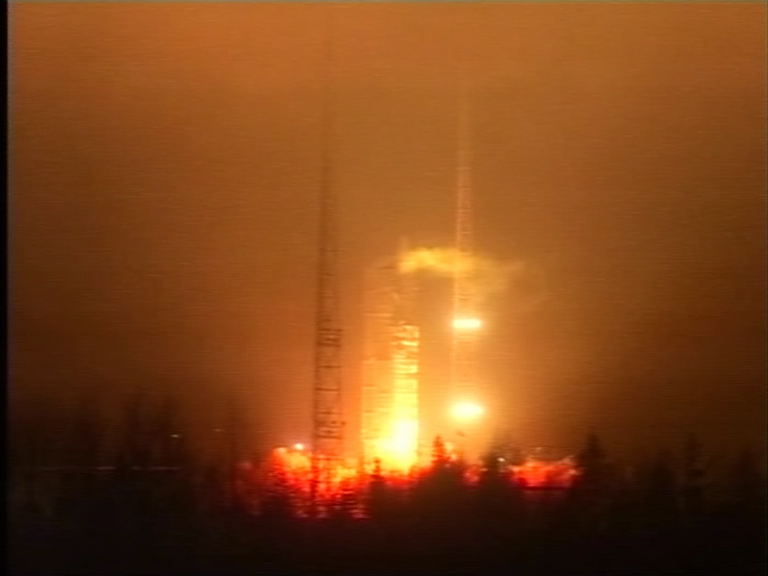
A Rockot launch vehicle lifted off from the Plesetsk Cosmodrome in northern Russia on November 2, 2009, at 02:50 CET. Rockot carried to orbit two new ESA satellites: SMOS and PROBA-2.


SMOS was released by the Breeze-KM upper stage some 70 minutes after the launch. After arriving at a lower orbit, the upper stage released Proba-2 around three hours after the launch.


The Soil Moisture and Ocean Salinity (SMOS) mission, which is the second Earth Explorer Opportunity mission to be developed as part of ESA’s Living Planet Program, will provide global maps of moisture over the Earth’s landmasses and salinity over the oceans. These observations will improve our understanding of hydrology and ocean circulation patterns.


PROBA-2 is part of an ESA program called In-Orbit Technology Demonstration Program, which is dedicated to the demonstration of innovative technologies. The PROBA-2 payload consists of scientific instruments that will make observations of the Sun in the ultraviolet portion of the spectrum and will measure certain properties of the plasma surrounding the spacecraft.


  • Facebook
  • Google
  • Slashdot
  • Reddit
  • Live
  • TwitThis
October 22, 2009

Carnival of Space #125

Posted by


Credits: NASA/Goddard Space Flight Center Conceptual Image Lab


Carnival of Space #125 is hosted by Robert Simpson at Orbiting Frog.


This week you can read about superconducting magnets used to enable hyperdrive propulsion, the LCROSS mission, surprising early results from the IBEX mission, the Kepler mission, variable stars, affordable microgravity research on the International Space Station, and much more.


  • Facebook
  • Google
  • Slashdot
  • Reddit
  • Live
  • TwitThis
October 22, 2009

Rosetta’s Last Visit Home

Posted by


Credits: ESA/AOES Medialab


On November 13, 2009, the Rosetta spacecraft will swing by Earth for the last time. This maneuver will provide the boost needed by the spacecraft to reach the outer Solar System. The critical swingby events are described on ESA’s web site.


Rosetta’s mission began on March 2nd, 2004, when the spacecraft lifted off from Kourou, French Guiana. In order to optimize the use of fuel, the probe has a very complicated trajectory to reach its final target, the comet 67/P Churyumov-Gerasimenko. The long trajectory includes three Earth-gravity assists (2004, 2007, and 2009) and one at Mars (2007). The probe uses the gravity wells of Earth and Mars to accelerate to the speed needed for the rendezvous with the comet.


Read more about Rosetta…


  • Facebook
  • Google
  • Slashdot
  • Reddit
  • Live
  • TwitThis
October 18, 2009

Carnival of Space #124

Posted by


Credits: HMCT/Giotto/ESA/MPAE


Carnival of Space #124 is hosted at We are all in the gutter, looking at the stars.


This week you can see an interesting picture of our nearest galactic neighbour Andromeda, you can read about the discovery of a new ring around Saturn, Halley’s Comet, sunspots, Orbital Gun Launch Systems, Skylab Orbital Workshop, and much more.


  • Facebook
  • Google
  • Slashdot
  • Reddit
  • Live
  • TwitThis