OrbitalHub

The place where space exploration, science, and engineering meet

Domain is for sale. $50,000,000.00 USD. Direct any inquiries to contact@orbitalhub.com.

Archive for the Space Exploration category

January 9, 2012

ASX 2012 Symposium in Toronto

Posted by


Credits: ASX


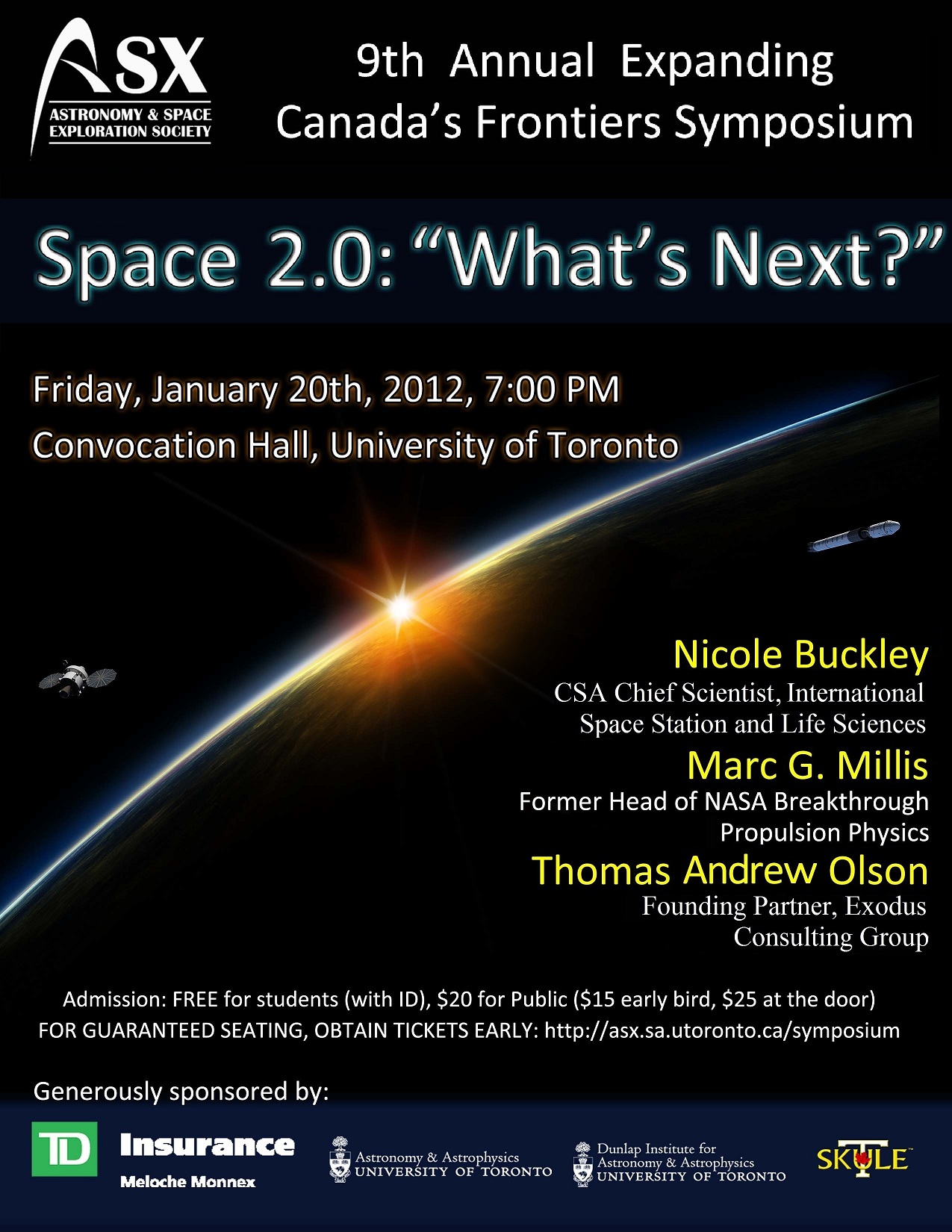
The University of Toronto Astronomy and Space Exploration Society (ASX) announced its 9th annual symposium. The ASX symposium is an event that aims to educate the public on space exploration related topics. Past symposium speakers include the Canadian astronaut Chris Hadfield, Anousheh Ansari, and Dr. Carolyn Porco.


The event’s topic this year is Space 2.0: What’s Next?. The end of the space shuttle era has brought the rise of private companies in the space sector. This year’s speakers, Dr. Nicole Buckley, Dr. Marc Millis, and Mr. Thomas A. Olson, will talk about emerging space technologies and how the private companies in the space sector will change the dynamics of the industry.


You can find more details about the symposium on the ASX 2012 Symposium page on Eventbrite. Also, ASX has a new website, which you might want to check out.


  • Facebook
  • Google
  • Slashdot
  • Reddit
  • Live
  • TwitThis
August 1, 2011

Juno

Posted by


Credits: NASA/JPL


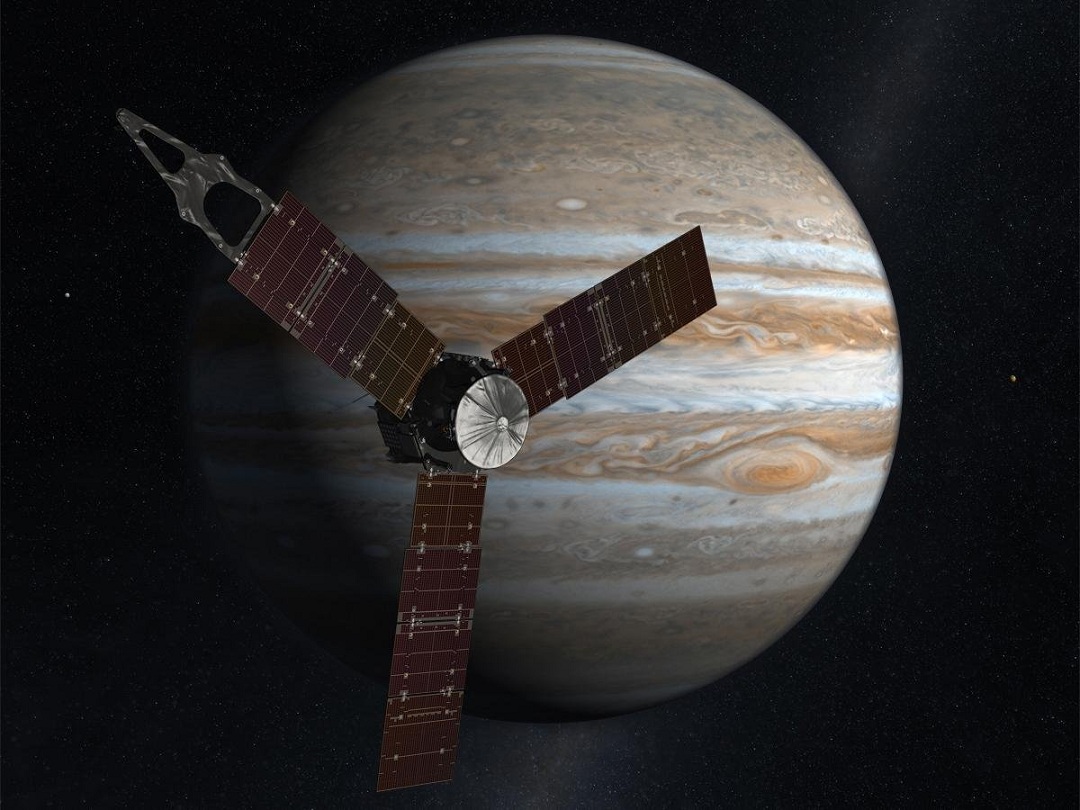
Juno is a NASA spacecraft scheduled to start its journey to Jupiter in a few days. Juno will help scientists understand the origin and evolution of Jupiter. While the dense cover of clouds helps Jupiter keep its secrets away from Earth observers, Juno will get close enough to Jupiter so that fundamental processes and conditions characteristic to the early solar system will be revealed.


First, Juno will try to determine if Jupiter has a solid planetary core. While this is an important piece of the puzzle, it might also help determine how Jupiter’s magnetic field is generated (by the way, scientists are still unclear how Earth’s magnetic field is generated, and there are several theories trying to explain it). Juno will also map Jupiter’s magnetic field, study the auroras, and determine the amount of water and ammonia in the atmosphere.


The launch vehicle to lift off with Juno is the most powerful Atlas rocket ever built, the United Launch Alliance Atlas V 551. In this configuration, an Atlas V launch vehicle can lift 18,810 kg to Low Earth Orbit (LEO) and 8,900 kg to Geosynchronous Transfer Orbit (GTO). However, the Atlas V 551 is not powerful enough to put Juno on a direct trajectory to Jupiter. In order to get as far as Jupiter’s orbit, Juno has to perform a gravity assist maneuver.


Juno will orbit Jupiter in a polar orbit and get as close as 5,000 km above the planet’s top clouds. This will allow the spacecraft to do science below the radiation belt of the planet and allow for a complete coverage of the planet. The low altitude will allow for a detailed analysis of the planet’s atmosphere. The orbit will also allow Juno to take a very close look at the auroras that are forming at the north and south Jovian poles.


The scientific payload carried by Juno includes a gravity/radio science system, a microwave radiometer, a vector magnetometer, particle detectors, ultraviolet and infrared spectrometers, and a color camera to capture images of the Jovian poles.


One interesting feature of the spacecraft is the electronics vault. Even if Juno’s highly elliptical orbit avoids the deadly radiation belts by approaching the planet at the north pole, skimming the clouds below the radiation belts, and exiting over the south pole, as an additional protection measure the onboard electronics are protected by a radiation shielded vault. This will ensure that the computers will not malfunction due to single events, and that the electronics will meet the requirements for the mission lifespan.


While the previous missions to the Jovian system have been powered by Radio Thermal Generators (RTGs), Juno will benefit from advances in solar power cell design. The cells used for Juno’s solar panels are far more efficient and radiation tolerant than the cells available to space systems engineers decades ago. Three solar panels that extend more than 10 meters from the hexagonal body of the spacecraft will provide the power required by the scientific instruments.


The mission is scheduled for launch on August 5, 2011. After coasting for more than two years, in October 2013, Juno will swing by Earth. The gravity assist maneuver will provide the delta V necessary for the spacecraft to reach Jupiter’s orbit. Juno will arrive at Jupiter in July 2016. After performing the Jupiter Orbital Insertion (JOI) maneuver, the spacecraft will start to collect and send back home scientific data.


Juno will send back science and telemetry data through the Deep Space Network (DSN), a network of powerful antennas located in Madrid, Spain; Barstow, California; and Canberra, Australia.


At the end of the mission, planned for October 2017, and after 33 complete revolutions around Jupiter, Juno will fire up its thrusters and decrease its velocity, enter the upper atmosphere of Jupiter, and get incinerated. Why such a tragic end to the Juno mission? Remember the Prime Directive? While the Prime Directive is known only to Star Trek fans… and it might get serious consideration only from Star Fleet officers, the possibility of having Juno crashing on one of the Jovian satellites (especially Europa) has to be eliminated. NASA scientists take contamination of other worlds very seriously.


You can find out more about the Juno mission on NASA’s dedicated web site. The Juno mission is managed by NASA’s Jet Propulsion Laboratory in Pasadena, California. The Principal Investigator for the Juno mission is Dr. Scott Bolton of Southwest Research Institute in San Antonio, Texas. The spacecraft was designed and built by Lockheed Martin of Denver, Colorado.



  • Facebook
  • Google
  • Slashdot
  • Reddit
  • Live
  • TwitThis
July 26, 2011

Interplanetary Internet

Posted by


Credits: NASA/JPL/Arizona State University


You know the frustration you experience when the new hit of your favorite band takes too long to download on your iPhone? Imagine 30 years from now (an optimistic estimate)… you are one of the happy colonists who work around the clock to build one of the first outposts on Mars.


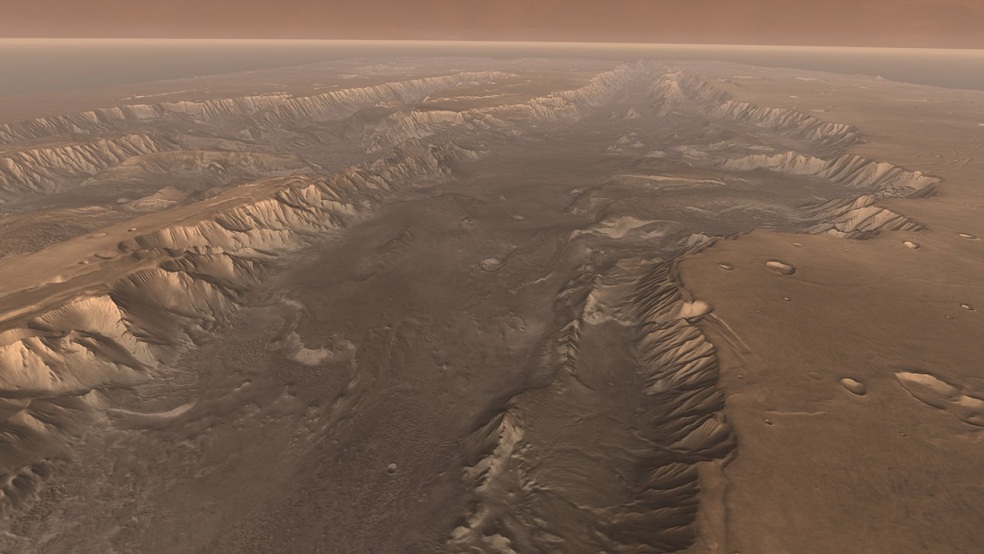
At the end of your shift in the hydroponics, you head back to your luxurious 20mx10m quarters (the shoebox, as your relatives back on Earth like to call it), have a hot shower, and a delicious vegetarian dinner while enjoying the view over the Valles Marineris (the $100 million view, as you like to call it). You receive an email with a link to the new hit of your favorite Earth band, and after clicking on the link in your favorite Internet browser, you download the song in less than one second.


What’s wrong with this scenario? It describes what software engineers would call a wonderful user experience, but something is wrong with this picture… what is it?


One short story might give you a hint. In January 2004, when the two Mars Exploration Rovers, Spirit and Opportunity, landed on Mars, you could watch videos of the scientists in the mission control room at JPL cheering when receiving confirmations of successful landings. The detail that might have escaped you is that those confirmation messages traveled around 20 minutes through interplanetary space before reaching the room at JPL. The scientists were cheering at JPL 20 minutes after the landings happened. If anything went wrong, the bad news would have reached Earth too late to do anything about it. This kind of explains why the engineers that designed and built the rovers had to make sure that the rovers themselves were capable of making some decisions on their own.


To go back to our sci-fi novel attempt in the first paragraph, the little detail that is misplaced in our story is that the time delay is not present. Our colonist clicks on the link to a server which is somewhere on Earth and the download is performed in no time.


For someone who has a basic understanding of protocol stacks (i.e. HTTP/TCP/IP), it is obvious that it would take quite some time to download a file from a server located on Earth to our Mars colony. All of a sudden, the ACK packets have lost their charm.


No reason to worry. Even if Mars outposts are far in the future, time and effort is spent on finding solutions for such communication problems in the present. The challenges seem overwhelming: very long delays, possible communication disruptions, and significant loss due to big bit error rates. A leap is necessary. The present protocols and architecture on which Internet relays have been designed assuming continuous and bi-directional paths, short round-trip times, and small error-rates.


One architecture that promises to solve the problems inherent to our scenario is the Delay Tolerant Networking (DTN) architecture, proposed in RFC 4838. A physical architecture that could solve the problems mentioned above is also proposed by Takashi Iida (Tokyo Metropolitan University), Yoshinori Arimoto (National Institute of Information and Communications Technology), and Yoshiaki Suzuki (NEC Corporation). The architecture would include clusters of communication satellites in orbit around Earth and Mars and relay satellites located at the Lagrangian points L4 and L5 of the Sun-Earth system. The relay satellites would make communication between Earth and Mars possible even when Mars is behind the Sun. Just a smart placement of relay satellites does not do the trick. In order to increase the responsiveness of the network, mirroring of data is also necessary.


You can find more information about space data systems on The Consultative Committee for Space Data Systems website. Other good resources include The InterPlaNetary Internet Project, and The Delay Tolerant Networking Research Group.


  • Facebook
  • Google
  • Slashdot
  • Reddit
  • Live
  • TwitThis


Credits: MDA


MDA (MacDonald, Dettwiler and Associates Ltd.) is a Canadian company that was incorporated in 1969 by two British Columbia entrepreneurs, John MacDonald and Werner Dettwiler. The company offers a broad spectrum of services. Currently, MDA is developing a Space Infrastructure Servicing (SIS) spacecraft that would operate as a refueling depot for communication satellites in geosynchronous orbit.


Geostationary communication satellites have to perform regular orbital stationkeeping maneuvers, which need delta-v of approximately 50 m/s/year (this translates into fuel consumption). As a result, the lifespan of a satellite is proportional to the amount of fuel it carries onboard, even if most satellites are capable of operating beyond this lifespan. MDA’s SIS system would extend the operational lifespan of these satellites and save satellite operators a lot of money (refueling a satellite would save the operators the cost of building and launching a new satellite).


A typical SIS mission profile not only includes satellite refueling, but also cleaning orbital slots by pushing dead satellites into graveyard orbits. This would also be a money saver because orbital slots are quite expensive.


However, there are challenges. The satellites currently operating are not designed to be serviced/refueled while on orbit (the Hubble Space Telescope is a notable exception). And this will make the refueling maneuver quite complicated… the servicing satellite has to remove a part of the thermal protection blanket of the target spacecraft before connecting to an internal fuel line.


In a March 15, 2011, press release, MDA announced that Intelsat S.A. entered into an agreement with MDA for the servicing of Intelsat’s operational satellites. On-orbit servicing is to be performed by a space-based service vehicle provided by MDA. From the press release:


“The SIS vehicle is expected to be the first of its kind, utilizing a sophisticated robotics and docking system. This system will be based on work that MDA has previously performed for NASA, the Canadian Space Agency and various Department of Defense agencies. The SIS vehicle’s robotic arm will not only be used in refueling, but could also be used to perform critical maintenance and repair tasks, such as releasing jammed deployable arrays and stabilizing or towing smaller space objects or debris. Intelsat, the world’s largest operator of commercial satellites in the geosynchronous arc, is expected to provide flight operations support for the SIS vehicle for the life of the mission.”


The services to be provided by MDA to Intelsat are estimated at more than US$280 million. In the June 17, 2011, press release, MDA also announced that it is extending by three months the requirements definition phase of its SIS initiative.


Needless to say, on-orbit servicing will be a very lucrative endeavor. It also has a strategic importance. Very expensive LEO observation satellites used by the military would benefit from such on-orbit services. Also, NASA is under a tremendous budget pressure. And this can be an answer to the question why NASA would move forward with its own on-orbit servicing initiative.


NASA will demonstrate in-orbit satellite refueling at the International Space Station. MDA-built Dextre, equipped with special tools, will cut through a satellite exterior shell and pump fuel into a mock satellite.


The first thing that comes to mind is that a NASA competition may put the MDA SIS system at risk. Does anyone remember the Avro Canada CF-105 Arrow?


  • Facebook
  • Google
  • Slashdot
  • Reddit
  • Live
  • TwitThis


Credits: Pat Rawlings


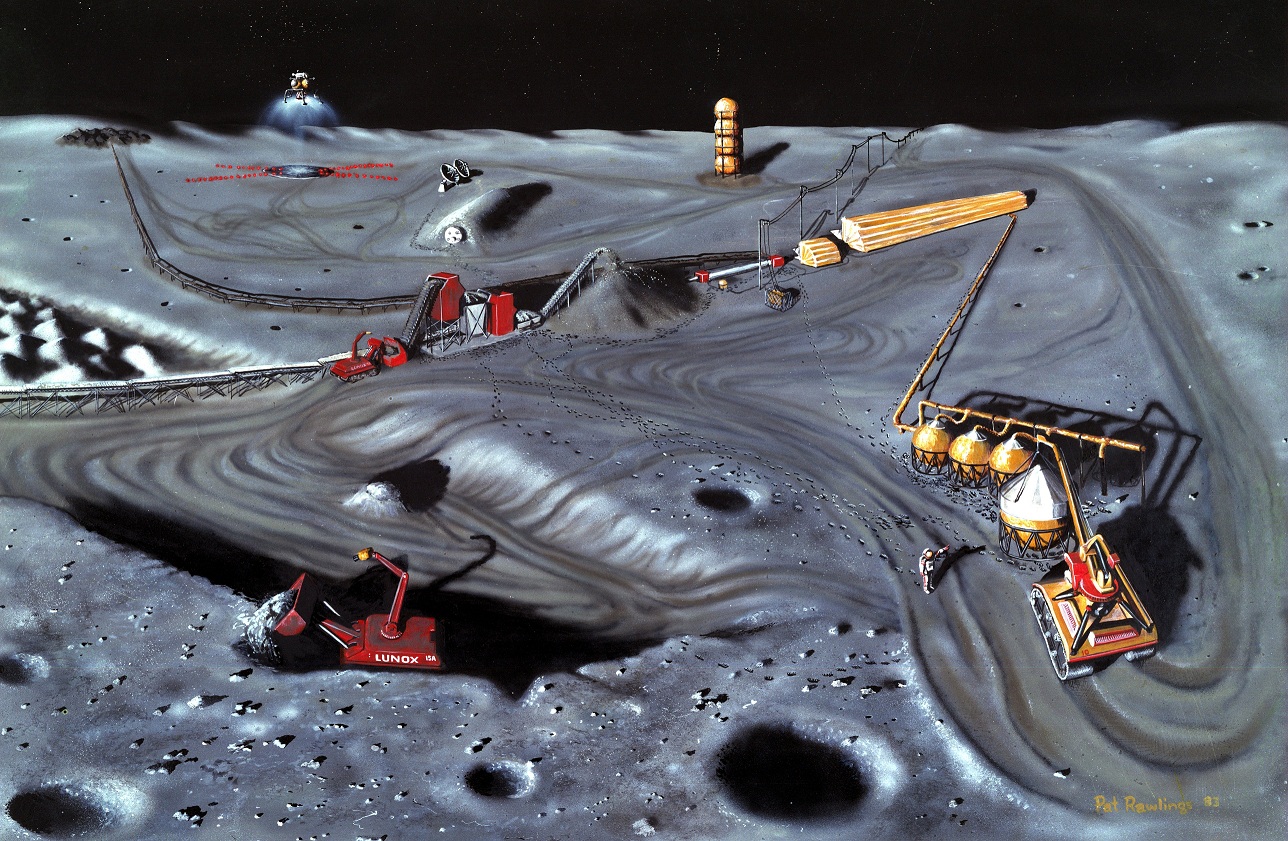
Excavation is a necessary first step towards extracting resources from the lunar regolith and building human settlements on the moon. NASA’s Lunabotics Mining Competition is designed to promote the development of interest in lunar regolith mining, which is especially challenging due to the unique properties of the lunar regolith, reduced gravity, and vacuum.


A Canadian team took first place in the second edition of NASA’s Lunabotics Mining Competition. Team Production of Laurentian University of Sudbury, Ontario, consisted of 4th year mechanical engineering students. The team had to compete with teams from 40 other universities from the U.S., Canada, India, Chile, and Bangladesh.


The competition was conducted at Kennedy Space Center, from May 23 to May 28, 2011. The minimum excavation requirement was 10 kilograms and the maximum excavation hardware mass was 80 kilograms. The lunabots performed in an enclosure (a.k.a. Lunarena) filled with compacted lunar regolith simulant.


The Canadian lunabot was able to excavate 237.4 kilograms of synthetic lunar regolith in 15 minutes. The team won a $5,000 cash prize and VIP passes to the final launch of the Space Shuttle Atlantis in July.


  • Facebook
  • Google
  • Slashdot
  • Reddit
  • Live
  • TwitThis


Credits: NASA


Let us see how the areas mentioned in the previous Sustainability in LEO post are covered at national level in the United States.


The United States has implemented a space traffic management program in the form of the Joint Space Operations Center (JSpOC) of the U.S. Strategic Command at Vandenberg Air Force Base in California.


JSpOC conducts periodic conjunction assessments for all NASA programs and projects that operate maneuverable spacecraft in low Earth orbits (LEO) or in geosynchronous orbits (GEO). Depending on the mission, the conjunction assessments can be performed up to three times daily. If JSpOC identifies an object that is expected to come in the proximity of a NASA spacecraft, and the collision risk is high enough (for manned missions the minimal value accepted is 1 in 10,000, while for robotic missions the threshold is 1 in 1,000), a conjunction assessment alert message is sent to the mission control in order to have collision avoidance maneuver commands sent to the spacecraft. The alert messages contain the predicted time and distance at closest approach, as well as the uncertainty associated with the prediction.


The control of the creation of space debris is addressed by orbital debris mitigation standard practices in four major areas: normal operations, accidental explosions, safe flight profile and operational configuration, and post-mission disposal of space structures. There are also NASA standards and processes that aim at limiting the generation of orbital debris.


The commonly-adopted mitigation methods, which focus on minimization of space debris creation, will not preserve the near-Earth environment for the future generations. As a matter of fact, the debris population increase will be worse than predicted by LEGEND-generated models due to ongoing launch activities and unexpected (but possible) major breakups. Here is where active space debris environment remediation comes into play.


The active space debris environment remediation is mainly concerned with the removal of large objects from orbit. Such large objects are defunct spacecraft (i.e. communication satellites that exceeded their operational life), upper stages of launch vehicles, and other mission-related objects. The removal of large objects from orbit is known as Active Debris Removal (ADR). Several innovative concepts are under study. Among them, tethers used for momentum exchange or electro-dynamic drag force, aerodynamic drag, solar sails, and auxiliary propulsion units. LEGEND studies have revealed that ADR is a viable control method as long as an effective removal selection criterion based on mass and collision probability is used, and there are at least five objects removed from orbit every year. The electrodynamic tethers seem to lead the competition so far, as they have a low mass requirement and can remove spent or dysfunctional spacecraft from low Earth orbit rapidly and safely.


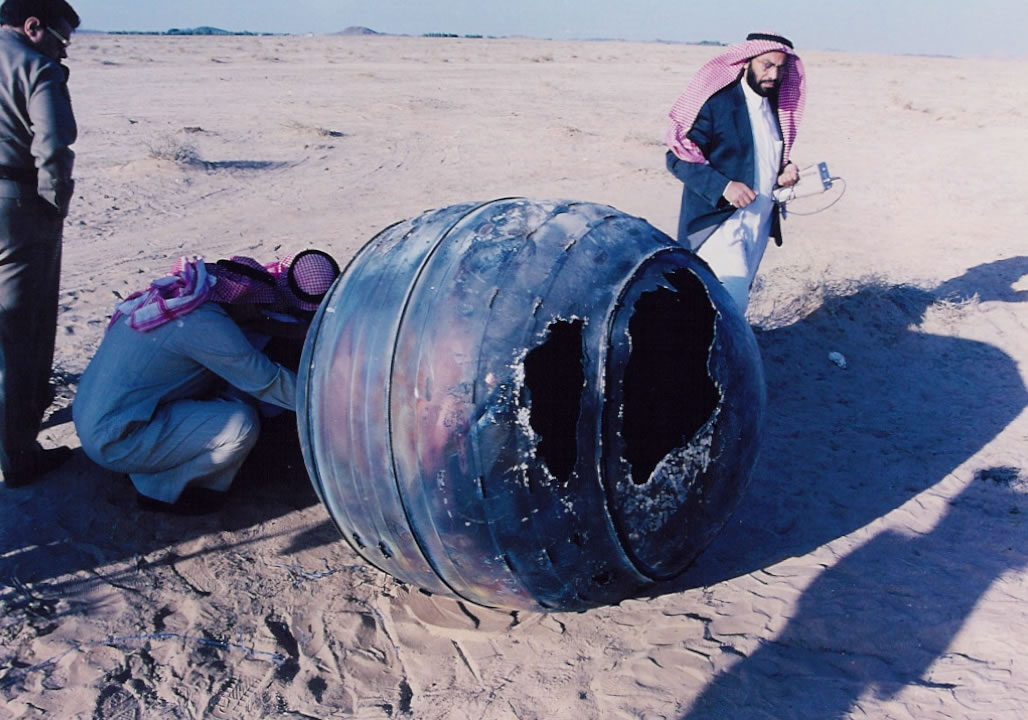
Re-entry in the Earth’s atmosphere of space mission related objects is an important aspect to be considered in this context. Even though no casualties or injuries have been reported so far being caused by components of re-entering spacecraft, fragments from space hardware pose a risk to human life and property on the ground. One big concern is caused by the fact that the point of impact from uncontrolled re-entries cannot be calculated exactly. The uncertainties are due to a large number of parameters that affect the trajectory and the heat of ablation of objects re-entering the atmosphere.


  • Facebook
  • Google
  • Slashdot
  • Reddit
  • Live
  • TwitThis