OrbitalHub

The place where space exploration, science, and engineering meet

Domain is for sale. $50,000,000.00 USD. Direct any inquiries to contact@orbitalhub.com.

06-14-17

Mimas and Pan

Posted by


NASA dixit:

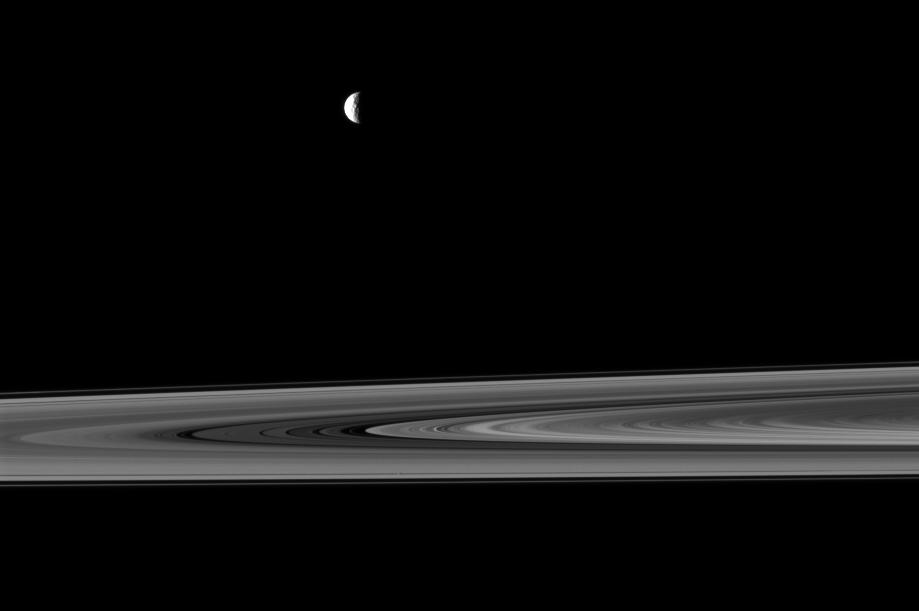
“October 19, 2009. The Cassini spacecraft captures a couple of small moons in this image taken while the spacecraft was nearly in the plane of Saturn’s rings. Near the top of this image, a crescent Mimas (396 kilometers, or 246 miles across) is closer to Cassini than the rings are. Pan (28 kilometers, or 17 miles across) is visible as a tiny dot in the Encke Gap of the A ring near the middle of the bottom of the image. This view looks toward the northern, sunlit side of the rings from just above the ringplane.

The image was taken in visible light with the Cassini spacecraft narrow-angle camera. The view was obtained at a distance of approximately 2.1 million kilometers (1.3 million miles) from Pan. Image scale is 13 kilometers (8 miles) per pixel.”

“After almost 20 years in space, NASA’s Cassini spacecraft begins the final chapter of its remarkable story of exploration: its Grand Finale. Between April and September 2017, Cassini will undertake a daring set of orbits that is, in many ways, like a whole new mission. Following a final close flyby of Saturn’s moon Titan, Cassini will leap over the planet’s icy rings and begin a series of 22 weekly dives between the planet and the rings.

No other mission has ever explored this unique region. What we learn from these final orbits will help to improve our understanding of how giant planets – and planetary systems everywhere – form and evolve.

On the final orbit, Cassini will plunge into Saturn’s atmosphere, sending back new and unique science to the very end. After losing contact with Earth, the spacecraft will burn up like a meteor, becoming part of the planet itself.

Cassini’s Grand Finale is about so much more than the spacecraft’s final dive into Saturn. That dramatic event is the capstone of six months of daring exploration and scientific discovery. And those six months are the thrilling final chapter in a historic 20-year journey.”

Image credit: NASA


  • Facebook
  • Google
  • Slashdot
  • Reddit
  • Live
  • TwitThis
05-28-17

Pan’s Lengthening Shadow

Posted by


NASA dixit:

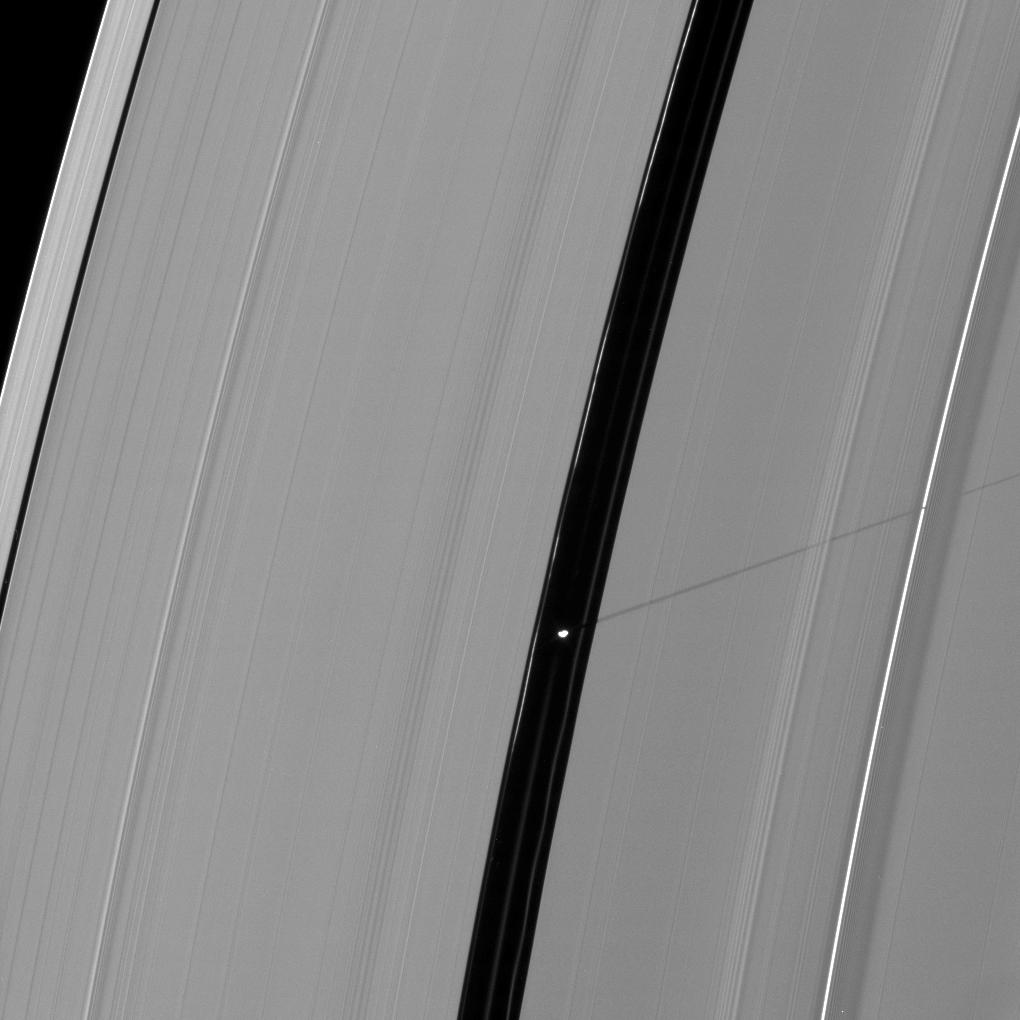
“July 27, 2009. The novel illumination geometry created around the time of Saturn’s August 2009 equinox allows moons orbiting in or near the plane of Saturn’s equatorial rings to cast shadows onto the rings. These scenes are possible only during the few months before and after Saturn’s equinox, which occurs only once in about 15 Earth years.

Pan (28 kilometers, or 17 miles across) orbits in the Encke Gap. This view looks toward the unilluminated side of the rings from about 34 degrees above the ring plane. The image was taken in visible light with the Cassini spacecraft narrow-angle camera. The view was acquired at a distance of approximately 839,000 kilometers (521,000 miles) from Pan and at a Sun-Pan-spacecraft, or phase, angle of 74 degrees. Image scale is 5 kilometers (3 miles) per pixel.”

“After almost 20 years in space, NASA’s Cassini spacecraft begins the final chapter of its remarkable story of exploration: its Grand Finale. Between April and September 2017, Cassini will undertake a daring set of orbits that is, in many ways, like a whole new mission. Following a final close flyby of Saturn’s moon Titan, Cassini will leap over the planet’s icy rings and begin a series of 22 weekly dives between the planet and the rings.

No other mission has ever explored this unique region. What we learn from these final orbits will help to improve our understanding of how giant planets – and planetary systems everywhere – form and evolve.

On the final orbit, Cassini will plunge into Saturn’s atmosphere, sending back new and unique science to the very end. After losing contact with Earth, the spacecraft will burn up like a meteor, becoming part of the planet itself.

Cassini’s Grand Finale is about so much more than the spacecraft’s final dive into Saturn. That dramatic event is the capstone of six months of daring exploration and scientific discovery. And those six months are the thrilling final chapter in a historic 20-year journey.”

Image credit: NASA


  • Facebook
  • Google
  • Slashdot
  • Reddit
  • Live
  • TwitThis
05-24-17

Pan’s Shadow

Posted by


NASA dixit:

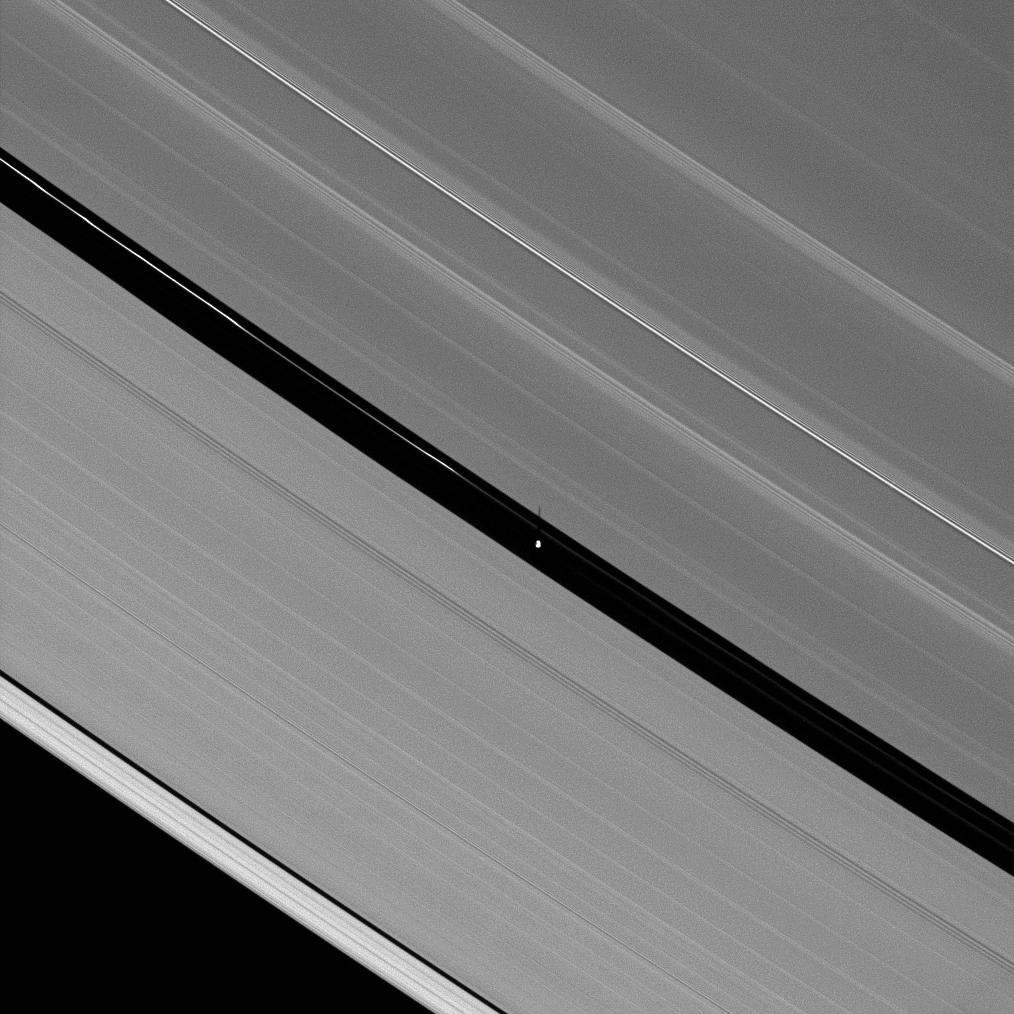
“February 12, 2009. Wendy Darling famously helped Peter Pan catch his shadow, and now Cassini captures the shadow of another Pan: Saturn’s 30-kilometer (19-mile) wide moon inhabiting the Encke Gap. In the center of this image, the shadow of Pan is a short streak thrown over the edge of the A ring where Pan travels its path through the Encke Gap.

One of the happy results of Saturn’s 29-year revolution around the sun is the changing elevation of the sun seen from the planet, and the changing elevation of the shadows of the rings and moons that the sun’s apparent motion brings. As Saturn approaches equinox, the angle at which the ringplane is inclined away from the sun will continue to decrease until August 2009, when equinox will bring about an alignment of the plane containing the rings with the rays of the sun. Only around the time of equinox is a moon’s shadow cast on the rings rather than the planet. Between now and equinox in August, the shadows cast by the moons on the rings will grow longer with time.

Cassini scientists planned a series of observations to chronicle these sights, knowing that the resulting images could hold valuable information about vertical displacements in the rings and the orbital inclinations of the shadow-casting moons. These planned images of course hold another reward: the simple but spectacular depiction of the path of sunlight across the solar system.

The image was taken in visible light with NASA’s Cassini spacecraft narrow-angle camera. This view looks toward the un-illuminated side of the rings from about 55 degrees above the ringplane. The view was obtained at a distance of approximately 997,000 kilometers (619,000 miles) from Pan and at a sun-Pan-spacecraft, or phase, angle of 112 degrees. Image scale is 6 kilometers (4 miles) per pixel.”

“After almost 20 years in space, NASA’s Cassini spacecraft begins the final chapter of its remarkable story of exploration: its Grand Finale. Between April and September 2017, Cassini will undertake a daring set of orbits that is, in many ways, like a whole new mission. Following a final close flyby of Saturn’s moon Titan, Cassini will leap over the planet’s icy rings and begin a series of 22 weekly dives between the planet and the rings.

No other mission has ever explored this unique region. What we learn from these final orbits will help to improve our understanding of how giant planets – and planetary systems everywhere – form and evolve.

On the final orbit, Cassini will plunge into Saturn’s atmosphere, sending back new and unique science to the very end. After losing contact with Earth, the spacecraft will burn up like a meteor, becoming part of the planet itself.

Cassini’s Grand Finale is about so much more than the spacecraft’s final dive into Saturn. That dramatic event is the capstone of six months of daring exploration and scientific discovery. And those six months are the thrilling final chapter in a historic 20-year journey.”

Image credit: NASA


  • Facebook
  • Google
  • Slashdot
  • Reddit
  • Live
  • TwitThis
05-17-17

Lengthening Shadows

Posted by


NASA dixit:

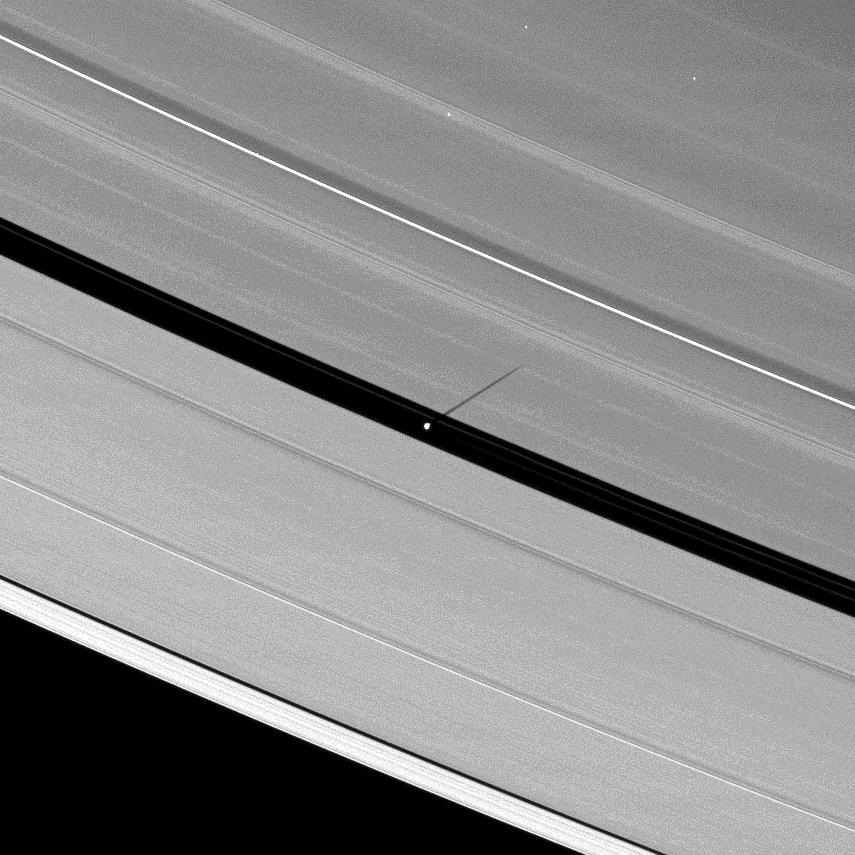
“June 28, 2009. As Saturn’s equinox continues to approach, the moon Pan casts a slightly longer shadow on the A ring. The novel illumination geometry created as Saturn approaches its August 2009 equinox allows moons orbiting in or near the plane of Saturn’s equatorial rings to cast shadows onto the rings. These scenes are possible only during the few months before and after Saturn’s equinox, which occurs only once in about 15 Earth years. Three stars are visible through the rings. This view looks toward the unilluminated side of the rings from about 51 degrees above the ringplane. The image was taken in visible light with the Cassini spacecraft narrow-angle camera. The view was acquired at a distance of approximately 1.4 million kilometers (870,000 miles) from Pan and at a Sun-Pan-spacecraft, or phase, angle of 80 degrees. Image scale is 8 kilometers (5 miles) per pixel.”

“After almost 20 years in space, NASA’s Cassini spacecraft begins the final chapter of its remarkable story of exploration: its Grand Finale. Between April and September 2017, Cassini will undertake a daring set of orbits that is, in many ways, like a whole new mission. Following a final close flyby of Saturn’s moon Titan, Cassini will leap over the planet’s icy rings and begin a series of 22 weekly dives between the planet and the rings.

No other mission has ever explored this unique region. What we learn from these final orbits will help to improve our understanding of how giant planets – and planetary systems everywhere – form and evolve.

On the final orbit, Cassini will plunge into Saturn’s atmosphere, sending back new and unique science to the very end. After losing contact with Earth, the spacecraft will burn up like a meteor, becoming part of the planet itself.

Cassini’s Grand Finale is about so much more than the spacecraft’s final dive into Saturn. That dramatic event is the capstone of six months of daring exploration and scientific discovery. And those six months are the thrilling final chapter in a historic 20-year journey.”

Image credit: NASA


  • Facebook
  • Google
  • Slashdot
  • Reddit
  • Live
  • TwitThis