OrbitalHub

The place where space exploration, science, and engineering meet

Domain is for sale. $50,000,000.00 USD. Direct any inquiries to contact@orbitalhub.com.


Credits: NASA


The adventure started on October 4, 1957, when the former Soviet Union successfully launched the first artificial satellite, Sputnik-1, using a rocket that was a modified Intercontinental Ballistic Missile (ICMB). Even if the political implications at that time were very important, as the launch ignited the Space Race within the Cold War, we can argue that the scientific accomplishments were more significant.


These accomplishments relied upon the theoretical work of scientists like Hermann Oberth and Konstantin Tsiolkovsky.


What followed this event, as mentioned above, was a race.


Explorer-1, the first American artificial satellite, was launched on January 31, 1958. Yuri Gagarin was the first human in outer space and the first to orbit the Earth on April 21, 1961. He was followed closely by Alan Shepard, who became the first American to travel into space onboard the Freedom-7 capsule, on May 5, 1961.


On August 19, 1964, the first geostationary communication satellite, Syncomm-3, was placed in orbit over the International Date Line. Syncomm-3 was used to relay the television coverage of the 1964 Summer Olympics in Tokyo, Japan, to the United States. The first to propose the concept of a communication satellite was Arthur C. Clarke, who in October 1945 published an article in the British magazine Wireless World that described the fundamental concepts behind the development of artificial satellites used to relay radio signals.


The first space station, Salyut-1, was launched on April 19, 1971. Even if the space station had a short operational life, as it re-entered the Earth atmosphere on October 11, 1971, it tested elements of the systems required on a space station and conducted scientific research and experiments. The construction of the first international research facility in Earth orbit, the International Space Station (ISS), began in 1998. The station is still under construction and it will be operational until at least 2015.


Where are we now, after 53 years of exploration of the space in the proximity of Earth? Since the launch of Sputnik on October 4, 1957, some 4,600 launches have orbited more than 6,000 satellites. All of these activities have created a cloud of orbiting particles around Earth. This new environment is referred to as space debris or orbital debris. Even if most of these particles are small in size (less than 1 cm), they are a source of great concern as the kinetic energies associated with impacts at orbital velocities, which are in the range 8-10 km/s or 28,800-36,000 km/h, are very high. It has been estimated that the total mass in orbit is 5,800 tons.


  • Facebook
  • Google
  • Slashdot
  • Reddit
  • Live
  • TwitThis
02-21-10

CryoSat-2

Posted by


Credits: ESA – P. Carril


In 2007, projections of sea level rise made by the Fourth Assessment Report of the Intergovernmental Panel on Climate Change were in the range of 28–43 cm by 2100, but there are new projections of the sea level rise that are in the order of 1.4 m.


While the trend is quite obvious, it is very important to be able to make accurate predictions.


Cryosat has been designed to measure the ice thickness on land and also at sea, and will provide enough data so that a precise rate of change of the ice thickness can be determined. A better understanding of how the volume of ice on Earth is changing will also be possible.


The declared primary goals of the CryoSat mission are to determine the regional trends in Arctic perennial sea-ice thickness and mass, and to determine the contribution that the Antarctic and Greenland ice sheets are making to mean global rise in sea level. Cryosat will also measure the variations in the thickness of Earth’s polar caps and glaciers. The spacecraft will be operational for a minimum of three years.


Credits: ESA/P. Carril


The spacecraft has a launch mass of 720 kg, of which 23 kg is the fuel required for orbital maneuvers and attitude corrections. The overall size of the spacecraft is 4.6 m x 2.34 m. Two solar panels are attached to the spacecraft’s body and provide a maximum of 800 W of power. As the CryoSat-2 orbit is not Sun-synchronous, providing enough power to the scientific payload has been a considerable challenge.


The operational orbit will be a 717 km non Sun-synchronous orbit with a 92 degree inclination.


The primary payload of the CryoSat-2 spacecraft is the SAR/Interferometric Radar Altimeter (SIRAL). In order to have the position of the spacecraft accurately tracked, a radio receiver called Doppler Orbit and Radio Positioning Integration by Satellite (DORIS) and a laser retro-reflector are part of the payload as well. A global network of laser ranging stations (the International Laser Ranging Service or ILRS for short) will support the mission. Three star-trackers will ensure a proper orientation of the spacecraft.


Using the Synthetic Aperture technique, CryoSat-2 measurements taken by SIRAL will have a 250 m resolution in the along-track direction. The instrument is designed to operate in three measurement modes: Low Resolution Mode (LRM) mostly over the oceans, Synthetic Aperture Radar (SAR) mode over sea-ice areas, and SAR Interferometric (SARIn) mode over steeply sloping ice-sheet margins, small ice caps, and mountain glaciers.


Credits: ESA – AOES Medialab


CryoSat-2 will be placed in orbit by a Dnepr launch vehicle. With a lift-off mass of 211 tons, Dnepr is 34 m long and 3 m in diameter, and has three stages that use hypergolic liquid propellants (N2O4 nitrogen peroxide and UDMH unsymmetrical dimethylhydrazine). In addition, there are Dnepr configurations with a third and a fourth stage for missions that require more energy. The launch vehicle is based on an ICMB designated as SS-18 Satan by NATO. The development and commercial operation of the Dnepr Space Launch System is managed by the International Space Company (ISC) Kosmotras. Dnepr can lift 4,500 kg to low Earth orbit (LEO) or 2,300 kg to a 98 degree Sun-synchronous orbit. Among other satellites launched by Dnepr are Demeter, Genesis I, Genesis II, and THEOS. Dnepr, carrying Cryosat-2, will lift off from Baikonur Cosmodrome in Kazakhstan.


The Rockot launch vehicle that attempted the orbiting of the first CryoSat mission, on October 8, 2005, failed to reach orbit. Due to faults in the onboard software, the second stage engine of the launcher did not shut down. The mission was terminated when the launch vehicle exceeded the flight envelope limit. The Rockot second stage/Breeze-KM/CryoSat stack crashed somewhere in the Arctic Ocean.


You can find more information about Cryosat-2 on ESA’s dedicated website. The Cryosat-2 mission EADS team also has a blog on EADS Astrium website. Check out the latest updates from Baikonur brought to you by Klaus Jäger (Astrium Spacecraft Launch Manager) and Edmund Paul (Astrium Spacecraft Operations Manager). A presentation of the SIRAL-2 instrument is available on Thales Group’s website.


  • Facebook
  • Google
  • Slashdot
  • Reddit
  • Live
  • TwitThis
09-14-09

PROBA-2

Posted by


Credits: ESA – P. Carril, 2009


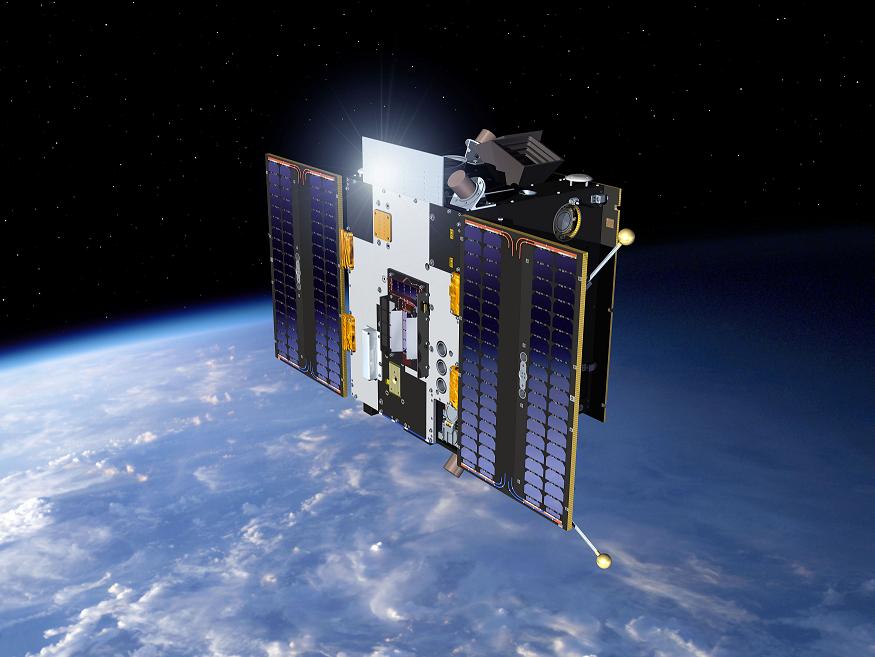
PROBA-2 is part of an ESA program called In-Orbit Technology Demonstration Program, which is dedicated to the demonstration of innovative technologies.


The PROBA-2 payload consists of scientific instruments that will make observations of the Sun in the ultraviolet portion of the spectrum and will measure certain properties of the plasma surrounding the spacecraft.


Among the new equipment and technologies demonstrated by PROBA-2 are new models of star trackers, GPS receivers, and reaction wheels, a new type of lithium-ion battery, an advanced data and power management system, composite carbon-fibre and aluminum structural panels, and magnetometers. PROBA-2 also hosts a digital Sun-sensor, an experimental solar panel, and a xenon gas propulsion system.


PROBA-2 will be launched onboard the same launch vehicle as SMOS. While the SMOS Mission will provide global maps of moisture over the Earth’s landmasses and salinity over the oceans, PROBA-2 is a small technology demonstrator. Launched as a secondary payload, PROBA-2 will orbit in the same plane as SMOS, but at a lower altitude. The planned mission duration is two years.


The spacecraft is a 600 mm x 700 mm x 850 mm box-shaped structure, with a mass of 130 kg. Aluminum honeycomb panels make the primary mechanical structure of the spacecraft. The two deployable solar panels and the one outer solar panel provide a maximum of 110 Watts of electrical power. A lithium-ion battery provides power during eclipse periods. A single 20 mN thruster is used for orbit adjustments.


Credits: ESA – P. Carril, 2009


PROBA-2 is three-axis stabilized. Attitude changes are performed using four reaction wheels that can be unloaded by magnetorquers, while the attitude determination is provided by star trackers, GPS sensors, and a three-axis magnetometer.


The spacecraft was built by Verhaert Design & Development NV, Belgium.


The scientific payload comprises of four experiments: two for solar observations (LYRA and SWAP) and two for space weather measurements (DSLP and TPMU).


LYRA is a Lyman-Alpha radiometer that will monitor four bands in a very wide ultraviolet spectrum. SWAP (the Sun Watcher using Active Pixel-sensor) will make measurements of the Sun’s corona. DSLP (Dual Segmented Langmuir Probes) will make measurements of the electron density and temperature in the background plasma. TPMU, which is the Thermal Plasma Measurement Unit, will measure ion densities and composition.


Launch services for the PROBA-2 mission are provided by EUROCKOT Launch Services GmbH. PROBA-2 will achieve its lower orbit by an orbit change maneuver of the Breeze-KM upper stage of the Rockot launch vehicle.


Credits: ESA – P. Carril, 2009


Rockot is a three-stage liquid propellant launch vehicle based on the Russian SS-19 Intercontinental Ballistic Missile (ICMB).


Rockot’s first and second stages (provided by SS-19) are completed by a third re-ignitable stage, the Breeze-KM upper stage. Rockot can deliver 1950 kg payloads to Low Earth Orbits (LEOs).


The length of the launch vehicle is 29 m. The external diameter of the stages is 2.5 m, while the payload fairing has an external diameter of 2.6 m and a height of 6.7 m. The mass of the vehicle at launch is 107 metric tons.


PROBA-2 will be carried into orbit from Plesetsk Cosmodrome, Russia. The operational orbit is a 700 km sun-synchronous orbit, with a 98 degree inclination.


You can read more about PROBA-2 on ESA’s dedicated web site. ESA’s web site also provides information about PROBA-1, which is already flying, and future PROBA missions, like PROBA-3 and PROBA-V.


  • Facebook
  • Google
  • Slashdot
  • Reddit
  • Live
  • TwitThis
03-21-09

Taurus

Posted by


Credits: Orbital


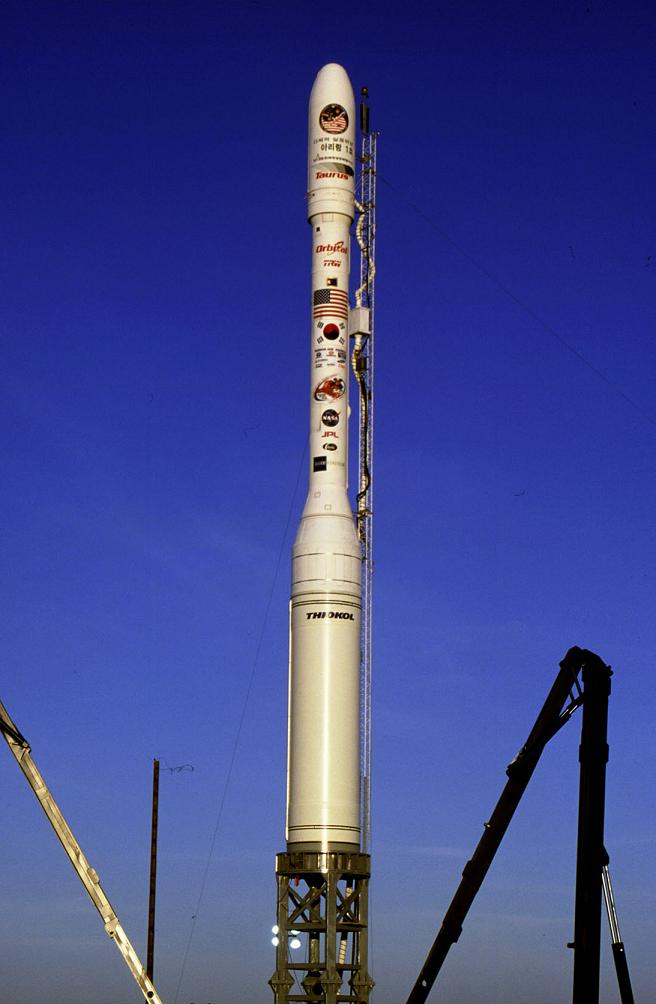
Taurus is a four-stage, inertially guided, all solid fuel, ground launched vehicle, designed and built by Orbital Sciences Corporation. In a typical mission, Taurus can inject a 1,350 kg payload in low Earth orbit (LEO).


Taurus lifted off for the first time on March 13, 1994. Since then, Taurus has conducted six of eight successful missions.


Taurus is well suited for LEO missions to a wide range of altitudes. Different orbital profiles can be attained through launches from more than one launch site. An additional fifth stage can boost the performance of the launch vehicle, making possible high energy and geosynchronous transfer orbit (GTO) missions.


Depending on configuration, Taurus can have up to 5 stages.


Stage 0 is an ATK Thiokol Castor 120 Solid Rocket Motor (SRM). Castor 120 is a commercial version of the Peacekeeper first stage. The stage is 9.06 m long and 2.38 m in diameter, with a mass of approximately 49 tons. The first Taurus used the Peacekeeper first stage as Stage 0.


Peacekeeper was an Inter-Continental Ballistic Missile (ICMB) deployed by the United States beginning in 1986. The Peacekeeper ICMB could carry up to ten re-entry vehicles, each armed with a 300-kiloton warhead (just to have an idea about the order of magnitude, that is twenty times the power of the bomb dropped on Hiroshima). The last Peacekeeper was decommissioned in 2005.


Stage 1 is an ATK Orion 50S SRM, 7.53 m long and 1.28 m in diameter, with a mass of approximately 12 tons. In the XL configuration, the stage is 8.94 m long and has a mass of approximately 15 tons. Stage 2 is an ATK Orion 50 SRM, 2.64 m long and 1.28 m in diameter, with a mass around 3 tons. In the XL configuration, the stage is 3.11 m long and almost 4 tons. Stage 3 is an ATK Orion 38 SRM. Stage 3 has a mass of around 800 kg, a length of 1.34 m, and a diameter of 97 cm.


The payload fairing comes in two versions: the 63” diameter fairing, manufactured by Vermont Composites, and the 92” diameter fairing, manufactured by Texas Composites. The fairing encapsulates and protects the payload during ground handling, integration operations, and flight. The payload mating is done late in the launch operations flow, so the designs of both fairings provide for off-line encapsulation of the payload and transportation to the launch site.


Taurus can be assembled in different configurations, depending on the specific requirements of the mission. The configurations are designated using a four-digit code. The first digit indicates the vehicle configuration (1 – SSLV Taurus with Peacekeeper first stage used as Stage 0; 2 – Commercial Taurus Standard with Castor 120 Stage 0 and standard-length Stage 1 and Stage 2; 3 – Commercial Taurus XL with Castor 120 Stage 0 and XL-length Stage 1 and Stage 2), the second digit designates the fairing size (1 for 63” fairing and 2 for 92” fairing), and the third and fourth indicate the Stage 3 motor (0 if there is no Stage 3 in configuration, 1 for Orion 38, and 3 for STAR 37), and the Stage 4 motor (0 if there is no Stage 4 in configuration, and 3 for STAR 37) respectively.


Credits: Orbital


The primary launch site used for Taurus is Site 576E on North Vandenberg Air Force Base (VAFB). Launches from North VAFB provide flight azimuths from 158 to 235 degrees, allowing payload injection on high inclination orbits (60 to 140 degrees).


For other mission profiles, there are a number of alternate sites that Taurus can launch from: South Vandenberg Air Force Base (VAFB), Cape Canaveral Air Force Station (CCAFS) Launch Complex 46, Wallops Flight Facility (WFF), and Reagan Test Site on the Kwajalein atoll in the western Pacific.


Taurus was designed to be launched from minimalist launch sites. The main requirement for the launch site is a 40×40 inch concrete pad that is able to support the weight of the launch vehicle.


For more information about the Taurus launch vehicle, you can visit the dedicated web page on Orbital’s website. There is also a Taurus User Guide available from Orbital. The guide is an exhaustive document, presenting the vehicle performance, the payload interfaces, an overview of the payload integration, among other things.


  • Facebook
  • Google
  • Slashdot
  • Reddit
  • Live
  • TwitThis