OrbitalHub

The place where space exploration, science, and engineering meet

Domain is for sale. $50,000,000.00 USD. Direct any inquiries to contact@orbitalhub.com.

04-3-17

SDO Year 7

Posted by


NASA dixit:

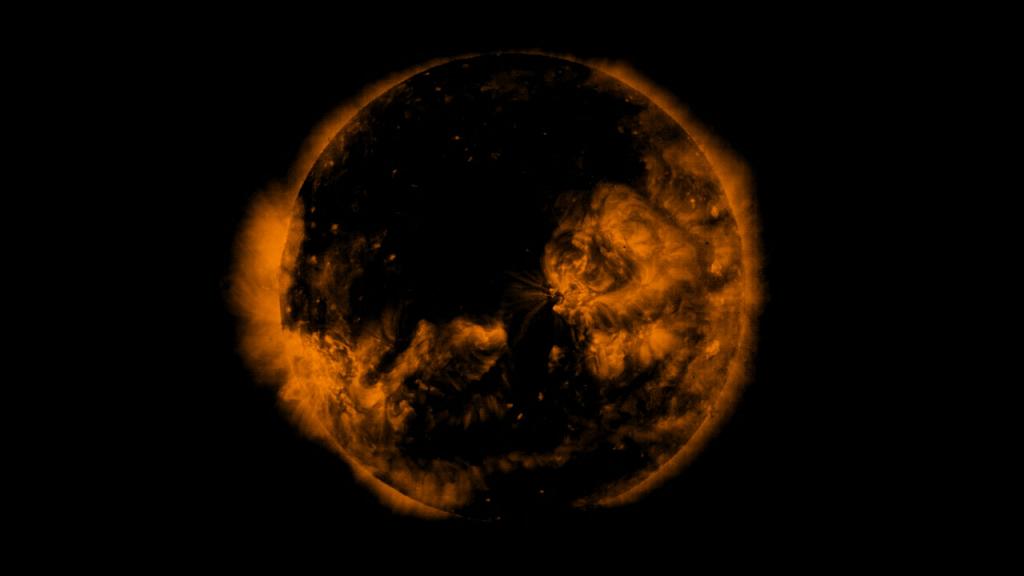
“The Solar Dynamics Observatory (SDO) has now captured nearly seven years worth of ultra-high resolution solar footage. This time lapse shows that full run from two of SDO’s instruments. The large orange sun is visible light captured by HMI. The smaller golden sun is extreme ultraviolet light from AIA and reveals some of the suns atmosphere, the corona. Both appear at one frame every 12 hours. SDO’s nearly unbroken run is now long enough to watch the rise and fall of the current solar cycle. The graph of solar activity shows the sunspot number, a measurement based on the number of individual spots and the number of sunspot groups. In this case, the line represents a smoothed 26-day average to more clearly show the overall trend.”

Video credit: NASA’s Goddard Space Flight Center/Scott Wiessinger


  • Facebook
  • Google
  • Slashdot
  • Reddit
  • Live
  • TwitThis
02-7-10

Solar Dynamics Observatory

Posted by


Credits: NASA/Goddard Space Flight Center Scientific Visualization Studio


Predictions of space weather are important as the effects of magnetic storms can be very significant: disruptions in radio communications, radiation hazards to astronauts in LEO, and power lines surges, just to name a few. The goal of NASA’s Living With a Star (LWS) Program is to understand the changing Sun and its effects on the Solar System. The Solar Dynamics Observatory (SDO) is one of NASA’s LWS missions.


SDO will take measurements of the solar activity. There are seven science questions SDO will try to answer. Among them, what is the mechanism that drives the cycles of solar activity? How do the EUV variations relate to the magnetic activity of the Sun? Is it possible to make predictions regarding the space weather and climate? The last question, if answered, will make choosing the launch windows for future interplanetary manned missions an easier task.


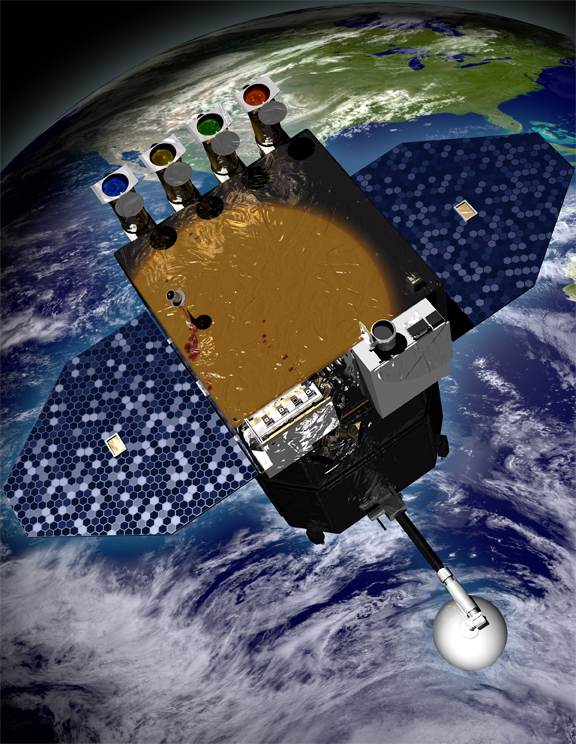
The spacecraft is 2.2 x 2.2 x 4.5 m and 3-axis stabilized. At launch, it has a mass of 3200 kg (270 kg the payload and 1400 kg the fuel). The solar panels are 6.5 m across, cover 6.6 m2, and produce up to 1540 W of power.
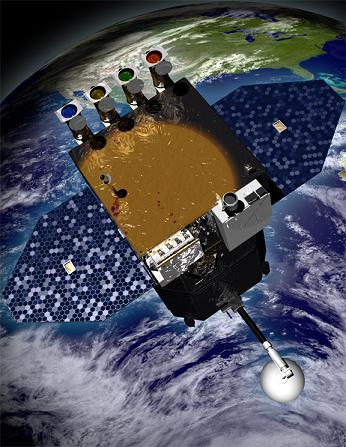
 

Credits: NASA


SDO carries three instruments: the Atmospheric Imaging Assembly (AIA), EUV Variability Experiment (EVE), and the Helioseismic and Magnetic Imager (HMI). The instruments will take measurements that will reveal at a very high rate the variations of the Sun.


The HMI was developed at Stanford University and it will extend the SOHO/MDI instrument. The HMI will help to study the origin of variability and the various components of the magnetic activity of the Sun. The measurements aim at understanding the origin and evolution of sunspots, sources and drivers of solar activity and disturbances, connections between the internal processes and the dynamics of the corona and the heliosphere.



You can find more information about the instrument on the HMI page on Stanford University’s web site.


The AIA will capture images of the solar atmosphere in ten wavelengths every ten seconds. The data collected by the instrument will improve the understanding of the activity in the solar atmosphere. The instrument was developed by Lockheed Martin.


EVE was developed at University of Colorado at Boulder. EVE will measure the solar extreme ultraviolet irradiance.


The SDO will launch aboard an Atlas V launch vehicle from SLC 41 at Cape Canaveral. SDO will operate on a geosynchronous orbit, which will allow continuous observations of the Sun. The orbit will also allow a continuous contact with a single dedicated ground station. The high data acquisition rate required such a mission profile, as a large on-board storage system would add to the overall complexity of the system.


You can find more information about SDO on NASA’s website.


  • Facebook
  • Google
  • Slashdot
  • Reddit
  • Live
  • TwitThis