OrbitalHub

The place where space exploration, science, and engineering meet

Domain is for sale. $50,000,000.00 USD. Direct any inquiries to contact@orbitalhub.com.

01-30-17

NASA’s Day of Remembrance

Posted by


They will always be remembered…

Apollo 1 (January 27, 1967)

Virgil “Gus” Grissom – Commander, Edward White – Command Pilot, Roger Chaffee – Pilot

STS-51 L (January 28, 1986)

Francis R. Scobee – Commander, Michael J. Smith – Pilot, Judith A. Resnik – Mission Specialist 1, Ellison Onizuka – Mission Specialist 2, Ronald E. McNair – Mission Specialist 3, Gregory B. Jarvis – Payload Specialist 1, Sharon Christa McAuliffe – Payload Specialist 2

STS-107 (February 1, 2003)

Rick D. Husband – Commander, William C. McCool – Pilot, Michael P. Anderson – Payload Commander, David M. Brown – Mission Specialist 1, Kalpana Chawla – Mission Specialist 2, Laurel Clark – Mission Specialist 3, Ilan Ramon – Payload Specialist 1

Video credit: NASA


  • Facebook
  • Google
  • Slashdot
  • Reddit
  • Live
  • TwitThis


Credits: NASA


As the primary cause of concern from space debris is physical damage upon impact, extensive efforts have been made for their detection. There are several detection methods, and they are grouped into two classes: active and passive.


Radar sensors fall into the first class, and radio interferometers and optical sensors in the second. One important element that has to be considered is the accuracy of the method used for detection.


The motion of an object in Earth orbit is completely determined if the so-called orbital elements are known. In theory, the orbital elements of a satellite can be calculated from only one observation. In practice, due to inherent observation errors, there is more than one observation needed to attain the precision required for orbital surveillance and prediction. Some 100-200 observations are required during the first days of orbit, 20-50 observations per day to update established orbits, and 200-300 observations per day to confirm and locate reentry in the case of decaying orbits.


In addition, the size of the debris is an important factor that affects the accuracy of the detection methods, and this is why only a small fraction of the space debris population is detectable, and as a consequence, catalogued. For example, present equipment is capable of tracking only objects bigger than 5 cm in diameter in low Earth orbit (altitudes of 160-2,000 km), and bigger than 50 cm in diameter in geosynchronous orbit (altitudes of 35,000 km). Further, the characteristics of certain type of orbits can make detection very difficult. For example, the debris population generated on highly elliptical and high inclination orbits with perigees situated deep in the Southern Hemisphere, also known as Molniya orbits, is very difficult to track. The geographic location of the ground stations used for space debris tracking makes detection impossible.


For these reasons, out of an estimated debris population of 600,000 objects bigger than 1 cm in diameter, only 19,000 can be tracked as of today.


The measurement and detection methods mentioned above are all remote methods. In-situ measurements of the characteristics of the debris environment have been conducted as well. In April 1984, the Space Shuttle Challenger placed into low Earth orbit a NASA spacecraft carrying a number of experiments for the purpose of characterizing the low Earth orbit environment. The spacecraft, the Long Duration Exposure Facility (LDEF), was a twelve-sided cylindrical structure and three-axis stabilized in order to ensure an accurate environmental exposure, and was supposed to spend one full year in orbit. Before the planned retrieval, the Space Shuttle fleet was grounded as a result of the Challenger accident on January 28, 1986. Eventually, the exposed facility was returned to Earth by the Space Shuttle Columbia during a mission in January 1990. After the extended mission, the results of the onboard experiments facilitated to a greater extent the understanding of the interactions between artificial objects and the space debris environment in Earth orbit as numerous impact craters were found on the outer layers of the spacecraft and analyzed.


In-situ measurements of the characteristics of the space debris environment have also been conducted by the European Retrievable Carrier (EURECA) and the Space Flyer Unit (SFU).


  • Facebook
  • Google
  • Slashdot
  • Reddit
  • Live
  • TwitThis


Credits: NASA


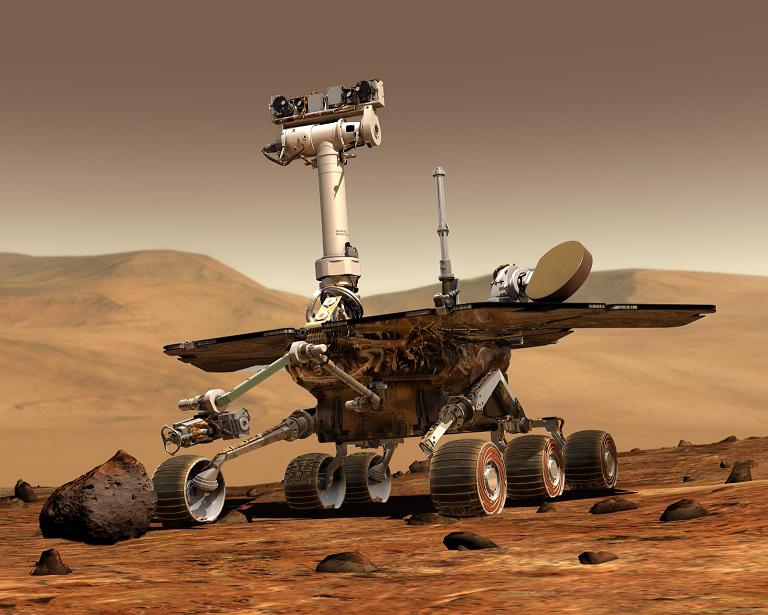
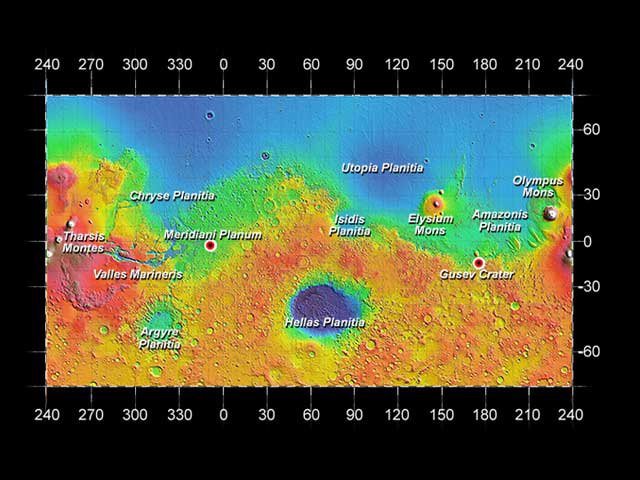
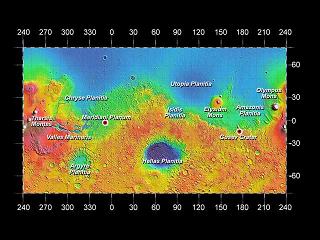
On January 3, 2004, the MER-A rover a.k.a. Spirit landed on Mars at the Gusev Crater. The second rover, MER-B a.k.a. Opportunity, followed twenty-one days later and landed at the Meridiani Planum.


They were both designed to operate for three months on the surface of Mars. Five years later, they are still operational and NASA has planned new missions for them.


Considering the harsh conditions on Mars, NASA’s twin rovers have accomplished remarkable things: they have returned a quarter-million images, driven more than thirteen miles, climbed a mountain, descended into impact craters, and survived dust storms. Using the Mars Odyssey orbiter as a communication relay, the rovers have sent more than 36 GB of scientific data back to Earth.


“These rovers are incredibly resilient considering the extreme environment the hardware experiences every day,” said John Callas, JPL project manager for Spirit and Opportunity. “We realize that a major rover component on either vehicle could fail at any time and end a mission with no advance notice, but on the other hand, we could accomplish the equivalent duration of four more prime missions on each rover in the year ahead.”
 

Credits: NASA


Digging into the MER mission archive, one detail caught my eye. The rovers carry plaques commemorating the crews of Columbia and Challenger, and some of the landmarks surrounding the landing sites of the rovers are dedicated to the astronauts of Apollo 1, Columbia, and Challenger.


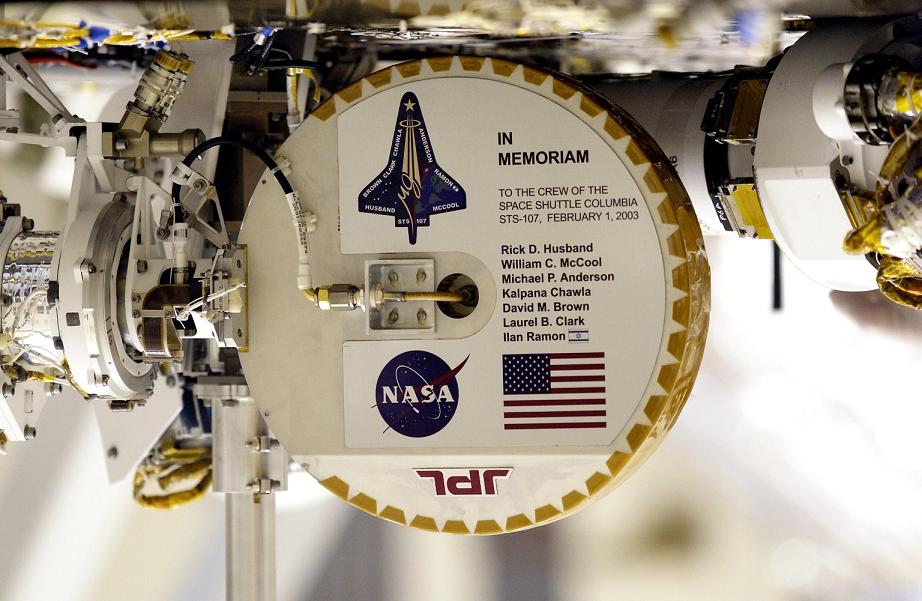
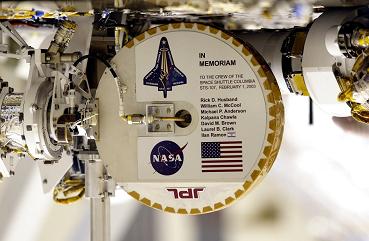
Spirit is carrying a plaque commemorating the STS-107 Space Shuttle Columbia crew, which has been mounted on the high-gain antenna of the rover.


The names of the STS-107 crew are inscribed on the plaque: Rick D. Husband, William C. McCool, Michael P. Anderson, Kalpana Chawla, David M. Brown, Laurel B. Clark, and Ilan Ramon. Their names are now looking over the Martian landscapes.


To further honor their memory, the landing site of the MER Spirit is called the Columbia Memorial Station.
 

Credits: NASA


Three of the hills surrounding the Columbia Memorial Station are dedicated to the Apollo 1 crew: Gus Grissom, Ed White, and Roger Chafee. Grissom Hill is located 7.5 km to the southwest of Columbia Memorial Station, White Hill is 11.2 km northwest of the landing site, and Chafee Hill is located 14.3 km south-southwest of the landing site.


The area where Opportunity landed in the Meridiani Planum is called Challenger Memorial Station, in memory of the last crew of the Space Shuttle Challenger: Francis R. Scobee, Michael J. Smith, Judith A. Resnik, Ellison S. Onizuka, Ronald E. McNair, Gregory B. Jarvis, and Sharon Christa McAuliffe. I remember that Sharon Christa McAuliffe was NASA’s first teacher in space.


“The journeys have been motivated by science, but have led to something else important,” said Steve Squyres of Cornell University, in Ithaca, N.Y. Squyres is principal investigator for the rover science instruments. “This has turned into humanity’s first overland expedition on another planet. When people look back on this period of Mars exploration decades from now, Spirit and Opportunity may be considered most significant not for the science they accomplished, but for the first time we truly went exploring across the surface of Mars.”

 

  • Facebook
  • Google
  • Slashdot
  • Reddit
  • Live
  • TwitThis