OrbitalHub

The place where space exploration, science, and engineering meet

Domain is for sale. $50,000,000.00 USD. Direct any inquiries to contact@orbitalhub.com.

01-30-17

NASA’s Day of Remembrance

Posted by


They will always be remembered…

Apollo 1 (January 27, 1967)

Virgil “Gus” Grissom – Commander, Edward White – Command Pilot, Roger Chaffee – Pilot

STS-51 L (January 28, 1986)

Francis R. Scobee – Commander, Michael J. Smith – Pilot, Judith A. Resnik – Mission Specialist 1, Ellison Onizuka – Mission Specialist 2, Ronald E. McNair – Mission Specialist 3, Gregory B. Jarvis – Payload Specialist 1, Sharon Christa McAuliffe – Payload Specialist 2

STS-107 (February 1, 2003)

Rick D. Husband – Commander, William C. McCool – Pilot, Michael P. Anderson – Payload Commander, David M. Brown – Mission Specialist 1, Kalpana Chawla – Mission Specialist 2, Laurel Clark – Mission Specialist 3, Ilan Ramon – Payload Specialist 1

Video credit: NASA


  • Facebook
  • Google
  • Slashdot
  • Reddit
  • Live
  • TwitThis
01-29-17

Apollo 1

Posted by


Wikipedia dixit:

“Apollo 1, initially designated AS-204, was the first manned mission of the United States Apollo program, which had as its ultimate goal a manned lunar landing. The low Earth orbital test of the Apollo Command/Service Module never made its target launch date of February 21, 1967. A cabin fire during a launch rehearsal test on January 27 at Cape Kennedy Air Force Station Launch Complex 34 killed all three crew members—Command Pilot Virgil I. “Gus” Grissom, Senior Pilot Edward H. White II, and Pilot Roger B. Chaffee—and destroyed the Command Module (CM). The name Apollo 1, chosen by the crew, was officially retired by NASA in commemoration of them on April 24, 1967.

Immediately after the fire, NASA convened the Apollo 204 Accident Review Board to determine the cause of the fire, and both houses of the United States Congress conducted their own committee inquiries to oversee NASA’s investigation. The ignition source of the fire was determined to be electrical, and the fire spread rapidly due to combustible nylon material, and the high pressure, pure oxygen cabin atmosphere. The astronauts’ rescue was prevented by the plug door hatch, which could not be opened against the higher internal pressure of the cabin. A failure to identify the test as hazardous (because the rocket was unfueled) led to the rescue being hampered by poor emergency preparedness.

During the Congressional investigation, then-Senator Walter Mondale publicly revealed a NASA internal document citing problems with prime Apollo contractor North American Aviation, which became known as the “Phillips Report”. This disclosure embarrassed NASA Administrator James E. Webb, who was unaware of the document’s existence, and attracted controversy to the Apollo program. Despite congressional displeasure at NASA’s lack of openness, both congressional committees ruled that the issues raised in the report had no bearing on the accident.

Manned Apollo flights were suspended for 20 months while the Command Module’s hazards were addressed. However, the development and unmanned testing of the Lunar Module (LM) and Saturn V Moon rocket continued. The Saturn IB launch vehicle for Apollo 1, AS-204, was used for the first LM test flight, Apollo 5. The first successful manned Apollo mission was flown by Apollo 1’s backup crew on Apollo 7 in October 1968.”

Video credit: NASA


  • Facebook
  • Google
  • Slashdot
  • Reddit
  • Live
  • TwitThis


Credits: NASA


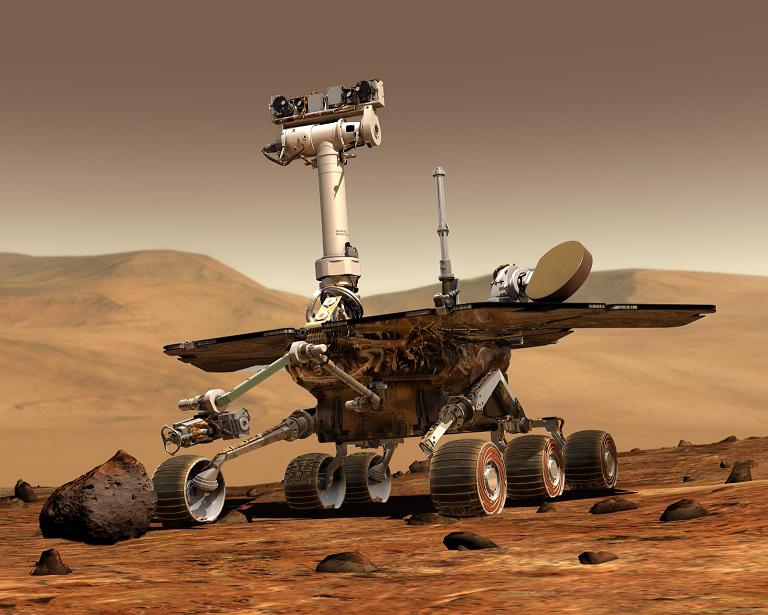
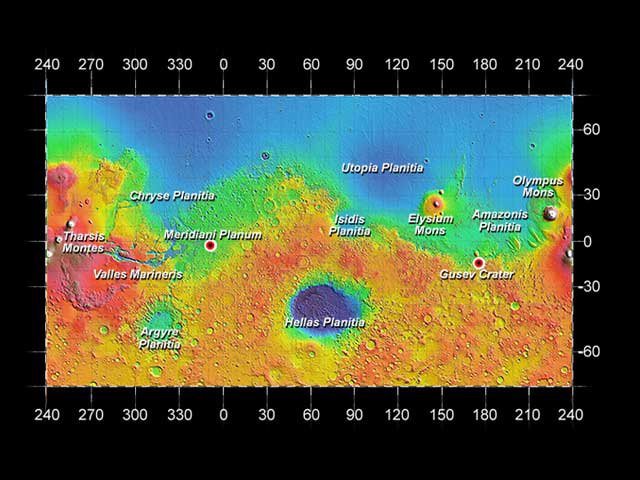
On January 3, 2004, the MER-A rover a.k.a. Spirit landed on Mars at the Gusev Crater. The second rover, MER-B a.k.a. Opportunity, followed twenty-one days later and landed at the Meridiani Planum.


They were both designed to operate for three months on the surface of Mars. Five years later, they are still operational and NASA has planned new missions for them.


Considering the harsh conditions on Mars, NASA’s twin rovers have accomplished remarkable things: they have returned a quarter-million images, driven more than thirteen miles, climbed a mountain, descended into impact craters, and survived dust storms. Using the Mars Odyssey orbiter as a communication relay, the rovers have sent more than 36 GB of scientific data back to Earth.


“These rovers are incredibly resilient considering the extreme environment the hardware experiences every day,” said John Callas, JPL project manager for Spirit and Opportunity. “We realize that a major rover component on either vehicle could fail at any time and end a mission with no advance notice, but on the other hand, we could accomplish the equivalent duration of four more prime missions on each rover in the year ahead.”
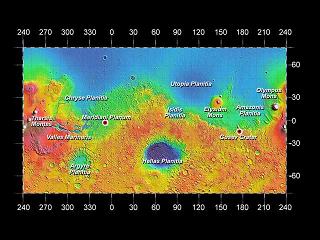
 

Credits: NASA


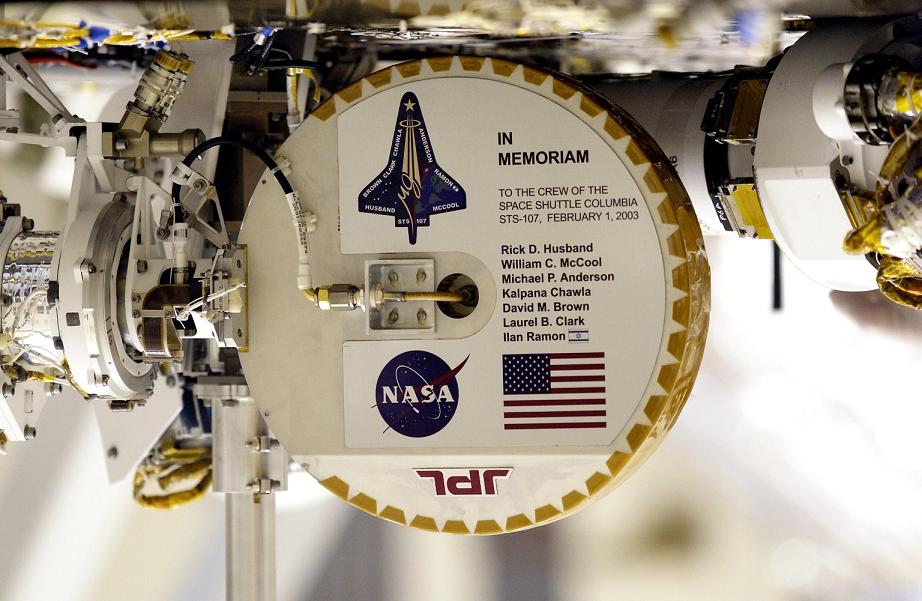
Digging into the MER mission archive, one detail caught my eye. The rovers carry plaques commemorating the crews of Columbia and Challenger, and some of the landmarks surrounding the landing sites of the rovers are dedicated to the astronauts of Apollo 1, Columbia, and Challenger.


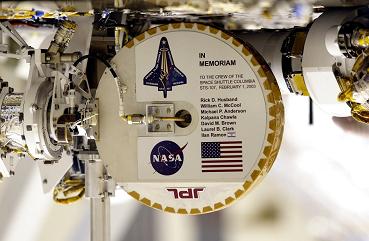
Spirit is carrying a plaque commemorating the STS-107 Space Shuttle Columbia crew, which has been mounted on the high-gain antenna of the rover.


The names of the STS-107 crew are inscribed on the plaque: Rick D. Husband, William C. McCool, Michael P. Anderson, Kalpana Chawla, David M. Brown, Laurel B. Clark, and Ilan Ramon. Their names are now looking over the Martian landscapes.


To further honor their memory, the landing site of the MER Spirit is called the Columbia Memorial Station.
 

Credits: NASA


Three of the hills surrounding the Columbia Memorial Station are dedicated to the Apollo 1 crew: Gus Grissom, Ed White, and Roger Chafee. Grissom Hill is located 7.5 km to the southwest of Columbia Memorial Station, White Hill is 11.2 km northwest of the landing site, and Chafee Hill is located 14.3 km south-southwest of the landing site.


The area where Opportunity landed in the Meridiani Planum is called Challenger Memorial Station, in memory of the last crew of the Space Shuttle Challenger: Francis R. Scobee, Michael J. Smith, Judith A. Resnik, Ellison S. Onizuka, Ronald E. McNair, Gregory B. Jarvis, and Sharon Christa McAuliffe. I remember that Sharon Christa McAuliffe was NASA’s first teacher in space.


“The journeys have been motivated by science, but have led to something else important,” said Steve Squyres of Cornell University, in Ithaca, N.Y. Squyres is principal investigator for the rover science instruments. “This has turned into humanity’s first overland expedition on another planet. When people look back on this period of Mars exploration decades from now, Spirit and Opportunity may be considered most significant not for the science they accomplished, but for the first time we truly went exploring across the surface of Mars.”

 

  • Facebook
  • Google
  • Slashdot
  • Reddit
  • Live
  • TwitThis