OrbitalHub

The place where space exploration, science, and engineering meet

Domain is for sale. $50,000,000.00 USD. Direct any inquiries to contact@orbitalhub.com.

10-16-17

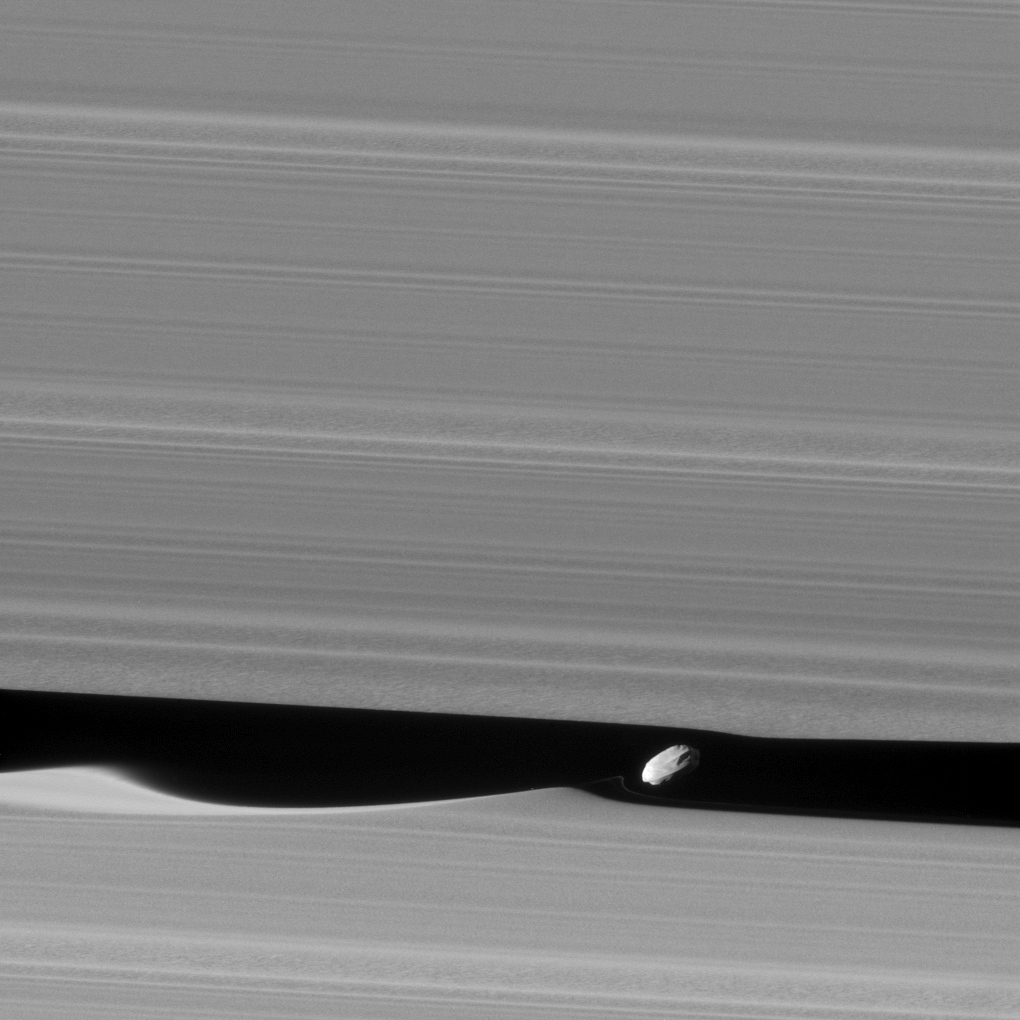
Daphnis Up Close

Posted by


NASA dixit:

“January 16, 2017. The wavemaker moon, Daphnis, is featured in this view, taken as NASA’s Cassini spacecraft made one of its ring-grazing passes over the outer edges of Saturn’s rings. This is the closest view of the small moon obtained yet. Daphnis (5 miles or 8 kilometers across) orbits within the 42-kilometer (26-mile) wide Keeler Gap. Cassini’s viewing angle causes the gap to appear narrower than it actually is, due to foreshorteneing.

The little moon’s gravity raises waves in the edges of the gap in both the horizontal and vertical directions. Cassini was able to observe the vertical structures in 2009, around the time of Saturn’s equinox. Like a couple of Saturn’s other small ring moons, Atlas and Pan, Daphnis appears to have a narrow ridge around its equator and a fairly smooth mantle of material on its surface — likely an accumulation of fine particles from the rings. A few craters are obvious at this resolution. An additional ridge can be seen further north that runs parallel to the equatorial band.

Fine details in the rings are also on display in this image. In particular, a grainy texture is seen in several wide lanes which hints at structures where particles are clumping together. In comparison to the otherwise sharp edges of the Keeler Gap, the wave peak in the gap edge at left has a softened appearance. This is possibly due to the movement of fine ring particles being spread out into the gap following Daphnis’ last close approach to that edge on a previous orbit. A faint, narrow tendril of ring material follows just behind Daphnis (to its left). This may have resulted from a moment when Daphnis drew a packet of material out of the ring, and now that packet is spreading itself out.

The image was taken in visible (green) light with the Cassini spacecraft narrow-angle camera. The view was acquired at a distance of approximately 17,000 miles (28,000 kilometers) from Daphnis and at a Sun-Daphnis-spacecraft, or phase, angle of 71 degrees. Image scale is 551 feet (168 meters) per pixel.”

Image credit: NASA/JPL-Caltech/Space Science Institute


  • Facebook
  • Google
  • Slashdot
  • Reddit
  • Live
  • TwitThis
10-13-17

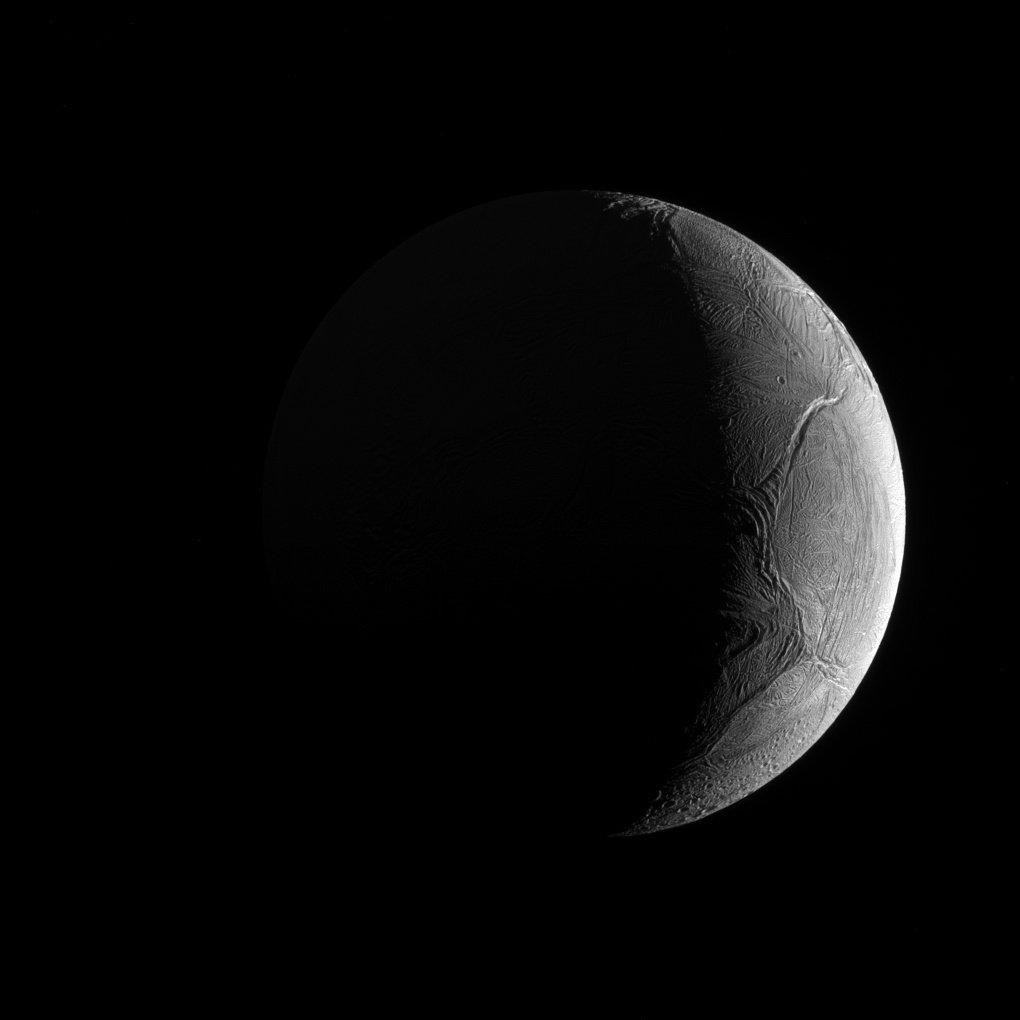
Enceladus

Posted by


NASA dixit:

“November 27, 2016. Seen from outside, Enceladus appears to be like most of its sibling moons: cold, icy and inhospitable. But under that forbidding exterior may exist the very conditions needed for life. Over the course of the Cassini mission, observations have shown that Enceladus (313 miles or 504 kilometers across) not only has watery jets sending icy grains into space; under its icy crust it also has a global ocean, and may have hydrothermal activity as well. Since scientists believe liquid water is a key ingredient for life, the implications for future missions searching for life elsewhere in our solar system could be significant.

This view looks toward the Saturn-facing hemisphere of Enceladus. North on Enceladus is up and rotated 6 degrees to the right. The image was taken in green light with the Cassini spacecraft narrow-angle camera. The view was obtained at a distance of approximately 81,000 miles (130,000 kilometers) from Enceladus. Image scale is 2,566 feet (782 meters) per pixel.”

Image credit: NASA/JPL-Caltech/Space Science Institute


  • Facebook
  • Google
  • Slashdot
  • Reddit
  • Live
  • TwitThis


NASA dixit:

“In October 2017, The Lunar Reconnaissance Orbiter celebrates 100 lunar days of being at the Moon. Part 1 of this video series helps explain what a “lunar day” is, and what it means for the spacecraft’s mission to have been at the Moon for this period of time.”

Music provided by Killer Tracks: “Time is Running” – Dirk Ehlert, Guillermo De La Barreda; “Buckaroo Instrumental” – Alan Gold & Fiona Hamilton.

Video credit: NASA Goddard


  • Facebook
  • Google
  • Slashdot
  • Reddit
  • Live
  • TwitThis
10-12-17

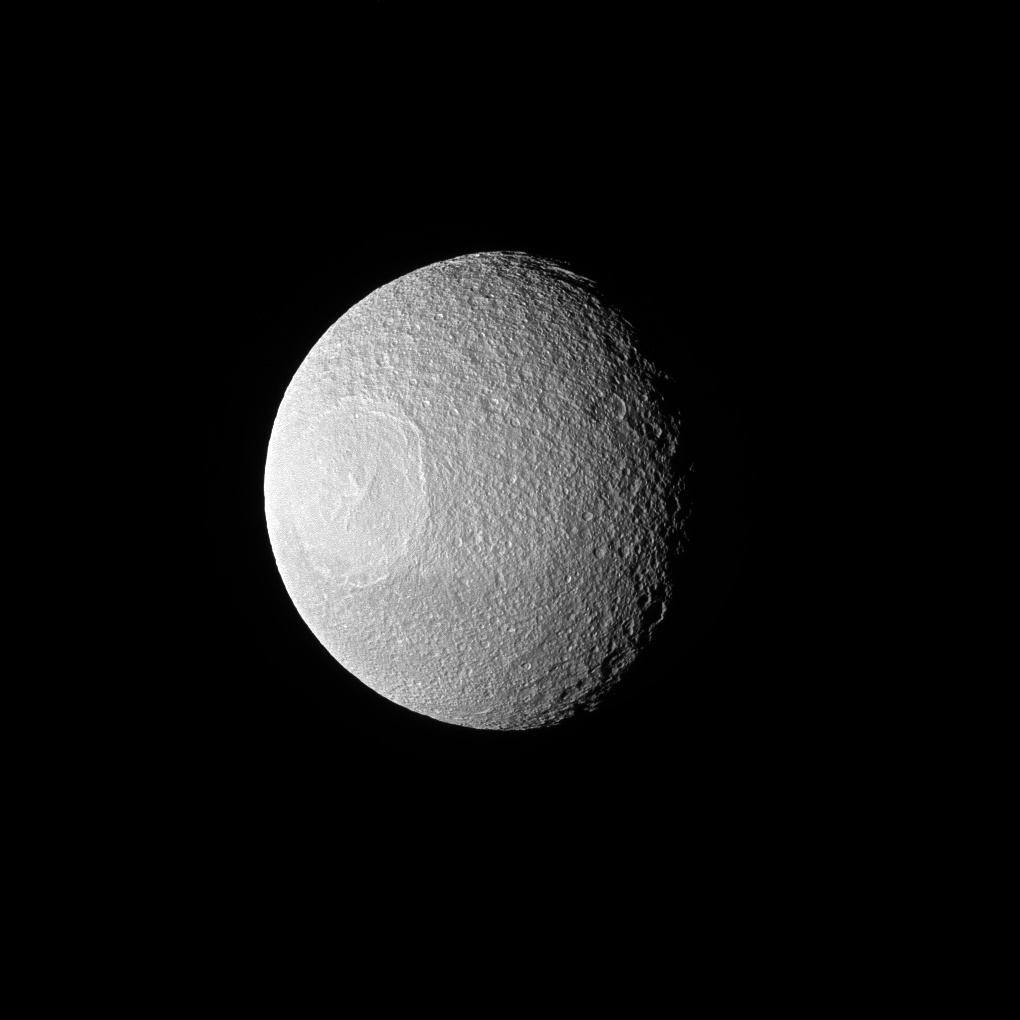
Tethys

Posted by


NASA dixit:

“November 10, 2016. Tethys, one of Saturn’s larger icy moons, vaguely resembles an eyeball staring off into space in this view from NASA’s Cassini spacecraft. The resemblance is due to the enormous crater, Odysseus, and its complex of central peaks. Like any solar system moon, Tethys (660 miles or 1,062 kilometers across) has suffered many impacts. These impacts are a prime shaper of the appearance of a moon’s surface , especially when the moon has no active geological processes. In this case, a large impact not only created a crater known as Odysseus, but the rebound of the impact caused the mountainous peaks, named Scheria Montes, to form in the center of the crater.

This view looks toward the leading side of Tethys. North on Tethys is up and rotated 1 degree to the left. The image was taken in green light with the Cassini spacecraft narrow-angle camera. The view was acquired at a distance of approximately 228,000 miles (367,000 kilometers) from Tethys. Image scale is 1.2 miles (2 kilometers) per pixel.”

Image credit: NASA/JPL-Caltech/Space Science Institute


  • Facebook
  • Google
  • Slashdot
  • Reddit
  • Live
  • TwitThis


NASA dixit:

“In 2017, we have seen four Atlantic storms rapidly intensify with three of those storms – Hurricane Harvey, Irma and Maria – making landfall. When hurricanes intensify a large amount in a short period, scientists call this process rapid intensification. This is the hardest aspect of a storm to forecast and it can be most critical to people’s lives. While any hurricane can threaten lives and cause damage with storm surges, floods, and extreme winds, a rapidly intensifying hurricane can greatly increase these risks while giving populations limited time to prepare and evacuate.”

Music credits: ‘Micro Currents’ by Jean-Patrick Voindrot [SACEM], ‘Sink Deep’ by Andrew Michael Britton [PRS], David Stephen Goldsmith [PRS], Mikey Rowe [PRS] from Killer Tracks.

Video credit: NASA Goddard


  • Facebook
  • Google
  • Slashdot
  • Reddit
  • Live
  • TwitThis
10-11-17

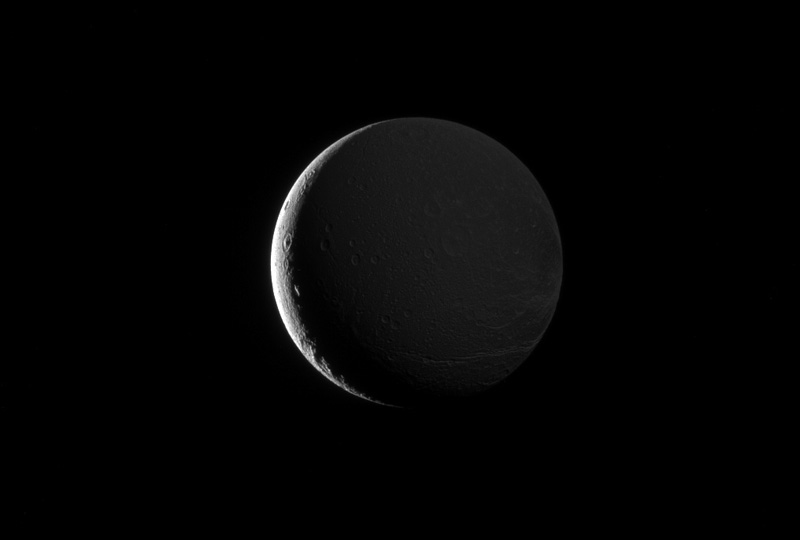
Coy Dione

Posted by


NASA dixit:

“October 23, 2016. Dione’s lit hemisphere faces away from Cassini’s camera, yet the moon’s darkened surface features are dimly illuminated in this image, due to Saturnshine. Although direct sunlight provides the best illumination for imaging, light reflected off of Saturn can do the job as well. In this image, Dione (698 miles or 1,123 kilometers across) is above Saturn’s day side, and the moon’s night side is faintly illuminated by sunlight reflected off the planet’s disk.

This view looks toward the Saturn-facing side of Dione. North on Dione is up and rotated 8 degrees to the right. The image was taken in visible light with the Cassini spacecraft narrow-angle camera. The view was obtained at a distance of approximately 313,000 miles (504,000 kilometers) from Dione. Image scale is 1.8 miles (3 kilometers) per pixel.”

Image credit: NASA/JPL-Caltech/Space Science Institute


  • Facebook
  • Google
  • Slashdot
  • Reddit
  • Live
  • TwitThis