OrbitalHub

The place where space exploration, science, and engineering meet

Domain is for sale. $50,000,000.00 USD. Direct any inquiries to contact@orbitalhub.com.


Credits: MDA


MDA (MacDonald, Dettwiler and Associates Ltd.) is a Canadian company that was incorporated in 1969 by two British Columbia entrepreneurs, John MacDonald and Werner Dettwiler. The company offers a broad spectrum of services. Currently, MDA is developing a Space Infrastructure Servicing (SIS) spacecraft that would operate as a refueling depot for communication satellites in geosynchronous orbit.


Geostationary communication satellites have to perform regular orbital stationkeeping maneuvers, which need delta-v of approximately 50 m/s/year (this translates into fuel consumption). As a result, the lifespan of a satellite is proportional to the amount of fuel it carries onboard, even if most satellites are capable of operating beyond this lifespan. MDA’s SIS system would extend the operational lifespan of these satellites and save satellite operators a lot of money (refueling a satellite would save the operators the cost of building and launching a new satellite).


A typical SIS mission profile not only includes satellite refueling, but also cleaning orbital slots by pushing dead satellites into graveyard orbits. This would also be a money saver because orbital slots are quite expensive.


However, there are challenges. The satellites currently operating are not designed to be serviced/refueled while on orbit (the Hubble Space Telescope is a notable exception). And this will make the refueling maneuver quite complicated… the servicing satellite has to remove a part of the thermal protection blanket of the target spacecraft before connecting to an internal fuel line.


In a March 15, 2011, press release, MDA announced that Intelsat S.A. entered into an agreement with MDA for the servicing of Intelsat’s operational satellites. On-orbit servicing is to be performed by a space-based service vehicle provided by MDA. From the press release:


“The SIS vehicle is expected to be the first of its kind, utilizing a sophisticated robotics and docking system. This system will be based on work that MDA has previously performed for NASA, the Canadian Space Agency and various Department of Defense agencies. The SIS vehicle’s robotic arm will not only be used in refueling, but could also be used to perform critical maintenance and repair tasks, such as releasing jammed deployable arrays and stabilizing or towing smaller space objects or debris. Intelsat, the world’s largest operator of commercial satellites in the geosynchronous arc, is expected to provide flight operations support for the SIS vehicle for the life of the mission.”


The services to be provided by MDA to Intelsat are estimated at more than US$280 million. In the June 17, 2011, press release, MDA also announced that it is extending by three months the requirements definition phase of its SIS initiative.


Needless to say, on-orbit servicing will be a very lucrative endeavor. It also has a strategic importance. Very expensive LEO observation satellites used by the military would benefit from such on-orbit services. Also, NASA is under a tremendous budget pressure. And this can be an answer to the question why NASA would move forward with its own on-orbit servicing initiative.


NASA will demonstrate in-orbit satellite refueling at the International Space Station. MDA-built Dextre, equipped with special tools, will cut through a satellite exterior shell and pump fuel into a mock satellite.


The first thing that comes to mind is that a NASA competition may put the MDA SIS system at risk. Does anyone remember the Avro Canada CF-105 Arrow?


  • Facebook
  • Google
  • Slashdot
  • Reddit
  • Live
  • TwitThis


Credits: Ronald C. Wittmann


There are numerous examples of successful implementation of mitigation measures, but also some not so successful, and even failures. There are two cases that I will mention, one from each camp.


Cosmos 954 was a Soviet Radar Ocean Reconnaissance Satellite (RORSAT) powered by an onboard nuclear reactor. At the time, the Russian designers were not able to find an alternative for the power system due to the power requirements of the payload carried by the spacecraft, which was a powerful radar. A post-mission mitigation method that involved parking the nuclear reactor on a higher orbit (with an estimated lifetime of hundreds of years) was adopted.


It seems that not enough effort was put into designing a reliable solution for the post-mission disposal method of the nuclear reactor. Besides the inherent low reliability associated with hardware in developmental phases, the quality assurance practices at that time were most likely affected by the conditions of the Cold War. In both camps, the concerns regarding the environment were ignored in favor of the military and political goals.


In 1978, COSMOS 954 failed to separate its nuclear reactor core and boost it into the post-mission parking orbit as planned. The reactor remained onboard the satellite and eventually re-entered into the Earth atmosphere and crashed near the Great Slave Lake in Canada’s Northwest Territories. The radioactive fuel was spread over a 124,000 km2 area. The recovery teams retrieved 12 large pieces of the reactor, which comprised only 1% of the reactor fuel. All of these pieces displayed lethal levels of radioactivity.


To highlight how dangerous and how serious the use of nuclear power sources for space mission is, consider these figures: at present, there are 32 defunct nuclear reactors in orbit around the Earth. There are also 13 reactor fuel cores and at least 8 radio-thermal generators (RTGs). The total mass of RTG nuclear fuel in orbit is in the order of 150 kg. The total mass of Uranium-235 reactor fuel in orbit is in the order of 1,000 kg.


RADARSAT-1 is an Earth observation satellite developed in Canada. Equipped with a powerful synthetic aperture radar (SAR) instrument, RADARSAT-1 monitors environmental changes and the planet’s natural resources. Well beyond the planned five-year lifetime, the satellite continues to provide images of the Earth for both scientific and commercial applications.


Following the guidelines of the United Nations Committee on the Peaceful Uses of Outer Space (COPUOS) document entitled Guidelines for Space Debris Mitigation, and implementing mitigation measures required for the space hardware manufacturers in Canada, the Canadian Space Agency has prepared post-mission disposal plans for its remote sensing satellite RADARSAT-1. As a prerequisite to the end of mission procedures, the energy stored in the propellant tanks, the wheels, and the batteries of the satellite will be removed, as suggested in the COPUOS guidelines. Also, the remaining fuel will be used to lower the orbit in addition to orienting the satellite so that drag is maximized. These measures will aim to reduce the orbit life span of the satellite to the lowest possible.


Simulations performed using NASA’s long-term debris environment evolutionary model (LEO-to-GEO Environment Debris model or LEGEND) or ESA’s debris environment long-term analysis tool (DELTA) have shown that even if new launches are not conducted, the existing population of orbital debris will continue to increase. This increase in number is caused by collisions between the objects already orbiting the Earth at the present time. Following the Iridium/Cosmos collision in 2009, the U.S. Air Force has issued hundreds of notifications to Russia and China regarding potential crashes between their satellites and other objects in orbit.


Even if we are contemplating grim future developments like the one mentioned above, international initiatives do not seem to gain enough momentum. NASA (National Aeronautics and Space Administration) and DARPA (Defense Advanced Research Projects Agency) were the sponsors of the first International Conference on Orbital Debris Removal, which was held in Chantilly, Virginia, December 8-10, 2009. The conclusions of the conference included the observation that:


“No evident consensus or conclusions were reached at the conference. Removing existing, non-cooperative objects from Earth orbit is an extremely difficult and likely expensive task. Although some of the techniques for removal discussed at the Conference have the potential of being developed into technically feasible systems, each concept seems to currently suffer from either a lack of development and testing or economic viability.”


  • Facebook
  • Google
  • Slashdot
  • Reddit
  • Live
  • TwitThis


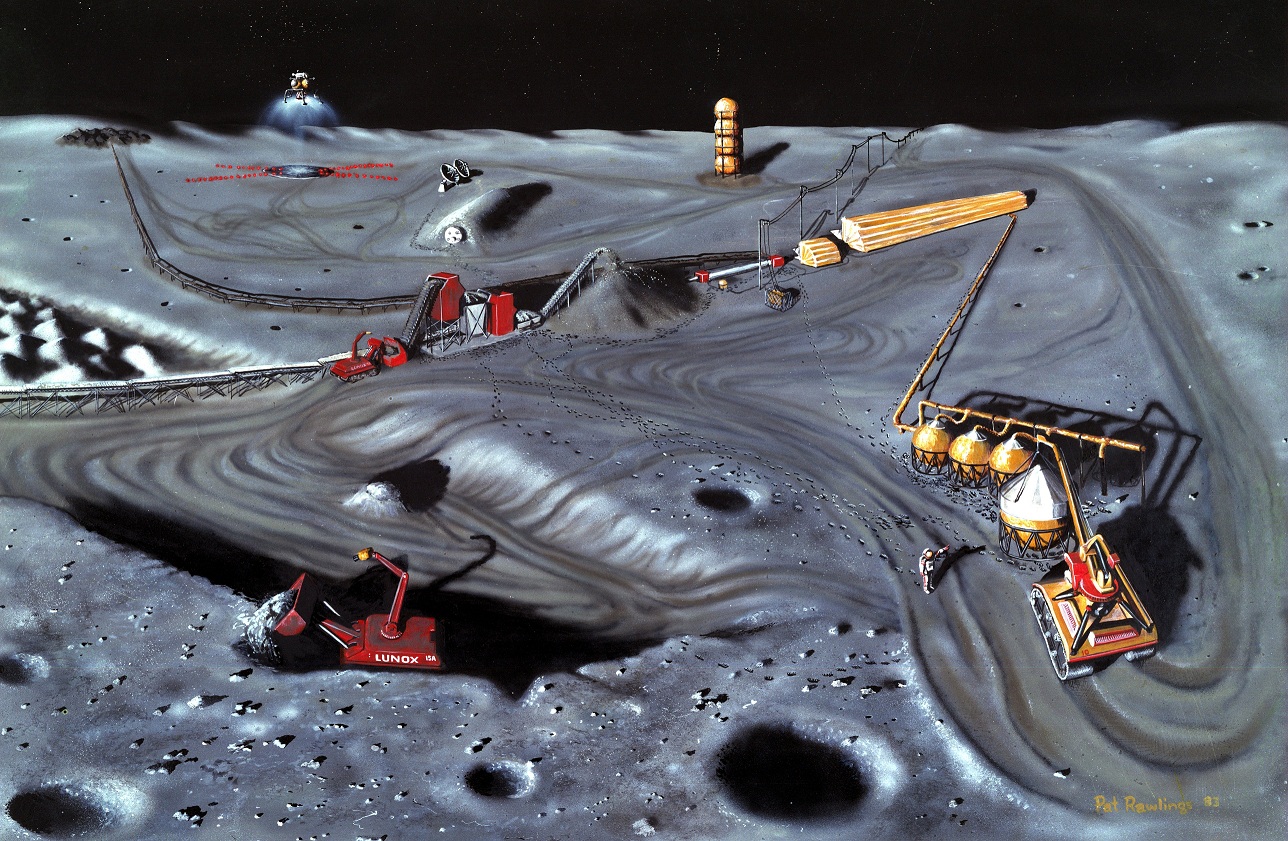
Credits: Pat Rawlings


Excavation is a necessary first step towards extracting resources from the lunar regolith and building human settlements on the moon. NASA’s Lunabotics Mining Competition is designed to promote the development of interest in lunar regolith mining, which is especially challenging due to the unique properties of the lunar regolith, reduced gravity, and vacuum.


A Canadian team took first place in the second edition of NASA’s Lunabotics Mining Competition. Team Production of Laurentian University of Sudbury, Ontario, consisted of 4th year mechanical engineering students. The team had to compete with teams from 40 other universities from the U.S., Canada, India, Chile, and Bangladesh.


The competition was conducted at Kennedy Space Center, from May 23 to May 28, 2011. The minimum excavation requirement was 10 kilograms and the maximum excavation hardware mass was 80 kilograms. The lunabots performed in an enclosure (a.k.a. Lunarena) filled with compacted lunar regolith simulant.


The Canadian lunabot was able to excavate 237.4 kilograms of synthetic lunar regolith in 15 minutes. The team won a $5,000 cash prize and VIP passes to the final launch of the Space Shuttle Atlantis in July.


  • Facebook
  • Google
  • Slashdot
  • Reddit
  • Live
  • TwitThis


Credits: NASA


The International Organization for Standardization (ISO) has implemented the UN Space Debris Mitigation guidelines in a number of standards.


The standards prescribe requirements that are derived from already existing international guidelines, but they capture industry best practices and contain specific actions to be taken by hardware manufactures to achieve compliance.


The highest level debris mitigation requirements are contained in a Space Debris Mitigation standard. This standard defines the main space debris mitigation requirements applicable over the life cycle of a space system and provides links to lower-level implementation standards. It is also important to be able to assess, reduce, and control the potential risks that space vehicles that re-enter Earth’s atmosphere pose to people and the environment. The Re-entry Risk Management standard provides a framework that is useful in this regard.


The seven guidelines endorsed by the United Nations Committee on the Peaceful Uses of Outer Space (COPUOS), also known as the Space Debris Mitigation Guidelines of COPUOS, are:

“limit debris released during normal operations;

minimize the potential for break-ups during operational phases;

limit the probability of accidental collision in orbit;

avoid intentional destruction and other harmful activities;

minimize potential for post-mission break-ups resulting from stored energy;

limit the long-term presence of spacecraft and launch vehicle orbital stages in LEO after the end of their mission;

limit the long-term interference of spacecraft and launch vehicle orbital stages with GEO region after the end of their mission;”


The good news is that as of the end of 2010, most of the space faring nations have implemented regulations on space debris mitigation at the national level.


  • Facebook
  • Google
  • Slashdot
  • Reddit
  • Live
  • TwitThis


Credits: NASA


Let us see how the areas mentioned in the previous Sustainability in LEO post are covered at national level in the United States.


The United States has implemented a space traffic management program in the form of the Joint Space Operations Center (JSpOC) of the U.S. Strategic Command at Vandenberg Air Force Base in California.


JSpOC conducts periodic conjunction assessments for all NASA programs and projects that operate maneuverable spacecraft in low Earth orbits (LEO) or in geosynchronous orbits (GEO). Depending on the mission, the conjunction assessments can be performed up to three times daily. If JSpOC identifies an object that is expected to come in the proximity of a NASA spacecraft, and the collision risk is high enough (for manned missions the minimal value accepted is 1 in 10,000, while for robotic missions the threshold is 1 in 1,000), a conjunction assessment alert message is sent to the mission control in order to have collision avoidance maneuver commands sent to the spacecraft. The alert messages contain the predicted time and distance at closest approach, as well as the uncertainty associated with the prediction.


The control of the creation of space debris is addressed by orbital debris mitigation standard practices in four major areas: normal operations, accidental explosions, safe flight profile and operational configuration, and post-mission disposal of space structures. There are also NASA standards and processes that aim at limiting the generation of orbital debris.


The commonly-adopted mitigation methods, which focus on minimization of space debris creation, will not preserve the near-Earth environment for the future generations. As a matter of fact, the debris population increase will be worse than predicted by LEGEND-generated models due to ongoing launch activities and unexpected (but possible) major breakups. Here is where active space debris environment remediation comes into play.


The active space debris environment remediation is mainly concerned with the removal of large objects from orbit. Such large objects are defunct spacecraft (i.e. communication satellites that exceeded their operational life), upper stages of launch vehicles, and other mission-related objects. The removal of large objects from orbit is known as Active Debris Removal (ADR). Several innovative concepts are under study. Among them, tethers used for momentum exchange or electro-dynamic drag force, aerodynamic drag, solar sails, and auxiliary propulsion units. LEGEND studies have revealed that ADR is a viable control method as long as an effective removal selection criterion based on mass and collision probability is used, and there are at least five objects removed from orbit every year. The electrodynamic tethers seem to lead the competition so far, as they have a low mass requirement and can remove spent or dysfunctional spacecraft from low Earth orbit rapidly and safely.


Re-entry in the Earth’s atmosphere of space mission related objects is an important aspect to be considered in this context. Even though no casualties or injuries have been reported so far being caused by components of re-entering spacecraft, fragments from space hardware pose a risk to human life and property on the ground. One big concern is caused by the fact that the point of impact from uncontrolled re-entries cannot be calculated exactly. The uncertainties are due to a large number of parameters that affect the trajectory and the heat of ablation of objects re-entering the atmosphere.


  • Facebook
  • Google
  • Slashdot
  • Reddit
  • Live
  • TwitThis


Credits: NASA


Space debris mitigation measures address issues in two major areas: protection from space debris and reduction of the space debris population growth.


Protection methods vary depending on the size of the space debris. Space debris fragments smaller than 0.1 mm in diameter do not have enough energy to penetrate protection panels. Even spacecraft thermal blankets and structural panels can offer protection from such small kinetic impactors.


However, larger debris fragments pose a more serious threat and there are few active measures that can be adopted to minimize the possibility or the consequences of impacts.


First, avoiding space debris is the method that always proves successful, so flying at altitudes and inclinations where space debris density is low should always be considered. Second, orienting sensitive surfaces away from or mounting a bumper on the leading edge can offer more protection for the spacecraft. Multilayered bumpers cause the fragmentation of the space debris and also prevent ejected material from dispersing from the point of impact. Bumpers add mass and volume to the spacecraft and this is why few space missions can exercise this option.


A promising new method for protection from orbital debris impact is shielding with metallic foams. Extensive research and experimental impact campaigns have proven that metallic open-cell foams provide improved protection against hypervelocity impacts with almost no ejecta generated at impact, while offering comparable mechanical and thermal performance to honeycomb structures, which are currently used for shielding. The fact that no ejecta are generated is of great importance, as fragments generated at impact can add to the already existing debris population in Earth orbit.


At this point, it appears that the best protection method is avoiding the creation of space debris.


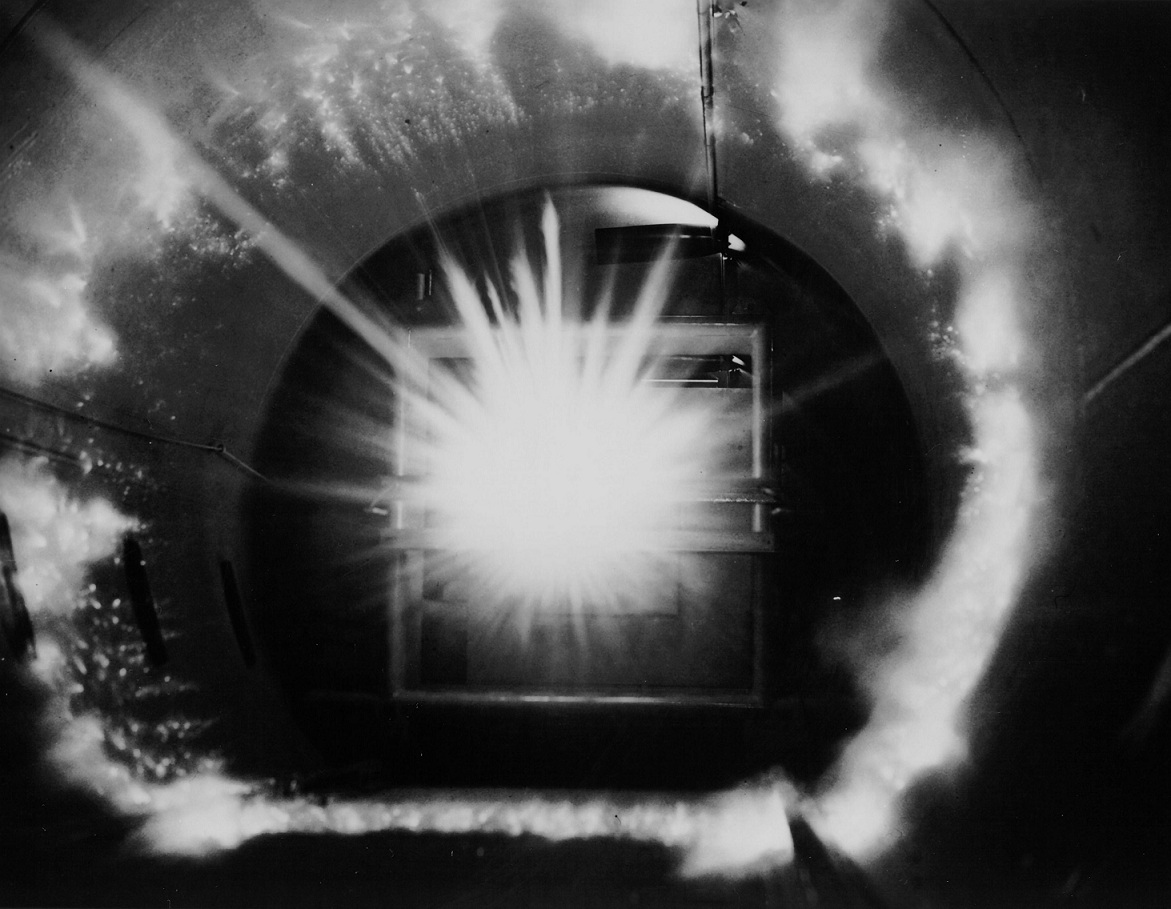
The long-term projections of the space debris environment generated by models like LEGEND or DELTA have proven that only active methods can maintain a stable environment of artificial objects in Earth orbit. It is quite obvious that unchanged operational practices or even an immediate stop to launch and release activities will not prevent the collisions between already existing space hardware. Scenarios like the one proposed by NASA scientist Donald J. Kessler in 1978 are very likely to occur. In the scenario proposed by Kessler, which is also known as the Kessler Syndrome, space exploration and the use of satellites in proximity of Earth will become unfeasible due to an exponential growth of the debris population caused by collisional cascading. The exponential growth is due to the fact that the material ejected during a hypervelocity impact becomes space debris itself. Laboratory experiments have shown that as a result of such an impact, 1 kg of aluminum can form several hundred thousand 1 mm sized particles.


Failure to address the potential uncontrollable growth of the space debris population will lead to major restrictions on the ability to exploit space. There is a debate in the scientific community over whether or not critical density has already been reached in certain orbital regions and if we are beyond the point where we can address the growth of the debris population.


There are various classifications of the space debris mitigation methods. For example, two broad categories might include, on one hand, measures that restrict the generation of space debris in the near future, such as limiting the production of mission-related objects and the avoidance of breakups, and, on the other hand, measures that restrict their generation for the long term, which include post-mission disposal methods and active measures to remove space debris from protected regions.


There are three major areas that could allow space faring nations to maintain a stable debris environment: space traffic management, control the creation of space debris, and active space debris environment remediation.


  • Facebook
  • Google
  • Slashdot
  • Reddit
  • Live
  • TwitThis