OrbitalHub

The place where space exploration, science, and engineering meet

Domain is for sale. $50,000,000.00 USD. Direct any inquiries to contact@orbitalhub.com.


Credits: ESA MPS for OSIRIS Team MPS/UPM/
LAM/IAA/RSSD/INTA/UPM/DASP/IDA


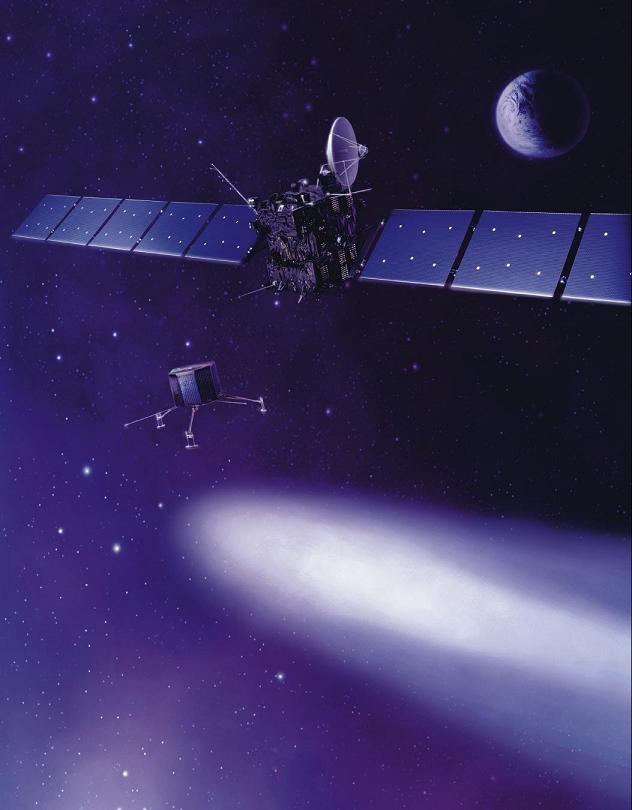
On September 6th, 2008, the ESA’s space probe Rosetta performed the first highlight on its 11 year mission: a close flyby the asteroid 2867 Steins. There are two more important events to occur during the mission, which are another flyby the asteroid 21 Lutetia in 2010 and the actual rendezvous with the comet 67/P Churyumov-Gerasimenko in 2014.


The Rosetta mission is special in many ways. It is the first mission to deploy a lander to the surface of a comet. It will also be the first to orbit the nucleus of a comet and to fly alongside a comet as it heads towards the inner Solar System.


Credits: ESA


Rosetta’s mission began on March 2nd, 2004, when the spacecraft lifted off from Kourou, French Guiana. In order to optimize the use of fuel, the probe has a very complicated trajectory to reach its final target, the comet 67/P Churyumov-Gerasimenko. The long trajectory includes three Earth-gravity assists (2004, 2007, and 2009) and one at Mars (2007). The probe uses the gravity wells of Earth and Mars to accelerate to the speed needed for the rendezvous with the comet. Most of the time, the probe is hibernating with the majority of its systems shut down in order to optimize the power consumption. At the time of the rendezvous, the remaining fuel will be used to slow down the probe to match the speed of the comet.


Credits: ESA/AOES Medialab


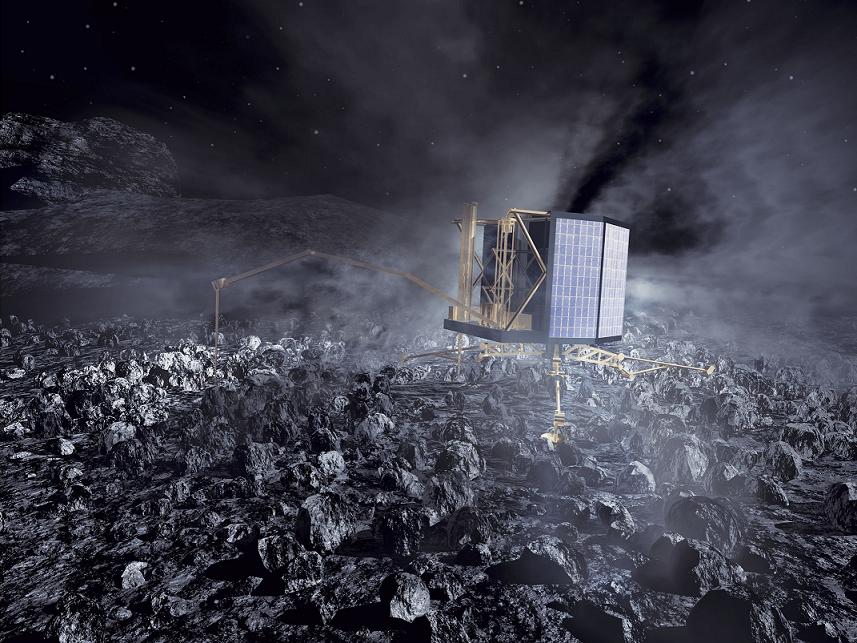
After reaching the comet, Rosetta will deploy a lander, called Philae, to the surface. While the probe will study the comet’s nucleus from a close orbit, the lander will take measurements from the comet’s surface. Because the gravity of the comet is very weak, the lander will use a harpoon to anchor itself to the surface.


Rosetta will stay with the comet more than one year, and during this time it will study one of the most primitive materials in the solar system. Scientists hope to discover the secrets of the physical and chemical processes that marked the beginning of the solar system some 5 billion years ago.


Credits: ESA/AOES Medialab


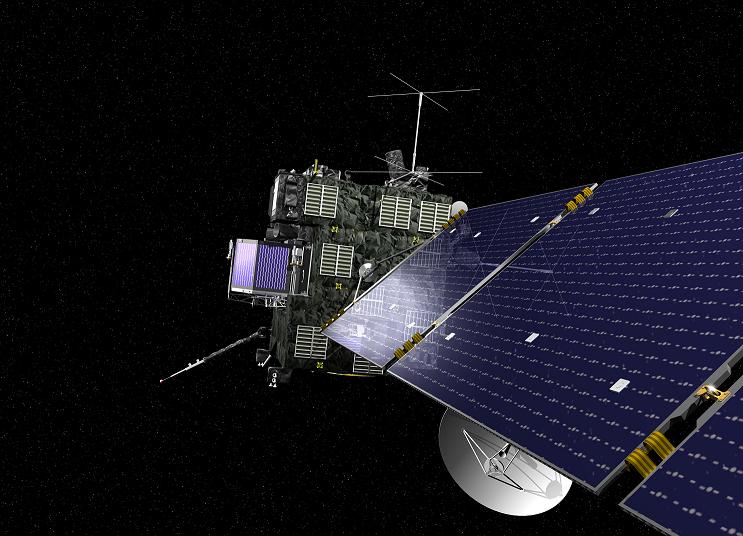
Traditionally, probes sent beyond the main asteroid belt employ radioisotope thermal generators (RTGs) as power generators. RTGs convert the heat from a radioactive source into electricity using an array of thermocouples. Instead, Rosetta is using solar cells for power generation. The probe deploys two impressive solar panels (a total area of 64 square meters). Even when close to the comet, the panels will be able to generate around 400 Watts of power. The panels can be rotated through +/- 180 degrees to track the Sun in every attitude assumed by the probe.


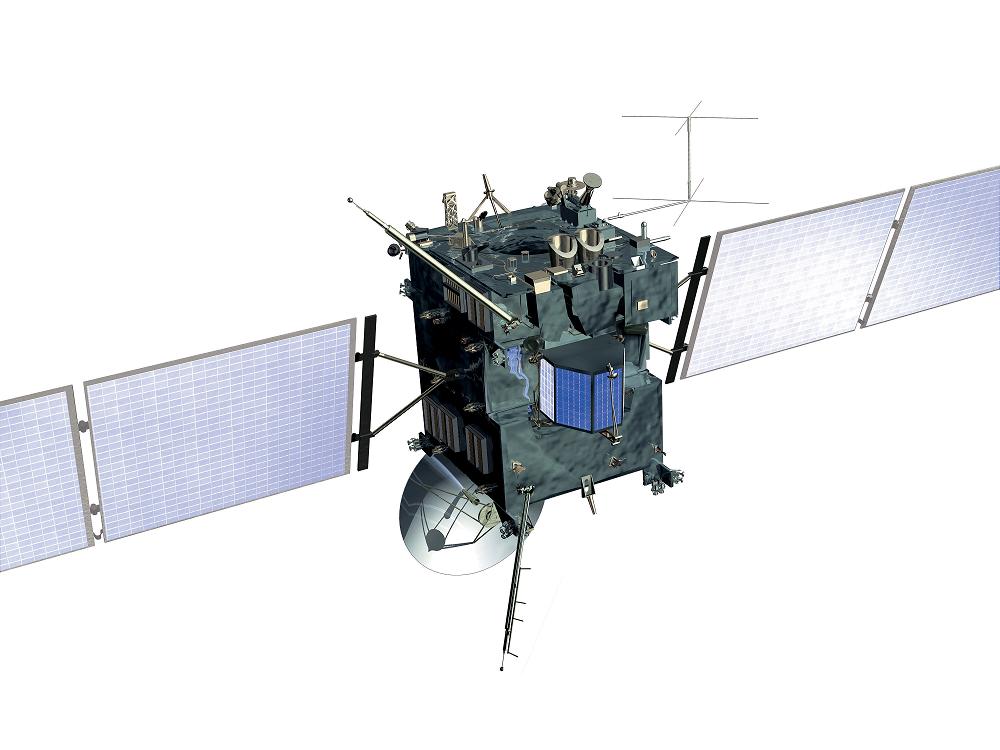
The probe is cube-shaped and measures 2.8×2.1×2.0 meters. At launch, it weighs 3,000 kg, including 1,670 kg of fuel, 165 kg of scientific payload for the orbiter, and 100 kg for the lander. The scientific instruments are accommodated on the lower side of the probe, which will be directed towards the comet during the last phase of the mission. Meanwhile, the probe will orbit the nucleus of the comet. A communication antenna 2.2 meters in diameter will be mounted on one side of the probe and on the opposite side the lander is attached. The other two lateral sides are used for anchoring the solar panels.


Credits: ESA/AOES Medialab


I was able to dig up more information about the probe and the lander in the mission launch kit on the EADS Astrium website.


The prime contractor for the spacecraft is Astrium Germany. The main sub-contractors are Astrium UK, Astrium France, and Alenia Spazio.


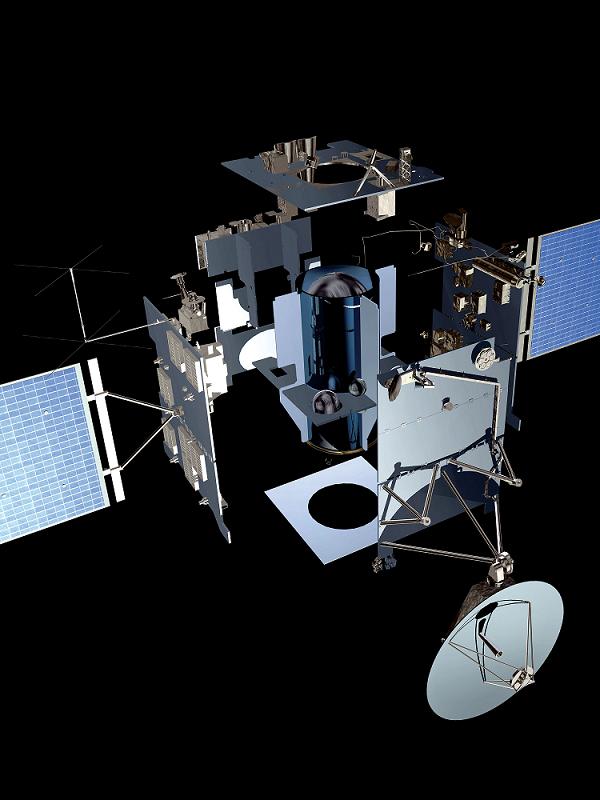
For propulsion and attitude control, the probe is using 24x10N bipropellant jets. The propulsion system is at the centre of the probe, where the tanks of propellant are located in the centre of a vertical tube.


I could not find an explanation as to why this design was chosen. Since the ability of the spacecraft to maneuver by using the onboard propulsion system is critical, I am assuming that the fuel tanks have to be protected from possible hits by micro meteorites.


Credits: ESA/AOES Medialab


The scientific instruments onboard Rosetta are: OSIRIS (Optical Spectroscopic and Infrared Remote Imaging System), ALICE (Ultraviolet Imaging Spectrometer), VIRTIS (Visible and Infrared Thermal Imaging System), MIRO (Microwave Instrument for Rosetta Orbiter), ROSINA (Rosetta Orbiter Spectrometer for Ion and Neutral Analysis), COSIMA (Cometary Secondary Ion Mass Analyser), MIDAS (Micro-Imaging Dust Analysis System), CONSERT (Comet Nucleus Sounding Experiment by Radiowave Transmission), GIADA (Grain Impact Analyser and Dust Accumulator), RPC (Rosetta Plasma Consortium), and RSI (Radio Science Investigation).


The lander is provided by a European consortium lead by the DLR (German Aeronautic Research Institute). Members of this consortium include ESA and the Austrian, Finnish, French, Hungarian, Irish, Italian, and British institutes.


Credits: ESA/AOES Medialab


The lander has a polygonal carbon fibre sandwich structure which is covered in solar cells. The antenna transmits data from the lander via the probe orbiting the comet.


There is an impressive collection of scientific instruments mounted on the lander as well: COSAC (Cometary Sampling and Composition experiment), MODULUS PTOMELY (Gas analyser), MUPUS (Multi-Purpose Sensors for Surface and Subsurface Science), ROMAP (Rosetta Lander Magnetometer and Plasma Monitor), SESAME (Surface Electrical Seismic and Acoustic Monitoring Experiments), APXS (Alpha X-ray Spectrometer), CONSERT (Comet Nucleus Sounding Experiment by Microwave Transmission), CIVA (Imager system using panoramic cameras), ROLIS (Rosetta Lander Imaging System used during the descend phase), and SD2 (Sample and Distribution Device, a sample acquisition system).


Credits: ESA


The scientific data collected by the instruments is transmitted to the Rosetta Mission Operations Centre (MOC) through a 8bps link. Due to the narrow bandwidth, the data cannot be sent back to Earth in real-time and has to be stored on the probe before being relayed.


The MOC at the European Space Operations Centre (ESOC) in Darmstadt has been controlling this long term mission since launch using ESA’s DSA 1 deep-space ground station at New Norcia.


It may seem like a long journey, but as in The Days of the Comet, the Rosetta mission could open up a whole new world of possibilities.


  • Facebook
  • Google
  • Slashdot
  • Reddit
  • Live
  • TwitThis


Credits: ESA


In September 2008, the first Automated Transport Vehicle (ATV) mission will come to an end. It is a significant achievement for the European space industry, marking another first in space exploration: the ATV spacecraft is capable of performing rendezvous and docking procedures to the International Space Station (ISS) in a fully autonomous manner. In comparison, the Russian spacecrafts used for carrying supplies and crews to the station (Progress and Soyuz) need the cooperation of the station for docking procedures.


The ATV program started back in 1995 and it has so far cost approximately 1.3 billion euros.


I will start by presenting some of the technical data of the ATV spacecraft. It will not be an exhaustive presentation by far, but I think it is important to have the orders of magnitude at least.


Credits: ESA


ATV has a mass of almost 21 tonnes (20,750 kg) at launch, of which up to 7 tonnes is on-board propellants and payload. The pressurized cabin section used for cargo storage has 48 cubic meters in volume. ATV is the largest spacecraft ever developed in Europe.


In the on orbit configuration, the spacecraft has a length of 9.794 m, maximum diameter of 4.480m, and the solar arrays span of 22.281 m.


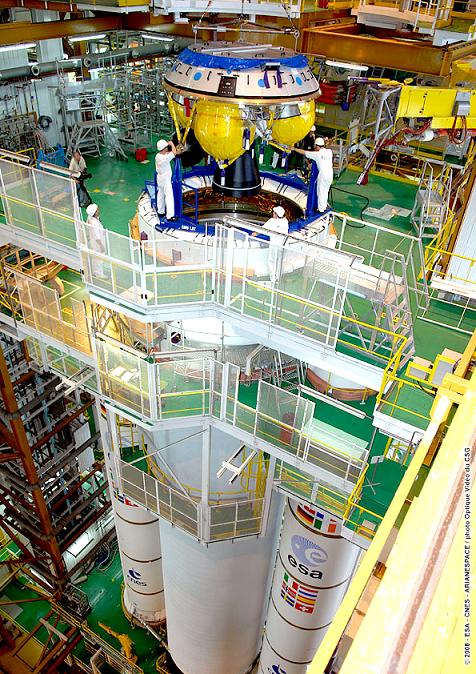
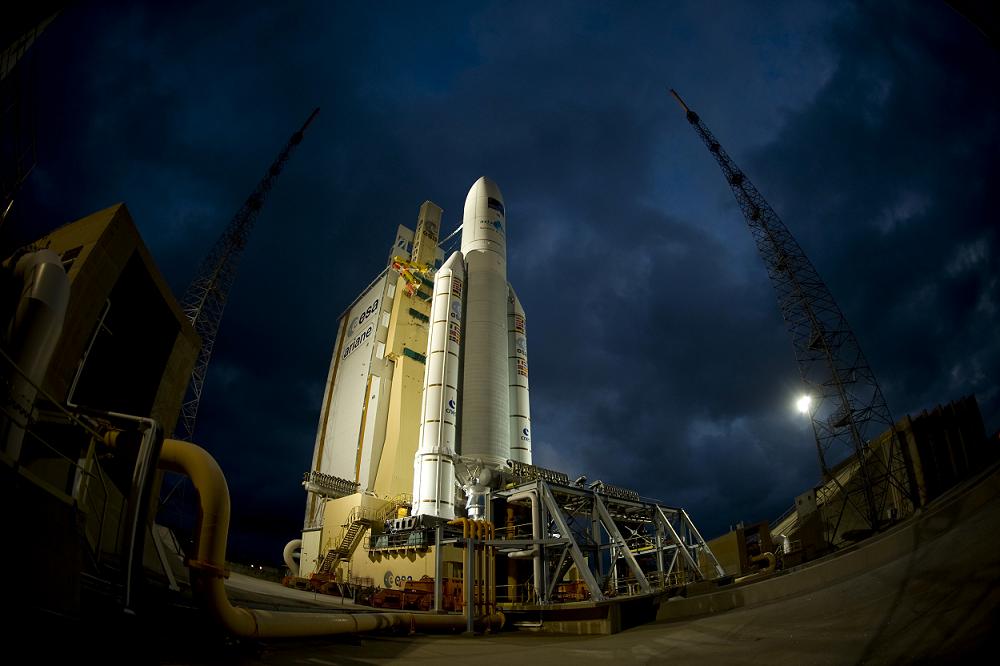
The launch vehicle used by ATV missions is Ariane 5. The ATV is deployed by the Ariane 5 rocket on a low Earth orbit (260×260 km, inclination 51.6 degrees).


Credits: ESA


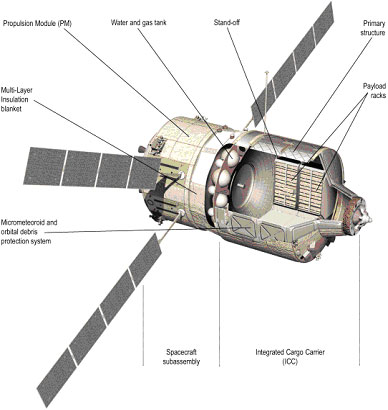
The ATV spacecraft consists of two main modules, the avionics/propulsion module, called the ATV Service Module, and the Integrated Cargo Carrier (ICC), which docks with the International Space Station (ISS).


Credits: ESA


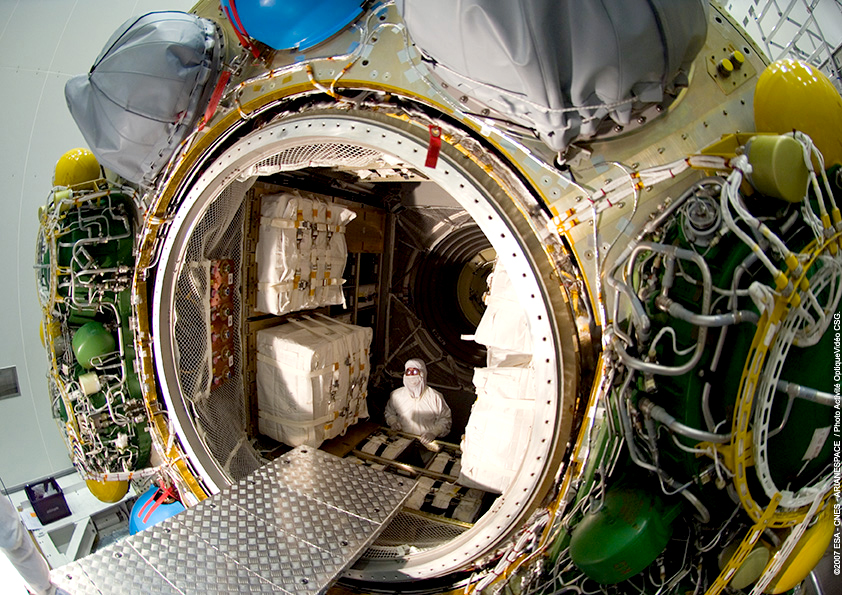
The ICC represents 60% of the total ATV volume. It is used to deliver two types of supplies to the ISS: the dry cargo (like hardware and personal parcels) and the fluid cargo (like propellant for the ISS’s own propulsion system, water, and gas).


Cargo mass can be distributed as follows:
· dry cargo: 1,500 kg – 5,500 kg;
· water: 0 – 840 kg;
· gas (nitrogen, oxygen, air, 2 gases/flight): 0 – 100 kg;
· ISS re-boost and attitude control propellant: 0 – 4,700 kg;
The total cargo upload capacity: 7,667 kg.


Credits: ESA

The waste download capacity is 6,340 kg (5,500 kg dry cargo + 840 kg wet cargo).


The front of the ICC contains the docking system. The docking system is Russian made and it is a state-of-the-art docking mechanism. It has evolved over the years from the original docking system used for the Salyut space station program in the late 1960s. The docking system enables crew access to the ICC pressurized module, but also provides electrical and propellant connections between the ATV and the ISS.


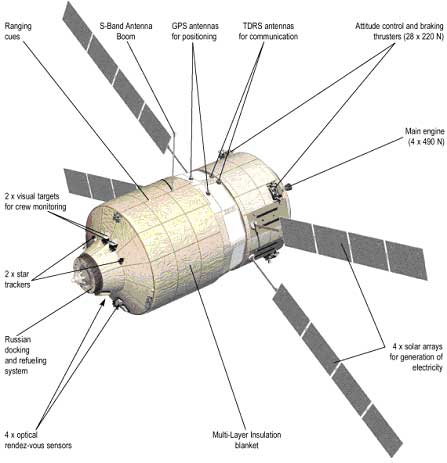
In order to make docking a safe procedure, the ICC is equipped with quite an impressive array of sensors and active components: two telegoniometers (used to calculate the distance and direction from ATV to ISS), two videometers (used to compute distance and orientation of the ISS), two star trackers, and two visual video targets (used by the ISS crew to monitor visually the ATV’s final approach).


Credits: ESA

The ATV Service Module includes the propulsion systems, the electrical power, computers, the communications, and the avionics.


The main propulsion system of the spacecraft is comprised of 4 x 490 N thrusters. The attitude control system relies on 28 x 220 N thrusters. The ATV propulsion system is a pressure fed liquid bi-propellant system using monomethyl hydrazine fuel and nitrogen tetroxide oxidizer. The fuel is pressurized by helium stored in two high pressure tanks.


The four solar panels ATV is equipped with can generate 4,800 W on average during the 6 month mission in space.


The typical ATV mission starts in French Guiana, at the Kourou launch site. An Ariane 5 rocket deploys the ATV spacecraft on a circular Low Earth Orbit (LEO) at an altitude of 260 km. ATV then activates its navigation systems and fires its thrusters to reach the transfer orbit to the ISS.


After two or three days, and raising its orbit to 400 km, ATV will be in sight of ISS. It will start the approaching phase of the mission from about 30 km behind and 5 km below the station.


Even if the approach and the docking procedures are fully automatic, the flight controllers can at any time call on the spacecraft and back away from the station. The ISS crew can also reject the spacecraft in case any anomalies are noticed.


Once the spacecraft is safely docked to the ISS, the station’s crew can access the pressurized cargo section and remove the payload. After the payload is removed, the crew fills the cargo section with used hardware and waste materials.

At intervals of 10 to 14 days, the main thrusters of the ATV will be used to boost the station’s altitude.

Once the mission is accomplished, the ATV separates from the ISS, and performs a controlled and safe destructive re-entry somewhere above the Pacific Ocean.


The first ATV mission is called Jules Verne, after the French author Jules Gabriel Verne (1828 – 1905) who pioneered the science-fiction genre.

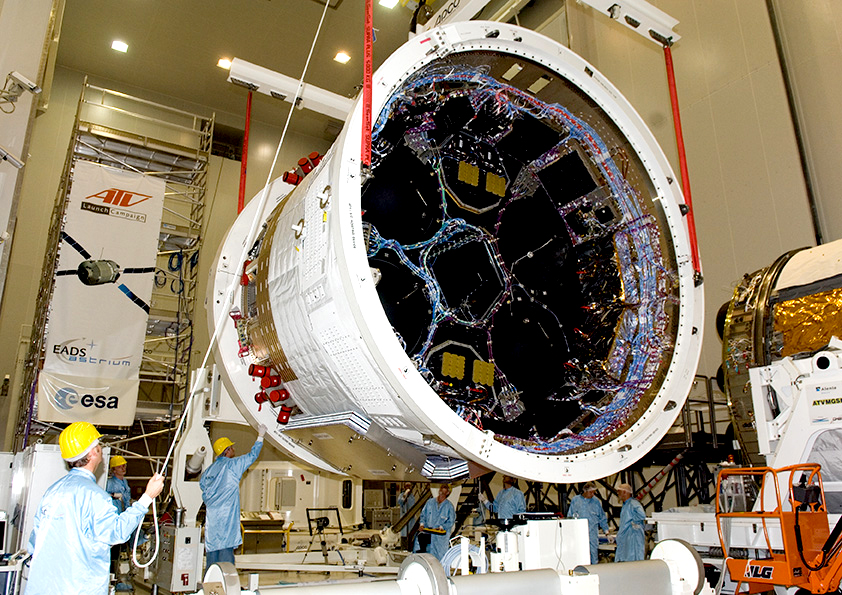
The Jules Verne ATV had to pass many tests in order to qualify for the mission. An interesting test was the acoustic testing at the ESA’s test facilities in Noordwijk in the Netherlands.

The spacecraft has to withstand the vibrations caused by the extreme noise levels generated during the launch by the Ariane 5 rocket. The ATV was locked in a closed space with huge speakers that simulate the noise levels recorded during an Ariane 5 launch.


Credits: ESA

Even though the ATV is able to perform the rendezvous and the docking procedures on its own, the ground control experts from ESA and CNES, the French space agency, were involved in the operations. They determined the route the spacecraft must follow in order to dock with the ISS. The two ISS control centers were also involved in ATV operations: the Mission Control Centre in Moscow and the Mission Control Center in Houston, Texas.


The Jules Verne mission is the first in a series to come. There are already five ATV missions scheduled between now and 2015. Under the coordination of ESA and the prime contractor EADS Astrium, European engineers have contributed to this new generation spacecraft. Major sub-contractors are Thales Alenia Space (Italy), Astrium (Germany and France), Oerlikon Space (Switzerland), Dutch Space (The Netherlands), with Russian partners providing the advanced docking system.


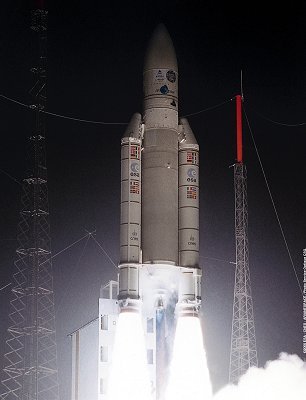
The Jules Verne mission liftoff occurred on March 9th, 2008 at 05:03 CET (04:03 UT) at the Kourou Spaceport in French Guiana.


ATV Jules Verne had to perform what the media called orbital rehearsals for ISS docking. The initial test, performed on March 14th, demonstrated the Collision Avoidance Manoeuvre (CAM). During this initial test, an automated system took control of the spacecraft and moved it to a safe distance from the ISS.


The following two tests demonstrated the flying capabilities of the spacecraft in the proximity of the station. On March 29th, ATV manoeuvred around the ISS using relative GPS navigation. Two days later, the ATV tested close proximity manoeuvring and control. The ATV approached first within 20 meters of the station, retreated, then approached even nearer, to only 12 meters from the docking port on the ISS Russian Zvezda module, before again backing off to a safe distance from the station.


On April 3rd, 2008 ATV Jules Verne docked to the ISS.

The ATV will undock from the ISS at the beginning of September 2008 and it will complete its mission at the end of September 2008 above the Pacific Ocean.


Due to its remarkable capabilities, ATV will serve the ISS for many years and it will become a major player after the Space Shuttle retirement in 2010.


There are quite a few ATV evolution scenarios already considered by ESA in the present. To mention here only two of the configurations: the Large Cargo Return (LCR) and the Crew Transport Vehicle (CTV). The LCR configuration presents a large cargo re-entry capsule able to bring back hundreds of kilograms of cargo and valuable experiment results. In the CTV configuration, the Integrated Cargo Carrier component of the spacecraft would be transformed into a manned re-entry capsule for crew transportation. Because of the re-entry capabilities, the CTV could be used as a crew rescue capsule for the ISS.


  • Facebook
  • Google
  • Slashdot
  • Reddit
  • Live
  • TwitThis