OrbitalHub

The place where space exploration, science, and engineering meet

Domain is for sale. $50,000,000.00 USD. Direct any inquiries to contact@orbitalhub.com.

November 11, 2010

ULA Delta-II Launch with COSMO-SkyMed 4

Posted by


On November 5, 2010, the fourth satellite of the COSMO-SkyMed constellation was placed into Earth orbit by an ULA Delta-II launch vehicle. COSMO-SkyMed is a constellation of four satellites equipped with X-band SAR (Synthetic Aperture Radar) technology. The satellites are able to monitor the Earth day and night, in all weather conditions. They are designed for military, civil, and commercial use. COSMO-SkyMed is the first Earth observation system fully designed and built in Italy.

Read the press release of the Italian Space Agency…


  • Facebook
  • Google
  • Slashdot
  • Reddit
  • Live
  • TwitThis


On October 30, 2010, the Progress M-08M cargo spacecraft docked to the Pirs Module at the International Space Station. The docking procedure was performed manually by Alexander Kaleri.

Read more about the International Space Station…


  • Facebook
  • Google
  • Slashdot
  • Reddit
  • Live
  • TwitThis
October 29, 2010

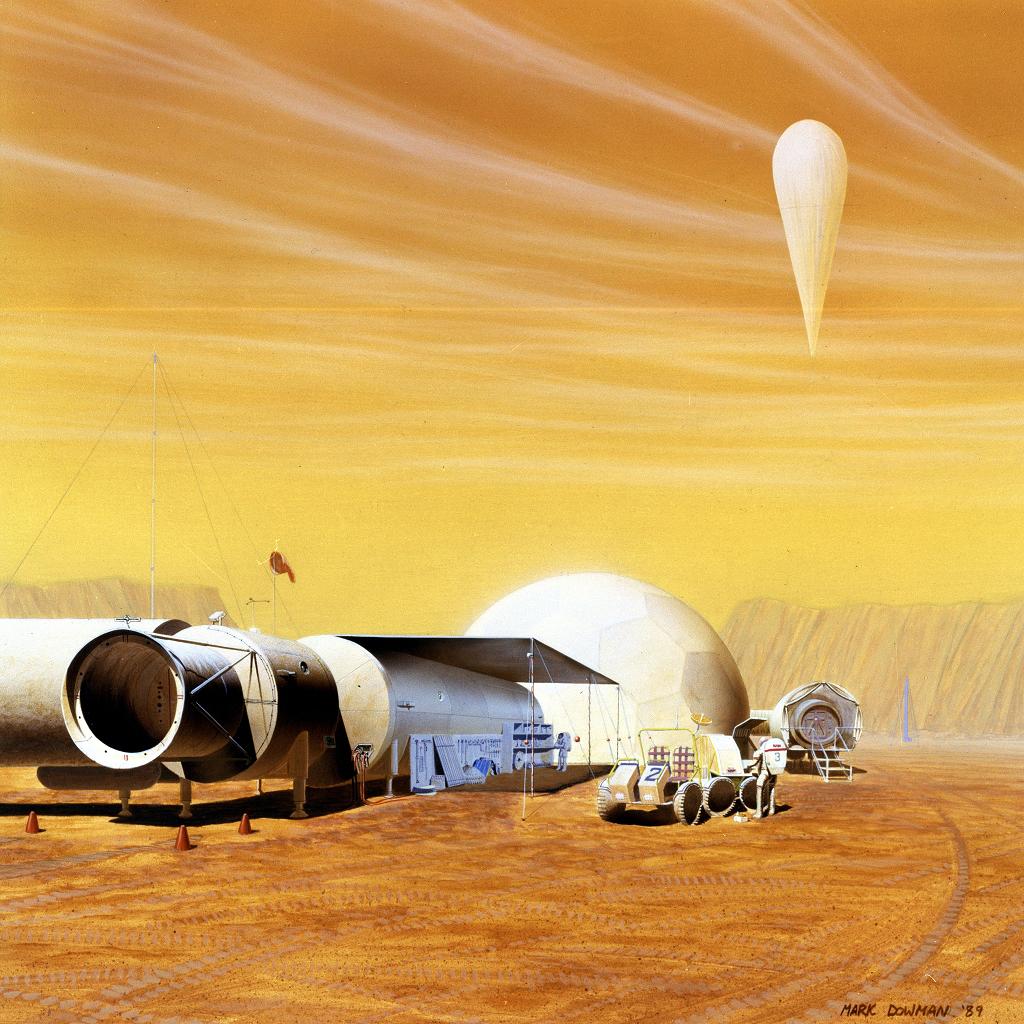
Aerobots for Planetary Exploration

Posted by


Credits: Mark Dowman


Airships are making a big comeback now as the energy consumption for all modes of transportation is being re-analyzed. Missions with special requirements like surveillance and reconnaissance missions and transportation of heavy payloads to remote outposts are the main driver for the reinvention of the airship.


But Earth is not the only place where airships can be deployed. There are a number of destinations in the solar system that would make a perfect environment for deployment and operation of airships, like Mars, Venus, and Titan – Saturn’s largest moon.


The presence of an atmosphere makes possible the use of vehicles that can fly within atmosphere for planetary exploration. Also, planetary exploration with low-powered vehicles like airships really makes sense considering the fact that energy is always at a premium.


So far, the only extraterrestrial deployment of an airship was performed during the Vega mission to Venus, in 1984. Two balloons were released and they floated 54 km above the planet’s surface for nearly two days.


Lighter-Than-Air (LTA) AERial ROBOTS (AEROBOTS) would present some advantages over their Heavier-Than-Air (HTA) siblings and the traditional planetary scouts, the exploration rovers: they would have long-duration mission and long-distance capabilities, they would not have to deal with obstacle avoidance problems, and they have low-power consumption. However, the environment in which the airship will operate will impose some restrictions on the capabilities of the airship (consider things like atmospheric composition and density, temperature, and the amount of solar radiation available). More on the planetary environments in the solar system and airship evaluations for each one of them can be found here.


NASA has funded a number of projects for solar system exploration that make use of aerobots. The Jet Propulsion Laboratory’s Planetary Aerobot Program is developing balloons to support scientific payloads in the atmosphere of other planets in our solar system. You can find more details about JPL’s Planetary Aerobot Program here.

 

  • Facebook
  • Google
  • Slashdot
  • Reddit
  • Live
  • TwitThis
October 28, 2010

Soyuz-U Launch with Progress M-08M

Posted by


On October 27,2010, a Soyuz-U launch vehicle lifted off from Baikonur Cosmodrome with Progress M-08M. The Progress cargo spacecraft is scheduled to dock at the International Space Station on Saturday, October 30, 2010.

Read more about the International Space Station…


  • Facebook
  • Google
  • Slashdot
  • Reddit
  • Live
  • TwitThis
October 25, 2010

Final Flight of Discovery

Posted by


STS-133 will be the 35th shuttle mission to the International Space Station. Space Shuttle Discovery will deliver and install the Permanent Multipurpose Module, the Express Logistics Carrier 4, and deliver critical spare parts to the station. The STS-133 crew consists of Commander Steven Lindsey, Pilot Eric Boe, and Mission Specialists Alvin Drew, Nicole Stott, Michael Barratt, and Tim Kopra.

Read more about the STS-133 mission…


  • Facebook
  • Google
  • Slashdot
  • Reddit
  • Live
  • TwitThis


On October 20, 2010, a medium-lift Soyuz launch vehicle lifted off from Baikonur with six Globalstar second-generation satellites. Arianespace will deploy a total of 24 second-generation satellites for Globalstar. The improved version of Soyuz used for this mission will be introduced by Arianespace at the Kourou Spaceport in French Guyana next year.

Read more about the Arianespace Soyuz mission…


  • Facebook
  • Google
  • Slashdot
  • Reddit
  • Live
  • TwitThis