OrbitalHub

The place where space exploration, science, and engineering meet

Domain is for sale. $50,000,000.00 USD. Direct any inquiries to contact@orbitalhub.com.

November 21, 2010

Minotaur IV Launch with FASTSAT

Posted by


On November 19, 2010, a Minotaur IV launch vehicle lifted off with FASTSAT microsatellite (Fast, Affordable Science and Technology Satellite) from the Alaska Aerospace Corporation\’s Kodiak Launch Complex on Kodiak Island, Alaska. Other satellites shared the ride with FASTSAT: FASTRAC, STPSat-2, FalconSat-5, NanoSail-D. FASTSAT is a demonstrator of NASA\’s ability to provide low-cost opportunities for scientific and technical payloads.

Read more about FASTSAT…


  • Facebook
  • Google
  • Slashdot
  • Reddit
  • Live
  • TwitThis
November 20, 2010

Aerial Regional-scale Environmental Survey

Posted by


Credits: NASA


ARES (or the Aerial Regional-scale Environment Survey) is an autonomous powered airplane. ARES will bridge the gap between remote sensing and surface exploration on Mars.


This new class of science will allow magnetic surveys with an improved resolution, geologic diversity coverage, and in-situ atmospheric science.


ARES method of deployment is unique because the robotic aircraft has to travel to Mars folded inside a protective shell. After the atmospheric entry and the parachute deployment, the heat shield that protects the aircraft during entry is released. Once the heat shield is out of the way, the folded aircraft leaves the protective shell. The unfolded tail will stabilize the tumbling aircraft. Finally, the wings will unfold and the aircraft will pull up from the dive.


It is needless to say that reliability is essential. All the mechanical systems of the aircraft that are involved in this maneuver must perform without any flaws, and that has to happen after spending six to eight months in vacuum at (more than) freezing temperatures. It is hard to imagine that ARES would be able to fly with a folded wing.


Credits: NASA


The ARES design is the result of five years of extensive analysis and testing. Testing has included wind tunnel tests, ejection tests, and flight tests. In order to simulate the Mars environment, the flight tests had to be performed at certain Mach and Reynolds numbers. A 50% scale prototype was released from a high-altitude research balloon. The robust design that resulted will handle the uncertainties in the Mars environment.


ARES could be selected as the next Mars Scout Mission. For more details about ARES you can visit NASA’s website. ARES Principal Investigator, Dr. Joel S. Levine, presented ARES at a TEDxNASA event. If you want to build your own paper-made scale model of the ARES Mars Airplane, you can find the model here.


  • Facebook
  • Google
  • Slashdot
  • Reddit
  • Live
  • TwitThis
November 19, 2010

Aalto-1 Microsatellite

Posted by


Aalto-1, Finland\’s first satellite, is under construction in Otaniemi. Most of the design, construction, and testing of the device will be carried out by students. Aalto-1 is developed at the Multidisciplinary Institute of Digitalisation and Energy (MIDE) of the Aalto University School of Science and Technology. Martti Hallikainen, Professor in the Department of Radio Science and Engineering at Aalto University, is in charge of the project, while Jaan Praks acts as the project coordinator.

Read more about the Aalto-1 microsatellite…


  • Facebook
  • Google
  • Slashdot
  • Reddit
  • Live
  • TwitThis
November 16, 2010

ISS Cosmonauts Complete Spacewalk

Posted by


Cosmonauts Fyodor Yurchikhin and Oleg Skripochka have completed a six and a half hour spacewalk outside the International Space Station. This was Skripochka\’s first spacewalk and the fifth for Yurchikhin.

Read more about the International Space Station…


  • Facebook
  • Google
  • Slashdot
  • Reddit
  • Live
  • TwitThis
November 13, 2010

Aerojet AJ26 Test Fired at Stennis

Posted by


A successful ten-second test firing of the Aerojet AJ26 engine was conducted at NASA\’s Stennis Space Center. The Aerojet AJ26 liquid fuel engine will power the first stage of the Orbital Sciences Corporation\’s Taurus II launch vehicle.

Read more about Orbital Sciences Corporation\’s Taurus II launch vehicle…


  • Facebook
  • Google
  • Slashdot
  • Reddit
  • Live
  • TwitThis


Credits: NASA


The Iridium satellite constellation, owned and operated by Iridium Communications Inc., is used to provide voice and data coverage over Earth’s entire surface.


Sixty-six satellites orbiting the Earth in low Earth orbit at 781 km altitude and 86.4 degrees inclination allow for pole-to-pole communication.


The Iridium modems deliver truly global communication capabilities. The solutions that incorporate the Iridium technology range from maritime voice terminals to vehicle tracking solutions. Most recently, we have seen them embedded in maritime robots like the iRobot seagliders collecting data in the Gulf of Mexico after the DeepWater Horizon accident.


Even if the majority of the applications are surface-to-surface communication, there have been attempts made to use the Iridium network for high-altitude communication. As such, weather balloons and sounding rockets have used the network to download data back to Earth.


A novel communication method for CUBESAT payloads using the Iridium network is proposed by Henric Boiardt and Christian Rodriguez from Florida International University for the PicoPanther payload, one of the entries in the Florida University Satellite competition.


The main challenges to overcome in order to adapt the Iridium technology to microsatellite communication in low Earth orbit are the miniaturization and the Doppler effects.


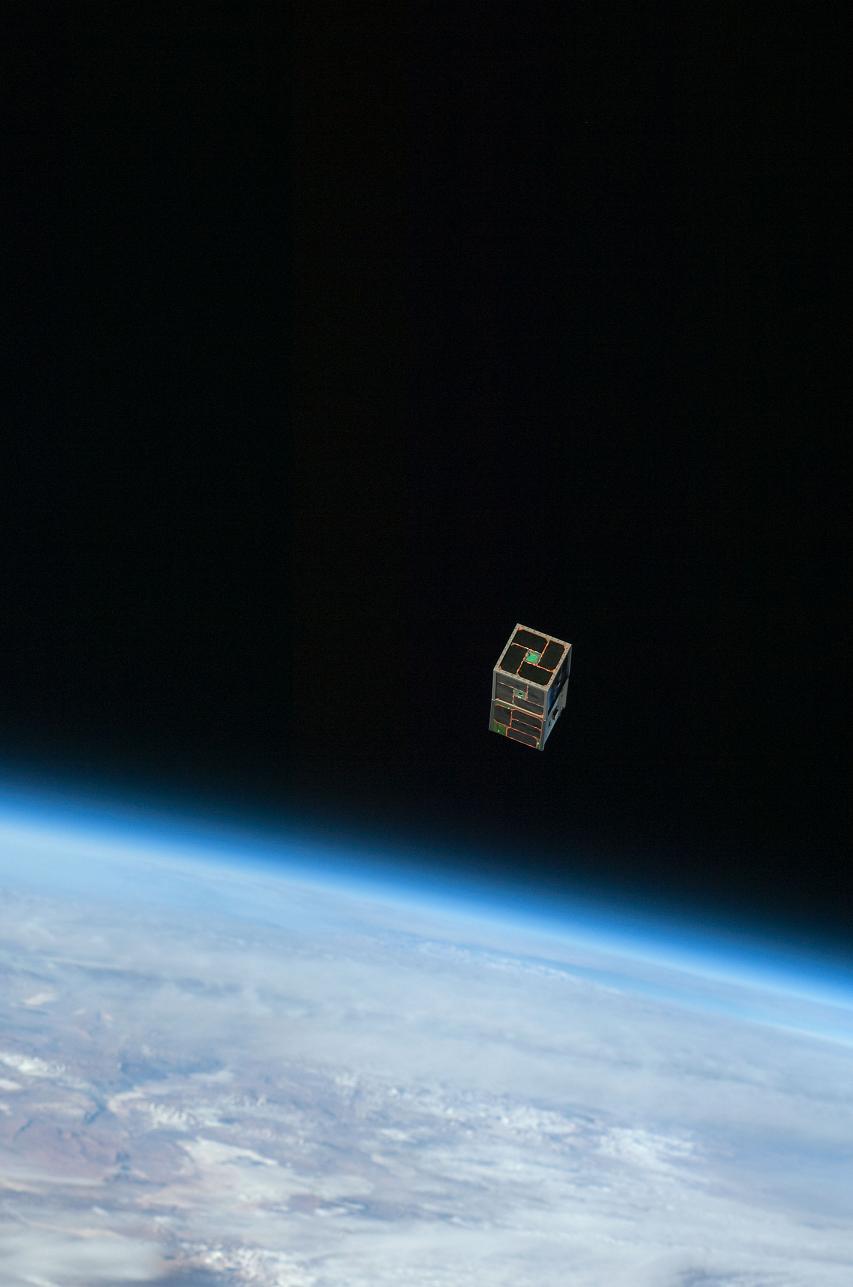
The CUBESAT standard was developed by California Polytechnic State University and Stanford. The standard specifies that one unit structure is a 10cm x 10cm x 10cm cube. This is quite a restrictive size-factor constraint.


The Doppler effects have to be considered due to the velocities at which the satellites operate in low Earth orbit. To minimize these effects, the microsatellite using the Iridium network to communicate with the ground station must have an orbit similar to the communication satellites in the network, which is a polar orbit. For the same reasons, Iridium itself supports inter-satellite links only between satellites orbiting in the same direction. Otherwise, the frequency shift due to orbital relative velocities would make communication unreliable.


If the proposed method is proven feasible, the Iridium network would definitely bring near-continuous communication to microsatellite technology.

 

  • Facebook
  • Google
  • Slashdot
  • Reddit
  • Live
  • TwitThis