OrbitalHub

The place where space exploration, science, and engineering meet

Domain is for sale. $50,000,000.00 USD. Direct any inquiries to contact@orbitalhub.com.


Credits: CSA


Canada is actively involved in space debris mitigation research and development activities. At the international level, Canada hosted the International Conference on Protection of Materials and Structures from the Space Environment (ICPMSE) in May 2008, and contributed to the 37th Committee on Space Research (COSPAR) Scientific Assembly in July 2008.


At the national level, the space debris research and development activities are coordinated by the Canadian Space Agency (CSA), which formed the Orbital Debris Working Group (ODWG). The group was formed in order to address a number of objectives:

“to increase the Scientific and Technical (S&T) knowledge and awareness of orbital debris in the space community;

to identify and encourage targeted Research and Development (R&D) in orbital debris and mitigation measures;

to identify and encourage development of orbital debris detection and collision avoidance techniques and technologies;

to promote Scientific and Technical (S&T) collaboration across Canada and with our international partners;

to identify Scientific and Technical (S&T) opportunities in relation to future potential missions which can directly benefit from the results of targeted Research and Development (R&D) and novel operational techniques, and develop and coordinate technical solution in Canada and with international partners; and

to establish and maintain technical liaison with our international partners in order to foster a sustainable space environment.”


The Canadian space debris mitigation research and development activities are focused on three main areas: hypervelocity impact facilities, debris mitigation and self healing materials, and spacecraft demise technologies. Hypervelocity impact facilities are facilities that are capable of accelerating projectiles to velocities of more than 10 km/s. Canada is developing an implosion-driven hypervelocity launcher facility. Such a facility could accelerate projectiles having a mass of 10 g to speeds of 10 km/s, facilitating meaningful impact studies. Self healing materials have the capability to initiate a self healing process after an impact, being an in-situ mitigation of space debris damage on board spacecraft. The Canadian Space Agency has supported the efforts to develop and test a self healing concept demonstrator. The spacecraft demise technologies ensure intentional and integral disintegration during re-entry, so that no debris reaches Earth. In this direction, studies that investigate various technologies that could be used to de-orbit micro- and nanosatellites have been conducted.


In Canada, the space operators and manufacturers are adopting the space debris mitigation measures on a voluntary basis. The Inter-Agency Space Debris (IADC) guidelines are used for monitoring activities to prevent on-orbit collisions and conduct post-mission disposal. There are also strict requirements integrated in its policies and regulations that address the post-mission disposal of satellites. For example, as required by the Canadian Remote Sensing Space System Act, space system manufacturers have to provide information regarding the method of disposal for the satellite, the estimated duration of the satellite disposal operation, the probability of loss of human life, the amount of debris expected to reach the surface of the Earth upon re-entry, an estimate of the orbital debris expected to be released by the satellite during normal operations by explosion, etc. There are also interesting recommendations made for the operation and post-mission disposal of satellites in Geostationary Orbits. The Environmental Protection of the Geostationary Satellite Orbit recommends “that as little debris as possible should be released into the geostationary orbit during the placement of a satellite in orbit”, and also that “a geostationary satellite at the end of its life should be transferred, before complete exhaustion of its propellant, to a super synchronous graveyard orbit”, where the recommended minimum re-orbiting altitude is given as 300 km.


  • Facebook
  • Google
  • Slashdot
  • Reddit
  • Live
  • TwitThis
April 7, 2011

Soyuz TMA-21 Docking

Posted by


On April 6, 2011, Soyuz TMA-21 spacecraft docked to the International Space Station.

Read more about Expedition 27…


  • Facebook
  • Google
  • Slashdot
  • Reddit
  • Live
  • TwitThis
April 7, 2011

Soyuz TMA-21 Launch

Posted by


Soyuz TMA-21 lifted off from Baikonur cosmodrome with cosmonauts Andrey Borisenko and Alexander Samokutyaev and NASA astronaut Ron Garan. They will join the Expedition 27 crew members already on the station: Dmitry Kondratyev, Catherine Coleman, and Paolo Nespoli.

Read more about Expedition 27…


  • Facebook
  • Google
  • Slashdot
  • Reddit
  • Live
  • TwitThis
April 7, 2011

MESSENGER Takes Pictures of Mercury

Posted by


The MESSENGER spacecraft entered Mercury\’s orbit. The first picture taken by the spacecraft was of the planet\’s south pole. MESSENGER began the operational phase of its mission on April 4, 2011.

Read more about MESSENGER…


  • Facebook
  • Google
  • Slashdot
  • Reddit
  • Live
  • TwitThis
March 29, 2011

STS-134 Payload

Posted by


The STS-134 mission will deliver the Alpha Magnetic Spectrometer-2 (AMS) and the Express Logistics Carrier 3 to the International Space Station. STS-134 launch is scheduled for April 19, 2011.

Read more about STS-134 mission…


  • Facebook
  • Google
  • Slashdot
  • Reddit
  • Live
  • TwitThis


Credits: NASA


Let us see how the areas mentioned in the previous Sustainability in LEO post are covered at national level in the United States.


The United States has implemented a space traffic management program in the form of the Joint Space Operations Center (JSpOC) of the U.S. Strategic Command at Vandenberg Air Force Base in California.


JSpOC conducts periodic conjunction assessments for all NASA programs and projects that operate maneuverable spacecraft in low Earth orbits (LEO) or in geosynchronous orbits (GEO). Depending on the mission, the conjunction assessments can be performed up to three times daily. If JSpOC identifies an object that is expected to come in the proximity of a NASA spacecraft, and the collision risk is high enough (for manned missions the minimal value accepted is 1 in 10,000, while for robotic missions the threshold is 1 in 1,000), a conjunction assessment alert message is sent to the mission control in order to have collision avoidance maneuver commands sent to the spacecraft. The alert messages contain the predicted time and distance at closest approach, as well as the uncertainty associated with the prediction.


The control of the creation of space debris is addressed by orbital debris mitigation standard practices in four major areas: normal operations, accidental explosions, safe flight profile and operational configuration, and post-mission disposal of space structures. There are also NASA standards and processes that aim at limiting the generation of orbital debris.


The commonly-adopted mitigation methods, which focus on minimization of space debris creation, will not preserve the near-Earth environment for the future generations. As a matter of fact, the debris population increase will be worse than predicted by LEGEND-generated models due to ongoing launch activities and unexpected (but possible) major breakups. Here is where active space debris environment remediation comes into play.


The active space debris environment remediation is mainly concerned with the removal of large objects from orbit. Such large objects are defunct spacecraft (i.e. communication satellites that exceeded their operational life), upper stages of launch vehicles, and other mission-related objects. The removal of large objects from orbit is known as Active Debris Removal (ADR). Several innovative concepts are under study. Among them, tethers used for momentum exchange or electro-dynamic drag force, aerodynamic drag, solar sails, and auxiliary propulsion units. LEGEND studies have revealed that ADR is a viable control method as long as an effective removal selection criterion based on mass and collision probability is used, and there are at least five objects removed from orbit every year. The electrodynamic tethers seem to lead the competition so far, as they have a low mass requirement and can remove spent or dysfunctional spacecraft from low Earth orbit rapidly and safely.


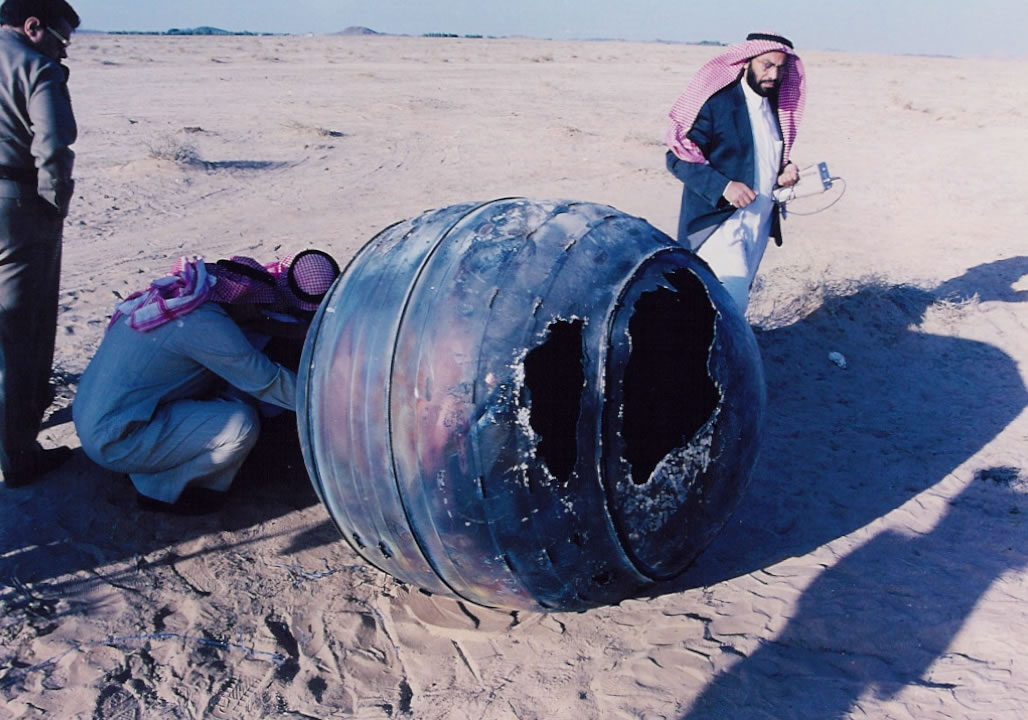
Re-entry in the Earth’s atmosphere of space mission related objects is an important aspect to be considered in this context. Even though no casualties or injuries have been reported so far being caused by components of re-entering spacecraft, fragments from space hardware pose a risk to human life and property on the ground. One big concern is caused by the fact that the point of impact from uncontrolled re-entries cannot be calculated exactly. The uncertainties are due to a large number of parameters that affect the trajectory and the heat of ablation of objects re-entering the atmosphere.


  • Facebook
  • Google
  • Slashdot
  • Reddit
  • Live
  • TwitThis