OrbitalHub

The place where space exploration, science, and engineering meet

Domain is for sale. $50,000,000.00 USD. Direct any inquiries to contact@orbitalhub.com.

Archive for 2017


NASA dixit:

“From a million miles out in space, NASA’s Earth Polychromatic Imaging Camera (EPIC) captured 12 natural color images of the moon’s shadow crossing over North America on August 21, 2017. EPIC is aboard NOAA’s Deep Space Climate Observatory (DSCOVR), where it photographs the full sunlit side of Earth every day, giving it a unique view of total solar eclipses.”

Video credit: NASA


  • Facebook
  • Google
  • Slashdot
  • Reddit
  • Live
  • TwitThis
August 27, 2017

Enceladus Flyby E-15

Posted by


NASA dixit:

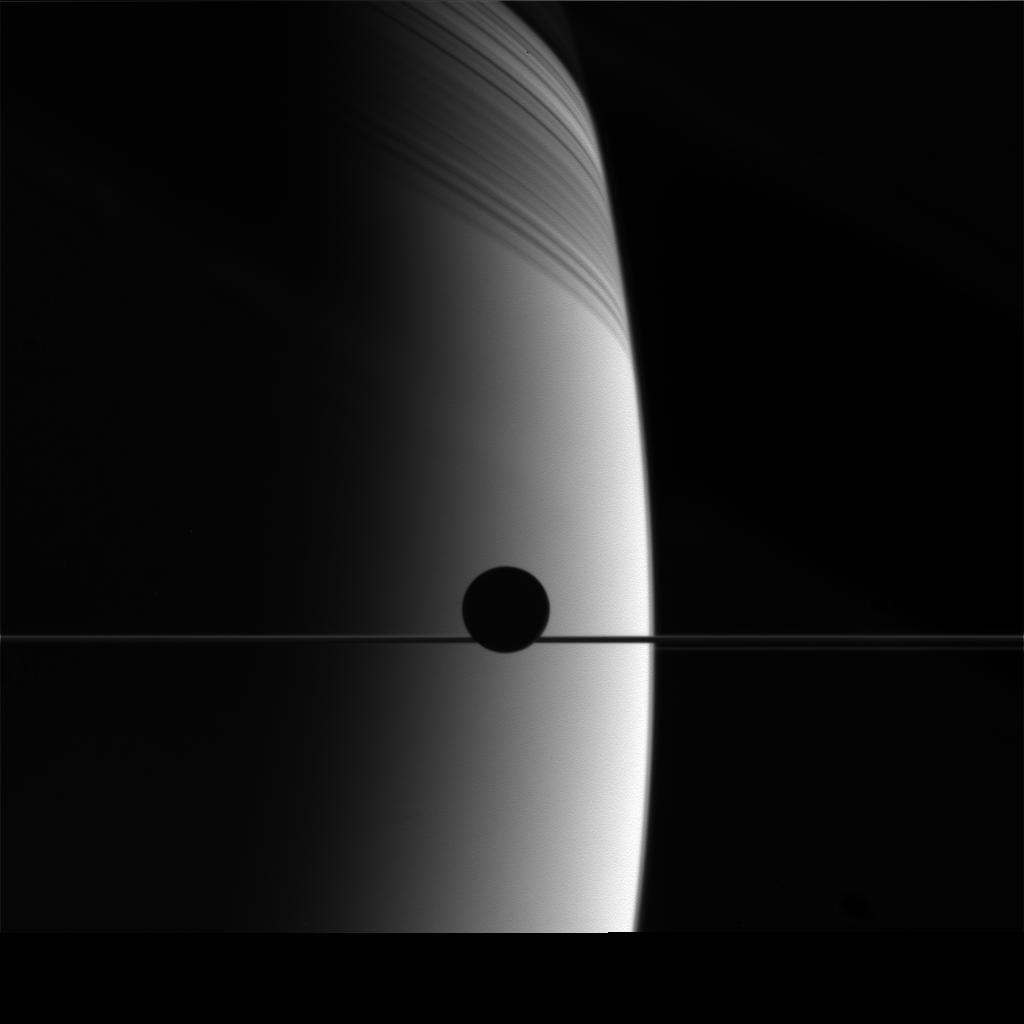
“October 19, 2011. This raw, unprocessed image of Saturn’s moon Enceladus was taken as the spacecraft passed Enceladus, and its infrared instruments, cameras and other instruments monitored activity on the moon, in particular the famed jets erupting from the moon’s south pole. The orbiter flew within about 765 miles (1,230 kilometers) of Enceladus’ surface.”

“After almost 20 years in space, NASA’s Cassini spacecraft begins the final chapter of its remarkable story of exploration: its Grand Finale. Between April and September 2017, Cassini will undertake a daring set of orbits that is, in many ways, like a whole new mission. Following a final close flyby of Saturn’s moon Titan, Cassini will leap over the planet’s icy rings and begin a series of 22 weekly dives between the planet and the rings.

No other mission has ever explored this unique region. What we learn from these final orbits will help to improve our understanding of how giant planets – and planetary systems everywhere – form and evolve.

On the final orbit, Cassini will plunge into Saturn’s atmosphere, sending back new and unique science to the very end. After losing contact with Earth, the spacecraft will burn up like a meteor, becoming part of the planet itself.

Cassini’s Grand Finale is about so much more than the spacecraft’s final dive into Saturn. That dramatic event is the capstone of six months of daring exploration and scientific discovery. And those six months are the thrilling final chapter in a historic 20-year journey.”

Image credit: NASA

 

  • Facebook
  • Google
  • Slashdot
  • Reddit
  • Live
  • TwitThis
August 26, 2017

SDO’s View of the Solar Eclipse

Posted by


NASA dixit:

“While many in the U.S. experienced a total solar eclipse on August 21, 2017, SDO’s perspective, observing the Sun from Earth orbit, afforded it a view of a partial eclipse. This movie, created from images taken by NASA’s Solar Dynamics Observatory, shows the Sun first in visible light, and then in 171-angstrom extreme ultraviolet light. The apparent slight movement of the Sun is because SDO has a hard time keeping the Sun centered in its images during eclipses, with so much light being blocked by the Moon. The fine guidance systems on SDO’s instruments need to see the whole Sun in order keep the images centered from one exposure to the next. Once the transit was over, the fine guidance systems started back up, once again providing steady images of the Sun.”

Video credit: NASA


  • Facebook
  • Google
  • Slashdot
  • Reddit
  • Live
  • TwitThis
August 22, 2017

Eclipsing a Moon

Posted by


NASA dixit:

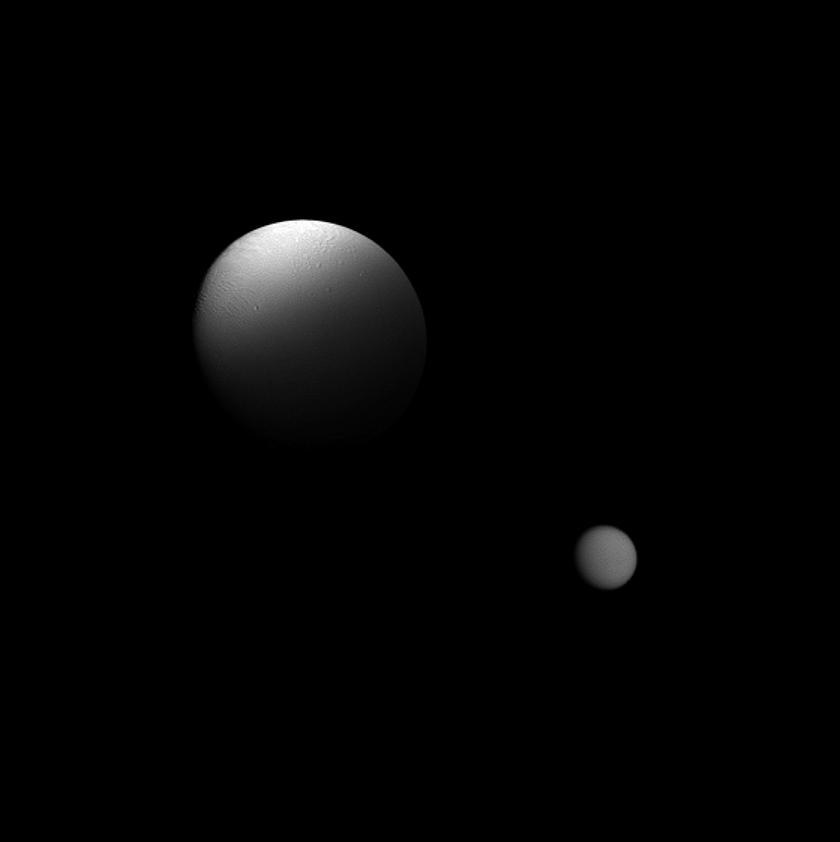
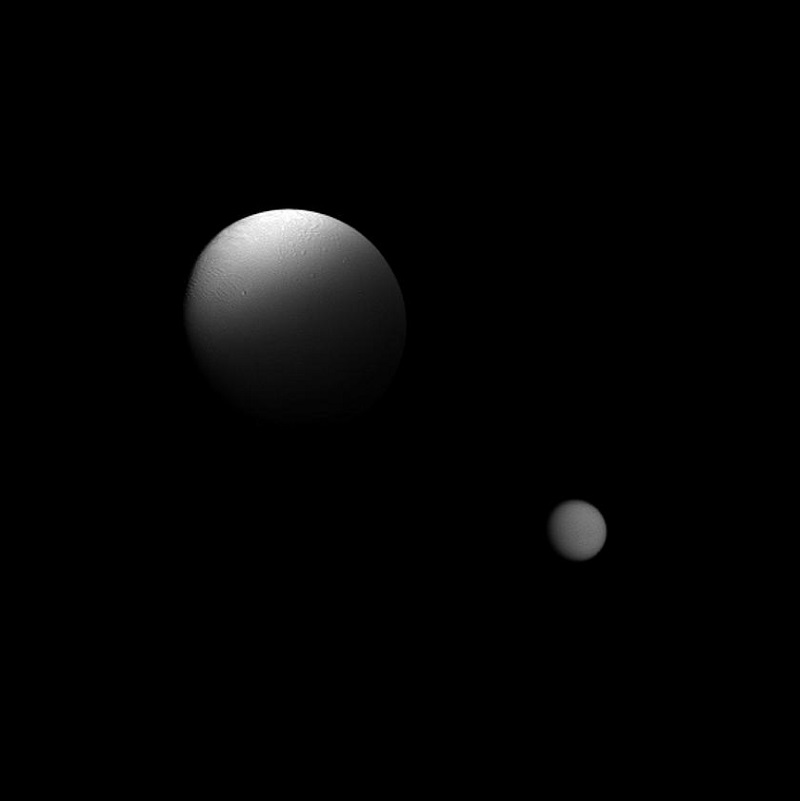
“October 1, 2011. Saturn’s moon Enceladus is partially eclipsed by the planet in this Cassini spacecraft view which also features the moon Titan in the distance. Cassini flew by Enceladus, shown in the center of the view, at a distance of about 16,000 miles (26,000 kilometers). The terminator between the day and night sides of Enceladus (313 miles, or 504 kilometers across) can be seen on the far left of the moon, while the shadow of the eclipsing planet runs across the bottom.

Titan (3,200 miles, or 5,150 kilometers across) is in the bottom right of this image and is about 684,000 miles (1.1 million kilometers) from the spacecraft. This view looks toward the Saturn-facing sides of Enceladus and Titan. North is up. The image was taken in visible light with the Cassini spacecraft wide-angle camera on. The view was obtained at a Sun-Enceladus-spacecraft, or phase, angle of 29 degrees. Scale in the original image was 2 miles (3 kilometers) per pixel on Enceladus. The image was contrast enhanced and magnified by a factor of 1.5 to enhance the visibility of surface features.”

“After almost 20 years in space, NASA’s Cassini spacecraft begins the final chapter of its remarkable story of exploration: its Grand Finale. Between April and September 2017, Cassini will undertake a daring set of orbits that is, in many ways, like a whole new mission. Following a final close flyby of Saturn’s moon Titan, Cassini will leap over the planet’s icy rings and begin a series of 22 weekly dives between the planet and the rings.

No other mission has ever explored this unique region. What we learn from these final orbits will help to improve our understanding of how giant planets – and planetary systems everywhere – form and evolve.

On the final orbit, Cassini will plunge into Saturn’s atmosphere, sending back new and unique science to the very end. After losing contact with Earth, the spacecraft will burn up like a meteor, becoming part of the planet itself.

Cassini’s Grand Finale is about so much more than the spacecraft’s final dive into Saturn. That dramatic event is the capstone of six months of daring exploration and scientific discovery. And those six months are the thrilling final chapter in a historic 20-year journey.”

Image credit: NASA


  • Facebook
  • Google
  • Slashdot
  • Reddit
  • Live
  • TwitThis
August 22, 2017

Auroras Over Saturn

Posted by


NASA dixit:

“Cassini gazed toward high southern latitudes near Saturn’s south pole to observe ghostly curtains of dancing light — Saturn’s southern auroras, or southern lights. These natural light displays at the planet’s poles are created by charged particles raining down into the upper atmosphere, making gases there glow.

The dark area at the top of this scene is Saturn’s night side. The auroras rotate from left to right, curving around the planet as Saturn rotates over about 70 minutes, compressed here into a movie sequence of about five seconds. Background stars are seen sliding behind the planet. Cassini was moving around Saturn during the observation, keeping its gaze fixed on a particular spot on the planet, which causes a shift in the distant background over the course of the observation. Some of the stars seem to make a slight turn to the right just before disappearing. This effect is due to refraction — the starlight gets bent as it passes through the atmosphere, which acts as a lens. Random bright specks and streaks appearing from frame to frame are due to charged particles and cosmic rays hitting the camera detector.”

Video credit: NASA


  • Facebook
  • Google
  • Slashdot
  • Reddit
  • Live
  • TwitThis
August 20, 2017

Helene, Close up

Posted by


NASA dixit:

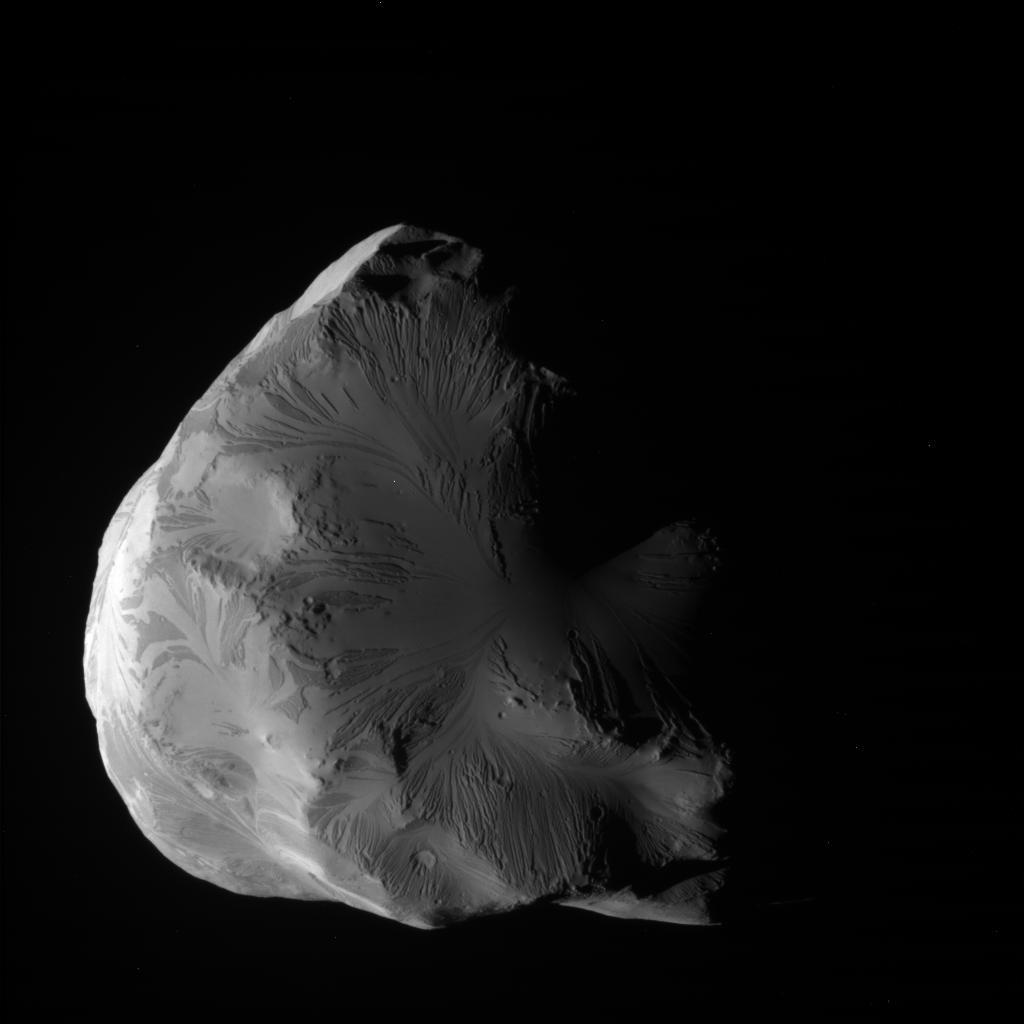
“June 18, 2011. NASA’s Cassini spacecraft obtained this unprocessed image of Saturn’s moon Helene.”

“After almost 20 years in space, NASA’s Cassini spacecraft begins the final chapter of its remarkable story of exploration: its Grand Finale. Between April and September 2017, Cassini will undertake a daring set of orbits that is, in many ways, like a whole new mission. Following a final close flyby of Saturn’s moon Titan, Cassini will leap over the planet’s icy rings and begin a series of 22 weekly dives between the planet and the rings.

No other mission has ever explored this unique region. What we learn from these final orbits will help to improve our understanding of how giant planets – and planetary systems everywhere – form and evolve.

On the final orbit, Cassini will plunge into Saturn’s atmosphere, sending back new and unique science to the very end. After losing contact with Earth, the spacecraft will burn up like a meteor, becoming part of the planet itself.

Cassini’s Grand Finale is about so much more than the spacecraft’s final dive into Saturn. That dramatic event is the capstone of six months of daring exploration and scientific discovery. And those six months are the thrilling final chapter in a historic 20-year journey.”

Image credit: NASA


  • Facebook
  • Google
  • Slashdot
  • Reddit
  • Live
  • TwitThis